صحيح أنني ملحد، لكنني لا أزال زيديَّ المذهب. أحب بعض الطقوس الزيدية وأتعامل معها باعتبارها عادات وتقاليد اجتماعية، مثل طريقة إقامة الأعراس والأناشيد الدينية التي ترافقها، والصلاة على آل بيت النبي، وأتحدث هنا عن الخمسة أهل الكساء حصرًا. كما أحب قراءة سورة «يس» على الميت، وبالنغمة الزيدية المتفردة لمنطقتنا في قراءة القرآن.
وأحب كذلك أن أصلي وأنا مُسبل اليدين. صحيح أنني أصلي أحيانًا من دون وضوء، وحين صليت أمامًا بصديقي صالح الصماد، الرئيس الحوثي السابق، ومع قادة آخرين في الحركة، لم أكن متوضئًا، لكن كان من الضروري بالنسبة لي أن أُسبل اليدين وألا أقول «آمين»، لأن قول «آمين» يفسد الصلاة في مذهبنا، باعتبار أن كلمة «آمين» ليست في القرآن.
لست في عداء مع المذهب الزيدي، ولا مع الهاشميين. عدائي مع كل من حمل السلاح ضد الدولة، ومن سعى إلى فرض فكره ومذهبه بالقوة، سواء كان زيديًا أو شيعيًا أو سنيًا، هاشميًا كان أم من أي قبيلة أخرى.
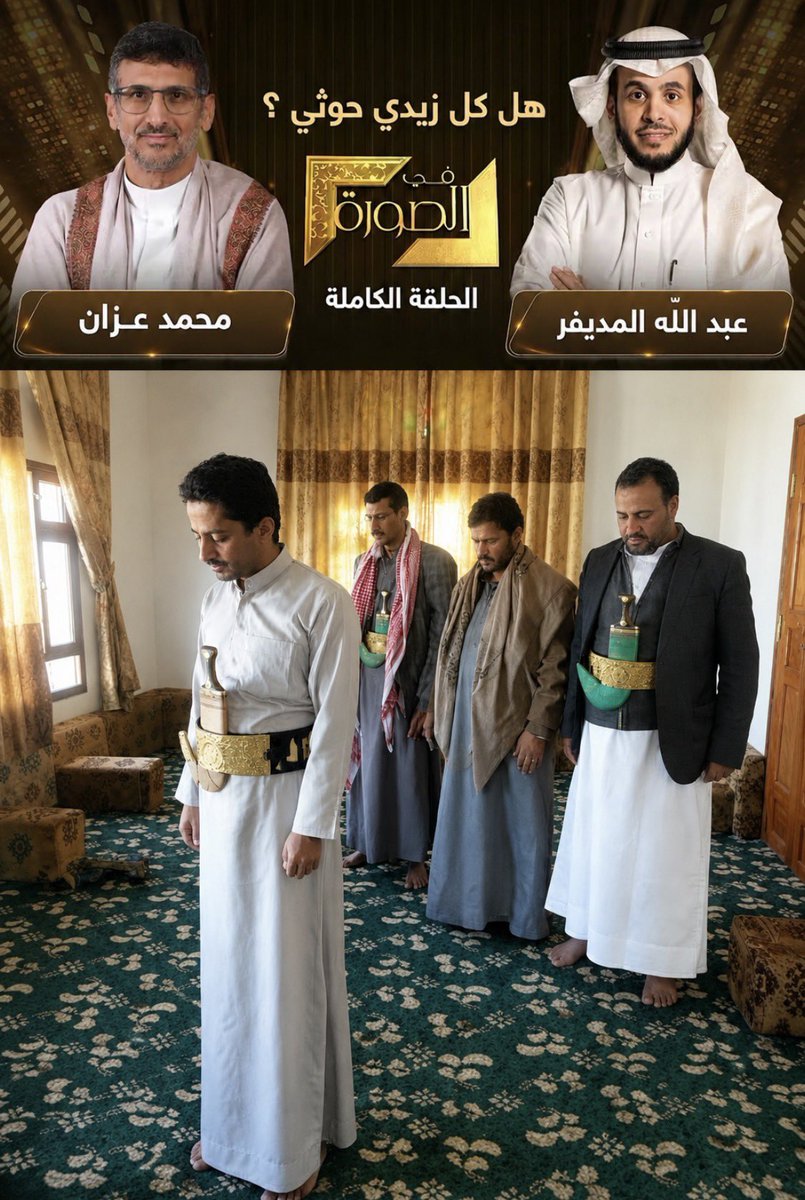
أحببت لقاء المفكر محمد عزان مع الإعلامي السعودي عبدالله المديفر، وأعجبني أن كثيرًا من الزيود في داخل اليمن وخارجه شعروا من خلال اللقاء أن السعودية 🇸🇦 ليست ضد المذهب الزيدي ولا ضد الهاشميين، كما يسعى الحوثي إلى ترسيخ ذلك عنها.
السعودية لن تخوض حروبكم الطائفية ولا العرقية كما يريدها البعض، ولو تبنّت الشرعية اليمنية مثل هذا الخطاب تجاه الزيدية، وتجاه الهاشميين، وتجاه منطقة «الهضبة الزيدية»، لوجد الحوثي صعوبة في تجنيد الكثير من شبابها تحت عناوين أنهم يتعرضون لعدوان ومحاولات استئصال.
—-
الصورة من صعدة مع الراحل صالح الصماد ويحيى قاسم أبو عواضه "الباحث في فكر حسين الحوثي" في 2013 أو 2014.
ملاحظة: اكتمل الحادي والحمد لله في عام 1997 أو 1998 تقريبًا. بعد مرحلة كنت فيها قرآنيًا ثم ربوبيًا.
صحيح أن علي البخيتي مكروه من الجميع..
لكن برضه يا جماعة لا يصح مسح البلاط بالبني آدم بهذه الطريقة 😂
هذا تصبين، وشطف، وعصر، وكوي على الوجهين..
المذيعة مسحت البلاط وصبنت ثم مسحت ثم بلطت
قبل أي مقابلة اسأل أولا من المذيع؟
وإذا قالوا لك مذيعة متمكنة مثل هذه..
اعتذر بأدب
Even more worrying is Iran's ability to simply infiltrate Iraq, launch attacks from there, then retreat.
In fact this is most likely what happened in the latest strike on the east-west pipeline.
This makes the matter all that much more complicated for gulf countries.
This is flawed on so many levels.
It trivializes the leverage Iran had over Hormuz by virtue of the fact that Iran could directly strike energy infrastructure.
This would be an act of suicide because it would give every justification on earth for trump to act on his threats.
Someone sent me this analysis and asked me what I think…
Yes, there is more oil flowing through the strait—with the exception of Iranian oil. But people misunderstand the issue of control of the Strait of Hormuz and overstate its importance in the positioning of Iran, the Gulf, and the U.S. as the war drags on. Specifically, this analysis on oil export volumes and its impact on negotiation positions overlooks two more important factors.
First, Iran may not be able to disrupt energy flows as effectively as in the early stage of the war, but it retains undiminished capabilities to destroy stocks, by which I mean the underlying production infrastructure, whether upstream or downstream.
Second, the assessment fails to consider that Iran can still choose to escalate by hitting these production targets if it determines that Trump isn’t feeling enough pain to take the diplomatic off-ramps being put in front of him. Importantly, we know what happens when Iran is exporting no oil and there is no realistic pathway for diplomacy—we saw it in the Abqaiq and Khurrais attacks on Aramco facilities in 2019.
So while the risk premium around oil flows may seem tolerable for Trump, the threats to energy production infrastructure the Gulf remain significant, which is exactly why regional countries are still trying to mediate a return to a durable ceasefire and diplomatic agreement. Trump too, is erratic, and could give cause to Iran to escalate in this way through his own fixation on “winning” the war. Markets are able to price this, especially not when traders are so fixated on short-term price action.
In this respect, the strait isn’t really Iran’s principle source of leverage. It never was! The attacks on U.S. bases and Gulf cities and infrastructure were far more consequential, but these dimensions of the conflict were downplayed because of what it would mean to acknowledge that Iran has such dangerous capabilities that the U.S. was unable to mitigate or degrade during the entirety of the fighting.
Sure, the U.S. navy can escort vessels (at great cost) and keep oil flowing. But the more fundamental issue of the failure of U.S. security guarantees over the entirety of the Gulf remains unresolved, and this is what provides Iran leverage in the negotiations.
Iran did not wage a scorched earth campaign—but it may yet do so if the current situation persists for too long. That is what everyone who actually follows this region and its dynamics is worried about.
But due to the IRGC's malicious and malignant nature, it can indirectly strike such infrastructure via their proxies in Iraq or Yemen.
This would make it possible to absolve Iran from responsibility and as a result avoid retaliation from US or its allies.
This report is making waves now and everyone is finally starting to wake up to the fact the Iran lost control over Hormuz.
I doubt it's up to 94% of pre-war levels, but whatever the percentage is it's enough to strip Iran from the leverage it once had.
@SaotN2@dzq_z1@ivarmm يا عزيزي رجاءا حاولت ان تفهم الفكرة التي احاول ايصالها
نحن نتحدث تحديدا عن خامنئي ماذا كان يقصد هو بالعبارة، وليس تفسيرك انت لها او للاحداث.
اعد قراءة ردي مرة اخرى