low p-values are fine but what is better are multiple independent sources of evidence pointing in the same direction. If your major concusion depends on the results of one significance test, you did the wrong experiments.
Happy to share a perspective on ethics in research, now published in American Society for Biochemistry and Molecular Biology(@ASBMB Today Magazine).
Thru writing, I hope 2 share d human side of science and the stories behind the people who make it happen
https://t.co/iKUhrUAoMy
Finally a move in the right direction. The extreme waste of time that is modern grant writing and reviewing, and the massive excess of administrative money lost in shuffling paperwork and reports back and forth…I see it first hand. Science funding has become a career for too many and just an outdated and strained business model. At least these few researchers can now do actual science for a nice stretch of time. 👏
1. CRISPR came from basic research on bacteria.
2. Optogenetics started with a discovery in algae.
3. The GFP protein comes from jellyfish.
The biggest breakthroughs all trace to scientists follow their curiosity. This is one huge reason why we must keep funding basic research!
Where you are from can determine whether you can get that discovery paper published, whether you get citations and recognitions, and whether you have a shot at winning the @NobelPrize The scientific world is not necessarily an equitable one.
Read on....
---
“Everything turned out beautifully,” Pan said.
So Pan and Dizhoor wrote a paper about their work and submitted it to Nature on November 25, 2004, according to the submission letter Pan shared with STAT. The editors at Nature suggested they send it on to a more specialized journal called Nature Neuroscience, which rejected it.
Early the next year, Pan sent the paper to the Journal of Neuroscience, where it was reviewed but then again rejected.
Disheartened, Pan set to work revising his paper, and in May 2005 traveled to Fort Lauderdale, Fla. for the Association for Research in Vision and Opthamology conference, where he described his work using channelrhodopsin in neurons. That single lecture, lasting just 15 minutes, would come to be his clearest stake along the timeline of invention.
It was what came next that would make that stake matter.
A few months later, in August of 2005, Nature Neuroscience published a paper about using channelrhodopsin to make neurons sensitive to light. The paper was by Edward Boyden and Karl Deisseroth.
Pan heard the news from a colleague who emailed him the paper. “I felt terrible. I felt terrible,” Pan said, pausing. “We didn’t feel very lucky.”
Quoted from:
https://t.co/I2FbPWyt6O
Feel very grateful and super elated to be one of the FIVE grant awardees across the world for science outreach and communication grant by American Society of Biochemistry and Molecular Biology. Meet the 2026 SOC grant awardees @ASBMB#womeninSTEM#scicom https://t.co/smFvXvLc3Y
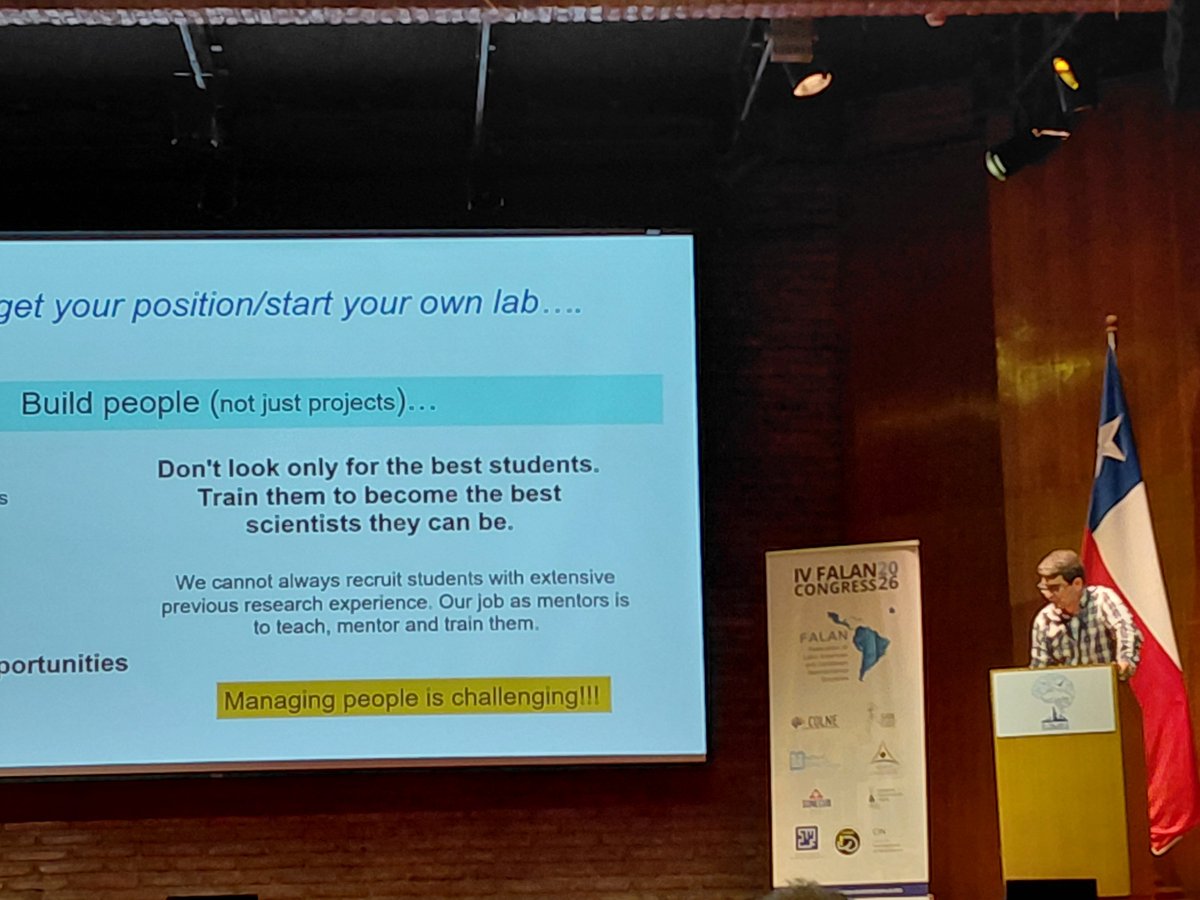
Fantastic advice from Felipe Gomez at FALAN in an @ibro_insta supported special event on how he set up his lab in Uruguay. "Dont only look for the best students. Train them to be the best scientists they can be"
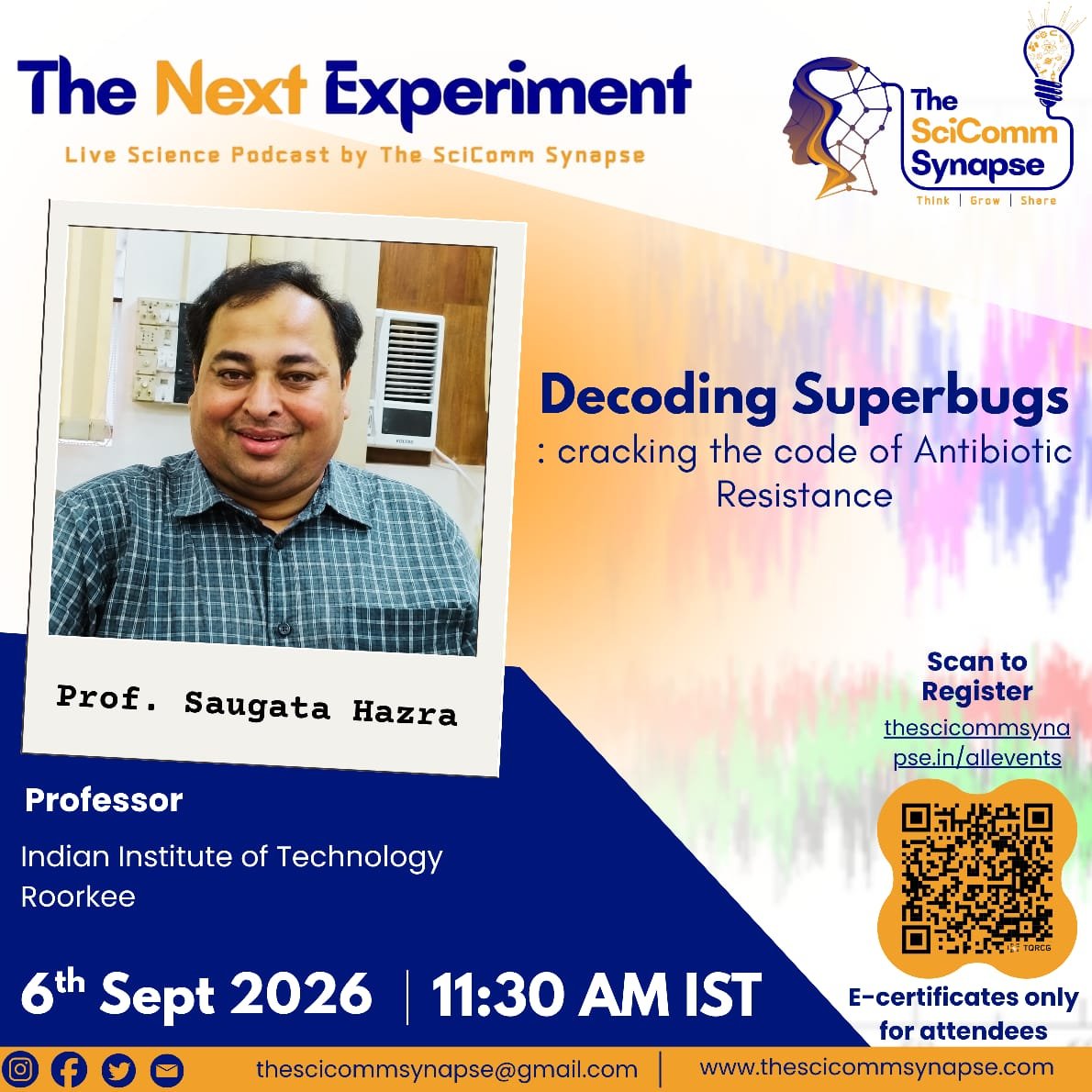
LIVE PODCAST: Decoding Superbugs!
How do we crack the code of Antimicrobial Resistance (AMR)? 🦠 Join us for "The Next Experiment" with Prof. Saugata Hazra (@IITRoorkee) as we explore the fight against superbugs & what it really takes to be a scientist.
Sept 6 | 11:30 AM IST
My journey with chemical elements and science outreach featured in the Times of India.
Grateful for the opportunity to share my passion for chemistry with young learners.
https://t.co/z47X7QJT5H
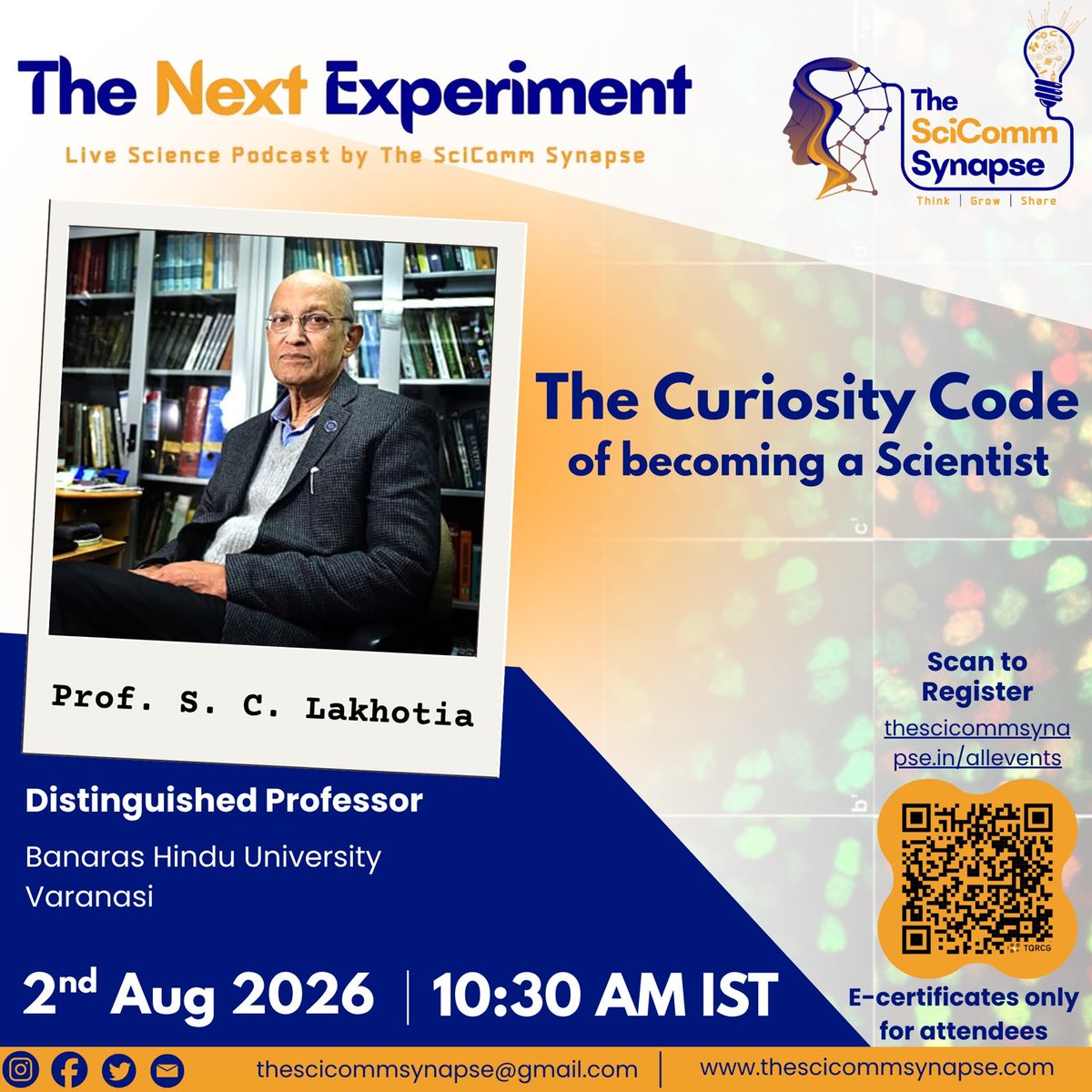
🔬 What does it really take to become a scientist?
Join us LIVE with Prof. S. C. Lakhotia as we explore curiosity, AI, research ethics, resilience, and the future of biology.
📅 Aug 2 | 10:30 AM
🔗https://t.co/Jir2lWOIVP
Do not miss the opportunity ✔️🚀
That feeling when someone says your experiment is flawed and you walk them through the facts, the rationale, and the science, explaining that it’s not flawed, it’s just a different approach.Then, a while later, you hear: “We’re on the same page…most satisfying PhD moments
#Comment 🚨
@ItaiYanai challenges common assumptions about communicating research and reflects on how greater clarity, focus and audience awareness can help transform talks into more meaningful scientific exchanges.
📖 👇
https://t.co/6p7iulkGSQ
If you are curious about my professional life and our science at The Yennamalli Lab, do register for this event!
Looking forward to a delightful conversation! @ImmuneSat
The Next Experiment is here! 🔬🎙️
Join us for an insightful conversation with Dr. Ragothaman M. Yennamalli, Associate Professor at Jawaharlal Nehru University, as he explores “Decoding Life Science with Data.”
📅 5th July 2026
🕥 10:30 AM
📍 Live with The SciComm Synapse