MLB payroll explains just 18% of wins. Efficiency explains 80%. A smart $100M team makes the playoffs 55% of the time. A dumb $194M team? 12%. You’re 4.4× more likely to reach October by being smart than by being rich.
Thought Experiment - What if the NFL had the same spending format as MLB?
Dodgers model: max spending at premium positions, fill out roster with top rookie deals - $450 M
Marlins model- do the best with salary constraints - $100 M
Who wins?
Expected Surplus Value vs. Right Tail Probability - Should NFL teams trade up in the draft?
It depends. The odds of finding a player who can transform your organization with the 1st overall pick are about 25-30%. By pick 10 that drops to 12-15%. By the end of round 1 it's 5%, at which point the odds aren't much different between pick 33 and pick 96 in terms of odds of finding a superstar.
This is why teams like the 49ers will trade massive capital for the opportunity to pick Trey Lance or the Chicago Bears trading several picks to move up one spot for Mitch Trubisky. The odds of finding that transformational player drop with every pick that goes by on Day 1 of the Draft.
If you are not moving up in the draft for a QB, Edge, or maybe OT, the data is clear, you should be trading back and accumulating as many picks between slots 25-75 as possible to create surplus expected value. This is why the best run teams consistently trade back in Round 1, despite frustrating their fans. Talent evaluation is difficult and teams should accumulate as many lottery tickets as they can once the first 15 picks have gone by.
#NFLDraft
Key point: restructures aren't free. They push money into future years. The question is whether you're confident the cap will keep growing fast enough to absorb it. That's the difference between the Eagles model (restructure aggressively, stay competitive, and let cap inflation bail you out) and the Saints/Browns model (restructure aggressively around declining assets and end up trapped).
This is why @AndrewBrandt argues the NFL has a "soft cap"
The cap growth is an important number for teams to model out as they plan for future years. Since 2021 the cap has grown 67%. This growth discounts future cap hits. Here's an example. Christian Darrisaw has cap hit numbers of $23 M in '26 and $24 M in '27. In 26 that number will be worth 7.6% of the cap. If the cap goes up another 10% (or $30M) in '27, his cap hit will go down by 0.5% despite making slightly more money.
This doesn't help us much in the immediate because the -$40 M cap number that the Vikings are starting with already has the cap growth and rollover amounts built in.
The Brewers were one of the teams linked in this article. Let’s look at what the market could look like for Valdez.
To benchmark using WAR (Wins Above Replacement), recent comparable starting pitcher contracts this offseason imply a market rate of roughly $7-10 million per projected WAR, based on FanGraphs' fWAR totals over the pitchers' 2024-2025 seasons (averaged annually) divided into their new deals' average annual value (AAV). Valdez posted 7.7 fWAR across those two years (3.85 per season), putting him in line with these signings:
- Dylan Cease (8.1 fWAR over 2024-2025, or 4.05 annually) signed a 7-year, $210 million deal with the Toronto Blue Jays (AAV $30 million), equating to about $7.4 million per WAR.
- Ranger Suárez (7.5 fWAR, or 3.75 annually) signed a 5-year, $130 million deal with the Boston Red Sox (AAV $26 million), equating to about $6.9 million per WAR.
- Michael King (4.7 fWAR, or 2.35 annually) signed a 3-year, $75 million deal with the San Diego Padres (AAV $25 million), equating to about $10.6 million per WAR.
At a similar $7-10 million per WAR rate, Valdez's recent production could warrant an AAV of $27-38 million, but age, injury history (he has averaged 192 innings over the last four years but dealt with elbow concerns), and market dynamics suggest a more conservative 5-year, $135 million estimate (AAV $27 million, or about $7 million per WAR assuming 3.85 annual fWAR without decline). This positions him as a high-end No. 2 starter for a contender needing innings and ground-ball upside (career 3.36 ERA, 1.204 WHIP, 1053 strikeouts in 1080.2 innings).
Based on this analysis, here are the top regression candidates for 2026:
1. Chicago Bears - $10.6M over the cap, not unbearable but restructures and/or cuts are needed, moving to a first place schedule and teams that win that many close games tend to regress. Caleb Williams still needs improvement - 31st in league in Success % and led the league in bad throws per ProFootball Reference (-4-6 games)
2. Carolina Panthers - first place schedule, Bryce Young needs to continue to develop, limited cap space (-3-4 games)
3. New England Patriots/Seattle Seahawks - both teams are actually pretty well positioned, Maye accounts for only 3.3% of the estimated cap next year and although Darnold jumps to 12%, the Seahawks have a ton of room. But when you win 14 games there’s really only one direction to go. (-2-4 games)
4. Minnesota Vikings- -$45M in cap space which means either major roster overhaul is coming or a ton of restructuring where they kick the can further down the road. JJ McCarthy needs to take a huge step forward otherwise the Vikings will continue to slide in the wrong directions. I’m guessing the new GM will blow this roster up and start over. (-4-6 wins)
#SKOL #DaBears #KeepPounding
The Packers have a usually high amount of restricted free agents this offseason. 11 in total (including exclusive rights free agents). Here’s my predictions for each:
Emanuel Wilson: Original round tender $3.7M
Darian Kinnard: Right of first refusal $3.5M
Bo Melton (ERFA) - minimum offer ($1.08 M)
Brenton Cox - minimum offer ($1.08M)
Chris Brooks - minimum offer ($1.08M)
Josh Whyle could be a candidate to bring back but I think he hits unrestricted free agency.
Zayne Anderson, Jonathon Ford, Arron Mosby, Kamal Hadden, and Donovan Jennings are the remaining RFA and ERFAs.
#Packers #NFL
Can the Rays generate $203M in operating income like the Dodgers?
No. Their entire revenue is $297M.
The Dodgers’ profit margin while spending aggressively is larger than most teams’ entire payrolls. That’s the structural imbalance - not the percentage of revenue spent, but the absolute financial firepower available for competitive purposes.
The Yankees at 49.7% ($362M) have more “restraint” than the Mets at 90% ($400M) - but the Yankees still spent $362M. The percentage obscures the reality: large-market teams can be “prudent” and still massively outspend small markets going “all-in.“
After the Freddy Peralta deal the Brewers will look to reload their starting rotation. One name to watch as a potential front end guy : Logan Henderson.
Logan Henderson’s 2025 debut season hints at serious upside for the Brewers.
Small sample size but at age 23: 1.78 ERA - 236 ERA+ (2nd on team behind Uribe), 0.99 WHIP in MLB, plus 1.11 WHIP across 77.2 IP at Triple-A.
3-0 with a 33:8 K:BB ratio. Elite command (just 2.8 BB/9) meets swing-and-miss stuff.
#Brewers
Options for remedies if tampering occurred:
1. NCAA sanctions - unlikely due to recent court decisions against NCAA and NCAA unwilling to get in the middle of NIL disputes.
2. Sue for tortious interference- unknown outcome, Wisconsin is suing Miami for a similar claim but that is still in the early stages of proceedings
3. Conference level enforcement - would SEC fine or sanction Ole Miss for an infraction against an ACC member? Will the ACC sanction Miami if Miami tampered with Duke’s QB? When both members are in same conference seems easier to enforce.
4. Congress intervention or new CBA system - don’t hold your breath
This is the fundamental inefficiency in MLB’s economic structure - teams are forced to pay for past performance (years 1-6) during the free agency years (7+) when players are already declining. It’s essentially a deferred compensation system where:
1.Players are underpaid (relative to production) during years 1-6
2.Players are overpaid (relative to production) during years 7-10+
3.The market forces this because bidding teams must compensate for the entire career arc
This creates the strategic tension between:
∙Extending young stars before free agency (buy out arbitration + some free agent years at below-market rates)
∙Letting players walk and replacing with younger, cheaper talent
∙Competitive window timing - when your young players peak (years 4-6) vs. when you’re paying for decline
If we assume $8-10M in marginal cost per win, the Kyle Tucker deal is a slight to moderate overpayment ($44-55M value based on 5.5 career WAR). It looks worse for the Dodgers if he performs like he did in 24 and 25 (4.7 and 4.6 with injury issues). Likely forced to higher AAV for fewer guaranteed dollars (Blue Jays reportedly offered 10 yrs / $350M).
From Tucker’s perspective, in order to maximize value, you have to hit FA as many times as possible. So the shorter contract is likely worth less guaranteed dollars as he can either hit FA at 31 or opt out after year 2. Next contract will only need to eclipse $110M to recoup “lost future earnings.
#Dodgers
The Battery is no doubt a driving factor as non baseball revenues for the Braves equal almost 10% of total revenues. Most teams don’t have this luxury. Also, if on field performance continues to decline, attendance will continue to decline, impacting revenues.
Despite losing 15 more games in 2024, the Braves cut their payroll for 2025 and yet baseball revenues continued to climb. This resulted in their first losing season since 2017 but also increased operating income by over 110%.
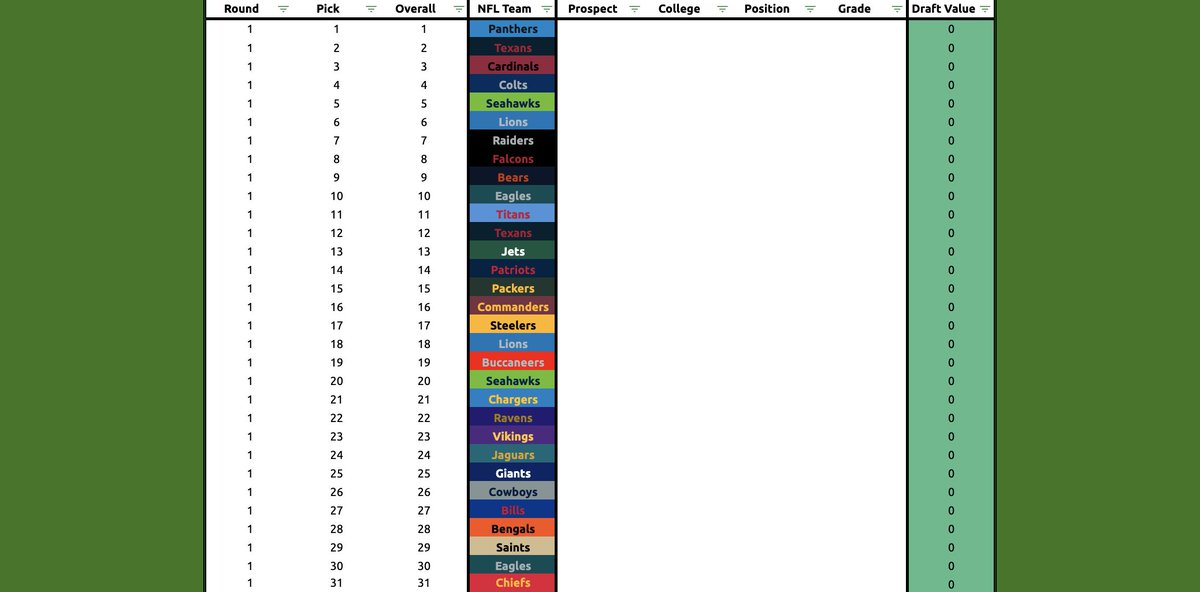
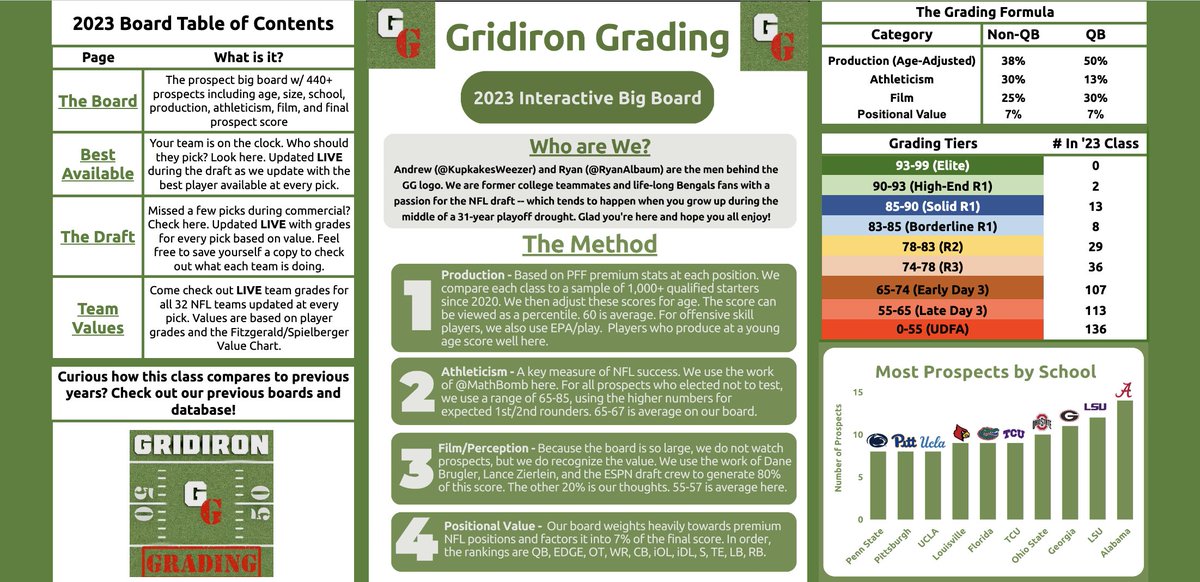
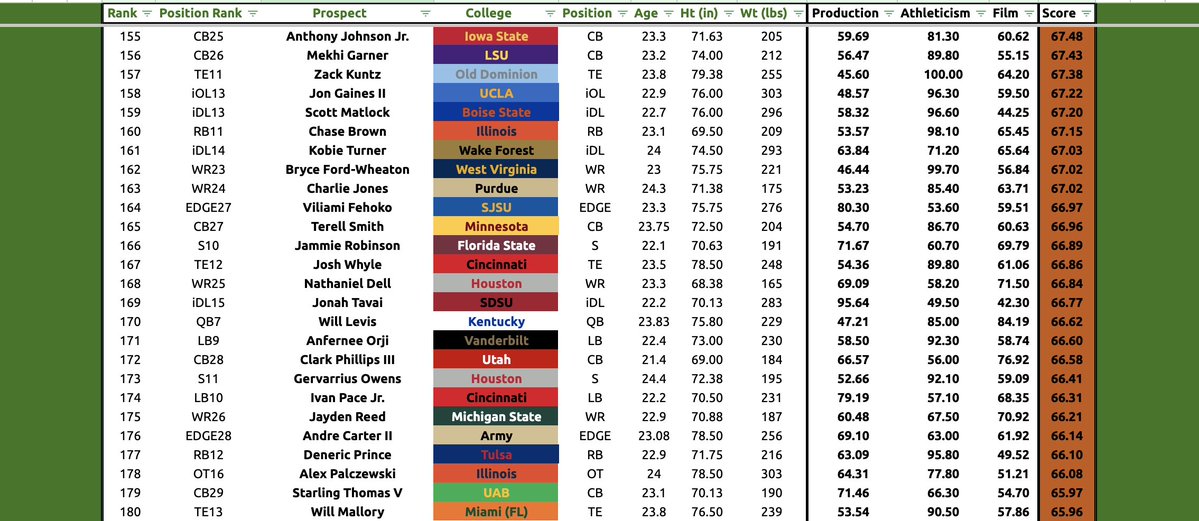
🚨Gridiron Grading #NFLDraft2023 Board🚨
📊440+ graded prospects
💻Updated LIVE for every selection through UDFA
📈Pick Values and Team Grades
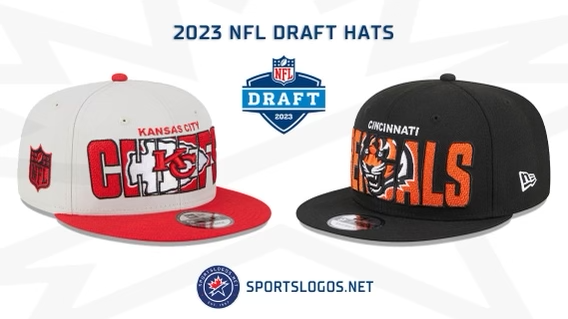
To celebrate we want to give away a draft hat. To access the Board and enter the giveaway:
1️⃣Retweet
2️⃣Follow
We will DM the board!
It’s game day! Hope the 350-odd people taking the @nflpa exam today can celebrate passing later this fall. Special salute to the hundreds that trained with us! See you on the other side! #TeamITL.
I am happy to announce that I will start work with the XFL on Monday as a Director of Team Operations! It was sad to leave my position at Viterbo as the staff and athletes are amazing but this was too good to pass on. This will be a great compliment to CGS! #CGSAllStar#XFL