Delta, Chase and Amazon are blocking AI agents.
The war on agents has begun, and here’s how it probably plays out:
Stage 1: Companies block agents because agents skip the ads and upsells.
Stage 2: Agents learn to act like humans, and it becomes an arms race.
Stage 3: The market splits. Companies that make money on sales let agents in, companies that make money on data charge for access, and the giants build their own agents.
Stage 4: A trusted middle layer for agent identity and payments becomes the standard way in.
Stage 5: Companies that welcome agents start winning customers from the ones that block them.
Stage 6: The agent blockers come back and let agents in on their own terms.
Stage 7: Everyone starts competing for agents with better prices, faster checkout and SEO built for agents.
Stage 8: The ads come back, and companies pay to be your agent’s first recommendation.
Stage 9: The agent war ends, and selling to agents becomes as normal as having a website.
@lennysan an interesting trend we see on adoption for our clients is that the employees that adopt and lean-in, kind of self-surface themselves as the new A-team.
Everyone else digs their own grave. Not enough people are talking about this
@HarryStebbings We preach this with all of our clients. once you become married to a model, its an expensive and messy divorce.
remaining model agnostic is the best moat against frontier lab capture.
As a Forward Deployed Engineer, you must build these projects.
Systems that prove you can deploy, secure & prove ROI when AI hits legacy enterprise networks.
1.) Enterprise SSO & RBAC Bridge
Build: An auth pipeline connecting your AI stack to Okta/Azure AD via SAML/OIDC with SCIM provisioning and row-level data scoping.
Why: No single sign-on and strict data isolation means no enterprise contract.
2.) Air-Gapped Deployment Pipeline
Build: Terraform and Helm scripts that deploy your entire AI stack into a customer VPC with zero egress to the public internet.
Why: Banks and governments don't let your AI talk to the public cloud. You must deploy in their basement.
3.) Legacy ETL & OCR Ingestor
Build: A pipeline using OCR and document parsing to turn 10 years of scanned PDFs and legacy database exports into a clean, queryable vector store.
Why: Enterprise AI starves without clean data. The customer's data is always a mess.
4.) Permission-Filtered RAG Engine
Build: A retrieval pipeline that enforces user-level RBAC, ensuring the LLM only retrieves and cites documents the specific user has clearance to see.
Why: An AI that leaks restricted HR or financial docs is an immediate breach of contract.
5.) Legacy MCP Gateway
Build: A Model Context Protocol server that lets an LLM safely query and write to a 15-year-old on-prem SAP or Oracle instance without exposing raw credentials.
Why: Agents are useless if they can't touch the customer's actual systems of record.
6.) PII Redaction & Unmasking Proxy
Build: Middleware that intercepts LLM traffic, swaps SSNs and credit cards for UUIDs before they hit the model and restores them post-generation with audit logs.
Why: Compliance teams will kill the deal if a single PII token hits an external API.
7.) Durable HITL Approval Gate
Build: A Temporal workflow that pauses high-stakes agent actions and sends a rich approval block to Slack/Teams, resuming execution only on human click.
Why: Enterprises adopt AI only when humans remain legally accountable for the final action.
8.) On-Prem Edge Inference Node
Build: A quantized 8B model served via vLLM or TensorRT-LLM on a single customer-owned GPU with MIG partitioning for local, zero-latency triage.
Why: Sometimes the data is too hot to move. You must bring the model to the data.
9.) Customer Health & ROI Dashboard
Build: A telemetry dashboard quantifying exact time saved, tasks automated and token spend per customer department this month.
Why: If the customer doesn't see the ROI quantified, they will churn at renewal.
10.) Customer Data Eval Harness
Build: A shadow-testing pipeline that runs 100 real historical customer tickets through your agent to prove accuracy before go-live.
Why: Generic benchmarks don't close enterprise deals. Proof on their messy data does.
11.) Technical Discovery to SOW Translator
Build: A structured interview framework converting vague "we want AI" executive requests into a scoped 4-week deployment plan with architecture diagrams.
Why: FDEs are the translators between revenue (Sales) and reality (Engineering).
12.) Self-Serve Admin & Runbook Portal
Build: A UI and documentation suite allowing the customer's internal IT team to manage prompts, view logs and update configs without calling you.
Why: Your leverage is measured by how little the customer needs you for day-to-day operations.
13.) Chaos & Failover Suite for Customer VPC
Build: A harness simulating network drops and API timeouts to test your AI stack's graceful degradation inside their unstable environment.
Why: Customer networks are unpredictable. Your architecture must heal itself.
14.) Multi-Tenant Cost Attribution Engine
Build: A FinOps engine tracking exact inference spend per customer, per department and per feature with anomaly alerts.
Why: Enterprise finance teams demand strict budget visibility and zero surprise bills.
15.) Public Deployment Case Study
Build: 3 published teardowns detailing how you navigated enterprise compliance, integrated legacy systems and delivered measurable business impact.
Why: Proof of surviving enterprise complexity gets you hired faster than any resume.
Systems that prove you can deploy, secure & prove ROI when AI hits legacy enterprise networks.
Most people watch tutorials. Builders ship systems.
Bookmark & Repost.
We'll be spending a lot more time trying to understand the outputs of language models. A few thoughts, tips & tricks:
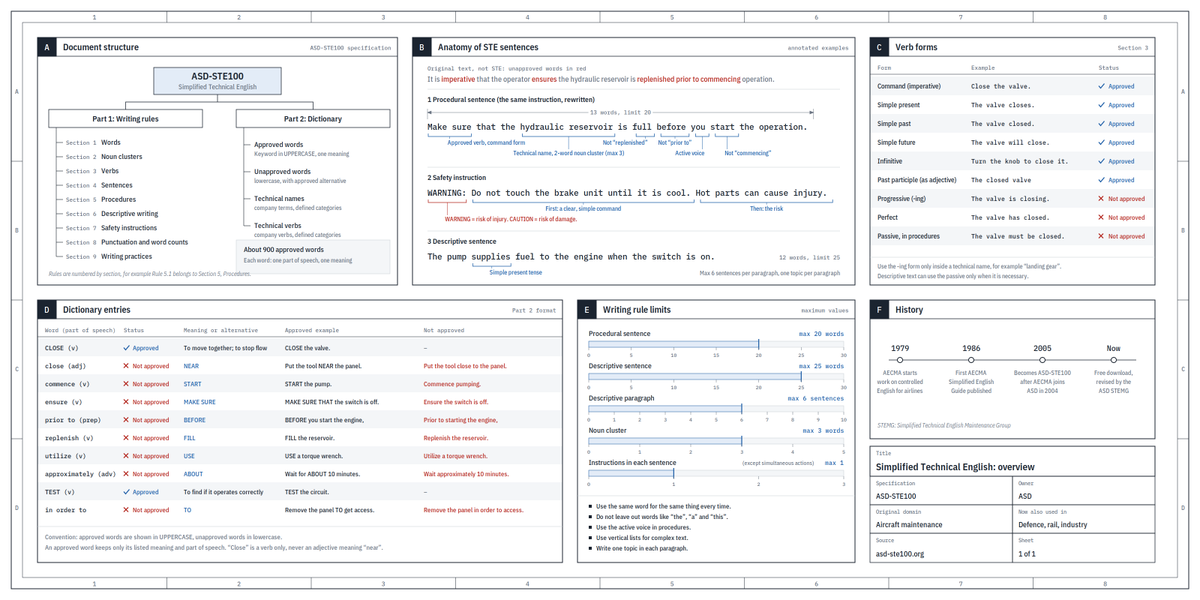
Writing. Something I've had success with: Ask your LLM to explain something in ASD-STE100, it's a controlled language specification originally developed for aerospace maintenance documentation. LLMs well-versed in this language and it comes with heavy constraints on clean writing style that I often find a lot more readable. Sometimes I've tried to soften it a bit e.g. ask for "80% of the way to ASD-STE100" because the spec is quite stringent. But even better:
Diagrams / images. Instead of writing, ask your LLM to create a diagram. These can be a lot easier to process, parse, and understand. But even better:
Web pages. Ask for output "in HTML" to get a beautiful, interactive webpage. LLMs are getting really good at frontend and can create beautiful experiences, animations, etc. But even better:
Explainer videos. The output format I am most bullish on is fully custom / bespoke explainer videos generated on any arbitrary topic. Experiment with things like "Create a 3b1b style video explainer on X. Use my ElevenLabs API key for audio narration". (you'd need an API key for the latter or you can ask your LLM to find you decent free alternatives that use your local compute). This is actually starting to work!
In summary:
- As LLMs get better, they will do more and more of the legwork autonomously, and a lot more of our work will rise up the abstractions into oversight and understanding.
- Luckily, LLMs can help here too because as intelligence and code are increasingly abundant, you can ask for large, custom, discardable software artifacts (e.g. web apps, video explainers) that would have never made sense to create before. Push the boundaries here and you'll be surprised.
Box CEO Aaron Levie (@levie) calls out the MASSIVE opportunity for AI deployment services:
"every single one of those companies, whether that's a 50-person firm or a multi-100,000 person firm, is gonna need an army of people to go in and help them with that transformation"
"when you go to that law firm and you go to that pharma company and you go to that bank, they need something that bridges the core technology to their workflow in their business process"
"somebody has to go into that organization and get it set up, and somebody has to go and provide domain expertise to this model so it really understands our particular business process"
Vendor FDEs are incentivized to get you hooked on their platform and to spend more money.
Indie FDEs are incentivized to use the best tool for the job and to save you money.
Hire indie FDEs.
@levie what we see implementing ai into companies is the workflow rebuild is only half the job, adoption is equally challenging.
legacy systems + legacy teams + a board hesitating to commit to reorganising around ai = artificial inertia
one interesting observation from implementing ai into companies is how much gentle nudging adoption needs, irrespective of how seamless the rollout is.
people are shockingly sticky about "how we've always done it"
combine that with a board who aren’t willing to fully reorganise around ai.
you get artificial inertia
@notkevinzhang Helping our enterprise clients become ai native, the latency gains are what I’m super excited about.
Would love to use it and then see how it could be deployed into prod
@coreyganim no way this took 45 minutes, you missed:
-permission gating access
-updates cannot run weekly in actual production
-embeddings
-how agent interacts (hooks etc)
I get the clickbait but you’re going to have people try replicate this and create a mess in their own org.
@vasuman what I see often is:
>CEOs feel ai anxiety
>slap a solution on top of their business fast
>ai anxiety solved
>solution creates problems or adoption is 0
>CEOs feel ai anxiety
@doodlestein@mattshumer_ Similar setup with multiple machines and one account to orchestrate, as usage limits are getting close orchestrator continues in the next machine