Prof Alf Baird: “A few fundamentals of colonial rule, applicable to Scotland:
– the under-development of the colony is due to decades or in our case centuries ‘of decline’ and lack of investment;
– the colonized suffers cultural obliteration due to imposed culture/language and cannot ‘enforce indigenous cultural mores’ on anyone;
– the colonized has no say in matters of migration;
– the colonized has no say on matters of industry or production;
– the colonized has no say on matters of taxation or energy;
– the colonized has no say on matters of war and peace;
– the colonized has no say on territorial matters.
Hence it matters little what ‘Scotland’s chattering classes’ utter because the fact remains, and as Fanon said, a colonized people are ‘out of the game’ in all meaningful respects until they recover their sovereignty, until colonial rule is ended, and until self-recovery of national culture.”
Before Wallace, before Bruce, there was Berwick. And what happened there is the reason the wars ever began.
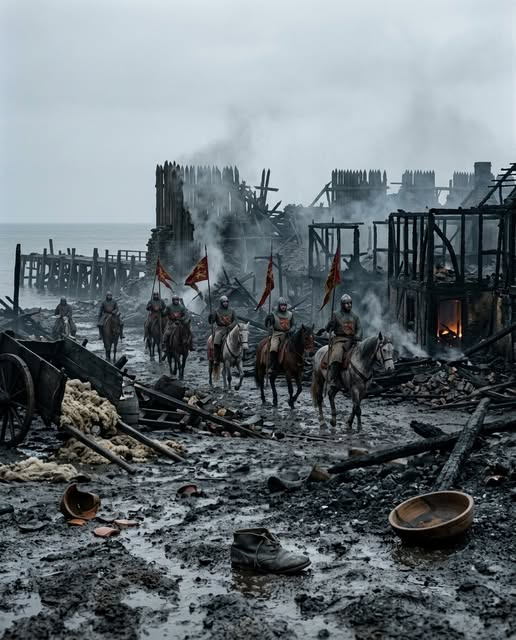
In 1296 Berwick upon Tweed was not a border curiosity. It was the richest town in Scotland, a booming North Sea port whose wool and hide trade made it the equal of any city in northern Europe. Flemish merchants kept warehouses there. It was Scotland's window on the world.
Edward the First of England came north with an army and asked the town to yield. Berwick refused, and jeered at him from its wooden palisade. So he took it, and then he did something that even chroniclers in his own country struggled to write down. The killing went on for days. The town was gutted so completely that its trade never recovered, and Berwick has been changing hands ever since.
Edward believed he was making an example that would frighten Scotland into obedience. He was wrong. The news of Berwick travelled every road in the country, and within a year a young man named William Wallace was in arms. Cruelty does not always cow a people. Sometimes it simply tells them exactly what they are fighting.🏴⚔️👑
#Berwick #ScottishHistory #WarsOfIndependence #EdwardI #Scotland
Elusive Scottish fact.
The Claim of rights passed by Scotland’s constitutional legislature
In 1689, Scotland did not have a Westminster style parliament.
It had the
Convention of Estates
a body with full constitutional authority to.
-make laws
-declare forfeiture of the crown
-define constitutional limits
-represent the people of Scotland
The Convention passed the Claim of Right Act, 1689 it became law,
just like any other Act.
That’s the foundation.
The Claim of Rights transferred the power to the people making the sovereign power the highest authority in Scotland.
Unalterable
This could not be changed in any way it’s that simple.
(Not even the Convention of Estates)
(power had passed to the people on that day and remains with the people today.)
Therefore no one has or had the authority to merge join or dilute the peoples authority.
So the
Act of the Union fails international legal and Scottish scrutiny.
Meaning the Union was and is annexation in international terms as we know it to be today.
🤞🌎🤔☮️⚖️🏴
All you need to do is follow the thread of logic. The Scottish Crown was annexed by the extension of the English Coronation Oath and English treason law to Scotland making Scots into what? It’s not hard wee unionist! Behind all the convoluted language the extension of the English Coronation Oath and English treason law over Scotland made Scots into subjects of the English Crown. Of course the treaty and acts of union called for a single kingdom/crown and adding Scotland to England’s Crown did not accomplish that. (Even annexed the Scottish Crown remains as a legal and constitutional fact though administered by England’s.) But that is why public servants swear their oaths to an English monarch of an English state (pseudonyms Britain and U.K.), exactly as all England’s colonial subjects have been required to do,
For Scotland and the Scottish Civic Council (SCC in formation stage)
Time is now the critical factor.
Because the UK Government and the SNP are already moving to close the constitutional window Scotland needs.
Westminster is centralising power, creating new reserve controls, redirecting funding to councils, and steadily hollowing out Holyrood’s authority.
Every step reduces Scotland’s ability to act as a nation.
At the same time, the SNP is preparing to pull the public back into party politics with another “referendum” narrative a move that will split the vote, drain civic energy, and bury the lawful civic route under another election cycle.
This is why the SCC matters.
It isn’t a theory. It isn’t a slogan.
It’s the only lawful civic mechanism Scotland has left and the window to establish it is closing fast.
The idea is simple, clear, and complete.
But it goes against the grain of everything Scots have been conditioned to believe.
That only parties act, only elections matter, and only politicians can speak for Scotland.
Breaking that conditioning takes time but Scotland doesn’t have time.
If the people want a civic route, they must step forward.
Not next year.
Not after the next election.
Now.
Because once Westminster finishes centralising and once the SNP pulls the movement back into electoral distraction, the civic route will be much harder to establish.
🤞☮️⚖️🏴🤔🌎
It's one of life's wonders to see a Labour MP like Torcuil Crighton stand up in the coloniser's debating chamber and express surprise and disgust that Scotland, the nation which provides most of the fish catch of these islands for the benefit of those in whose interest that chamber functions, is deprived of the least sniff of incoming fishing rights, all of which go to the coloniser. You suppose taking all of our fish has become just too much of a habit for them to consider otherwise for this bluefin tuna quota. They want it all.
If you are old enough to remember giving the brass lock of a public lavatory a dunt to get the penny to drop, you won't have any trouble seeing the problem here. Colonialism, coupled with self-interest and an invitation to participate in the processes of the banditry perpetrated on our country, can get the most awesome grip of some of us. Unedifying, @Torcuil.
A piper was executed by a legal argument that has echoed through British courtrooms for 250 years.
The Act of Proscription of 1746, passed after the crushing of the Jacobite Rising, is widely believed to have banned bagpipes across Scotland. It didn't. The Act's actual text focuses entirely on Highland dress and weapons — bagpipes are never mentioned once.
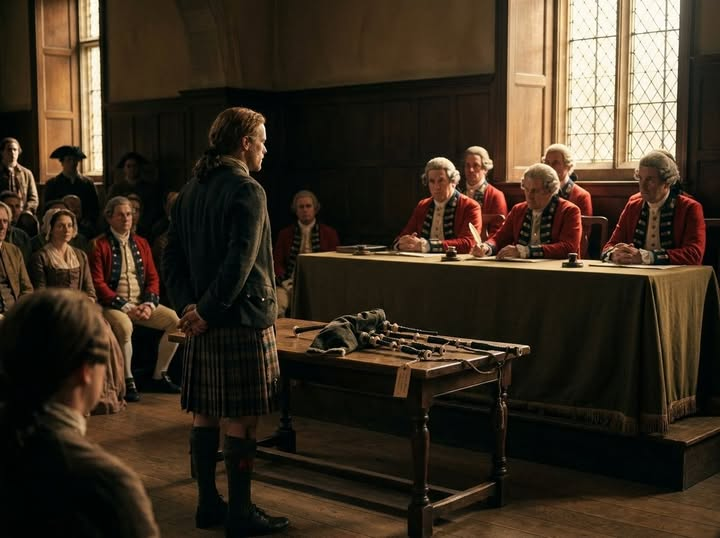
The myth traces to a single, specific case. James Reid, a Jacobite piper captured after Culloden, argued at his 1746 treason trial that he was a noncombatant who had carried no weapon onto the battlefield. The presiding tribunal disagreed, ruling that Highland regiments never marched without a piper, and that his bagpipe therefore counted, in the eye of the law, as an instrument of war. Reid was convicted and hanged in York that November — the first legal ruling to classify a musical instrument as a genuine weapon.
That single court decision, not any actual Act of Parliament, is why British forces classified captured bagpipes alongside sabers and rifles for the next two and a half centuries. The precedent resurfaced in 1996, when a London piper cited Reid's case in his own defense against a busking bylaw. The judge ruled Reid's original 1746 conviction had been a miscarriage of justice — but confirmed that, technically, in wartime, bagpipes could still be considered instruments of war.
No Act ever banned the bagpipes.
One dead piper's court case did nearly as much damage as a law would have.
#ScottishHistory #Bagpipes #JamesReid #ScotlandHistory #ActOfProscription #ScottishMyths
"The Scots are the titleholders - the titleholders - to the territory, seas and land of Scotland..."
++Coming Sunday, 12 July 10.30am++
'Liberation Scotland July 2026 Update'
Recovery of Sovereignty with Alan McMahon, Prof Alf Baird, Dr Chris Thomson, Craig Murray, Jerome Bouquet-Elkaim, and Sara Salyers.
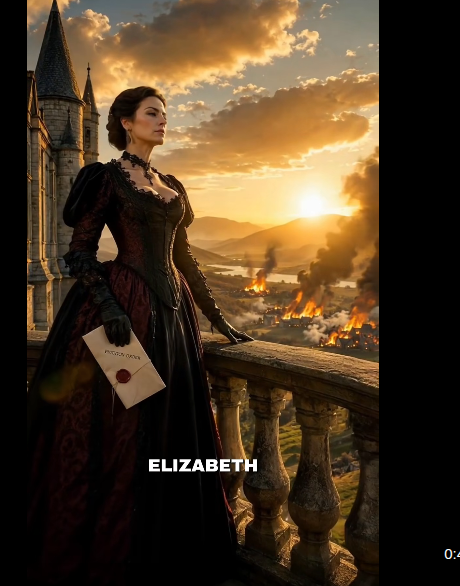
She signed the orders herself. Elizabeth Gordon, Countess of Sutherland, put her name to the clearance of an entire people. Fifteen thousand Highland Scots driven from land their families had worked for centuries. In 1814, she wanted the glens for sheep. Patrick Sellar carried out the orders. Sixteen townships burned. One elderly woman, Margaret MacKay, was dragged from her bed while her home was set alight. She died soon after. Sellar stood trial. He was acquitted. The Countess called it improvement. But the people who walked out of that smoke carried something her signature could never touch. Their Gaelic. Their surnames. Their memories. The names of every glen, every burn, every stone. If you carry Scottish blood today, you are proof they could be driven from the Highlands, but they could never be erased. #scottishheritage #scottishhisotry #scottishbloodline
Well if your bothered to look you’d have realised that the franchise for the opinion poll pretends referendum included 2nd home owners, temporary residents- non Scots workers, students, military- recent arrivals etc. Excluding those who should never have been given a vote, the majority of actual Scots voted for independence. How the fuck do you get off opining without knowing what was actually being said?