During the special order of business at the 135th Continental Congress, members were told by the presiding officer that leaving the hall would be a forfeiture of their right to vote. Yes, they were free to leave, but could not return during debate. If a member needed to leave to use the restroom, well, she had a decision to make.
It is unclear if this was part of the Standing Rules which said:
“Doors shall be opened as indicated in the Program or by direction of the Presiding Officer.”
Since the 135th Continental Congress, dozens of testimonials have been given by members who experienced having to make this difficult decision. We will link to some of their stories presented in the media below (see link to the blog post).
To gain clarity on this question, we consulted with Tim Wynn, PRP of Perfect Rules, Inc. asking:
“Are Members Free to Come & Go During a Business Session?”
Mr. Wynn weighs in:
Members of an assembly are free to enter and exit as they please, though there is one notable exception that is based completely in practicality and accuracy (which will be addressed five paragraphs below).
“It is a fundamental principle of parliamentary law that the right to vote is limited to the members of an organization who are actually present at the time the vote is taken in a regular or properly called meeting, although it should be noted that a member need not be present when the question is put. Exceptions to this rule must be expressly stated in the bylaws.” – RONR (12th ed.) 45:56
This rule is essentially saying that when the vote is taken—that is, in the case of a ballot vote, when the ballots are collected—any member present can vote, whether or not that member was present earlier.
However, there is no requirement that the member be present when the motion is actually put by the chair—that is, when the chair officially announces the exact question that is to be voted upon and instructs the assembly regarding the vote. In a ballot vote, the vote itself can take considerable time after the chair puts the question. The rule clearly prescribes that one need not be present for the putting of the question, but may enter (or re-enter) afterward and still vote on the question.
“… the motion to close the polls requires a two-thirds vote.
“If members enter afterward and it is desired to reopen the polls, this can be done by a majority vote.” – RONR (12th ed.) 30:9-10
The provisions immediately above speak to a case where the polls have officially been closed. In such a case, the polls can be reopened to accommodate a member who enters after the polls have been closed. If the member enters while the polls are still open, there is no impediment to his casting a vote.
For comparison, there is a rule regarding the taking of a Counted Rising Vote, which, of course, does not apply to the taking of a vote by ballot.
See the following:
“In all but small assemblies, the doors should be closed and no one should enter or leave the hall while a count is being taken.” – RONR (12th ed.) 45:15
This applies only to the taking of a counted rising vote. When a counted rising vote is taken, the chair instructs those in favor of the motion to rise, then the chair (or tellers) count those who are standing for the affirmative vote. This process is then repeated for the negative vote. So, standing is the method each member uses to indicate his vote. Normally, one enters and exits a room also by standing. So, allowing entry and exit provides confusion, especially in larger assemblies, during the counting process, since anyone standing should be counted as casting a vote. This rule does NOT apply to voting by ballot, where standing does not equate to casting a vote. The inclusion of this rule here—for a specific practical purpose—and its omission elsewhere, supports the conclusion that this very specific rule does not apply to the taking of a ballot vote.
Also, it should be understood that the assembly cannot create a rule that would prevent voting delegates from attending the meeting, even by a unanimous vote. Delegates have a right to attend and to vote.
“Rules protecting a basic right of the individual member cannot be suspended. Thus, while generally applicable limits on debate and the making of motions may be imposed by motions such as the Previous Question, the rules may not be suspended so as to deny any particular member the right to attend meetings, make motions or nominations, speak in debate, give previous notice, or vote. These basic rights may be curtailed only through disciplinary proceedings.” – RONR (12th ed.) 25:11
https://t.co/Qa1Om12Jab
*Images are AI generated. All text is original to Tim Wynn, PRP or me.
https://t.co/WiA3Y1i9kD
“The protesters said they had to describe their genitalia to officers — an exchange that lasted roughly 20 minutes. After the description officers told the crew members they were free to go.”
20. Whole. Minutes. Brave heroes.
“There's no sexualization at a drag show... I've taken my children to drag shows... it's wholesome entertainment!”
— U.S. Senate candidate Angie Nixon who won the Democrat primary in Florida
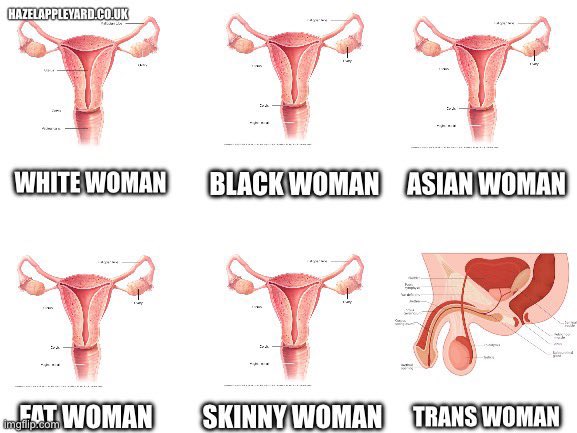
We trust that the WNBA knows what it’s doing and stand in solidarity! Not all speech is good speech, and not all is “free.” There is a cost- especially to our trans daughters. We must silence the dissenting XX’ers so our penis-born sisters remain safely in our chapters.
Today, ADF attorneys sent a letter to @WNBA commissioner @CathyEngelbert, warning her that the league may expose themselves to legal liability by silencing fans' viewpoints.
In two different situations, fans at a game in Seattle were bullied by a co-owner of the team for their signs supporting @sophaller while fans at a game in Atlanta were made to cover up their @xx_xyathletics shirts. These incidents send a resounding message to WNBA fans: if you know what it means to be a woman and support fairness in women's sports, you are not welcome at WNBA games.
ADF is open to assisting the league with legal education and policies that would support free expression at games and fairness in women's sports. It is time to take action against this blatant censorship of the truth.
The sex difference in throwing is one of the largest behavioral sex differences ever measured. While training matters, the disparity appears to be mostly biological.
Yet Anne Fausto-Sterling argues in favor of pure socialization while ignoring a mountain of evidence to the contrary.
Few scholars claim to deny biology outright, with most agreeing that nature and nurture interact. In practice, however, they routinely reject biological explanations in favor of comparatively implausible environmental ones.
They pay lip service to biology, but never actually allow it to explain anything.
This new long read by professors Robert Deaner and Mike Lombardo examines the science of throwing, hunting, and combat, and ask a simple question:
What evidence would actually be allowed to count as evidence for an innate sex difference?
Read the free article on @RealLastStand below.
🔗https://t.co/HOT59TDQhE
We should accept that losing 5,000 XX members is a very small price to pay to ensure our XY sisters can experience a hate-free environment. #noplaceforhate#nsdar
Well, look at that. DAR is waiving fees for reinstatements for the first 5,000 members who want to come back. Nice to confirm that they have lost at least 5,000 members but the number is much higher than that. Bet they don't get anywhere near that number of reinstatements. The ladies are ticked.
https://t.co/vjHq8VDuu3
"Excluding or targeting people because of their gender identity contradicts the values of respect, service, & sisterhood that the DAR claims to uphold.”
The Daughters of the American Revolution voted to allow men to join their organization. Do not give $!
https://t.co/X1BjIOWAHP