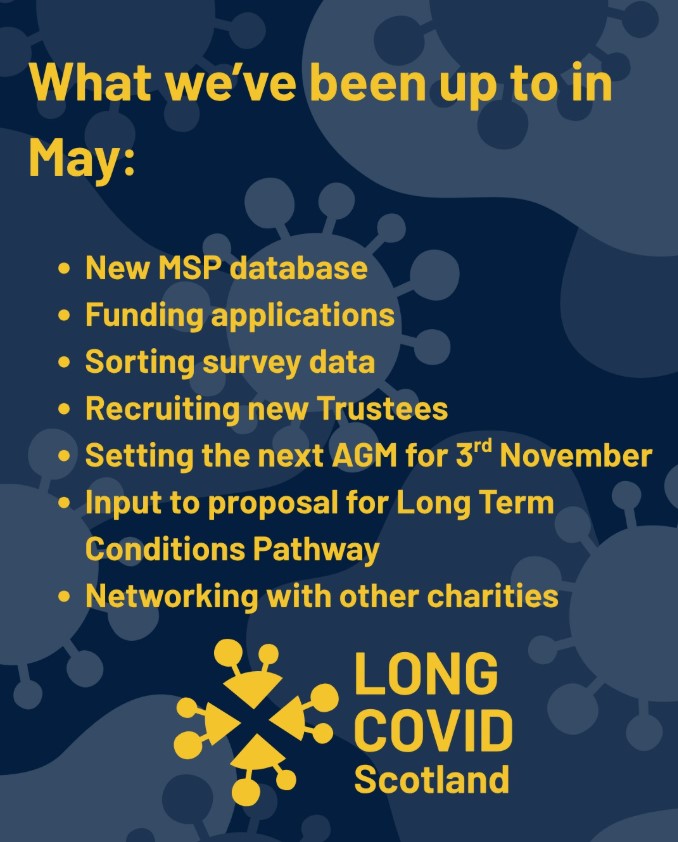
Sharing international Covid-related new learning, opportunities and creativity; driving good practice towards a safe Inclusive New Normal. Based in Scotland.
@ZdenekVrozina Very interesting and thank you for presenting the findings so clearly. I wonder if this also happens with other post-acute infection conditions, like ME/CFS and maybe so-called Funcional Neurological Disorder.
In this large multicenter real-world cohort study, patients who developed long COVID had a substantially higher risk of major adverse cardiovascular events (MACE) and death compared with COVID-19 patients who did not develop #LongCOVID.
➡️ The overall risk of MACE was increased more than fourfold (HR 4.48), with particularly high risks for coronary artery disease (HR 6.48) and stroke (HR 3.46). 1/
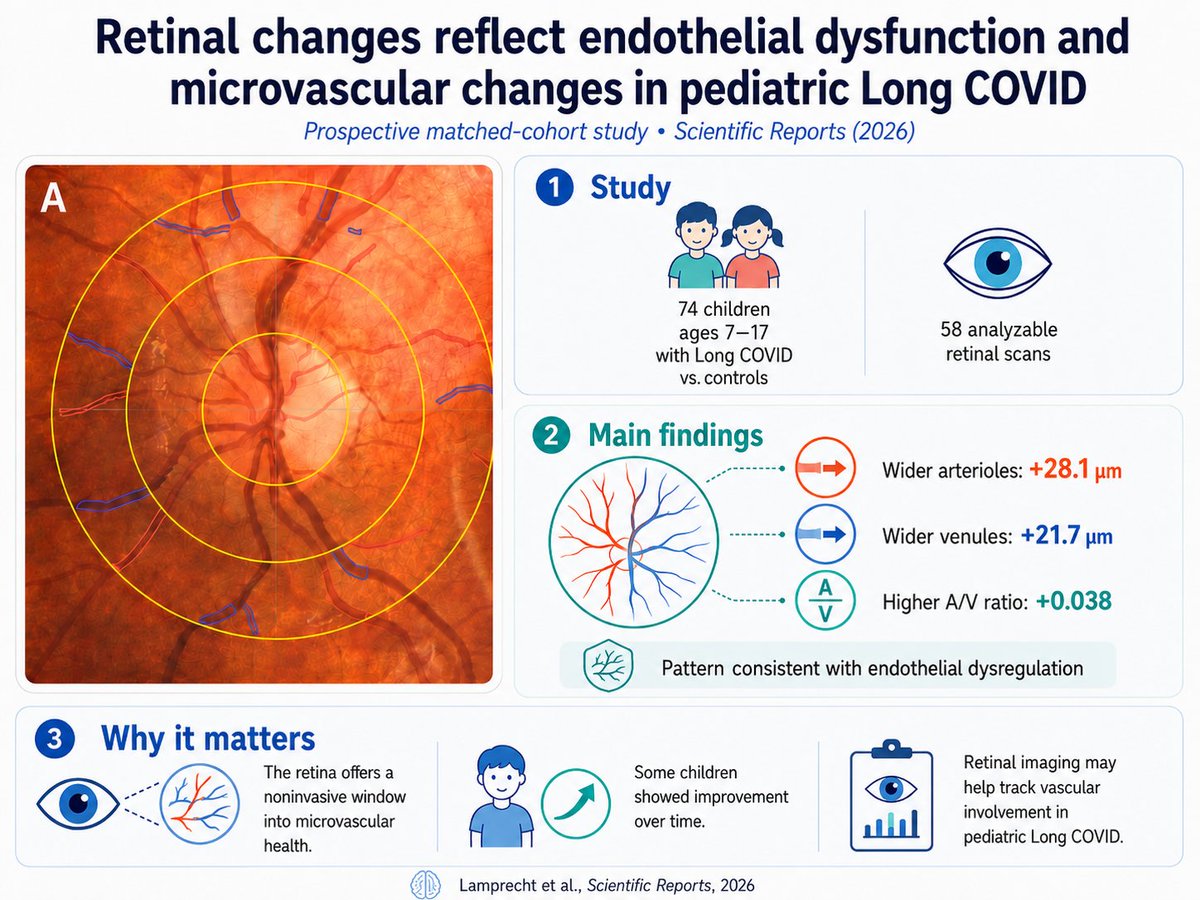
Children with Long COVID had measurable retinal microvascular changes. https://t.co/eIElYHievL
In 74 kids ages 7–17, scans found wider arterioles, wider venules, and a higher A/V ratio, consistent with endothelial dysfunction.
The eye may help track pediatric Long COVID.
Clean Air Day is 18 June, just two weeks away. This year, call on your local councillor to champion clean air in your community. 82% of people say air pollution should be a UK priority. Make your voice one of them. #CleanAirUK#CleanAir https://t.co/iiRs1y843d
Wonderful example of a worldwide phenomenon - how pandemic-disabled people have founded and come together in new kinds of communities, blending global and local, online and onsite👏
Prof. Klaus Wirth proposes that a substantial subset of Long COVID—the group that clinically resembles ME/CFS—is driven by a vicious cycle involving vascular dysfunction, impaired sodium handling, calcium overload, and ultimately mitochondrial injury.
In his model, exertion does more than temporarily deplete energy reserves. Instead, exercise may trigger abnormal sodium accumulation within muscle cells. Excess sodium then promotes calcium influx, including into mitochondria. Calcium overload is a well-established mechanism of mitochondrial injury in other diseases, and Wirth argues that repeated episodes may progressively impair cellular energy production.
This hypothesis attempts to unify several observations reported in Long COVID and ME/CFS research: orthostatic intolerance, impaired cerebral blood flow, elevated lactate during exercise, post-exertional malaise (PEM), cognitive dysfunction, autonomic abnormalities, and exercise intolerance.
Importantly, this remains a hypothesis—not a proven mechanism—but it offers a biologically plausible framework linking many seemingly disconnected findings.
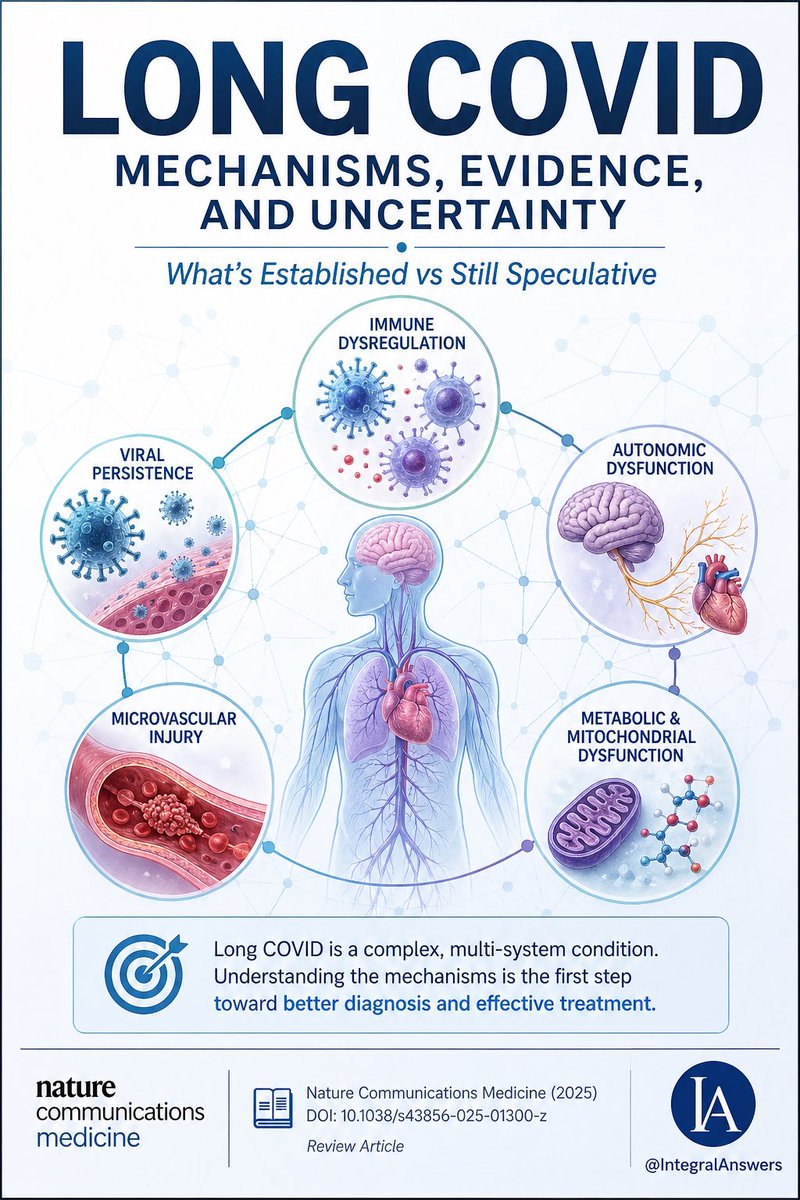
1/ Long COVID is one of the most complex post-infectious syndromes ever studied.
A new review in Nature Communications Medicine attempts to unify the biology.
Here’s what’s established, what’s emerging, and what’s still speculative. 🧵
“This new class of universal vaccines are future-proofed. They not only protect against many variants simultaneously, but potentially against related viruses that haven’t yet emerged...". Wow! Would be good to know more on the science but well done @UHSFT👏https://t.co/E58oef6uGT
58 organisations. 1,200 individuals
We're incredibly grateful to everyone who supported our open letter to the Royal College of Psychiatrists.
This coalition brings us together from across the community. A powerful reminder of what solidarity can achieve.
Update & full 💌👇🎙️
Those of us who keep up with the science are about as unsurprised by this as it's possible to be. The only surprising thing is that a medical establishment noticed!
We’re a primary care practice in Vermont. We implemented a practice-wide protocol screening every patient at every encounter for recent SARS-CoV-2 infection history. What we’re observing in our panel is not consistent with a psychosomatic framework.
We’re seeing measurable, objective increases in new-onset hypertension, acute cardiovascular events, new-onset allergic disease, and new-onset type 2 diabetes mellitus, all temporally correlated with infection history. These are not symptom reports. These are clinical findings.
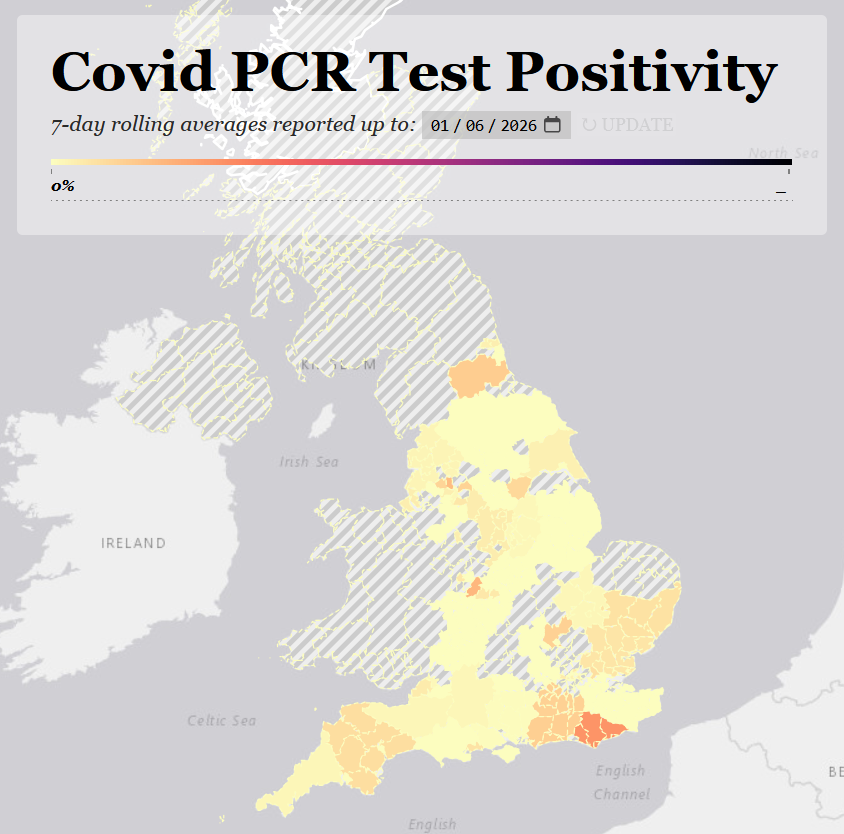
The PCR positivity map is out.
Most areas are either not reporting or have stopped within the last 7 days, hence this week's national average is unlikely to have any meaning at all.
I'll discuss known hotspots first, then the data shortage issue.
https://t.co/1phcyp7jth
1/8
@resfoundation I think you need to take a serious look at this study if you want an explanation for increases to unemployment, labour market inactivity due to ill-health disability. Also liik at the apprx half a million studies on Covid post acute sequelae https://t.co/yKVPZkEmg1
@_CatintheHat@resfoundation I suspect diagnostic coding systems that aren't designed to capture Covid post acute sequelae (& there are genuine challenges in coding complex multi-system illnesses like Long Covid) have much to do with it. But the fundamental reason is that policymakers don't want to know.
Why do so many charts on different kinds of illness show soaring rises from 2020-21? Findings show approx 1 in 6 develop post acute Covid sequelae but diagnostic coding systems capture under half, so millions are invisible to health systems & policymakers https://t.co/yKVPZkEmg1
It’s good to see the @resfoundation highlighting how the deterioration in young people’s health since 2019 is a significant driver of the NEET crisis.
And yet, the official report does not even mention Long Covid once.
Covid continues to be the elephant in the room. 🐘
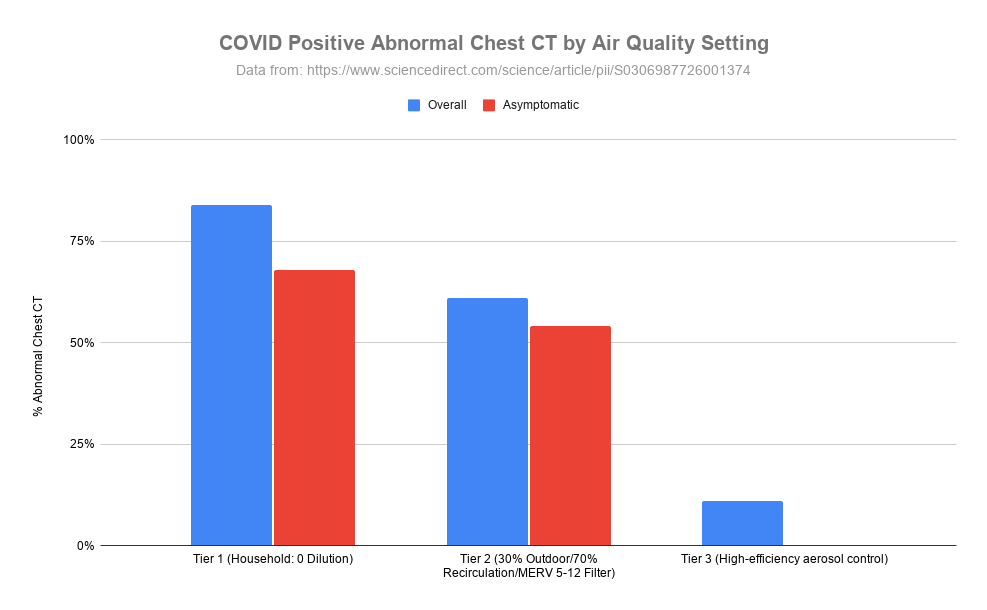
@jeffgilchrist I wonder if CPAP machines (Continuous Positive Airway Pressure - used by people with sleep apnea and other breathing disorders) might inadvertently drive infection deeper into the lungs. Could that be an implication of this study's findings?
Filtering the air may help prevent your own infection from becoming more severe
If everyone in a household becomes infected with the same virus, does it help to isolate from each other and can you be a danger to yourself? Read on to find out...🧵1/
#AirQuality#IAQ#Ventilation
New paper out in BMC Infectious Diseases, led by Natalie Wilson with Alicia Grima and Clara Lee: how we define hospital-acquired COVID changes whether we see its true mortality burden, and most common definitions hide it. 🧵