KELE-BOLO
The Kèlè-Bolo, translating to "War-Arm" in Mandinka, formed the empire's infantry, typically consisting of a few hundred men. They were organized into smaller infantry formations known as Kèlè-Kulu (War-Heaps), which functioned as individual squadrons within the larger formation.
The Kèlè-Bolo included both archers and melee infantry, with the latter consisting of warriors armed with spears, short swords and daggers. Some squads of spear-throwers would have utilized the Tamba, a Mandinka short spear. Warriors also commonly wore protective amulets, usually thick leather pouches tied around the neck or forearm, which were believed to provide spiritual protection against harm.
The Military of the 13th-Century Mali Empire.Before Mansa Suleyman’s Reforms
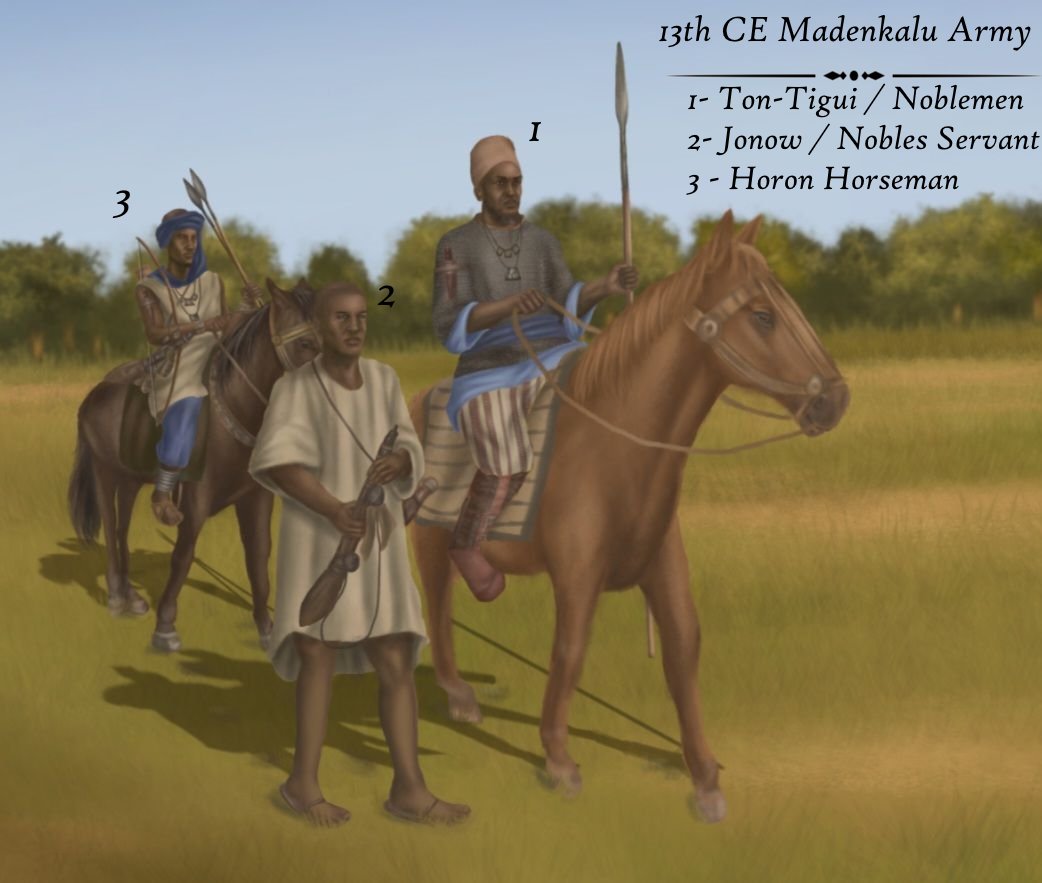
Mali’s cavalry was led by noblemen called “Ton-Tigui,” meaning “Quiver Master.” These Ton-Tigui were appointed from Mali’s 16 clans, which were organized by the Empire’s founder, Sundiata Keita.
Mandenkas are in every country in west Africa and they called different names in each country that they are in:
🇲🇱: Malinké, Bambara, or Wangara.
🇸🇳: Mandinka, Bambara, or Soce
🇬🇳: Maninka, or Konianke
🇬🇲:Mandinka
🇸🇱:Mandingo
🇬🇭:Wangara
🇬🇼:Mandinka
🇲🇷:Bambara
🇳🇬:Wangara
@Sahelian221 Oh Sure , Somehow not a single Soninke sculpture depicts this practice and Soninke oral history or any other writers make no mention of such , But Massa Al-Bakri who never visited west Africa even once is to be trusted right ?
@frankonX_@Sahelian221 Using a 12th-15th century carving for reference doesn't account for written records explicitly saying that the men of Wagadu shaved their faces tho
Oh Sure! According to an Arab traveller of old during a time where adventurers would Lie about what they’d seen during their travels . Soninke people were walking around with shaved heads , the same traveller whom didnt specify Wheiter it was Practiced in the court , or Generally amongst Soninke .
We can see the Carving made by the Soninke , Al-Bakri only provided words the Soninke and numerous other people depicted themselves but according to Pigskins such as yourself it doesn’t apply .
@crazznigga@KuanariT The Mandinka Carried Large and round wood Shields , with a central grip unlike European shields which usually were gripped from the side .
KELE-BOLO
The Kèlè-Bolo, translating to "War-Arm" in Mandinka, formed the empire's infantry, typically consisting of a few hundred men. They were organized into smaller infantry formations known as Kèlè-Kulu (War-Heaps), which functioned as individual squadrons within the larger formation.
The Kèlè-Bolo included both archers and melee infantry, with the latter consisting of warriors armed with spears, short swords and daggers. Some squads of spear-throwers would have utilized the Tamba, a Mandinka short spear. Warriors also commonly wore protective amulets, usually thick leather pouches tied around the neck or forearm, which were believed to provide spiritual protection against harm.
The Military of the 13th-Century Mali Empire.Before Mansa Suleyman’s Reforms
Mali’s cavalry was led by noblemen called “Ton-Tigui,” meaning “Quiver Master.” These Ton-Tigui were appointed from Mali’s 16 clans, which were organized by the Empire’s founder, Sundiata Keita.
KELE-BOLO
The Kèlè-Bolo, translating to "War-Arm" in Mandinka, formed the empire's infantry, typically consisting of a few hundred men. They were organized into smaller infantry formations known as Kèlè-Kulu (War-Heaps), which functioned as individual squadrons within the larger formation.
The Kèlè-Bolo included both archers and melee infantry, with the latter consisting of warriors armed with spears, short swords and daggers. Some squads of spear-throwers would have utilized the Tamba, a Mandinka short spear. Warriors also commonly wore protective amulets, usually thick leather pouches tied around the neck or forearm, which were believed to provide spiritual protection against harm.