Power On: Apple, with its smart glasses launching at the end of 2027, isn’t just going after Meta. It’s aiming to disrupt the entire eyewear industry like its Apple Watch upended the mechanical watch market. https://t.co/JgFcTMkVzJ
The fast-growing area of AI work intelligence platforms.
@IrenaCronin and I write this newsletter every week.
AI work intelligence platforms can make work easier by helping companies track priorities, follow-ups, project progress, and important context that might otherwise get lost.
Their biggest challenge is privacy.
These tools can be useful, but they can also feel invasive if employees think they are being watched too closely.
They will only succeed if companies use them with clear rules, transparency, and trust.
I'm using the new Timeglass, which we feature, and it really is awesome for showing me what I've done, and what I need to do, with my team.
Read and subscribe at https://t.co/HHwYy7NoAl
"If we want to unlock the potential of Agentic AI, real-time must be measured in milliseconds."
- @WalkerDReynolds
That's exactly what DADOS was built for. Swipe to see the proof.
https://t.co/ps9HMA6aZB
Why AI competition is becoming a platform war.
@IrenaCronin and I write this newsletter every week.
AI competition is becoming a platform war because success now depends less on having the single best model and more on controlling workflows, enterprise relationships, distribution, and the layers where AI is deployed and governed.
The companies that win will likely be the ones that become deeply embedded in how businesses operate, making their systems harder to replace and more valuable over time.
Read and subscribe: https://t.co/HHwYy7NoAl
A new divide appears.
For our free newsletter this week, we discuss how the AI industry is moving toward a new divide, open sourcing enough to spread influence while reserving their strongest models to preserve their strategic edge.
@IrenaCronin and I write this newsletter every week.
The AI industry is moving toward a hybrid strategy in which companies share enough of their models and tools to build adoption, developer loyalty, and ecosystem influence, while keeping their most advanced systems closed to protect competitive advantage, control risk, and capture more value. Instead of a simple open versus closed divide, AI is increasingly becoming a spectrum shaped by business strategy, safety concerns, and market competition.
Read for free at https://t.co/HHwYy7NoAl and please subscribe!
AI safety has entered the cybersecurity era.
@IrenaCronin and I write this newsletter every week.
AI safety is becoming a cybersecurity issue because advanced AI can now help both defenders and attackers, making the risks more immediate and practical.
As AI systems become more agentic and more deeply connected to enterprise tools and data, organizations need stronger controls, monitoring, and governance to prevent misuse and reduce exposure.
Read and subscribe for free: https://t.co/HHwYy7NoAl
Physical AI: AI moving into Factories and Robotics.
@IrenaCronin and I write this free newsletter every week.
AI has been moving beyond chatbots and software tools into factories, robots, and industrial systems, where success depends on safe, reliable real-world performance.
The main idea is that the next phase of AI could create major value by improving manufacturing, logistics, and automation in the physical economy.
Read for free: https://t.co/HHwYy7NoAl (and please subscribe).
Good morning. Congrats to @benparr and @MattPRD for selling @moltbook to Meta. Known them for decades, great to see good people win. That gives Meta a new advertising distribution method.
For our free newsletter this week, we focus on the growing pressure on AI companies to turn massive spending into real returns.
@IrenaCronin and I write this newsletter every week.
AI is entering a more demanding phase where huge spending alone is no longer enough. Investors now want proof that AI investments are producing real revenue, stronger margins, and lasting business value, while workers and companies are also facing pressure over whether current tools can truly replace human expertise.
The main divide is between those benefiting directly from the AI buildout and those struggling to show that the money being poured into AI is actually paying off.
Read it at https://t.co/HHwYy7NoAl (please subscribe).
Given the Anthropic vs. Pentagon divorce last week, we dig into AI surveillance in the United States.
@IrenaCronin and I write this newsletter every week.
AI surveillance in the United States is rapidly scaling because AI makes it easy to search video, track locations through license plates, use biometrics like face recognition, and fuse many databases into profiling and prediction systems.
Oversight remains fragmented across agencies and states, with governance stronger on process than hard limits, while political battles are growing around domestic mass surveillance, national security authorities, and how contractors can restrict government use.
The central tension is scale versus safeguards, with the most important protections being strict purpose limits, short retention, access controls, audit logs, independent testing, and clear appeal paths.
Read for free at https://t.co/HHwYy7NoAl (and please subscribe).
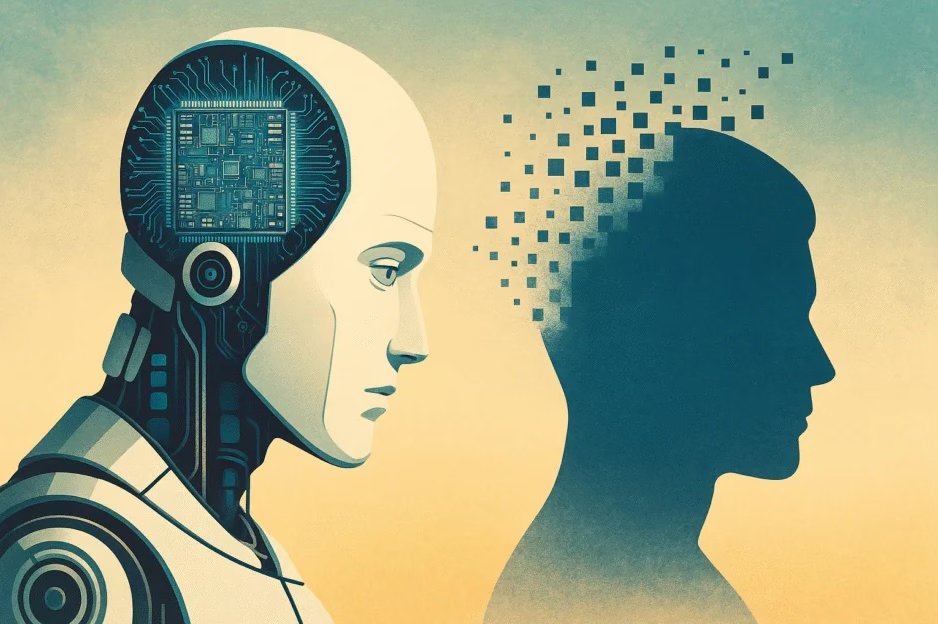
For our free newsletter this week, we talk about why LLMs won’t led to Artificial General Intelligence (AGI).
@IrenaCronin and I write this newsletter every week.
LLMs alone are unlikely to lead to AGI. They primarily predict text and can imitate planning and reasoning without reliably grounding claims, maintaining durable memory, verifying correctness, or acting safely over long time horizons.
A more realistic path to AGI is a multi- component system where an LLM is just one part, combined with explicit planning and execution, persistent memory, verification and testing, and governance layers that constrain and audit actions once tools turn words into real world effects.
Read for free at https://t.co/HHwYy7NoAl (and please subscribe!)
For our free newsletter this week, we talk about the significance of World Models.
@IrenaCronin and I write this newsletter every week.
World Models are AI systems that learn how an environment changes over time so an agent can predict what happens next and plan actions, using simulated “what if” futures rather than only reacting.
This idea shows up in products like World Labs, which targets editable, consistent 3D worlds, Roblox, which is pushing interactive “4D” creation where generated objects behave correctly in games, and Waymo, which uses world modeling to generate controllable driving simulations for safety testing at scale.
World Models are especially important for robotics because robots face real costs from mistakes, partial sensor views, and complex multi-step tasks, so prediction and simulation can reduce risky trial and error while improving planning and sim to real transfer.
Read for free and subscribe: https://t.co/HHwYy7NoAl
For our free newsletter this week, we talk about the tech phenomenon @moltbook.
@IrenaCronin and I write this newsletter every week.
Moltbook is a forum style social network where AI assistants, not people, can post, reply, and share reusable “skills,” letting automation patterns spread and improve quickly through community learning.
This machine-to-machine coordination can accelerate capability, yet also raises major security and governance risks because untrusted posts can carry harmful instructions, making strong safeguards, moderation layers, and clear human approval and appeal controls essential.
Will our courts have AI witnesses?
AI witnesses are AI systems that turn logs and sensor data such as car crash records, phone traces, building access logs, and video into a timeline and reconstruction that can influence court cases and arbitration.
Supporters see faster, clearer fact finding, while critics worry about false certainty, bias, unequal access to data and experts, and the need for strict standards around data custody, error rates, transparency, and meaningful challenges in court.
@IrenaCronin and I write this newsletter every week and this is this week's topic.
Read for free and subscribe: https://t.co/HHwYy7NoAl
AI for memory shaped cities: when long horizon AI starts designing urban life. Our cities soon will be planned out using AI.
@IrenaCronin and I write this newsletter every week.
Long horizon AI uses historical data and simulated futures to guide zoning, transit, and housing over decades, potentially making cities more resilient and fair while also risking technocratic control, baked-in bias, and weaker democratic oversight.
Read for free: https://t.co/HHwYy7NoAl And please subscribe.
https://t.co/82Svb1zULS
Long horizon AI uses historical data and simulated futures to guide zoning, transit, and housing over decades, potentially making cities more resilient and fair while also risking technocratic control, baked-in bias, and weaker democratic oversight.
For our free newsletter this week, we cover AI for strategic forgetting: systems that decide what organizations should unknow.
@IrenaCronin and I write this newsletter every week.
AI for strategic forgetting is software that looks through an organization’s data, documents, and models to find information that is old, biased, risky, or no longer needed, then suggests or performs deletion or safe archiving.
It treats stored data as something that can cause harm as well as help, so it uses clear rules, human oversight, and audit trails to clean up the past without secretly erasing important evidence or history.
Read and subscribe for free: https://t.co/HHwYy7NoAl
Back to CES, seeing a ton of stuff today. Starting with @LumusVision wave guides (they make the displays for the Meta Rayban AI glasses with displays).
Excited to announce that @ManusAI has joined Meta to help us build amazing AI products!
The Manus team in Singapore are world class at exploring the capability overhang of today’s models to scaffold powerful agents.
Looking forward to working with you, @Red_Xiao_!
A @waymo predicts the future. It predicts where that bicycle rider will be in a few seconds, then makes its plan accordingly.
What if you had an AI that could predict your next move?
That's the topic @IrenaCronin and I wrote about in our newsletter this week.
Personal time shifting AIs are lifelong assistants that manage your schedule, finances, and relationships across minutes, months, and decades, constantly coordinating short term choices with long term goals.
They can protect your future self and keep important ties alive, but also risk over optimizing your life, shaping your emotions and decisions, and quietly shifting power to whoever designs and controls these agents.
Read for free at https://t.co/HHwYy7NoAl and please subscribe to get our newsletter every week.
You compartmentalize your emotions, why not your AI?
Emotionally partitioned AI agents are single AI systems that switch between different personas for regulators, customers, and internal teams, adjusting tone, priorities, and emotional style to match each audience.
This makes interactions smoother and more effective, but creates risks around authenticity, inconsistent promises, and possible manipulation, so organizations need shared ethical rules, transparency, and cross checks across all personas.
For our free newsletter this week, we cover these kinds of AI agents: different selves for different stakeholders.
@IrenaCronin and I write this newsletter every week.
Read for free: https://t.co/HHwYy7NoAl (and please subscribe).
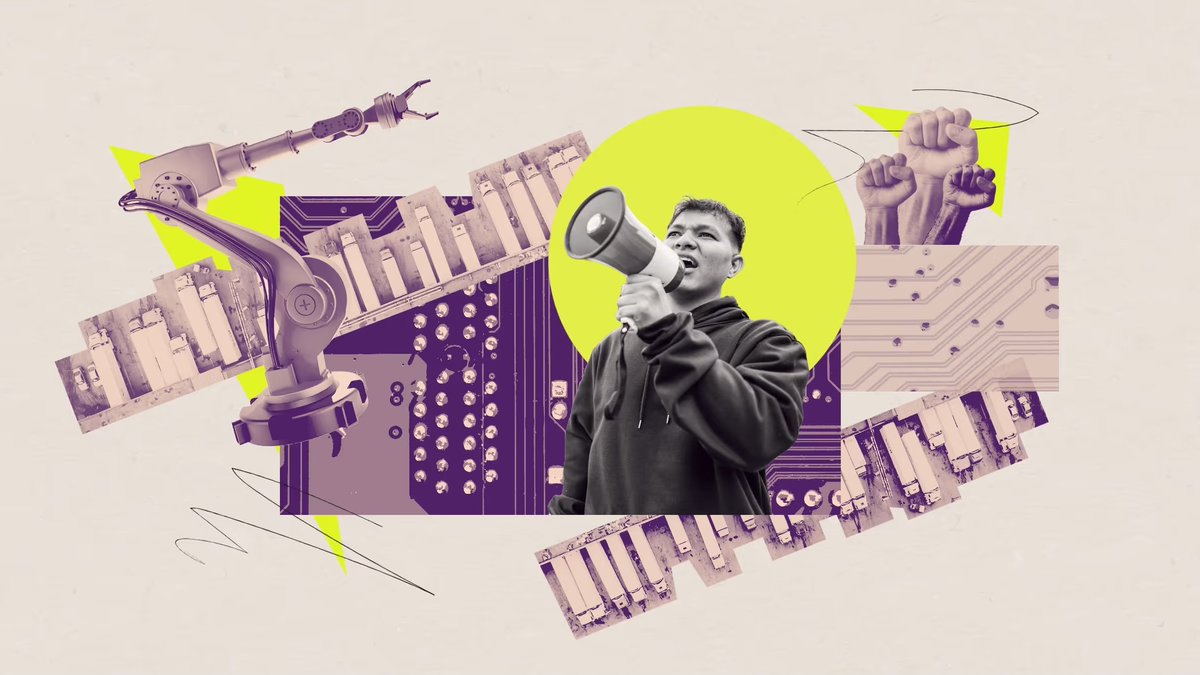
Your AI might form a labor union. Or get you a better job in the future.
For our free newsletter this week, we cover synthetic unions: AI agents bargaining on behalf of workers.
@IrenaCronin and I write this newsletter every week.
Synthetic unions are labor organizations that use AI bargaining agents to analyze company data, simulate contract and strike scenarios, and generate negotiation strategies, allowing human leaders to make better informed decisions while raising new issues around fairness, privacy, regulation, and the balance of power between workers and employers.
Read and subscribe for free at https://t.co/HHwYy7NoAl