New from @_InThisTogether at Unlimited Hangout
In Part 3 of his series on the Silicon Valley-adjacent "Praxian" oligarchs, Iain Davis delves into how global forces have aligned behind the Praxian vision of a Network State Empire in the march toward a Multipolar World Order that both the ostensibly "anti-globalist" Praxians and the overtly "globalist" UN and its allies are working to accelerate.
https://t.co/hC5v9vNlgy
This is a Trojan horse that will eliminate privacy on the internet.
Why not make devices just for kids if you want to protect them? Why KYC every single person on the internet?
Because this is about control, not children.
Proton CEO Andy Yen warns that mandatory online age verification could mean the death of anonymity online.
He criticizes systems that force users to upload government IDs, passports, facial scans, or biometrics.
These rules, Yen argues, would turn the internet into an ID checkpoint, they create massive databases vulnerable to breaches and enable government surveillance, censorship, and the erosion of free speech.
Instead, he calls for privacy-first solutions: on-device age checks that verify without storing data, plus stronger parental controls at the device level.
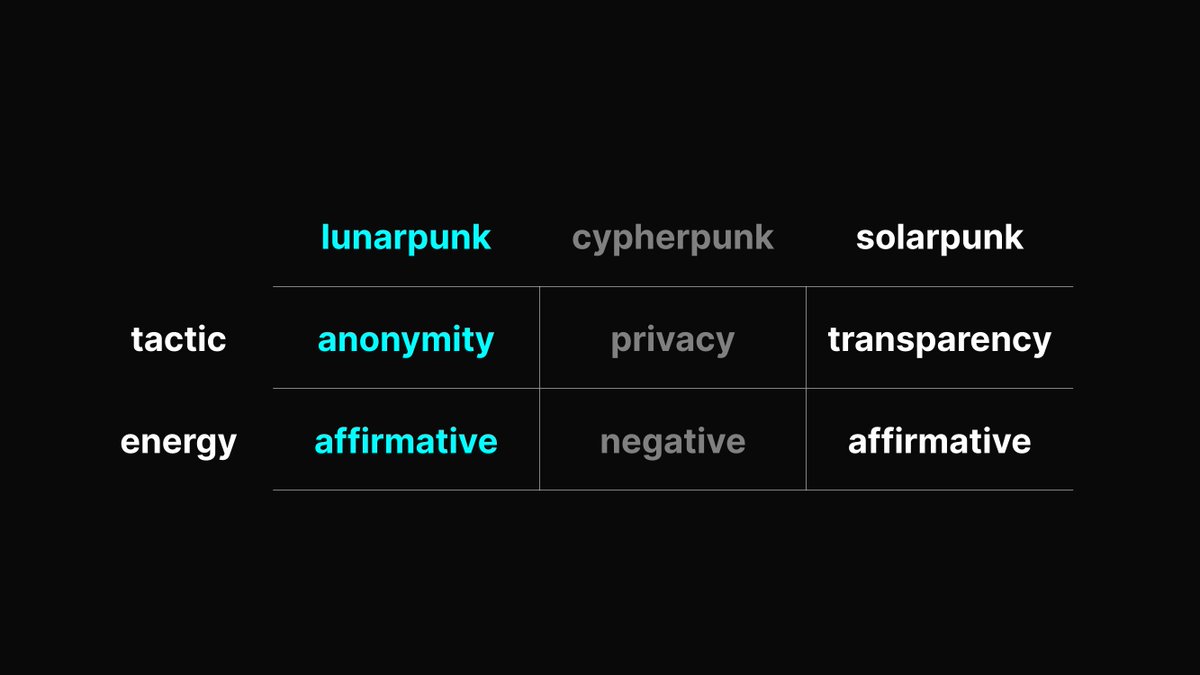
Neo-cypherpunk is lunarpunk.
For years I’ve been arguing for a reframing of cypherpunk along these lines:
From individuals to squads,
From anti-state to non-state,
From dystopian privacy to generative anonymity.
The original promise of crypto was pure. But it was co-opted by the system and by centrists who wanted to use crypto to perfect existing financial institutions.
Crypto generated an image of itself (weak, apologetic and defanged) that destroyed it from the inside.
The question I had was: is there something in crypto's memetic heritage that created this trap?
Perhaps cypherpunk was too reactive, too individualist. Everything in its aesthetics was focused on negativity and inversion. Perhaps this was limiting its scope and confining crypto to be a mirror image of the system, never truly able to surpass it.
We needed a new memetic landscape that was active rather than reactive. Oriented toward real revolution and guided by a utopian vision of what anonymity could do. We chose anonymity rather than privacy as our defining term since privacy felt too wrapped up in the old defensive paradigm. Privacy is sad and closed off. Anonymity is active, aggressive, vitalist.
We spoke of squads rather than individuals, not because we're collectivists but because we had a big, wide, expansive vision that required many people to work together toward massive change.
DarkFi calls this new paradigm "lunarpunk." The web3privacy crowd calls it "neo-cypherpunk." The aesthetics differ quite a lot. It doesn't really matter.
What matters is it feels that crypto has become trapped in a relentless discussion of terminology. I'm bored of discussing lunarpunk, solarpunk, cyberpunk, cypherpunk, and neo-cypherpunk.
This no longer feels like a healthy, energetic retvrn to the original values of crypto. Rather it feels more like a paranoid preoccupation with crypto's self-image.
Nick Land says: "An animal attending to the operation of its own organs is sick." Action happens on the outside. When it turns inward, it becomes pathological. Crypto's relentless self-questioning has started to feel like a disease.
I'm more interested in facing outward to the world and to the future. Escaping from the repetition of old symbols and self-referential purity spirals. I love cypherpunk and crypto-anarchy. But why are we still stuck in visions from the 90s? It's time to leave the old symbols behind and create something new.
We are in a fundamentally new paradigm. Everything has changed. No new terms can keep up with this relentless forward march. Nor should they.
Code is a cybernetic intensity capable of reorienting the world in ways we cannot predict. It's more powerful than language. It has a certain magical immanence since it does exactly what it says. That's why I spend most of my time today writing code rather than consciously creating culture. The culture follows us, not the other way around.
Crypto has been been a phenomena for over 17 years. It has made so many beautiful promises. It has delivered on much less. It's time we find out what crypto can actually do.
We haven’t seen anything yet.
A new bipartisan bill was just proposed forcing every operating system: Apple, Google, Microsoft, to verify age before being able to set up or use a device.
Not just for kids. For everyone.
Today it’s age verification.
Tomorrow it’s a Digital ID.
Reject it before it starts.
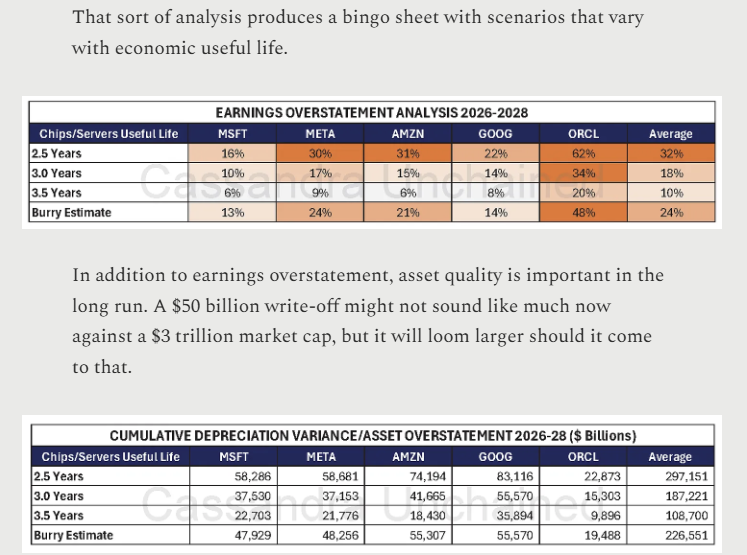
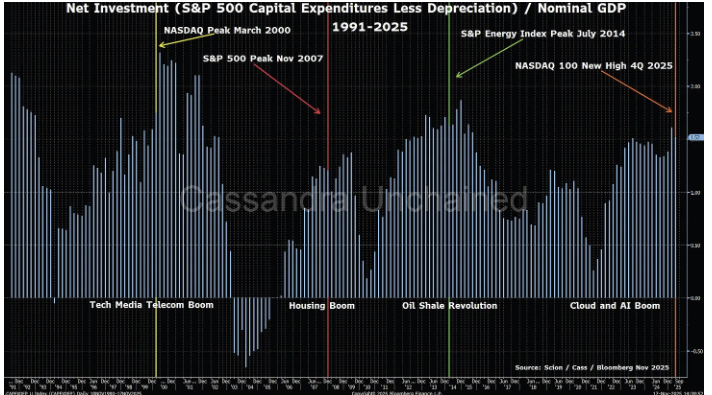
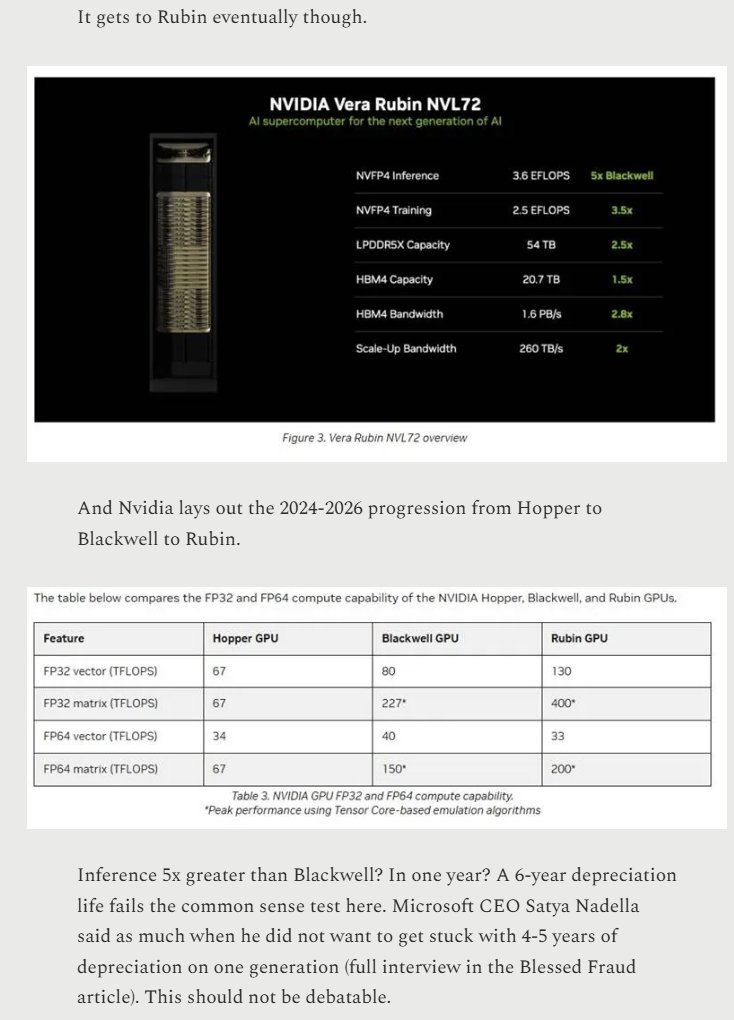
A question I have for $ORCL, $GOOG, $META, $MSFT, $AMZN, $NVDA, $CAT, and all the rest, “When does the spending for AI data center buildout actually end?”
It is consuming all your cash flow, you are borrowing, you are financing in ways you never have, apparently because it is so urgent, because it scales?
But if it scales, when does it end?
Now you are engaging in accounting tricks to hide expense, to protect earnings, as the impact is so severe. You will be tortuously adjusting your earnings in a new and sinister ways.
When does it end?
@PhilKonieczny@OstatniePokolen Ostatnie pokolenie nie ogarnia manipulacji socjotechniki długość smyczy. Są jak lemingi na samobóju za centy global narracji...