Telehealth has already changed what’s possible for millions of Americans by breaking down barriers of distance, cost, and time that once stood between patients and their care teams.
Now AI is becoming part of that picture. Used responsibly, it can continue to expand access to health services and help patients get the right care at the right time. AI must strengthen the patient-provider relationship, not replace it.
Telehealth and AI should work for patients, not around them.
Learn more at https://t.co/nd5HqjS8s7
When the government decides what health information Americans can see, patients lose the power to ask questions and advocate for themselves.
Opaque rules don’t just limit speech; they limit what patients can do for their own care.
Learn more at https://t.co/XOorpVZeHS
Most food packaging today is designed to highlight health claims on the front while burying complex ingredient lists on the back. That means patients managing chronic conditions can’t make the most informed choices their health depends on.
Patients rely on clear food labels to know what they’re really putting into their body.
Learn more at https://t.co/nd5HqjS8s7
Patients can’t make informed decisions about their care without the full picture.
When health information is restricted or hard to find, patients cannot fully participate in their own care.
This Health Literacy Month, we’re advocating for the transparency that empowers patients to be informed patients.
Learn more at https://t.co/nd5HqjS8s7
HHS @SecKennedy and the @FDA have the right instinct: patients deserve transparency.
The agency’s new Transparency Roadmap promises greater openness into how decisions get made. But transparency only works if it comes with balance. Patients don’t just want more information – they want truthful, fair information that helps them make real decisions about their care.
Learn more at https://t.co/75XMbGYpBl
Breast cancer affects millions of American families – patients, survivors, caregivers, and loved ones who show up every day through this journey.
Every patient deserves access to clear, reliable health information about their diagnosis, options, and treatments available to them.
This Breast Cancer Awareness Month, we’re honoring every patient and survivor.
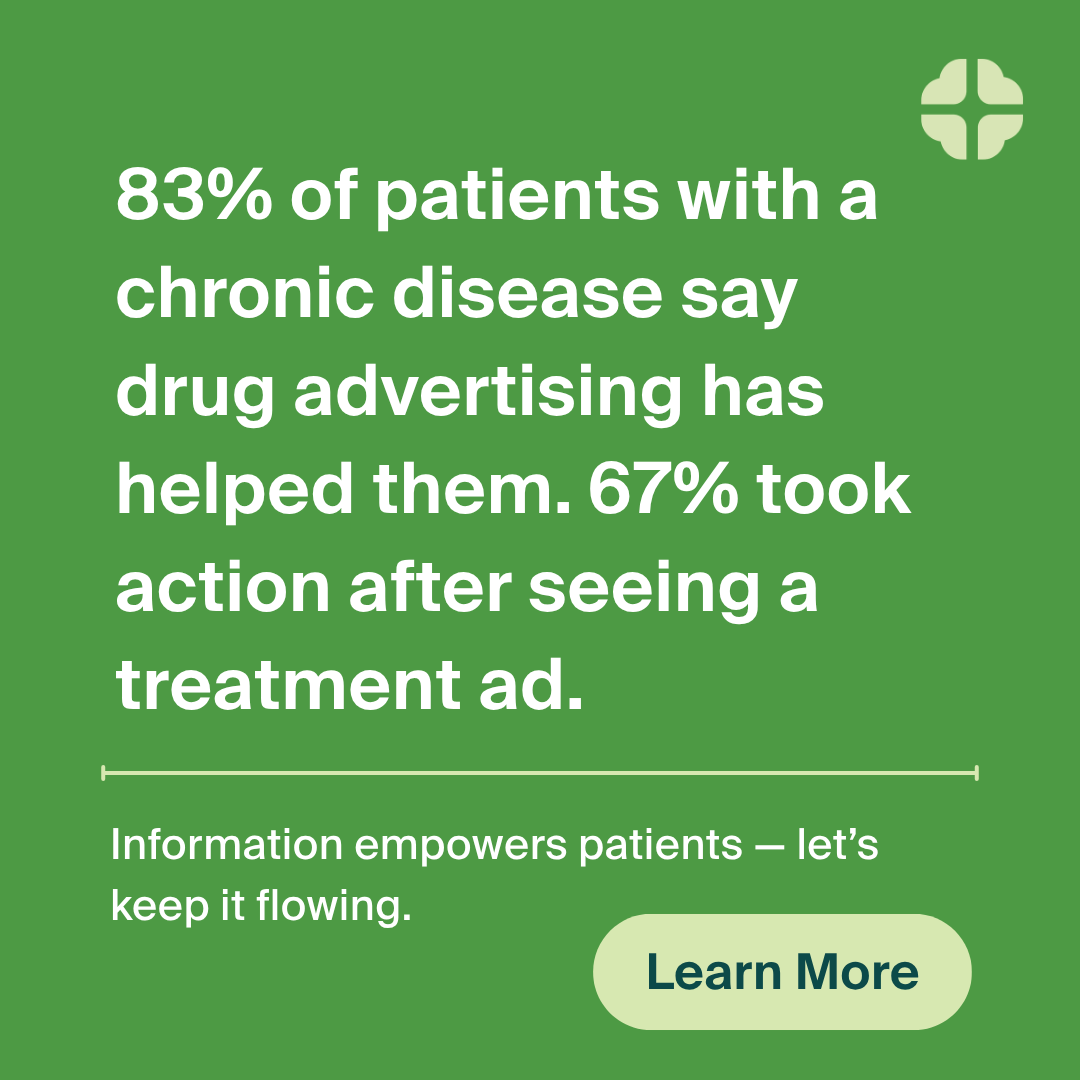
83% of patients with a chronic disease say drug advertising has helped them. 67% took action after seeing a treatment ad. Information empowers patients — let’s keep it flowing.
Read more at https://t.co/b3EfO6Tc2D
Transparency isn't abstract — it's how patients understand their treatment options and make informed health decisions. The @FDA's new Transparency Roadmap is a good start, but balance matters.
Read more at https://t.co/b3EfO6Tc2D
Every American deserves to live a healthy lifestyle. This starts with having access to the information they need to make smart choices about the food they eat, medicines they take, and science that guides their care.
A healthcare system where transparency is standard and patients are active participants in their own health is the baseline Americans deserve.
Learn more at https://t.co/nd5HqjS8s7
Jeanette was diagnosed with multiple sclerosis at ten years old.
Years later, drug ads on TV introduced her to treatments she hadn’t heard of. She did her own research, brought questions to her doctor, and made the most of every appointment.
Drug ads open up dialogue between patients and their providers. Don’t take that away.
Watch Jeanette’s full story at https://t.co/Kw7ZjHe3cC
Drug ads help patients learn about treatment options and start important conversations with their doctors.
A proposed rule could make the information patients rely on harder to understand.
Patients deserve clear drug ads they can actually learn from.
Learn more at https://t.co/nd5HqjS8s7
When your health is on the line, you want to use every resource available.
Lovette engaged at every touchpoint she could to stay informed and find a path to health care that changed her life. That included drug ads.
Informed patients are healthier patients.
Hear more patient stories like Lovette's at https://t.co/yPLmpvJ4js
Patients navigating a chronic disease can learn about new treatments through drug ads.
Jeanette was able to start new conversations with her doctor because of what she learned from a drug ad.
Access to health information should be protected and preserved, not scaled back.
Hear Jeanette’s story at https://t.co/Kw7ZjHe3cC
For patients in rural communities waiting weeks for an appointment, a drug ad might be the first time they learn a treatment exists.
A proposed rule would threaten that, making health information even harder to access. Patients deserve more information, not less.
Learn more at https://t.co/nd5HqjS8s7
Today’s #MAHASummit includes a panel on modernizing the FDA, with Acting Commissioner Kyle Diamantas.
It's a real opportunity. Modernization can mean faster answers for patients, clearer labeling, and rules that transform how care actually gets delivered – if patients stay at the center of the conversation.
We'll be listening for the patient in the room.
Learn more at the link below. https://t.co/nd5HqjSGhF
MAHA has raised real questions about who has stake in your health care – questions a lot of patients share.
That's part of why today’s #MAHASummit is worth a closer look. Its sponsors include health insurers, AI companies, and one of the country's largest retail pharmacy chains. None of that erases the movement's goals.
But a movement for patients is strongest when it puts patients first.
Learn more at the link below. https://t.co/nd5HqjS8s7
- Protecting the free flow of health information.
- Protecting American families from hidden dangers in our food.
- Empowering patients with the right to try.
- Modernizing virtual care with patients at the center.
- Protecting free expression in the digital town square.
Each of these helps patients make informed decisions about their own care, and none of them should get lost in the conversation about putting patients first.
Learn more at the link below. https://t.co/nd5HqjSGhF
Having kids can change how you think about your health.
Lovette couldn’t spend time with her daughter the way she wanted. That motivated her to seek out information, ask better questions, and find a treatment that changed her health.
Being an empowered patient means being part of the decision and the outcome. That starts with access to health information.
Watch her story and more at https://t.co/yPLmpvJ4js
For years, Dominique's doctors had no answers — until a drug ad sparked a conversation that changed her care.
The more patients know about their options, the better equipped they are to advocate for themselves.
Hear Dominique’s and other patient stories at https://t.co/ywVEJDPVKZ