Sound isn’t just something we listen to.
In this clip, "Ascension Harmonics" author Jonathan Goldman explores two dimensions of our experience of sound: psychoacoustics and vibroacoustics, what we hear and the vibrations we feel. It’s an invitation to consider our relationship with sound beyond our ears.
Curious about the role of sound in spiritual practice? Explore "Ascension Harmonics" and watch the full conversation.
📖 Explore the book: https://t.co/vVtMazqlk9
🎧 Watch the interview: https://t.co/F3TUyU0qVA
When an urge feels overwhelming, simply trying to suppress it may not be enough.
In this clip, Robert Weisz, PhD, discusses how addictive behaviors can be fueled by emotional energies and physical sensations in the body. By pausing to notice the underlying felt sense—rather than only battling the behavior—we may begin to relate to the urge in a new way.
▶️ Watch the full interview to hear how somatic awareness can support a more compassionate, body-based approach to understanding addiction: https://t.co/hBphohzbCm
📘 Get your copy of "Mindfulness-Based Somatic Emotional Processing" by Robert Weisz, PhD, and Daniel Blackwood, MA, to explore practices for working with emotions through the body: https://t.co/I71QmTXpQb
#MindfulnessBasedSomaticEmotionalProcessing #SomaticAwareness #AddictionRecovery #RecoverySupport #MindfulnessPractice #EmotionalHealing #BodyMindConnection #SomaticHealing #MentalHealthAwareness #HealingJourney #MindfulLiving #HealingArtsPress #InnerTraditions
Most of us learned the history of this continent from the outside in. Native American Heritage Month is a good time to reverse that and listen to Indigenous people tell it themselves.
Start with the long view. In "Rediscovering Turtle Island," Taylor Keen, a citizen of the Cherokee Nation and member of the Omaha Tribe, draws on oral tradition, creation stories, and history to describe North America as its First Peoples remember it. That includes Cahokia, a Mississippian city that flourished from roughly 1050 to 1300 CE, and a frank Indigenous rereading of Manifest Destiny.
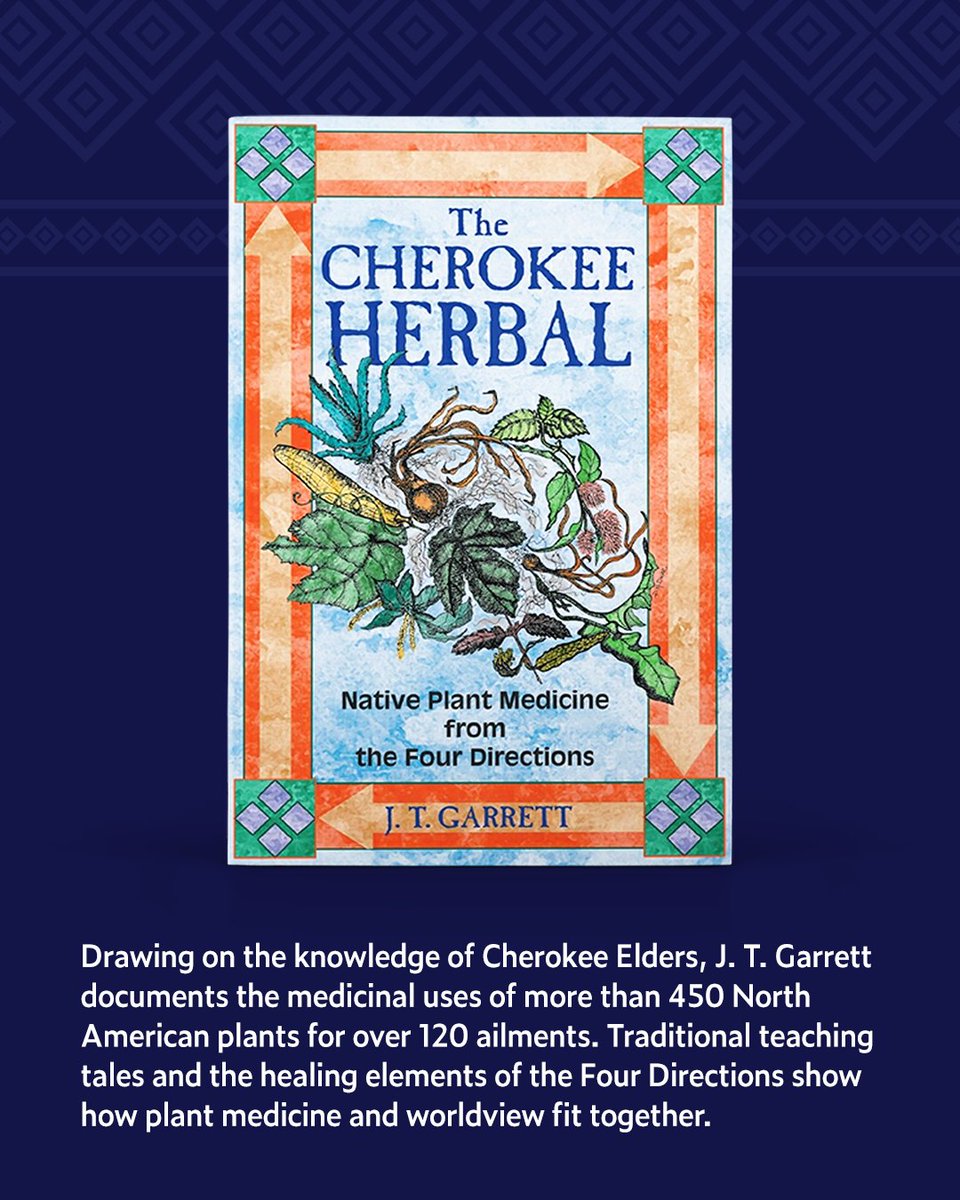
Next, go to the teachings themselves. J. T. Garrett and his son Michael Tlanusta Garrett, both of the Eastern Band of Cherokee, learned from medicine elders in the Great Smoky Mountains. "Medicine of the Cherokee" explains the idea of right relationship, with each other, with the land, and with the Four Directions. "The Cherokee Herbal" shows that philosophy in practice, documenting more than 450 plants and how they were used for healing. And in "Walking on the Wind," Michael Garrett shares the stories his great-grandfather passed down, each one a lesson in balance.
Finally, widen the circle. Original Instructions, edited by Melissa K. Nelson of the Turtle Mountain Band of Chippewa, brings together more than 20 contemporary Indigenous leaders, including Chief Oren Lyons and Winona LaDuke, on what traditional knowledge offers a world in ecological crisis.
What ties these books together is a way of seeing in which health, story, land, and community are inseparable. These are not artifacts of the past but living traditions with things to teach anyone willing to listen.
Explore more books by Indigenous authors and on Indigenous traditions at https://t.co/rrtU5Hw1Mn, and sign up for our loyalty program for special benefits.
Where do you begin with a tradition that spans alchemy, astrology, meditation, and more? David Pantano’s advice: stay curious. Read widely, explore different sources, and notice what resonates with where you are now. In this conversation with Miguel Conner, he shares a starting point: the Emerald Tablet and its teaching, “What is above is like what is below.”
📚 Explore more in Pantano’s "The Hermetic Book of the Dead," and discover another path into spiritual transformation with Conner's "The Occult David Bowie." Watch their full conversation on Aeon Byte Gnostic Radio.
📖 Explore "The Hermetic Book of the Dead": https://t.co/7iRm5k6fZY
📖 Explore "The Occult David Bowie": https://t.co/9pdTX78Btz
🎙️ Watch the interview: https://t.co/ZUjYkJR5Is
Jonathan Goldman, author of "Ascension Harmonics," explores how bringing kindness, compassion, and intention to our everyday conversations can change the way we connect. Speaking kindly, and truly listening, offers a simple place to begin.
Discover more in "Ascension Harmonics," and watch the full interview for a deeper exploration of sound, intention, and connection.
📖 Explore the book: https://t.co/vVtMazqlk9
🎧 Watch the interview: https://t.co/F3TUyU0qVA
On Brainforest Café, Jonathan Dickinson joins Dennis McKenna to explore the unusual inner dialogue people describe during ibogaine experiences, images, voices, or figures that can feel both unfamiliar and deeply connected to the self.
Explore these questions further in Dickinson’s book, "Ibogaine and the Bicameral Mind," and watch the full interview for more on ibogaine, consciousness, and the nature of these experiences.
📖 Explore the book: https://t.co/86m5WDakmO
🎙️ Watch the interview: https://t.co/vX82tMydAU
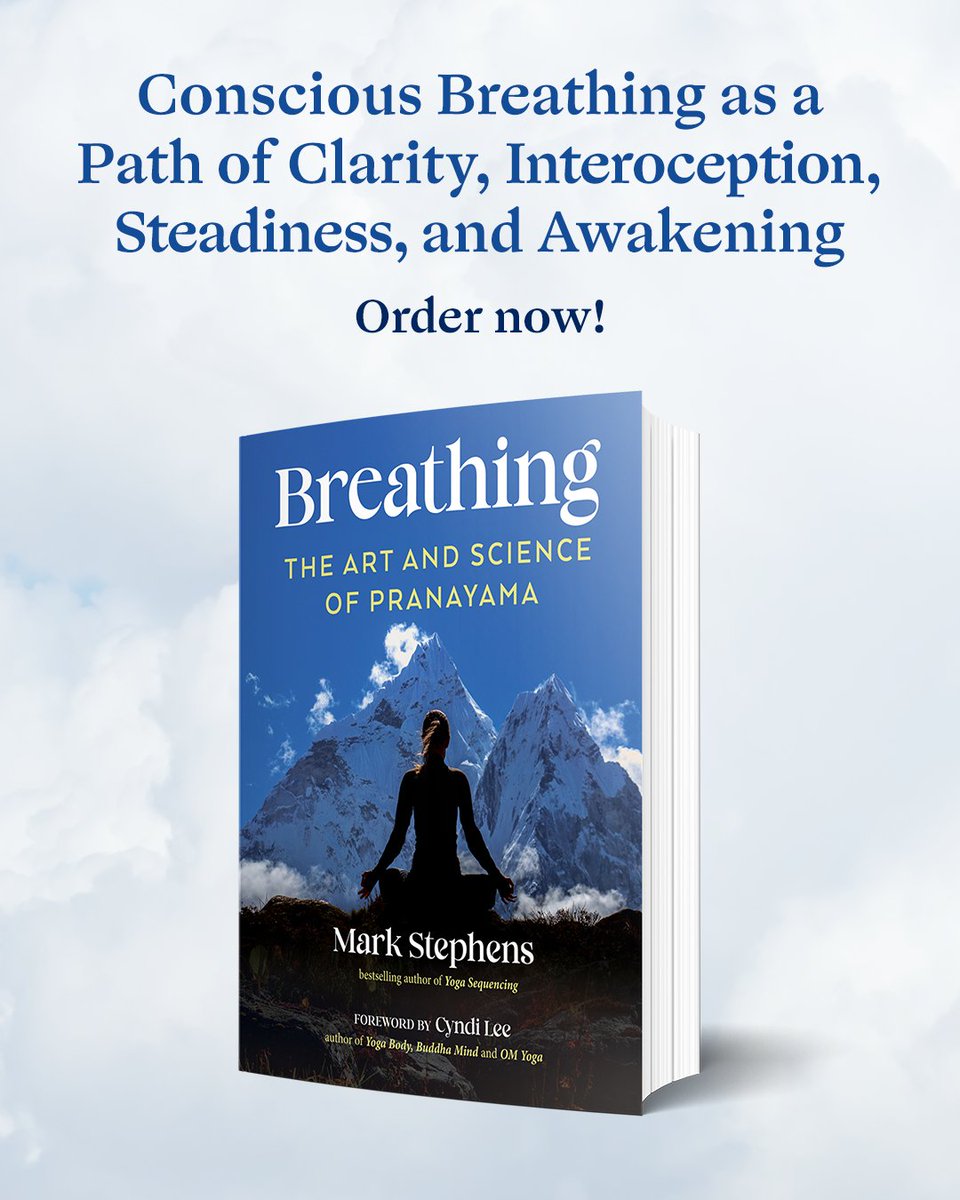
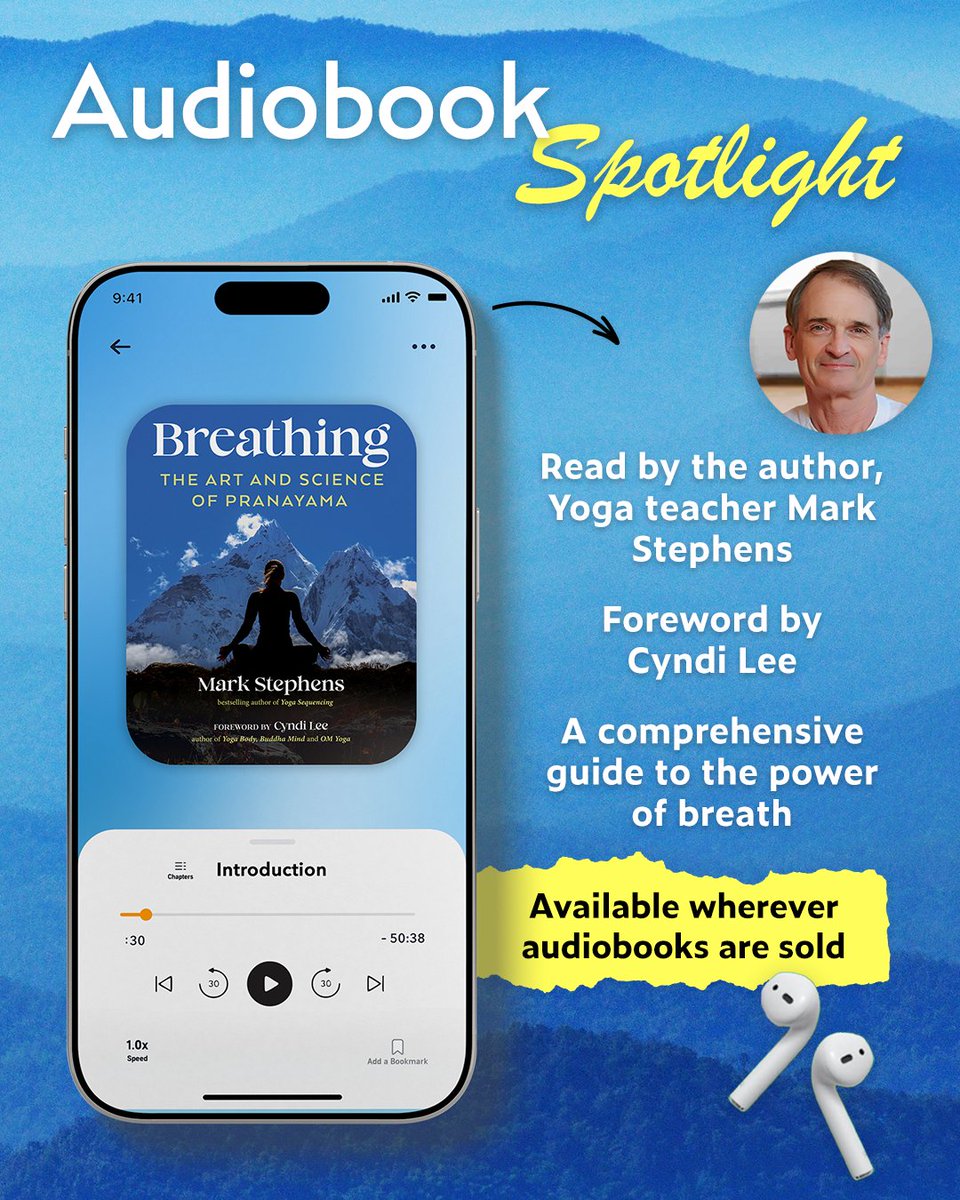
Every breath is a doorway. In "Breathing: The Art and Science of Pranayama," yoga teacher Mark Stephens guides you through the ancient yogic practice of conscious breathing, now read in his own voice.
Bringing together classical teachings and modern anatomy and neuroscience, this comprehensive guide traces pranayama from its shamanic and Vedic roots to contemporary yoga and breathwork. Inside, you'll find:
• More than 25 pranayama techniques, from foundational to advanced
• Preparatory asanas, bandhas, and cleansing practices
• How conscious breathing supports emotional balance, mental clarity, meditation, and spiritual insight
• Breath practices for every stage of life
Available wherever audiobooks are sold.
Explore more now: https://t.co/5rJ37pMsfH
#Pranayama #Breathwork #YogaBooks #Audiobook #YogaTeacher #Breathing #ConsciousBreathing #Meditation #YogaPhilosophy #NewRelease #InnerTraditions
What happens when, instead of fighting an emotion, you meet it with awareness?
In this interview clip, Robert Weisz, PhD, explores how emotions can be experienced as vital energies in the body, and how approaching them with curiosity, openness, and compassion may help us process what we’ve been carrying.
▶️ Watch the full interview to learn why somatic awareness can be an important part of emotional processing: https://t.co/hBphohzbCm
📘 Learn more about "Mindfulness-Based Somatic Emotional Processing" by Robert Weisz, PhD, and Daniel Blackwood, MA—available now from Inner Traditions. https://t.co/I71QmTXpQb
#MindfulnessBasedSomaticEmotionalProcessing #SomaticAwareness #SomaticHealing #EmotionalProcessing #MindfulnessPractice #EmotionalWellbeing #TraumaHealing #BodyMindConnection #MentalHealthAwareness #HealingJourney #MindfulLiving #HealingArtsPress #InnerTraditions
The Kama Sutra does not treat recreation as time free of discipline. Its account of the cultivated citizen's life describes gatherings, festivals, and amusements governed by the same care given to business and study, so that leisure becomes another arena for practiced conduct.
The text describes garden parties held among friends, drinking gatherings conducted with attention to company and moderation, and seasonal festivals marked by music, flowers, and shared recitation. Even water sports and outings to view a spring bloom appear with expectations attached: whom to invite, how to behave, what conversation belongs to the occasion. Pleasure taken carelessly, the text implies, is pleasure taken poorly.
This attention to leisure completes the portrait the text builds of its ideal reader. A life ordered enough to sustain real enjoyment requires more than restraint at work; it requires the same discernment applied to rest. Company chosen with care, occasions marked with appropriate custom, become training for the deeper discernment the text later asks of desire between two people.
This week, choose one occasion of leisure, a gathering, a meal with friends, a quiet outing, and give it the same attention you would give a duty. Notice whether the pleasure changes when approached with care rather than left to chance.
"The Complete Illustrated Kama Sutra," researched and archived by Lance Dane across five decades in India, gathers this teaching with 269 illustrations drawn from museums and collections worldwide. Written for readers curious to see a text on desire begin instead with an argument for a well-rounded, cultivated life. Available from Inner Traditions and wherever books are sold.
Arthur Versluis explores how alchemical traditions, sacred imagery, and perennial wisdom can help us move beyond the illusion of endless material progress, and toward personal transformation, spiritual awakening, and a renewed connection with the Earth. "Alchemical Lightwork" offers a visionary path for finding and cultivating seeds of light in a challenging age.
✨ Watch the full interview on Youtube to explore the transformative possibilities of spiritual alchemy: https://t.co/1IJcPaJSsD
📚 Discover "Alchemical Lightwork: A Guide to Creating Cultures of Light and Spiritual Awakening," available now from Inner Traditions: https://t.co/pV8838ti6T
#AlchemicalLightwork #ArthurVersluis #SpiritualAlchemy #Lightwork #SpiritualAwakening #PerennialWisdom #WesternMysticism #EsotericWisdom #Alchemy #Consciousness #InnerTraditions
When people engage in rhythmic and collective activities, such as singing in a choir, collaborating on a project, or sharing a deep conversation, they often report a profound feeling of being part of something larger. For decades, psychology treated this feeling as a mere emotional illusion, studying the human mind as an isolated and self-contained unit.
Today, social neuroscience is proving that this collective feeling is a measurable biological reality. Using a technology called hyperscanning, researchers can simultaneously record the electrical brain activity of multiple people engaged in a shared task. The data reveals a phenomenon called inter-brain synchronization. When individuals interact, their brain rhythms, specifically in the alpha, beta, and gamma frequency bands, literally align. The boundaries of the individual self become neurologically blurred, creating a temporary and collective network known as a hyperbrain.
This synchronization is not just a symptom of shared activity; it actually drives it. In Stranger and Stranger, neuroscientist Richard Silberstein, PhD, examines the profound implications of this collective neural state. He highlights research showing that the degree of brain synchrony between a teacher and a student directly predicts how well the student learns. In teamwork, high synchrony correlates with success. However, if one member internally decides to stop cooperating, the neural synchronization drops significantly before they even take an overt physical action.
Silberstein explores how this phenomenon points toward a broader and interconnected reality. By detailing advanced research, including causal experiments with transcranial electrical stimulation and his own laboratory studies on sensorily isolated identical twins, he demonstrates that human connection operates at a fundamental level.
The science of the hyperbrain shows that the boundaries of the self are physically mutable. Under the right conditions, individual consciousness merges into a self-organizing collective entity.
Read "Stranger and Stranger" by Richard Silberstein, PhD. It is available now from Inner Traditions and wherever books are sold.
https://t.co/uIn0nM9RqY
Your breathing already has a rhythm. The inhale has a duration, the exhale has a duration, and there are brief transitions when the breath is full or empty. Vritti pranayama begins by bringing these patterns into awareness.
The Sanskrit word vritti refers to fluctuation. In this practice, the fluctuations are the changing lengths and qualities of inhalation and exhalation. A simple place to begin is sama vritti, equal fluctuation. You might breathe in for three quiet counts and breathe out for three. The point is to feel the two phases becoming alike in pace, duration, sound, and texture. If counting makes the breath rough, hurried, or effortful, return to a more natural rhythm.
Once that even pattern feels steady, visama vritti, unequal fluctuation, gives you a way to explore change. Lengthening the inhale by one count can cultivate breath expansion and a more alert, focused quality. Lengthening the exhale by one count can bring a quieter, more settling effect. These are gradual explorations. The breath should remain smooth, and the ribs, diaphragm, throat, and shoulders should stay as relaxed as possible.
Notice what happens at the edges of each cycle. After a longer exhale, does the next inhale rush in? When the inhale expands, do you feel gripping in the neck or chest? Such details are useful feedback. Reduce the count whenever there is strain, dizziness, breathlessness, or agitation. A comfortable rhythm gives the bodymind more to learn from than an ambitious one.
In "Breathing: The Art and Science of Pranayama," Mark Stephens presents vritti pranayama as a foundational way to refine breathing capacity, awareness, and balance. He recommends beginning with equal breathing, making small changes, and returning to an even rhythm to sense the effects.
Breath ratios offer a practical way to listen more carefully. They make the timing of breathing visible, helping you recognize when a little more length supports steadiness and when ease asks you to do less.
Read "Breathing: The Art and Science of Pranayama" by Mark Stephens—available now from Inner Traditions and wherever books are sold.
Before ink entered the pages of a grimoire, it belonged to a far older history of pigment, surface, and mark. The earliest traces of works made with ink, or substances similar to it, have been found in caves. Some vestiges date to the Neanderthal era, approximately 50,000 years ago. Their black and ochre colors can be understood as foundations for the later history of ink.
Ancient cultures developed inks from plants, minerals, and animal products. Egyptian scribes used charcoal and pigments of plant and mineral origin to create texts on papyri. The material record of writing was already bound to the particular properties of pigment and surface.
India and China also developed their own ink traditions. During the reign of Huangdi in 2697 BC, the manuscript describes a lacquer-like ink applied to silk with bamboo in China. It was later replaced by the ink stick, a black stone dipped in water and rubbed before use. Traditional Chinese or Indian ink used black carbon pigment with fluid binding agents such as protein, skin, or fish glue. Plant-based glues later contributed to inks valued for their indelible quality.
Ink may be liquid or paste. Its modern composition generally includes water, resin, pigments or dyes, and solvents. Its application also depends on the surface and the instrument: paper, ceramics, skin, pen, brush, needle, or finger.
The grimoire enters this long material lineage as a written repository for prayers, spells, invocations, symbols, sigils, and seals. Its pages preserve a record made possible by the same enduring human impulse that shaped cave pigment, papyrus writing, and the ink stick: to set a mark upon a surface and allow it to remain.
Follow the history of ink into magical writing, ritual practice, and the creation of a personal grimoire. Read "Grimoire of Magical Inks: Recipes for Hexes, Hoodoo, and High Magic" by Noémie Myara, available now from Inner Traditions and wherever books are sold.
https://t.co/AjQlg7VHgS
The “white crow” argument is a simple way to understand why exceptions matter. If someone claims that all crows are black, one reliably documented white crow is enough to show that the rule cannot be universally true. The exception does not tell us how many white crows exist, why one is white, or what every other crow looks like. It does show that the original claim needs revision.
William James used this logic to defend the study of anomalies: reports that appear to challenge accepted assumptions about mind, matter, perception, or time. His point was methodological. A researcher does not need to prove that every unusual report is genuine before investigating the strongest cases. The first task is to establish whether even one apparent exception can withstand careful scrutiny.
That standard matters. A striking story, personal conviction, or unusual coincidence does not automatically become a white crow. The case needs documentation, independent checks where possible, reliable dates and records, attention to alternative explanations, and a clear account of what remains uncertain. A claimed exception that fails those tests cannot overturn a general rule.
In "Anomalous Phenomena," Keith Thompson applies the metaphor to what he calls “veridical anecdotal evidence”: reports that are vivid to witnesses and may be supported by sources such as legal records or witness logs. He discusses contested cases involving dreams, unusual lights, and purported communications, while acknowledging explanations such as coincidence, fraud, or telepathy among the living.
The white crow argument does not ask anyone to accept extraordinary claims on demand. It asks a sharper question: if one well-documented exception remains after serious investigation, does the existing rule still explain the full range of evidence?
Read "Anomalous Phenomena" by Keith Thompson—available now from Inner Traditions and wherever books are sold.
https://t.co/SyRDOAK1Xc
Why are we drawn to symbols that unsettle, frighten, or challenge us?
In this clip, author Carl Abrahamsson explores the attraction to figures such as the devil and Loki, and why confronting the “dark side” can be part of rebellion, self-discovery, and the lifelong process of becoming who we truly are. Rather than simply accepting what we are taught, he suggests that we must sometimes embark on our own vision quest to find our path.
▶️ Watch the full interview to hear Abrahamsson unpack the deeper meaning behind our fascination with dark and controversial symbols: https://t.co/nRpGoXww1M
📚 Learn more in "Occulture," Carl Abrahamsson’s exploration of the hidden currents connecting occultism with art, music, film, literature, and popular culture. Get your copy today: https://t.co/mtB1CIoBmj
#Occulture #CarlAbrahamsson #OccultCulture #Esotericism #DarkSymbols #ShadowWork #SelfDiscovery #Individuation #AleisterCrowley #Loki #OccultHistory #InnerTraditions
What is bodhichitta? In Tibetan Buddhism, bodhichitta translates to the “mind of enlightenment.” It is the altruistic combination of impartial love, compassion, and the profound wish to attain enlightenment for the benefit of all sentient beings. According to this tradition, beings wander continuously through the cycle of life because they grasp at an illusory reality, pursuing one mirage after another. Bodhichitta is generated to help all beings relax into intrinsic awareness.
The teachings describe two main aspects of this principle: relative and absolute. Relative bodhichitta is the active wish to achieve liberation in order to help others. This is divided into wishing bodhichitta and actualizing bodhichitta. Wishing bodhichitta involves contemplating four boundless states: love, compassion, joy, and equanimity. It requires feeling this motivation deeply throughout your entire being, what Tibetans describe as feeling it in the mind, heart, and chest. Actualizing bodhichitta occurs when that internal motivation shines outward into daily physical and mental actions. Absolute bodhichitta is the true nature of mind itself. It is the open, vast clarity recognizing that all beings are primordially enlightened.
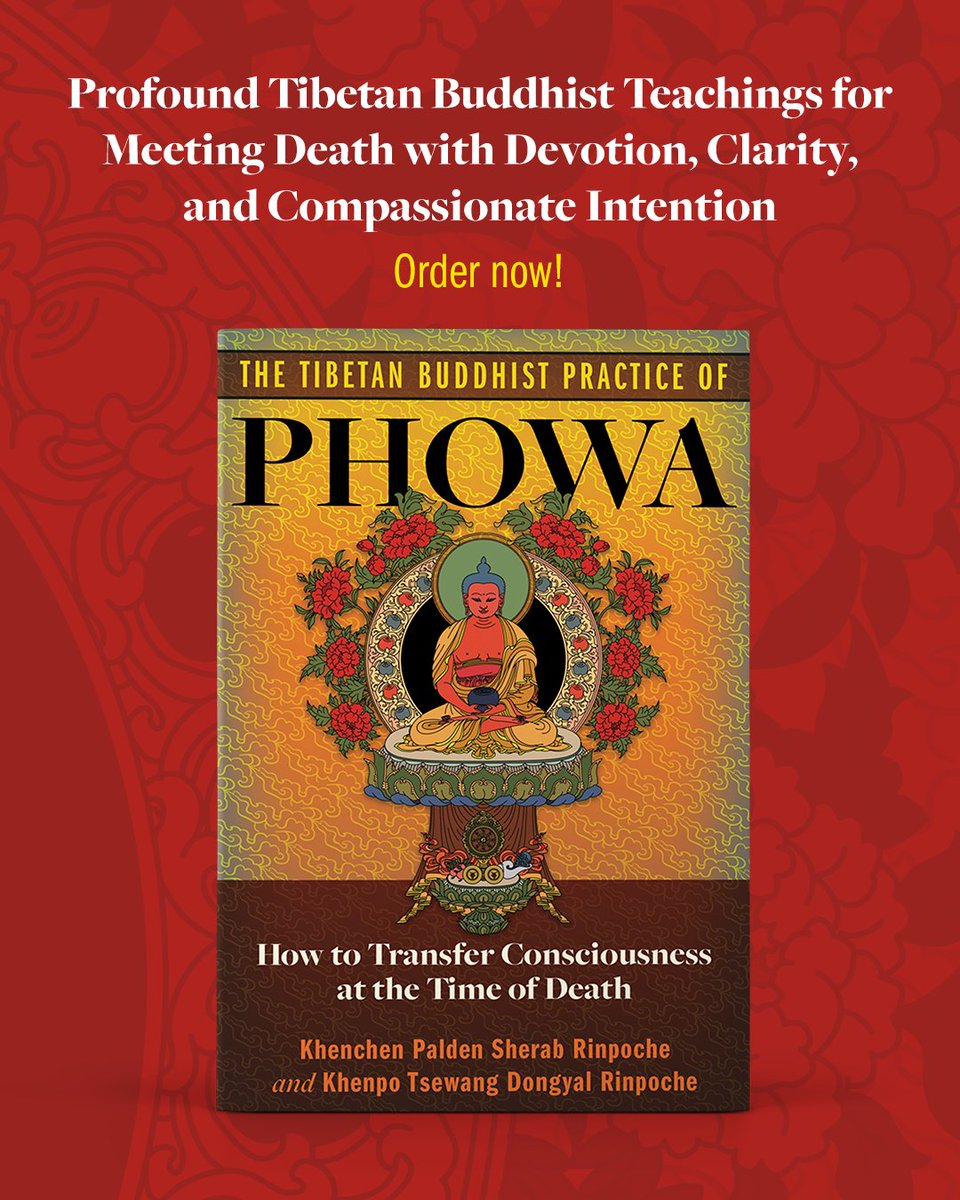
In "The Tibetan Buddhist Practice of Phowa," Ven. Khenchen Palden Sherab Rinpoche and Ven. Khenpo Tsewang Dongyal Rinpoche explain how these principles support meditation and the transition of death. The authors note that if absolute bodhichitta is difficult to grasp at first, beginners can steadily cultivate the relative wish for the well-being of family, friends, and their community. This focus causes the mind to gradually become more relaxed and peaceful, naturally expanding into the absolute state of awareness over time.
Understanding this term clarifies why this tradition emphasizes practical care in the present moment. The practice matters because it offers a structured, accessible way to transform everyday relationships into deep spiritual realization.
Read "The Tibetan Buddhist Practice" of Phowa by Ven. Khenchen Palden Sherab Rinpoche and Ven. Khenpo Tsewang Dongyal Rinpoche, available now from Inner Traditions and wherever books are sold.
https://t.co/PRt6JwdOOZ
Before it addresses desire between two people, the Kama Sutra addresses the formation of the person who desires. Its opening chapters set out sixty-four arts a cultivated man or woman is expected to know, and pleasure, in this text, grows out of that cultivation rather than apart from it.
The list ranges wide: singing and instrumental music, dancing, painting, and the arrangement of flowers into garlands sit beside perfumery and the blending of scents for body and home. Cookery, gardening, and a working knowledge of gems and metals appear alongside verse composition, skill in conversation, and games of wit and memory. Even small accomplishments, teaching a parrot to speak, solving a riddle, are named among them.
Read together, the list makes a quiet argument. A person capable of shaping a garland or turning a verse has trained an attention that carries into every other exchange with another person. The arts double as practice in the patience, precision, and care that character requires.
Choose one modest art from this range, arranging flowers, composing four lines of verse, blending a simple scent, and practice it once this week with real attention. Notice what the discipline of the small craft asks of you.
"The Complete Illustrated Kama Sutra," researched and archived by Lance Dane across five decades in India, gathers this teaching with 269 illustrations drawn from museums and collections worldwide. Written for readers curious to see a text on desire begin instead with an argument for a well-rounded, cultivated life. Available from Inner Traditions and wherever books are sold.
https://t.co/TuAK3W3dxF
"Three Books of Occult Philosophy," Heinrich Cornelius Agrippa’s seminal guide to the hidden structure of the cosmos, brings together magic, astrology, number, symbolism, and natural philosophy in one of the great master texts of the Western esoteric tradition. Both visionary and systematic, it offers a disciplined account of how the visible and invisible worlds reflect one another.
Readers will discover how celestial forces, sacred numbers, elemental correspondences, images, language, music, and the human soul participate in a living metaphysical order, and how magic was understood as a rigorous art rooted in divine proportion and cosmic harmony.
This book is for serious students of occultism, Hermetic thought, alchemy, Renaissance philosophy, and the history of esoteric science. It is also for readers who want to move beyond modern simplifications and encounter a foundational work that still shapes the language and practice of Western magic.
Order now to explore the foundations of occult philosophy. Available now from Inner Traditions and wherever books are sold.
https://t.co/AZoisvNtkn
#OccultPhilosophy #HeinrichCorneliusAgrippa #WesternEsotericism #Hermeticism #Alchemy #EsotericBooks #OccultStudies #SpiritualWisdom #Mysticism #MagicAndAlchemy #InnerTraditions #SacredKnowledge #Metaphysical #EsotericScience #HiddenWisdom
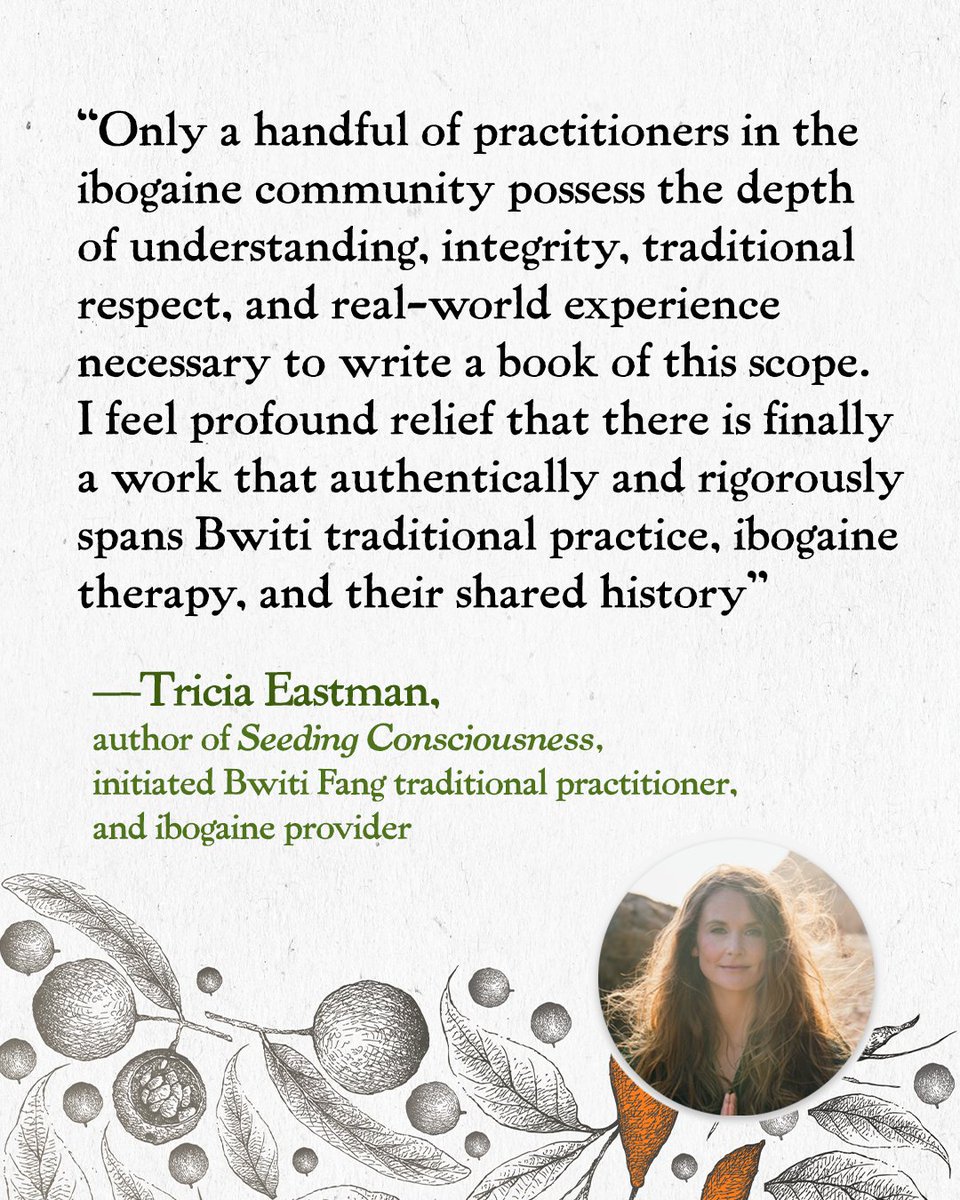
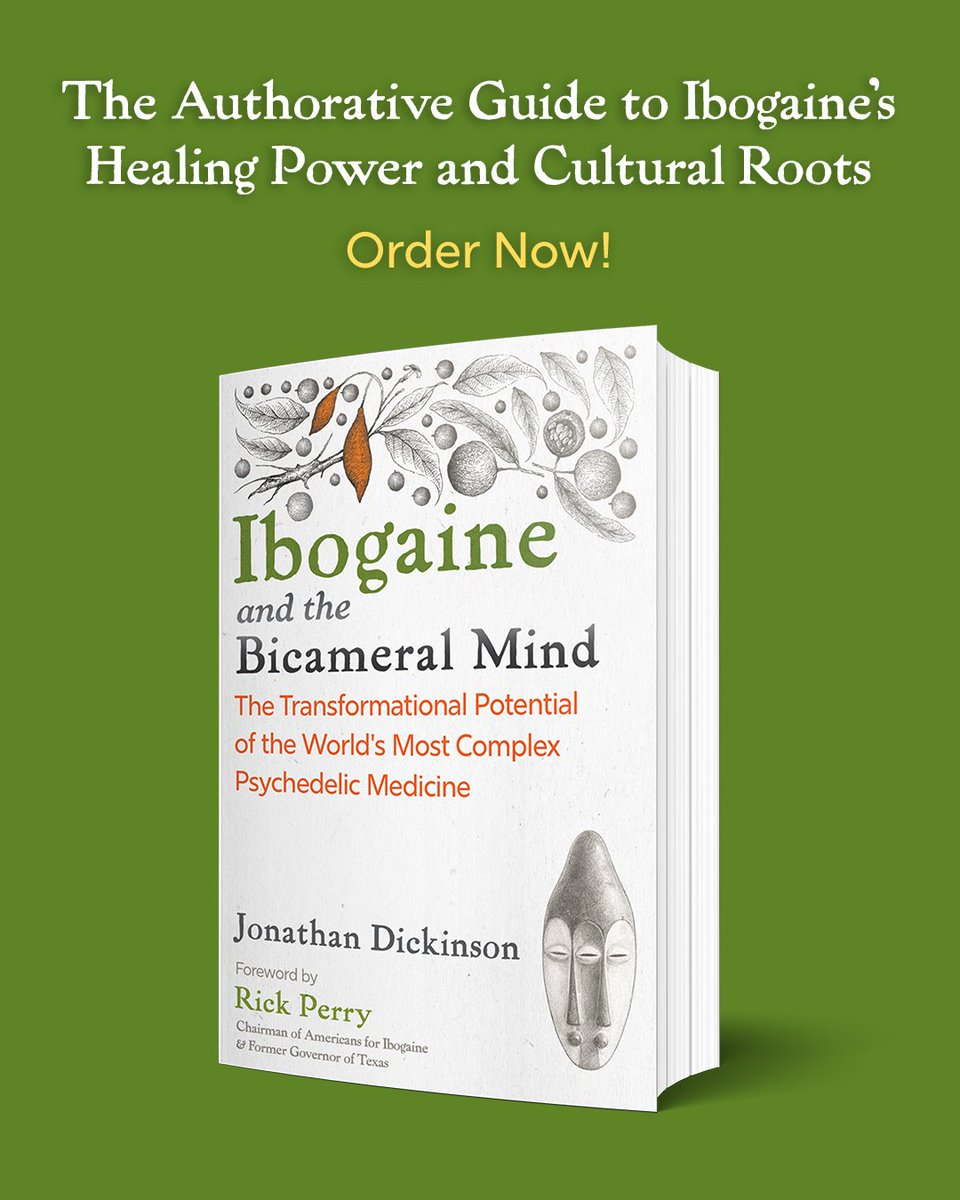
As awareness of ibogaine continues to grow—and political, clinical, and cultural conversations around its therapeutic potential gain real force—“Ibogaine and the Bicameral Mind” arrives as an essential and authoritative work for this moment.
Drawing on decades of clinical experience, traditional knowledge, and interdisciplinary research, Jonathan Dickinson offers one of the most comprehensive examinations of ibogaine to date. Bridging neuroscience, consciousness studies, trauma treatment, and the sacred traditions that have preserved this medicine, the book expands the conversation far beyond hype and headlines.
Praised by leading voices in psychedelics, mental health, and the veteran community, this book is for anyone seeking a serious, informed understanding of why ibogaine is becoming central to the future of addiction treatment, trauma recovery, and mental health.
Pre-order your copy.
https://t.co/yMABbgTNkR
#IbogaineAndTheBicameralMind #Ibogaine #Psychedelics #MentalHealth #TraumaHealing #Consciousness #AddictionRecovery #HealingTrauma #Neuroscience #SpiritualHealing
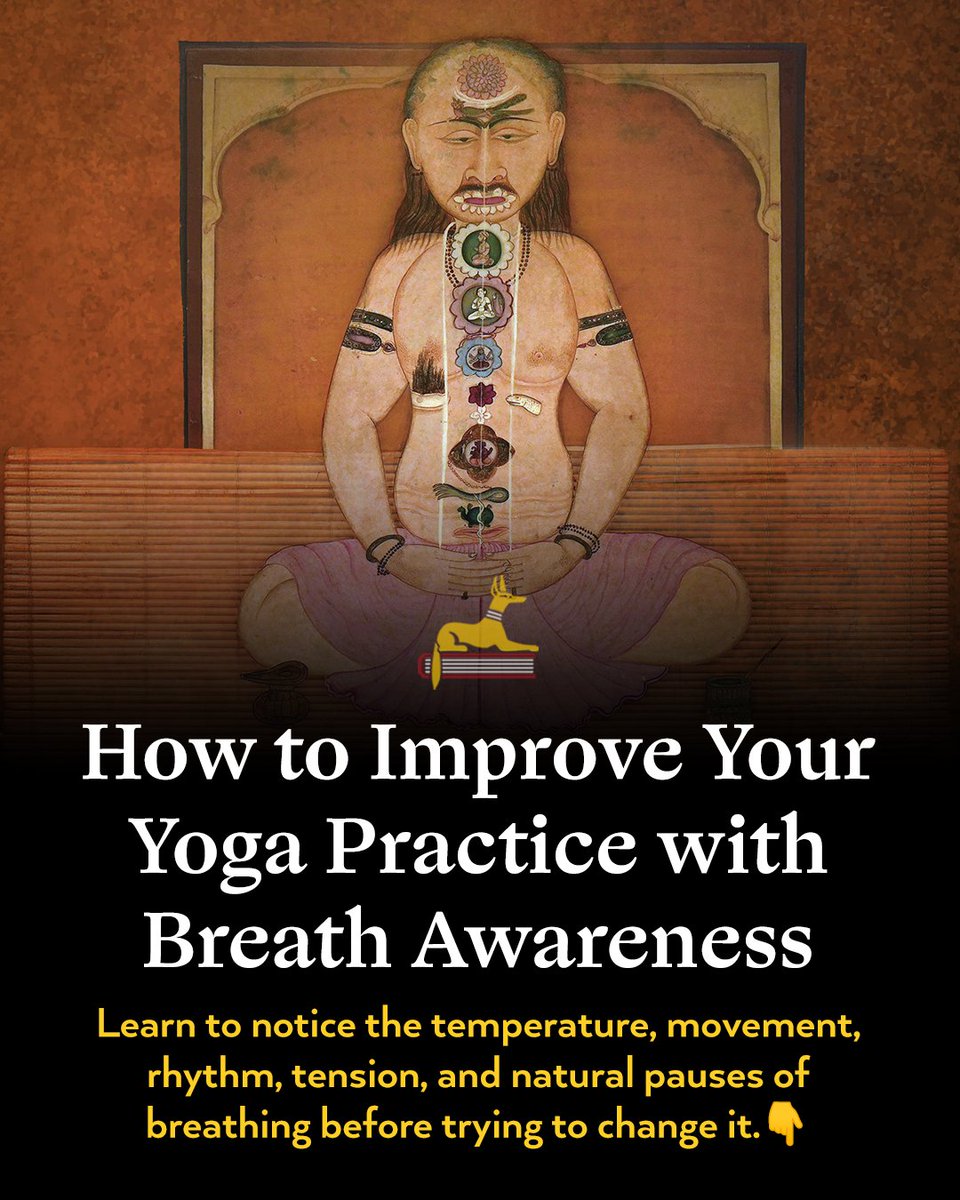
Before you count breaths, lengthen an exhale, or try a named technique, there is a simpler practice: notice what is already happening.
Where do you first feel an inhale? At the nostrils? In the throat, chest, side ribs, belly, or back? Does the breath arrive smoothly, or does it hesitate? Does the exhale release on its own, or is there effort in the jaw, shoulders, throat, or abdomen?
Yoga calls this kind of inward attention interoception, which is the ability to sense internal bodily experience. Breath offers a particularly immediate field for it. Incoming air may feel relatively cool at the nostrils; outgoing air may feel warmer. The ribs may widen evenly or more on one side. The abdomen may expand freely, barely move, or tighten before it needs to. None of these observations requires correction. They provide information.
The quieter moments between breaths are worth noticing, too. After an inhale, there may be a brief moment before the exhale begins. After an exhale, another moment may appear before the next inhale. Let those pauses occur naturally. Their quality can be revealing: settled, rushed, spacious, uneasy, or almost imperceptible.
This is why breath awareness comes before more deliberate pranayama. It establishes a baseline. It can show how posture, activity, emotion, and attention affect breathing from one moment to the next. A tight neck, a hurried exhale, or uneven movement through the ribs may simply invite a change in position or a decision to leave the breath alone.
In "Breathing: The Art and Science of Pranayama," Mark Stephens builds from this observational foundation before introducing more structured breathing methods. He suggests beginning in a supported position, allowing the breath to remain effortless, and refining attention gradually: first to airflow, then to movement, then to the complete cycle.
The point is not to produce an ideal breath. It is to become more accurate about the breath you have.
Read "Breathing: The Art and Science of Pranayama" by internationally renowned Yoga Teacher Mark Stephens—available now from Inner Traditions and wherever books are sold.