4/ 🚀 PERO HAY ESPERANZA:
Si las causas son sistemáticas, también lo son las soluciones.
Las empresas "gacelas" que SÍ logran multiplicar x21 sus ventas siguen patrones específicos.
📖 Análisis completo + metodología Growth Engine:
https://t.co/EwtfqDn9nl
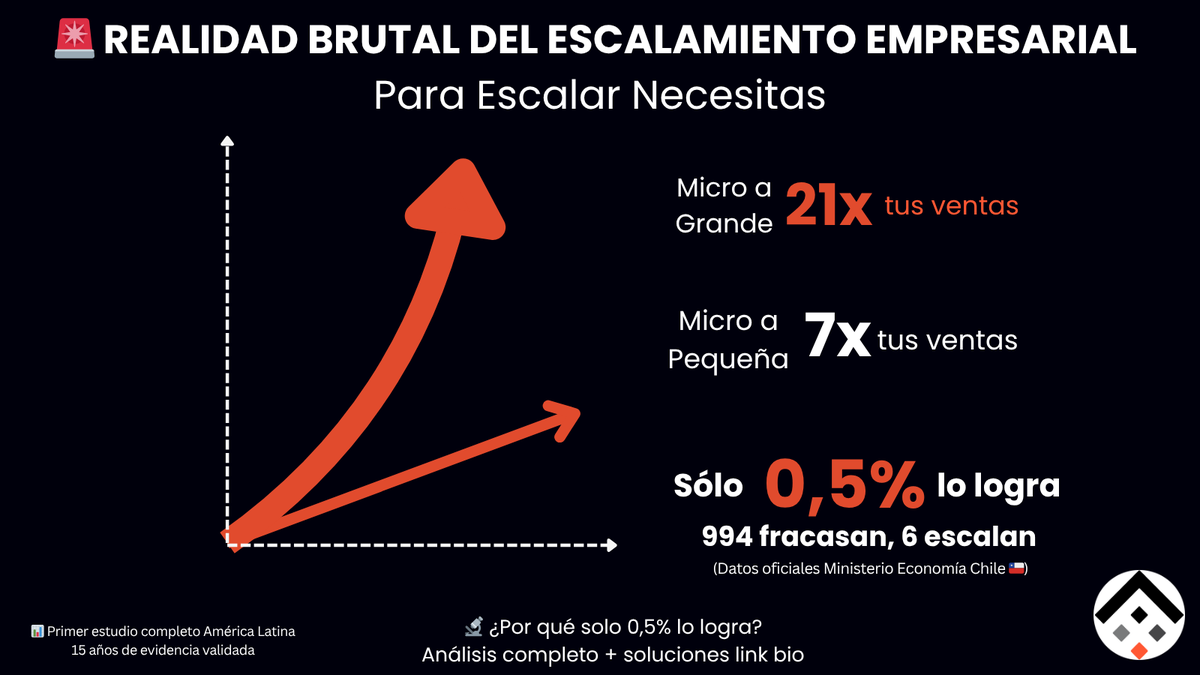
🚨 REALIDAD BRUTAL: Para escalar en Chile necesitas multiplicar tus ventas 7X→21X
Solo 0,5% lo logra.
994 de cada 1,000 fracasan.
¿Por qué? Primer análisis que conecta estudio pionero chileno con datos globales recientes.
📊 Thread con hallazgos ⬇️
#ScaleUp#Chile#Growth
3/ 💡 CONEXIÓN REVELADORA:
Conecté este estudio pionero chileno con evidencia global reciente:
- Harvard: 87% Fortune 100 se estanca
- CB Insights: 70% startups fracasa
- McKinsey: Patrones sistemáticos
Conclusión: Las causas del fracaso son universales y predecibles.
Since AI progress is driven (right now) by scaling, it is generational. You need an order of magnitude (& a bit) more data/compute/money for each generation. That takes time to set up.
OpenAI got to GPT-4 class first, now everyone caught up. No step function until the next gen.
Taking a scientific approach to startup strategy works.
An important paper replicates - entrepreneurs who are taught to take a scientific approach to building their companies, articulating hypotheses that they test through experiments, outperform those who don't test hypotheses.
“Existe la idea errónea de que una idea tiene que ser genial para poder iniciar una empresa. En cambio, mi primer consejo es empezar con un problema. Es mucho más fácil comenzar con un problema y luego pensar en cómo calificarlo”.
— Michael Seibel, ex director ejecutivo de Y C
Apple’s message is clear: after desktop and mobile computing, the next big tech era will be spatial computing—also known as augmented reality https://t.co/3mhULZvB0m
It's harder to separate work from personal life than we realize.
Data on 47k surgeons doing 980k procedures: patients are significantly more likely to die on surgeons' birthdays.
When they leave us distracted or rushed, even positive events can have negative consequences.
Students at NYU asked the creators of South Park the million-dollar question:
“What makes a good story?”
They gave one of the best explanations of story I’ve heard:
“If we can take the beats of your outline, and the words ‘and then’ belong between those beats… you got something pretty boring.
What should happen between every beat you’ve written down is the words ‘therefore’ or ‘but.’”
They go on to say, “That gives you the causation between each beat, and that makes a story.”
Point 1:
There’s an idea in storytelling called ‘Promise, Progress, Payoff.’
Essentially, a story is a neverending cycle of promises that are paid off over the span of the story.
It’s a cycle of expectation and resolution. Cause and effect. Conflict and progress.
Point 2:
A story isn’t a bunch of random events thrown together.
A story is a series of but / because / therefore moments.
A famous example:
• Harry discovers he's a wizard. Because of this, he goes to learn magic at Hogwarts.
• But then he learns Voldemort wants to kill him and rule the world.
• Therefore, he must find a way to defeat him.
Point 3:
‘And’ implies a simple continuation.
‘But / Therefore’ give prior events meaning through causation.
‘But’ implies conflict. ‘Therefore’ implies progress.
I’m reminded of a Hemingway quote:
“Prose is architecture, not interior decoration.”
Great writing is intentional. It doesn’t wander. It builds upon itself.
***
I hope you enjoyed that! If so, follow @nathanbaugh27. I study the best storytellers ever and share what I learn.
In 2014, KFC increased the sale of one of their flagship products by 56% using a super simple psychology hack.
They spent weeks working with the team at Ogilvy to crack the code.
I’ll teach you how they did it in just 3 minutes:
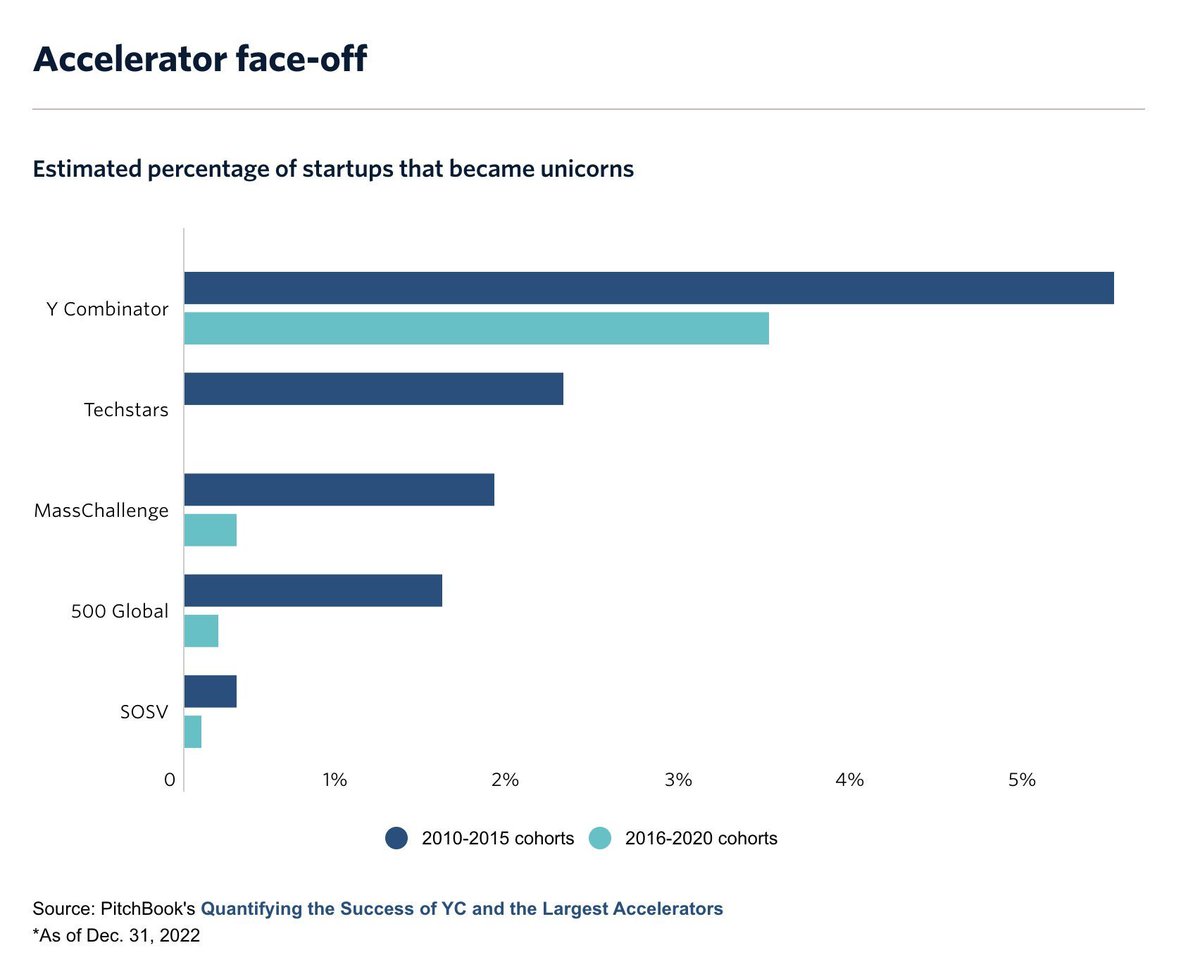
The power-law of accelerators.
People love to gossip about whether YC has become too big, but the question isn't how many startups YC funds in absolute terms, but rather what % of these startups become huge.
The numbers speak for themselves.
4 years ago I took a job as a Service Designer for a business that turned over $1 billion.
The MOST important lesson:
Mapping the customer journey is THE most important step in building an incredible service.
Here's the 7-step guide (it'll level up your one-person business):
I think it is important that everyone realize that, within months, how people relate to writing is going to change, for better & for worse.
I have been playing with Google Docs with built-in AI & it is clear that most people will start much of their writing work with an AI draft