I Speak & Write about Leadership, Employee Engagement & Workplace Culture | Interested in Social Entrepreneurship & Social Responsibility | Fmr. CTE Instructor
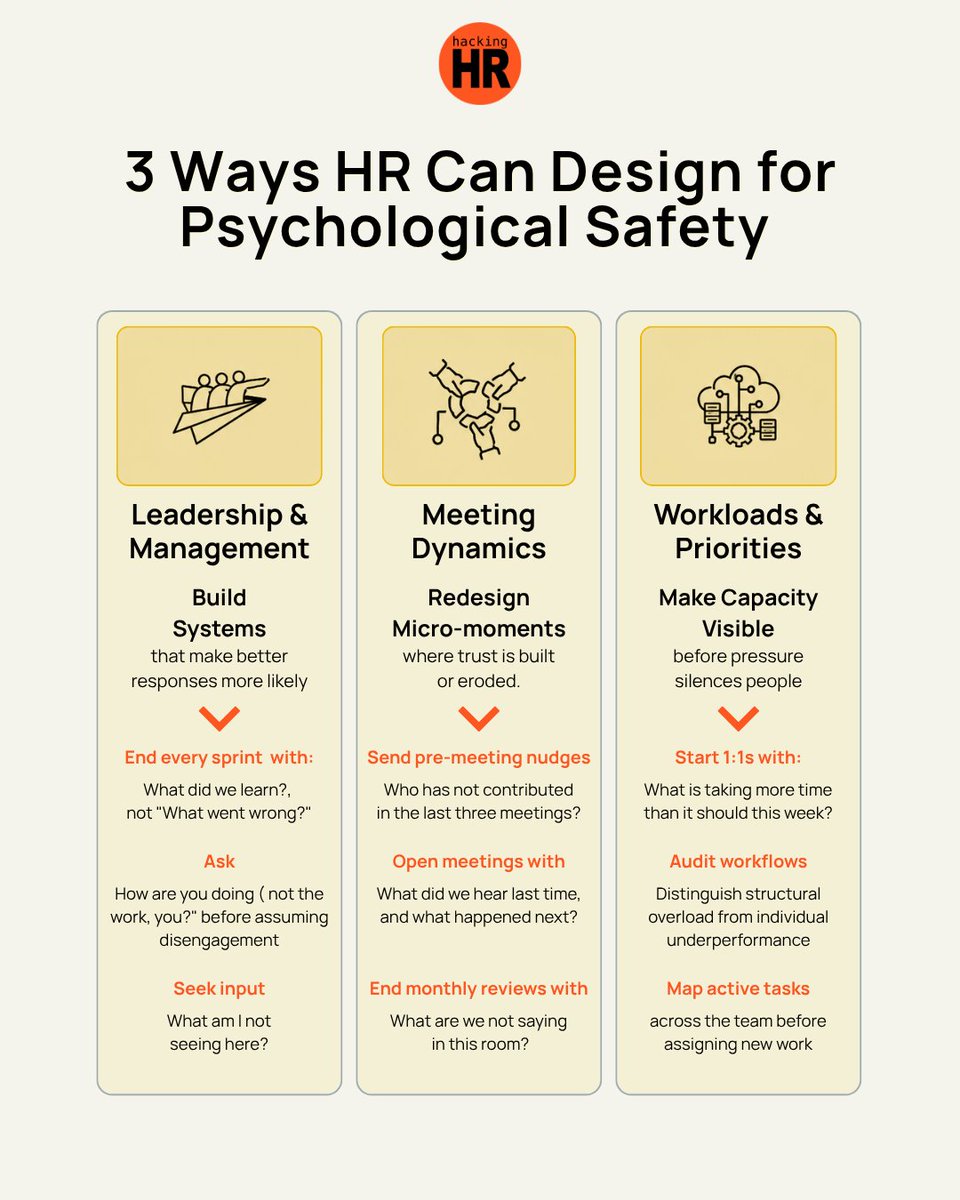
We build psychological safety in the small moments that define how people experience work every day.
🔷 A manager who asks, "What am I not seeing?"
🔷 A meeting where everyone has a chance to contribute before decisions are made.
🔷 A conversation about priorities before another project lands on someone's desk.
These moments may seem small, but they influence whether people speak up, ask for help, share ideas, or stay silent. And HR plays an important role in designing those conditions.
Three places to start:
1️⃣ Leadership and manager development. Help leaders build the habits that create trust: being curious, listening without the need to respond immediately, and being consistent in follow-through.
2️⃣ Meeting dynamics. Create space for every voice, encourage healthy discussion, and regularly ask what isn't being said.
3️⃣ Workloads and priorities. Make capacity visible before assigning more work. When priorities change, discuss what will pause, shift, or stop.
Psychological safety is the byproduct of hundreds of everyday interactions that signal whether people feel safe contributing, challenging ideas, and doing their best work.
💬 Which of these three areas would have the biggest impact in your organization today?
#Leadership #PeopleLeaders #PsychologicalSafety #WorkplaceCulture
What began as a crisis-driven response to the Covid pandemic laid the foundation for today’s dominant management paradigm: people-first management.
But today’s business demands a different approach, as performance and productivity have risen to the top of the executive agenda.
Performance-first management represents a gentle shift toward an approach where managers empower their teams to deliver high-impact results within a complex and evolving reality. It reorients the manager’s role around enabling performance, not just supporting satisfaction. https://t.co/3fMrPPRWc8
Giving performance feedback is one of the most important responsibilities of any people leader.
The way we have these conversations shapes trust and nurtures development and performance over time.
A few reminders that are always worth revisiting:
1️⃣ Focus on observable behaviors. Instead of "You're not collaborative," say, "During yesterday's brainstorming meeting, you interrupted your teammates several times before they finished speaking."
2️⃣ Give people enough context to understand your feedback. The SBI model (Situation, Behavior, Impact) helps you explain what happened, what you observed, and why it mattered.
3️⃣ Connect feedback to goals and development: Help people see how today's conversation supports their growth and future success.
4️⃣ Make feedback part of regular conversations. Waiting for the annual review often means waiting too long.
5️⃣ End with a clear next step and invite the other person's perspective.
🌐 A story from our community: After a difficult feedback conversation, a leader encouraged her team member to do something they genuinely enjoyed—a yoga class, a favorite coffee, or lunch at a favorite spot.
The message wasn't, "Forget the conversation."
It’s alright to feel emotionally taxed when we receive difficult feedback, even when it's delivered with empathy. Giving people the space to process those emotions doesn’t weaken the conversation. It may help them move forward with greater clarity.
🌟 What has helped you make feedback conversations more effective?
#Leadership #PeopleLeadership #PerformanceFeedback #PerformanceManagement #ManagerEffectiveness #EmployeeDevelopment
Dealing with a toxic boss? Learn how to document issues, protect your mental health, build allies and safeguard your career while planning your next move. https://t.co/gcxLcwHvvh
When you anchor your leadership in deep psychological safety, you build a sanctuary where vulnerability is celebrated and unique perspectives are fiercely protected. It takes a genuinely kind heart and a secure mind to welcome opposition without feeling threatened.
📌 PUBLIC SPEAKING GUIDE.
🔸️ Start with a clear message
🔸️ Speak slowly and with confidence
🔸️ Focus on connection, not perfection
🔸️ Use pauses to emphasize key points
🔸️ Maintain strong body language and eye contact
🔸️ Practice until the message feels natural
🔸️ Prepare well, then trust yourself
Great speakers are built through repetition and confidence 💪
👉 Follow @BetterYouSkills for Actionable Tips on Soft Skills + Growth.
#PublicSpeaking #Communication #Confidence
📌 MANAGEMENT vs. LEADERSHIP.
🔸️ Management focuses on processes
🔸️ Leadership focuses on people
🔸️ Managers maintain systems
🔸️ Leaders inspire vision and growth
🔸️ Management seeks control and efficiency
🔸️ Leadership builds trust and influence
🔸️ Managers direct tasks
🔸️ Leaders empower individuals
Great organizations need both — but LEADERSHIP creates LASTING IMPACT 💪
👉 Follow @BetterYouSkills for
Actionable Tips on Soft Skills + Growth.
#Leadership #Management #Growth
On Memorial Day, we pay tribute to the brave men and women in uniform who gave their lives for this country that we love. It is a debt we can never fully repay, but we must never stop trying. I’ll always be grateful to our fallen heroes and their families, whose sacrifice reminds us of what it means to live for something greater than ourselves.
What distinguishes toxicity is the systematic absence of psychological safety combined with the active presence of behaviours that punish honesty, suppress vulnerability, and reward performance at the expense of people. Great article by Elise Dyer:
https://t.co/ePGGBvaypk
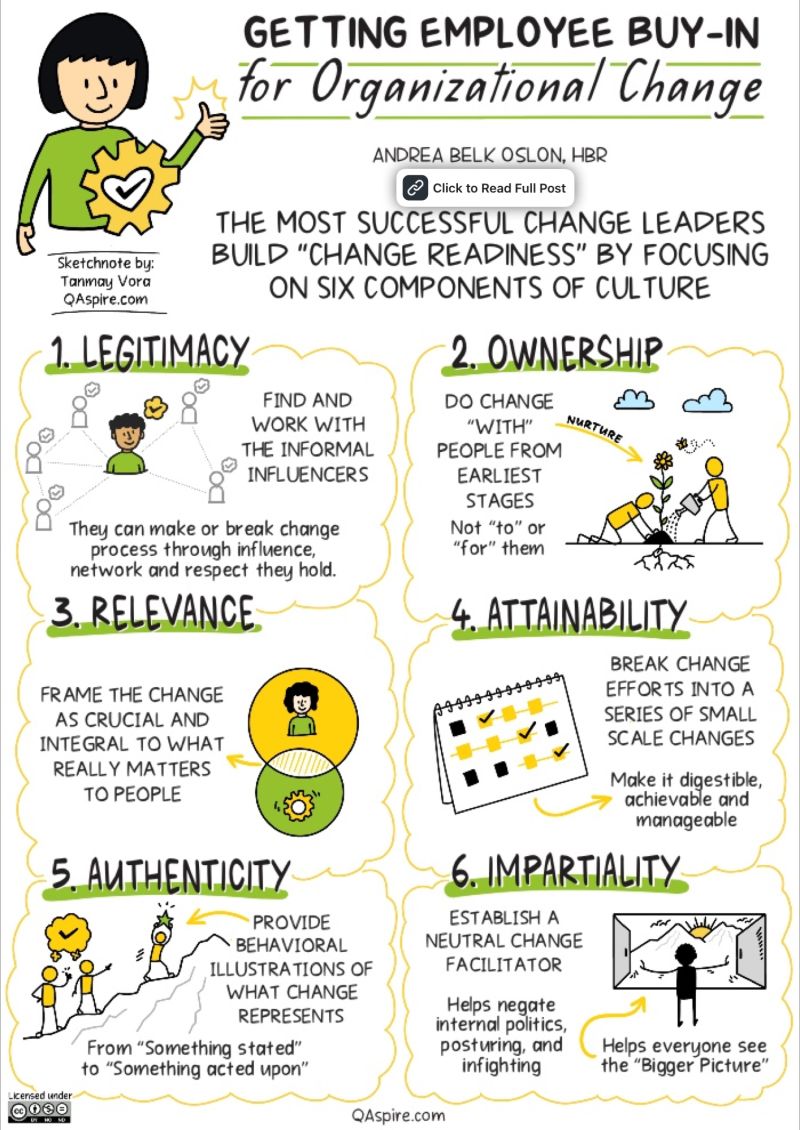
Ready for change? Set your initiative up for success by emphasizing readiness and organizational culture.
Here are six key components to building readiness for change: