Institutional and sustainable development foundati
@Instsustdevf
NGO in the SDG'S,Energy,extractive, public accountab, education, environment, climate change,decarbonization, blue, green and circular economy& econ governance.
Statement from Institutional and Sustainable development Foundation on the world Environmental Day 2026. “Methane emission management, the implementation of the countries NDC 3.O commitment, circular economy, greening the economy, Tree planning
https://t.co/sQcqAlbwcR
Nigeria is at a critical point in its energy transition plan. Critical minerals in Nigeria can power both its own transition and make it a global play in Policy Brief on Critical mineral in Nigeria https://t.co/cTEGBRF5Ig @UN ,@DOECMEI ,@GRA_Renewables,@RW_Mag
@nigeriaeiti Groups proposing isolating enforcement asks, raising FOIs, exploring litigation options, demanding 2022-2025 data, reaching out to non-disclosing coys, demanding reduced corporate emissions and many others. Pleased to see #EMAT
translate to real and tangible outcomes @CJIDAfrica
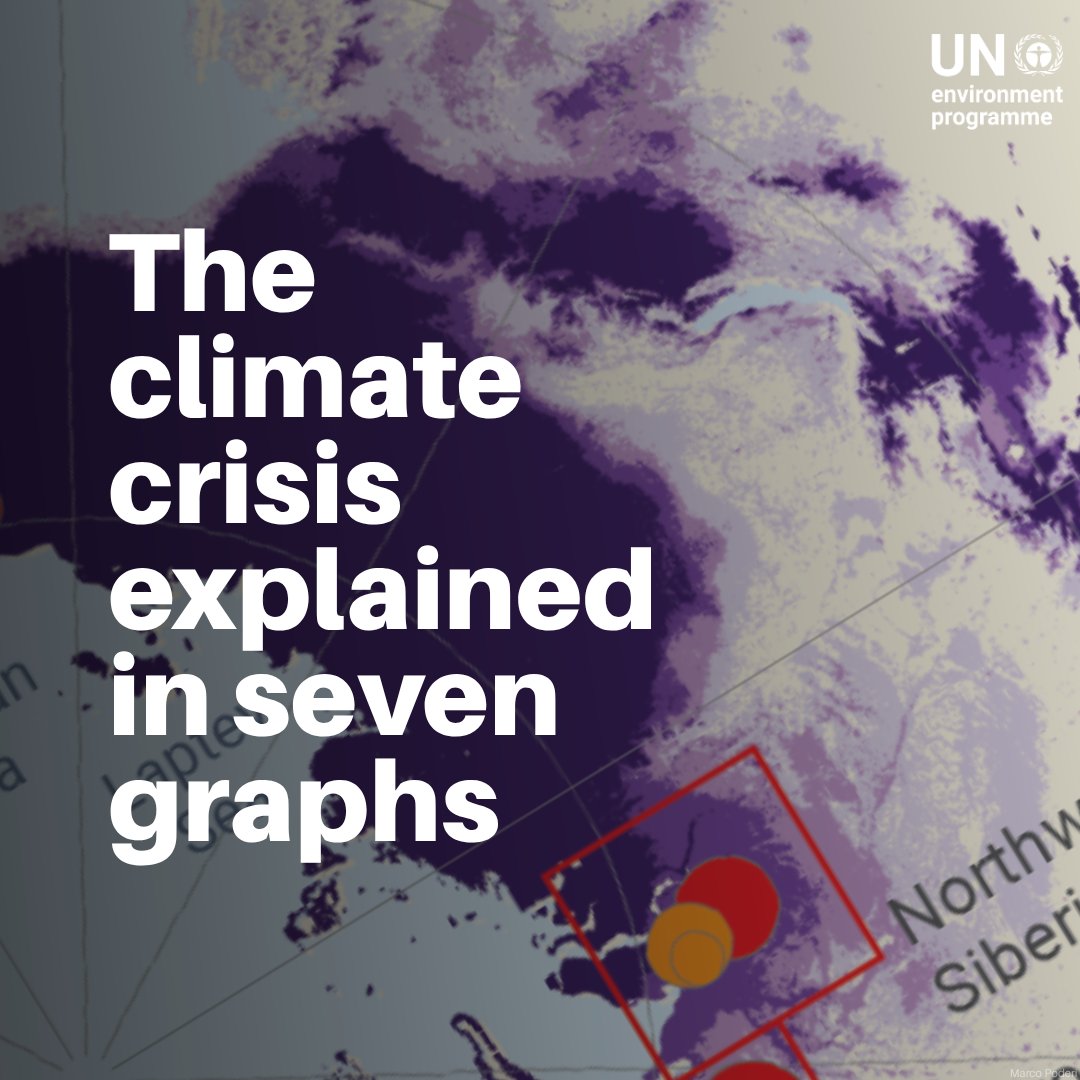
Chances are you know the climate is changing, and that means trouble.
From rising emissions to melting permafrost and economic risks, these 7 graphs break down the climate crisis today.
Ahead of #WorldEnvironmentDay, explore UNEP data and why the world must act #NowForClimate: https://t.co/biQyCggjAC
The conversation on energy transition must include methane, ignoring emission today creates larger risks tomorrow # methane accountability
@NRGInstitute ,@CJIDAfrica @
🇨🇳 China installed a solar panel every 2 seconds in 2025.
315 gigawatts of new solar capacity in a single year.
That's the equivalent of installing 500 million solar panels, or adding a Germany-sized power grid every 12 months.
No country has ever built anything at this speed.
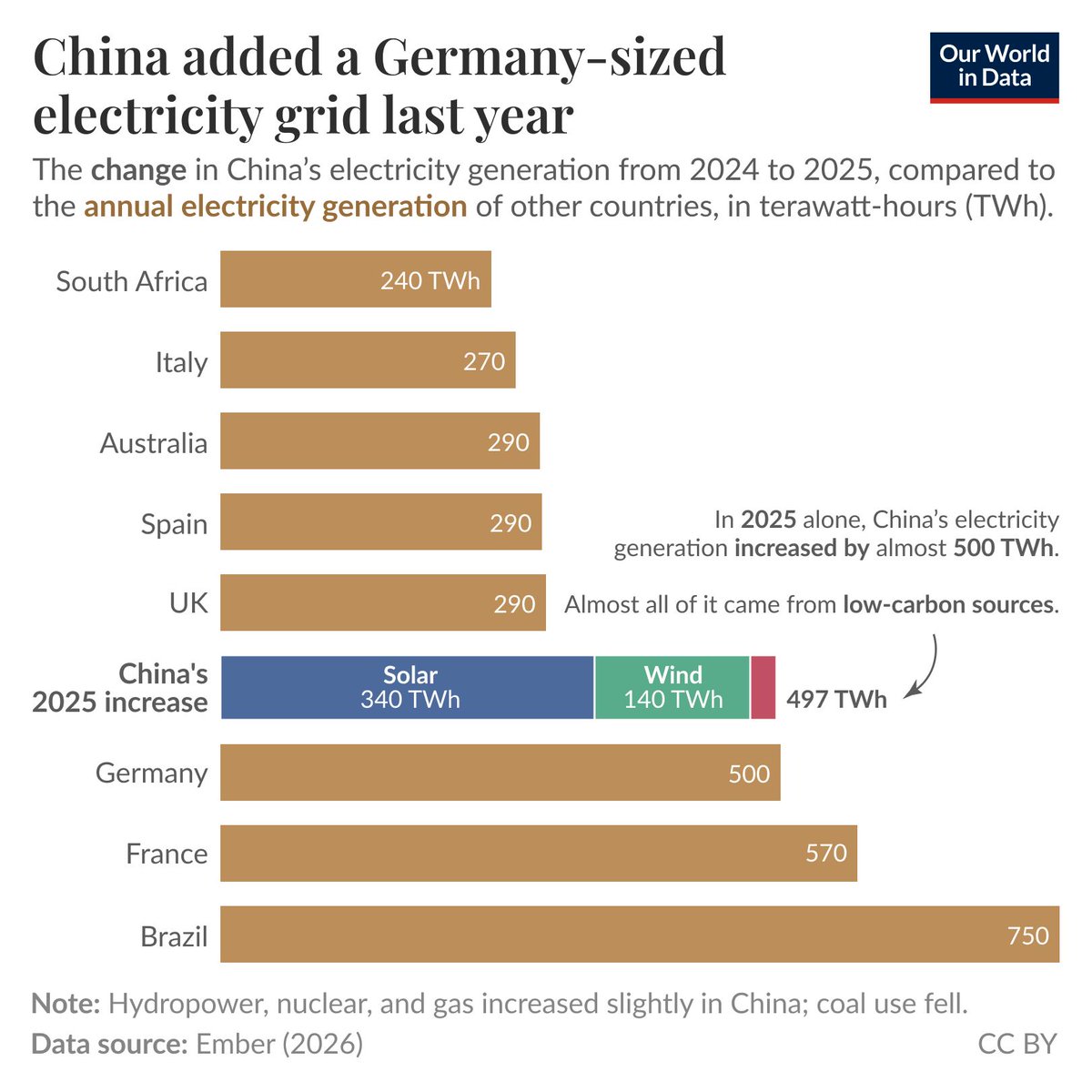
China added a Germany-sized electricity grid last year—
(This Data Insight was written by @_HannahRitchie and Pablo Rosado.)
We’ll often see headlines quoting how many gigawatts of new solar farms or coal plants China is building. But it’s hard to get a meaningful sense of scale for how electricity generation in China is changing.
The chart puts it in perspective.
In 2025 alone, China’s electricity generation increased by almost 500 terawatt-hours (TWh). This is compared here to the total amount of electricity that whole countries generate each year.
Germany generates almost exactly that amount. That means China effectively added a Germany-sized grid to its electricity system in just one year.
What’s also quite staggering is that almost all of this new generation came from solar and wind. China generated 340 TWh more electricity from solar than the year before.
That’s more than our two home countries, the UK and Spain, generate from all sources each year.
Low-carbon sources grew so much that coal power in China actually fell slightly.
China switched on the world’s largest open-sea offshore solar farm in late 2025.
2.3 million solar panels.
2,934 steel platforms.
11,736 piles driven into the ocean floor.
Generates ~1.78 TWh annually, enough to power around 2.67 million people.
Built to survive force-11 gales and sea ice while sitting nearly 8 km offshore.
Oh… and they’re farming fish underneath it too.
Solar above. Food below.
Fossil fuels increasingly looking like old industrial scaffolding from a previous civilisation.
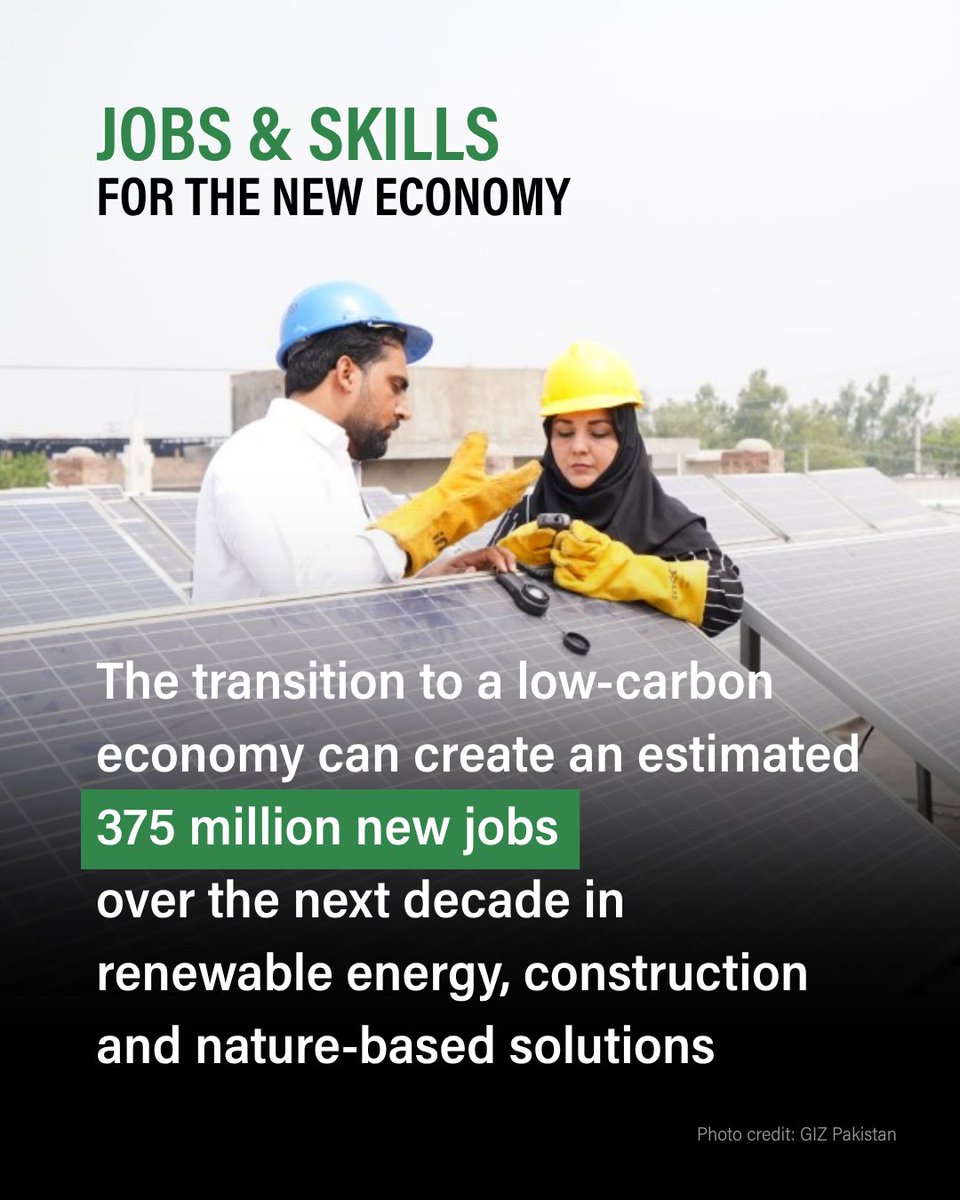
The green transition isn’t just about cutting carbon, it’s about creating opportunity👷
Up to 375 million new jobs could be created in the next 10 years. With the right skills & investments, climate action can power prosperity. Learn more: https://t.co/Jo5dlwZXO8
#JobsAndSkills
@nafiquarshie, @NRGInstitute Africa Director opens the review of 'Assessing Nigeria's Gas Ambitions Towards Achieving a More Sustainable Energy Future' Day 1 review of the #DecadeofGas
Nigerian defense-tech startup Terra Industries unveiled its latest autonomous defense systems including interceptor drones, mine-detection vehicles and battlefield intelligence software https://t.co/1G04IE7nIi
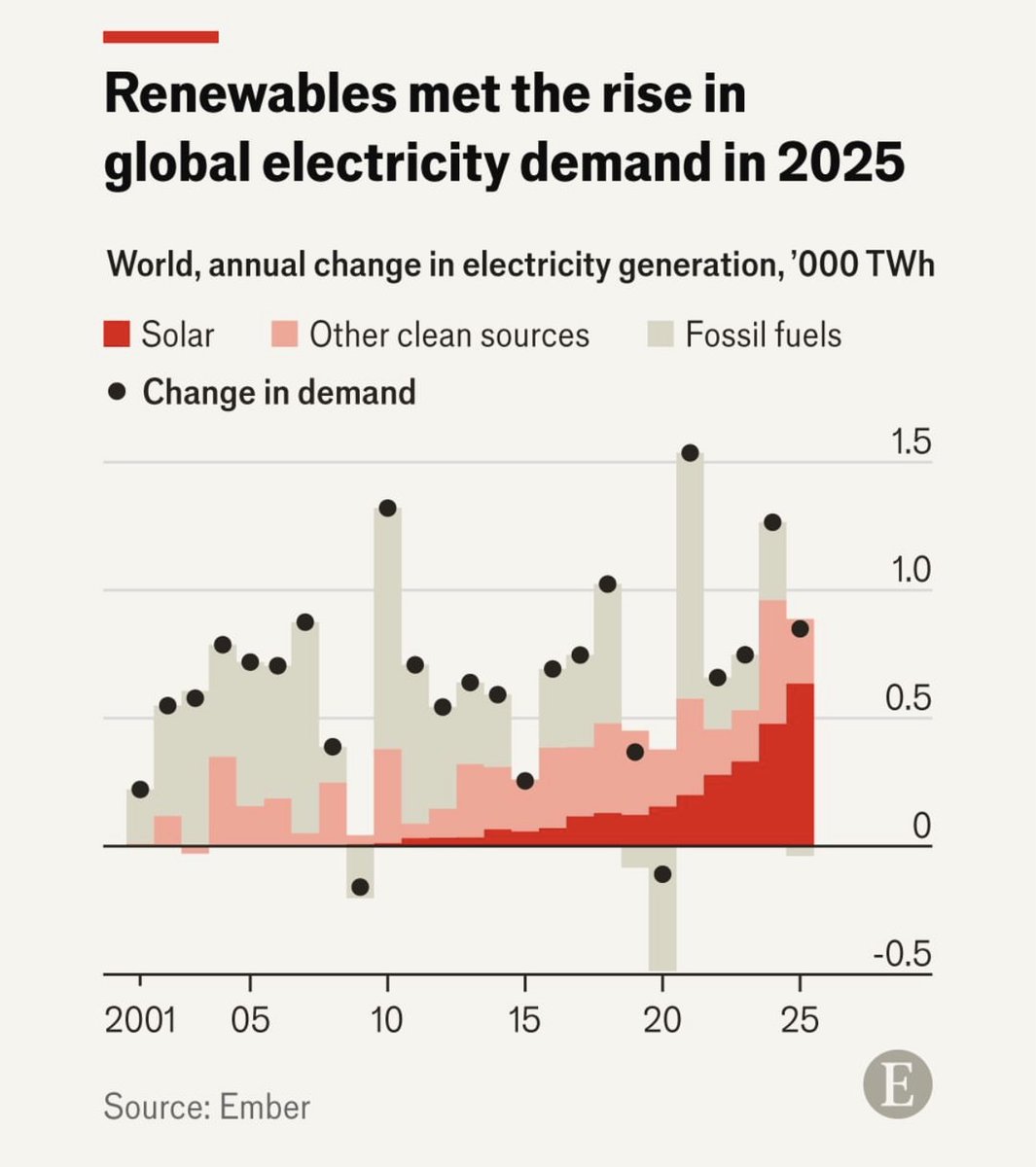
For the first time in history, renewables met 100% of global electricity demand growth in 2025.
Every new TWh the world consumed last year was covered by solar and clean sources fossil fuels added nothing net to the growth equation.
In 2001 almost all demand growth was fossil fuels.
By 2025 solar alone is carrying the load.
⚠️But this happened the same year Hormuz closed and reminded the world that electricity generation and liquid fuels are 2 completely different problems and renewables solve just 1 of them.
You can solar-panel your grid.
You can't solar-panel a 747....
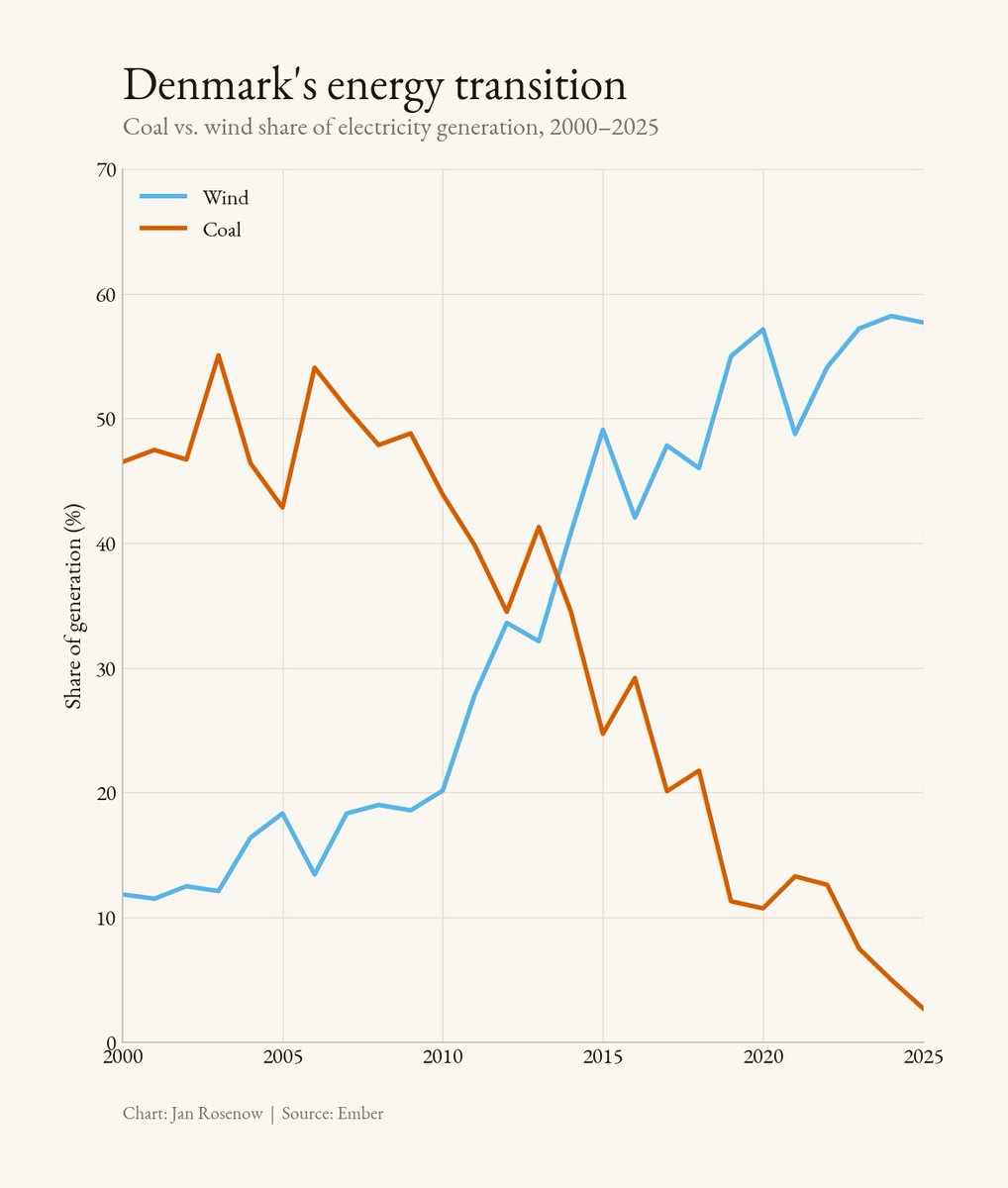
Denmark didn’t just “phase out” coal. It made it obsolete.
Coal: 85% → 3%
Wind: 11% → 60%
Solar: 0% → 13%
Renewables: 15% → 92%
Wind scaled first. Biomass stabilised. Solar is now accelerating the endgame.
Transitions evolve. Systems get replaced. #Bettrification#RIPCOAL
Denmark's coal-to-wind transition is one of the most dramatic energy transformations of the past three decades.
In 1990, coal provided 90% of Danish electricity. Today it is under 3%.
Wind now covers roughly 60% of electricity generation.