Developing a long-term & forward-looking perspective on international migration, seeing migration as part of broader global change & development. RT≠endorsement
Researching the Politics of Knowledge in Migration Policy. Check out this new @IntMigInstitute / PACES working paper by @KatharinaNatter.
https://t.co/dbTUGMY6wd
Researching Decisions to Stay and Migrate: A Temporal Multilevel Analysis framework. Check out this new IMI working paper by Simona Vezzoli, Lucia Mýtna Kureková and @KerilynSchewel. https://t.co/e9cY1MJL15
Congratulations to @k_natter for her book 'The Politics of Immigration Beyond Liberal States: Morocco & Tunisia in Comparative Perspective' with @CUP_PoliSci!
- 'important' @BoswellPol
- 'highly original' James F. Hollifield
- 'empirically-rich & analytically-astute' @gtsourapas
Given wide disparities in wealth & wellbeing worldwide, far fewer people migrate than our theories predict. Why?
New WP alert! Check out the first global survey of *staying* aspirations and *retain* factors using @GallupPoll data
https://t.co/N9BGFsn2Sa
Focusing on educated urban youth, this paper with @BeeStrid as lead author, presents "Mobilization Trajectories" as analytical tool for understanding why in a similar context some prefer to migrate, others to protest and yet others prefer inaction..
Why does discontent lead some to migrate, others to protest, while others do nothing?
New IMI WP by @BeeStrid, @ersanilli_e, and Jacquelien van Stekelenburg introduces 'mobilization trajectories' as a tool to study migration and protest intentions
🔗https://t.co/WmAg7dDrWc
It is with great sadness that we have to announce that one of the founders & former director of IMI, Prof. Stephen Castles, has passed away.
His vast legacy will continue to inspire generations of researchers, students, activists, & policy makers.
https://t.co/AW3FkS8jRd
New IMI Working Paper by Simona Vezzoli explores how young adults make a decision to migrate or to stay in a Brazilian town experiencing economic decline. She provides a fresh take on why many prefer to stay.
Check out this and other IMI WPs here: https://t.co/SiY8b54hXm
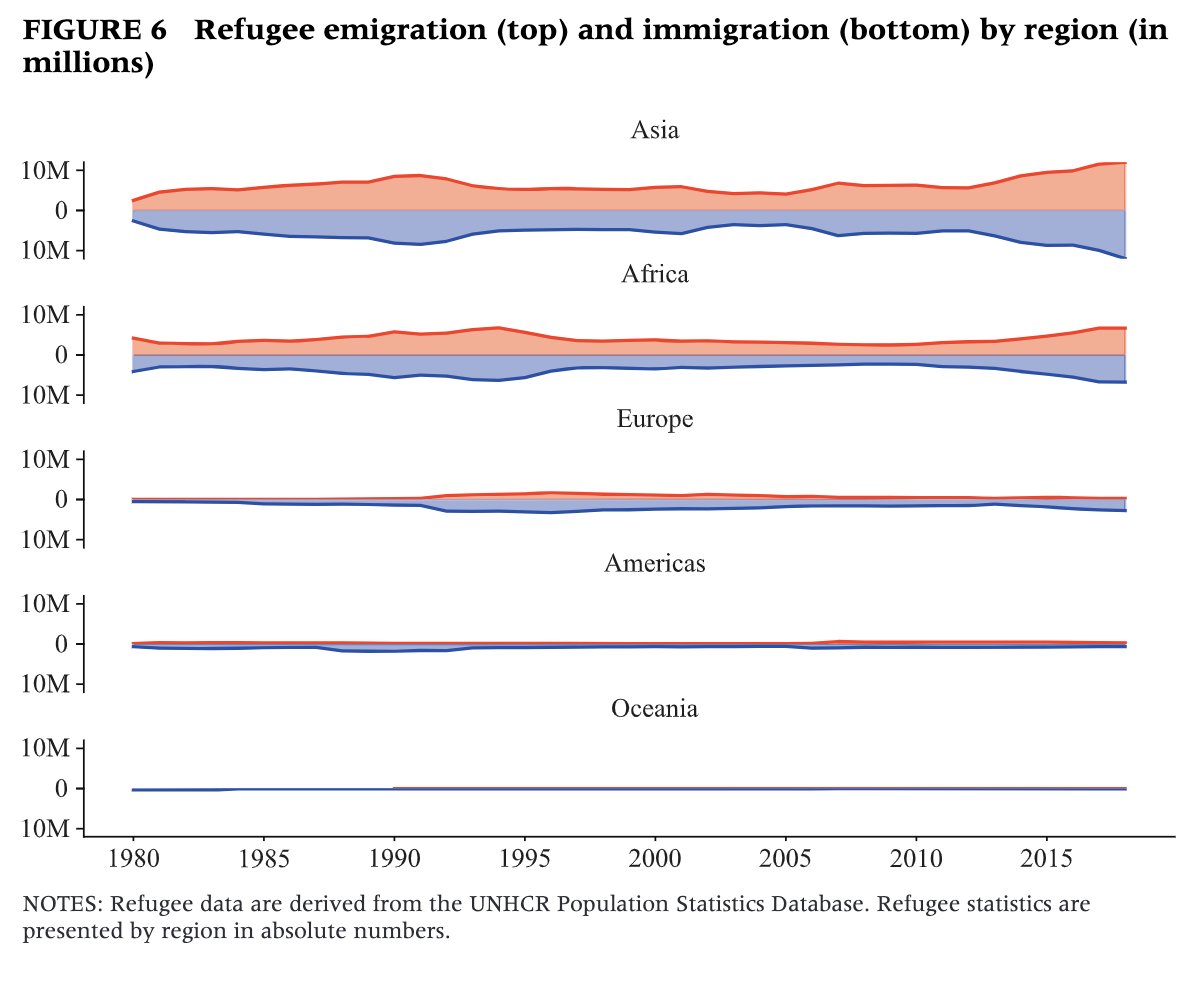
Are refugee numbers really at an all-time high? New study analyzing long-term trend in refugee migration by Sonja Fransen and @heindehaas challenges the popular idea that we live in times of unprecedented refugee migration. https://t.co/JrOAmp6exS
Very excited that our first TIES teaching module on migration drivers for high school students is online in English! Soon also in French, German, Italian, Dutch and Polish. Please share with teachers & tell us what you think! @IntMigInstitute@GIGA_Institute@InsideNatGeo
🚨 another great IMI WP is out!
I'm editor of this series, and we welcome research that promotes new thinking about migration as an intrinsic part of global change and development. Interested in submitting?
Send me a DM or read more here: https://t.co/Qo3wyS56nx
When and why do states include migrants in social protection policies?
In a new IMI WP, @Mira_B_Rudolph explores this question in Kerala, India - one of the first subnational states to implement social protection policies for emigrants and returnees.
https://t.co/EdfDiB5q9Y
"no long-term increase in the global intensity of refugee migration" but concentration to fewer origin countries and widening to more destination countries.
Trends and Patterns of Global Refugee Migration. New article just published in Population and Development Review by IMI fellows Sonja Fransen and Hein de Haas.
https://t.co/JrOAmp6exS
New article by IMI Fellows @Geraldine_Adiku & @LKandilige explores the co-creation of transnational livelihoods through ‘door-to-door’ shipping operations between Ghana and the UK
Now out in the Journal of Ethnic and Migration Studies @scmrjems:
https://t.co/40SIn6gKkw
just before the weekend - my new article on democratization and migration policy in Tunisia is out! It’s part of a SI with the wonderful @ThiolletHelene. Please share and let me know what you think! @_ENMISA @IMISCOE_MigPoG @MigCitizenAPSA@PolSciLeiden https://t.co/534EkRVYmR
Research suggests rising levels of development lead to rising levels of migration, but what causes significant country-to-country variation in this trend?
The MADE project asks this question in 6 country case studies. Check out their first policy brief👇
https://t.co/6JCgclyG6e
Call for applications for a publishing workshop for African scholars - with extensive feedback and mentoring to demystify the publishing process.
Open to scholars employed in SSA at any stage of their careers, deadline 15 July:
https://t.co/YbYHgHBJkU
How does development shape patterns of internal and international migration?
The MADE project examined development-migration interactions in six case study countries and its first policy brief is out!
Check it out for the findings and key insights: https://t.co/6JCgclyG6e