Thinking about NYC's real estate - 35,000 apartments by 2025 sounds huge! But Asheville's 13.3% growth rate is impressive too. How will all this affect housing affordability and urban development?
Thinking about how the commercial real estate fundraising is cooling off in 2024. Banks modifying loans may be slowing the distressed asset sales we expected. With $400 billion in CRE loan maturities hanging over the market, it's hard to say where things will go next.
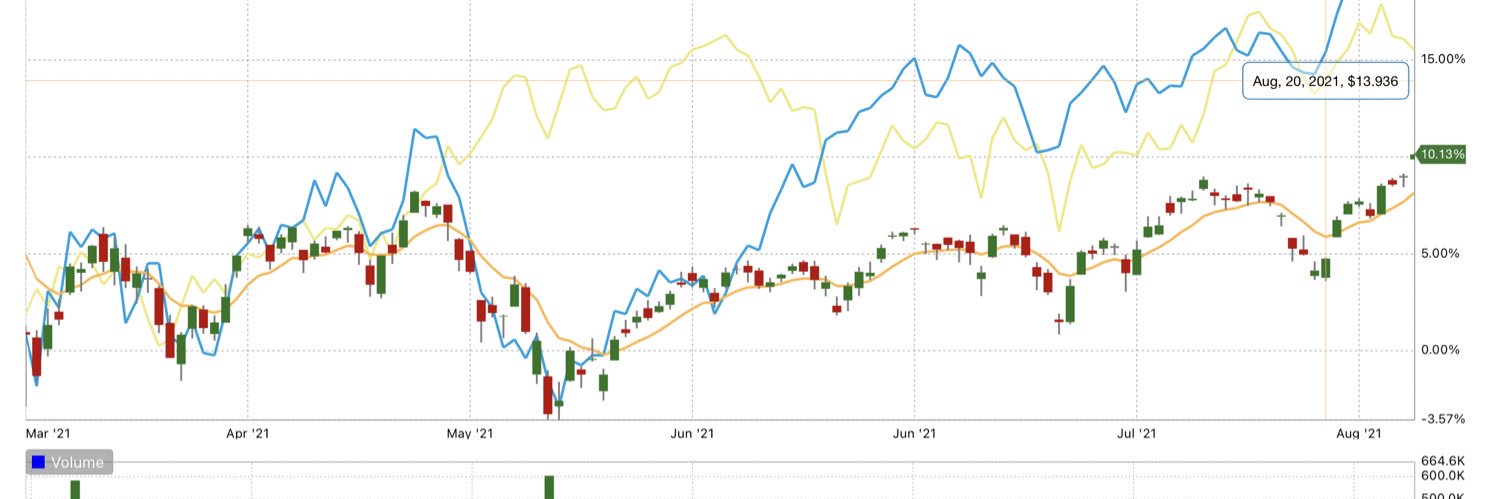
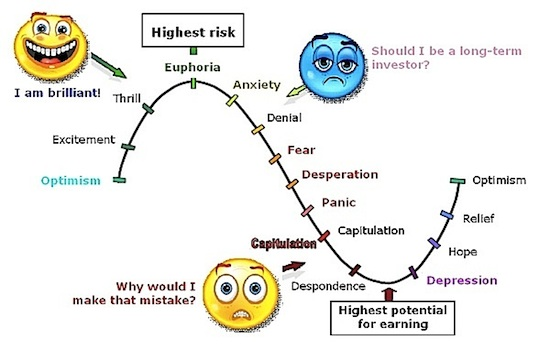
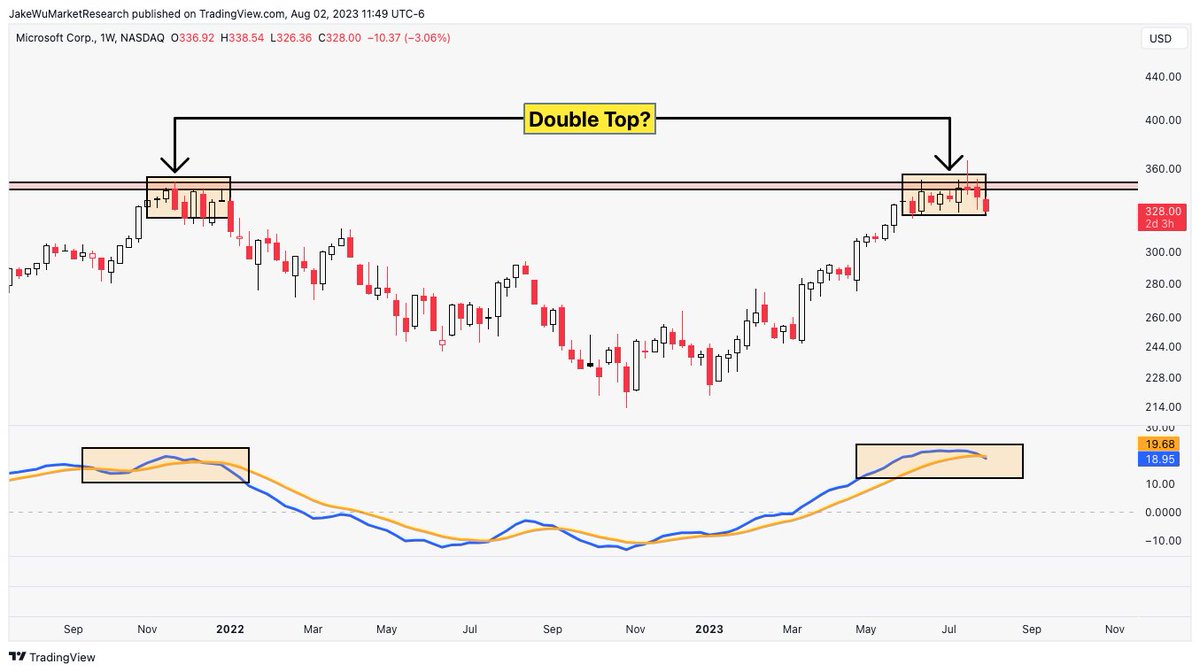
Here’s the playbook.. tomorrow could be a nice flush day.. if so wait until the close to buy.. bc if we get the flush .. we’ll likely retrace and bounce next week to give all the trapped bulls one last out before things turn sour in Sept .. 💎💎
In 2 days there are have been 4 studies that help explain LK-99's potential superconducting abilities.
These simulations converge on key properties that suggest a new class of SC materials, and help explain quirks of TK-99 we've seen so far.
Here is the easy-to-digest summary so far:
(Reminder: still no experimental replication yet!!)
All studies converged on the fact that LK-99 has interesting electronic properties, formed by these 'flat energy bands' that can enable superconductivity through several different mechanisms.
- This effect relies on copper replacing lead atoms in the crystal, but it has to replace very specific lead atoms for the bands to appear, meaning it may be hard to synthesize with high purity (paper 1)
- The conduction pathways in the material may be one-dimensional, meaning they aren't equal in all directions, and this could be why it doesn't act as a perfect magnetic levitator but rather a semi-levitator. Also, other metals like gold could make LK-99 perform even better (paper 2)
- TK-99 appears to be much more robust to disorder, or randomness in the crystal, while retaining its superconducting properties. And, it appears the overlap of copper and oxygen electron orbitals might explain why this occurs at ambient pressures (paper 3)
- The most dramatic result of all is by the most distinguished author: the appearance of diamagnetism without superconductivity seems unlikely (paper 4).
Here is the technical deep-dive to back it up:
Note: I include highest h-indexes of authors, which is like a 'science high score'
h=20: 'successful scientist', e.g. full professor
h=40: 'outstanding scientist', e.g. fellowship in APS
h=60: 'truly exceptional scientist', e.g. national academy
1st Paper - Lawrence Berkeley National Lab
Sinead Griffith (h-index 20)
https://t.co/UOOtDlx3eE
@LBNLresearch scientist @sineatrix published the first simulation study on LK-99. Her study supported the original Korean team's (LKK) proposed mechanism whereby copper atoms replace lead atoms in a crystal structure, which introduces a twist or strain on the crystal.
LKK measured a 0.5% volume contraction from this strain, which @sineatrix's simulation corroborated, but more interestingly this change in shape creates an interesting change in the available places electrons can fit into the material. These are known as 'energy bands' and normally are quite jagged, going up and down below the 'sea level' of energy like a mountain range.
However, when these energy bands remain quite flat and stay close to sea level, aka 'fermi energy', it is thought to enable interesting properties like superconductivity, insulation, etc, and more.
Notably these energy bands only form when one particular location receives the copper replacement atom, and it is the least-likely location. This suggests synthesizing the material may be difficult, with low-efficiency yield or purity.
2nd Paper - Shenyang National Laboratory
https://t.co/CBRGZPquFJ
Lai, Li, et al, and Xing-Qiu Chen (h-index: 47)
These authors find similar results to @sineatrix, showing a volume contraction with lead-apatite has copper introduced, and which produces the signature 'flat energy bands' near the fermi level which are thought to make possible superconducting effects.
They note that the available conduction pathways through the material seem one dimensional, meaning they do not extend in all directions equally. This might explain an imperfect Meissner effect where the material does not levitate perfectly, but only partially (my interpretation).
Most interestingly, they try simulating similarly-sized atoms like silver and gold in replacement of copper atoms, and find that these maintain flat energy bands at the fermi surface. Other elements besides copper may improve the performance of LK-99-like materials.
3rd Paper - University of Colorado, Boulder
https://t.co/hcGPtrzKa8
Kurleto et al, Daniel S Dessau (h-index: 49)
Also finds the same flat energy band structure at the fermi surface. More interesting, these authors simulate the effects of disorder being introduced to the crystal lattice, and see an interesting result: energy bands in TK-99 remain flat even when slightly disordered, i.e. not perfectly 'ideal crystal'.
They suggest this could help explain how it retains superconductivity at such high temperatures. Also, they put forward an interpretation of the superconductivity as reliant on overlapping wave functions, or distributions, of the electron energy levels, i.e. the electrons are just slightly overlapping with each other, which creates the flat bands.
They also claim the most important consideration is the overlap between the copper and oxygen electron orbitals, noting that the Oxygen-Copper pairing may explain why TK-99 may superconduct at much lower pressures than previous RTS materials (hydrides). (previous hydride-based RTS materials were superconducting at room temperature, but only at millions of atmospheres of pressure).
4th Paper - Northwest U and TU Wien
https://t.co/tbrO3An3g6
Liang Si and Karsten Held (h-index: 67)
These authors find the same results as the previous two studies - flat energy bands around the fermi surface as a result of copper atoms replacing lead. Two different methods for superconductivity are coupling between electrons, 'electron-electron', or coupling between electrons and vibrations in the crystal lattice, 'electron-phonon'. These authors find that both mechanisms could be possible given the structure that is formed.
There is strong agreement with general findings of all the other papers mentioned, however they additionally claim the appearance of diamagnetism without superconductivity is at odds with their results.
This would have immense implications for the early attempts at synthesis which show diamagnetism but have not yet yielded electrical measurements of zero resistance.
~~~~~~~~~~~
All the authors in these studies noted that their simulation results are not predictive or conclusive of TK-99 being the holy grail of materials science - a room temperature, ambient pressure superconductor.
Taken together they paint an interesting and compelling picture - at the very least, TK-99 is a very interesting material that suggests new lines of research into superconductors that have the potential to perform at room temperatures and ambient pressures.
Here is my mental model right now:
This material is difficult to synthesize because getting the copper in the right place is not very likely, producing low-yields. However, it's possible to separate out individual flakes, or crystal grains, that are diamagnetic but these are quite small. Internal to these tiny crystal grains are one-dimensional 'superconducting' channels that result in partial flux-pinning / levitation, however because these don't enable currents to flow in any direction it isn't perfectly pinned. The energy bands that superconduct are resilient to slight disorder, and are oriented in such a way that lets them perform well without requiring large temperatures.
The flakes that levitate aren't just diamagnets, but, the 1-dimensional conduction pathways might feasibly make it difficult to measure resistance (i.e. anisotropic resistance? - my speculation).
~~~~~
I'll reiterate that everything depends on experimental verification, but it is fascinating to read and share this rapidly developing scientific breakthrough.
My personal odds keep going up.
It’s not about how much you make, it’s about how much you keep
You can watch the full EYL 247 feat. Calais Campbell on Earn Your Leisure’s YouTube & all podcast audio outlets
Jamaica had to launch a GoFundMe to help pay for their trip to the Women’s World Cup.
They just knocked out Brazil — and are headed to the Round of 16 for the first time in the nation’s history.
doing a special angel box giveaway! presave the song and send me a screenshot that you did to enter ✨👼🏽 5 of you will be chosen! 🩷 https://t.co/MyfJrEU3jv
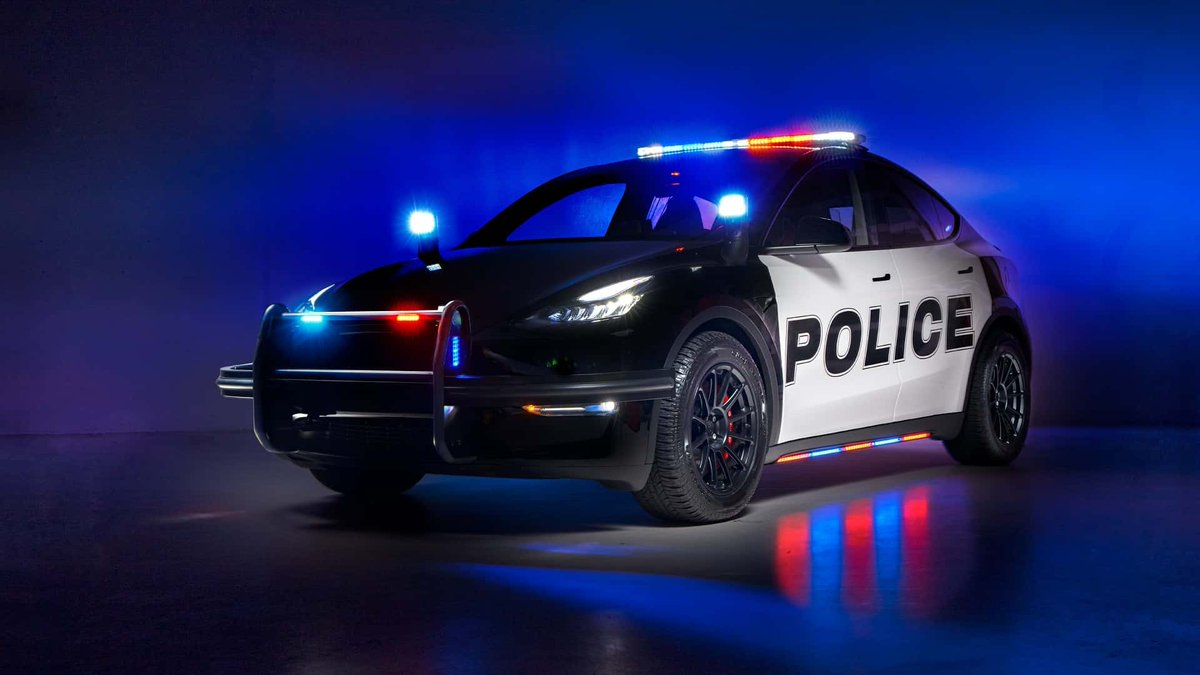
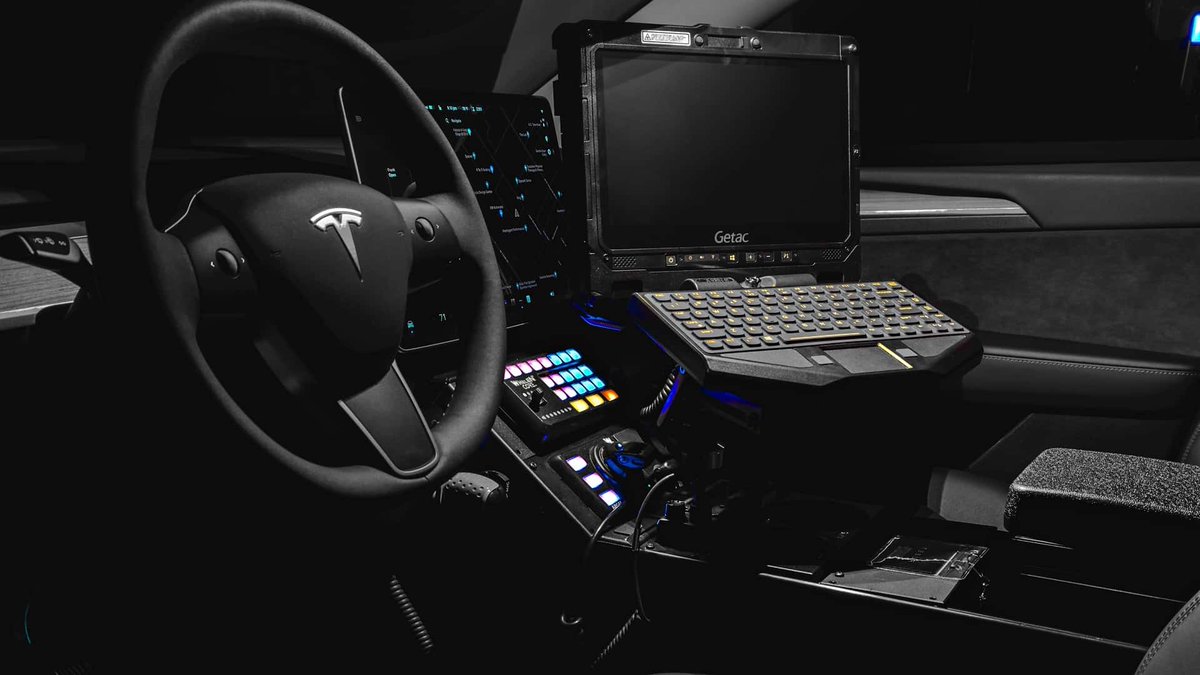
NEWS: @UnpluggedTesla is now building Tesla Model Y Police vehicles.
Its police car costs $91,990 (including $41,500 for upfitting) – making it ~$7k cheaper than a Ford Police Interceptor Utility Hybrid. This doesn't include the rest $27k in fuel/maintenance savings over 5 years
Remember when the Black people of KC were telling police there was a suspected white supremacist serial killer on the loose, and police dismissed it as a rumor, and a victim escaped and had the suspect arrested?
Well another one of his victims has been discovered.
New Victim In KC Serial Killer Case Found In Missouri River, Clay County Prosecutor Admits Greater Public Safety Threat Than Initially Stated https://t.co/OW004zH3Rs via @kcdefender