According to information received, Fatemeh Sepehri reported worsening health problems and delays in medical treatment during a phone call from Vakilabad Prison in Mashhad on Monday, November 9, 2026.
She said she is experiencing severe pain in her right hand and is unable to curl her fingers, along with weakness in her legs, difficulty walking and maintaining her balance, and serious throat problems. Despite medical referrals for an MRI and a neurological examination, neither has been carried out.
Her family has expressed concern over the delays in medical care and her deteriorating health.
Islamic Republic Threatens Iranians Abroad with Asset Seizures and Denial of Consular Services
The Islamic Republic’s state broadcaster, IRIB, has issued a warning through its “Alaj” platform, threatening Iranians living abroad with asset seizures, denial of consular services, and restrictions on their financial and business dealings in Iran for participating in anti-government protests.
The platform also claimed to be monitoring government opponents abroad and urged the public to report the identities of protest participants through the Baleh messaging app.
According to information received, Abolfazl Sedaghat, 20, along with Matin Faryan, 23, and Vahid Khodri-Khah, 34, all detained during the January 2026 nationwide uprising in Mashhad, have been sentenced to death on charges of enmity against God.
The verdicts were issued by Branch 5 of the Mashhad Revolutionary Court, presided over by Judge Hossein Yazdan-Khah. Following their arrests in January, they were transferred to Vakilabad Prison, where they remain held in separate wards.
According to available information, Abolfazl Sedaghat was denied access to a lawyer of his own choosing and was assigned a court-appointed lawyer instead. With his identity now confirmed, the identities of all three individuals sentenced to death in this case are now known.
The Islamic Republic’s judiciary announced on Sunday, November 8, the execution of Hassan Dehband, Hamid Kazemi and Reza Zanganeh, three men arrested during the January 2026 nationwide uprising in Karaj.
The judiciary claimed that the three had been sentenced to death on charges of “operational collaboration with Israel, the United States and hostile groups against national security and interests.” It also accused them of participating in attacks on public and government buildings, making and using Molotov cocktails and homemade grenades, carrying weapons, and damaging electricity infrastructure in Karaj during the protests.
A total of 11 people were arrested in connection with the case. Three were sentenced to death and had their assets confiscated, while the remaining eight received prison sentences ranging from five to 10 years.
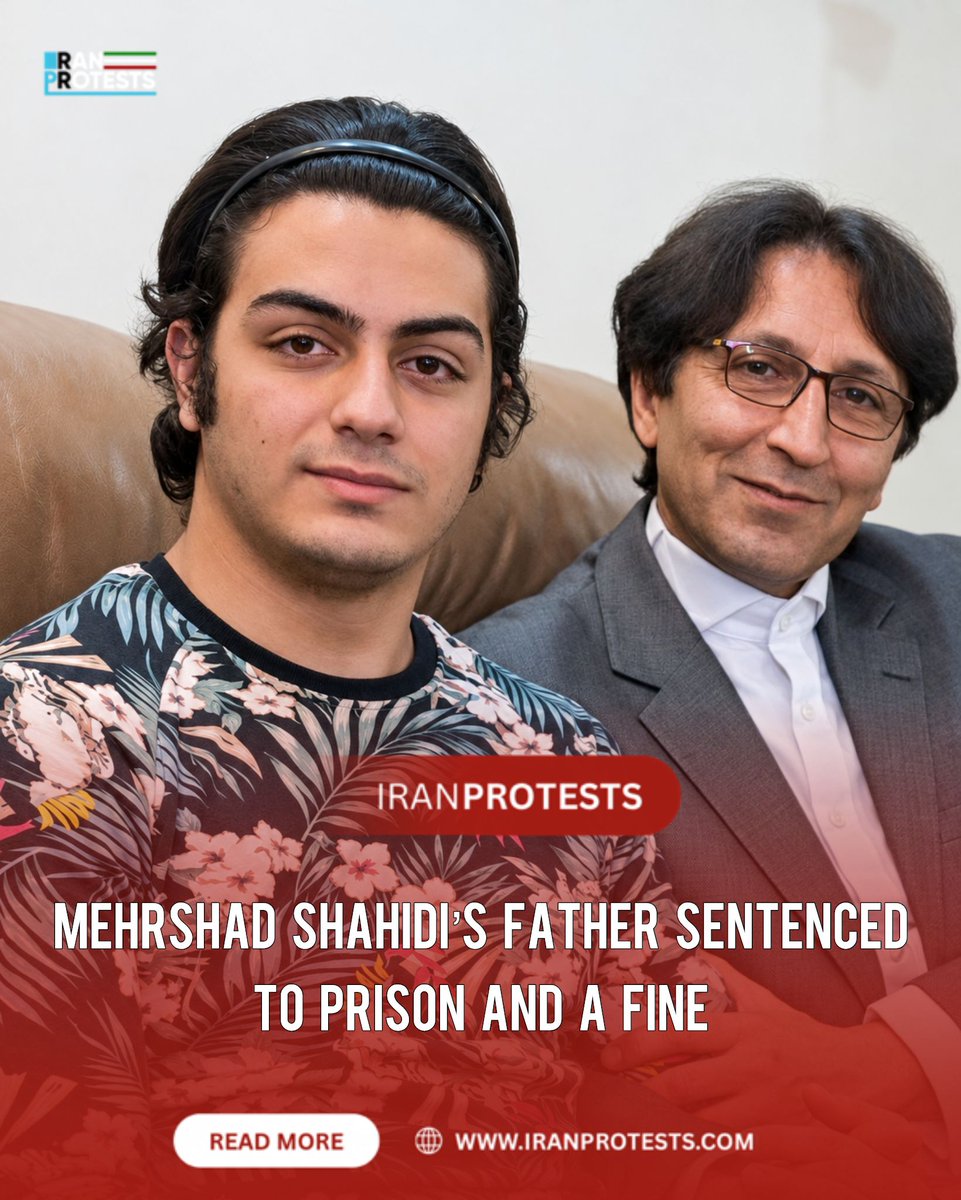
Amir Shahidi-Nejad, the father of slain protester Mehrshad Shahidi-Nejad, has been sentenced to two years and six months of suspended imprisonment and ordered to pay a fine instead of serving an additional two years and six months in prison. The verdict was delivered in recent days.
Arrested last year, Shahidi-Nejad had repeatedly criticised the judicial proceedings over his son's death, noting that prison sentences handed down to those convicted in the case had also been replaced by fines.
Mehrshad, a 19-year-old chef and university student from Arak, was killed on October 26, 2022, during the nationwide protests. According to his family and eyewitnesses, security forces chased him and beat him with batons and stun guns after he fell to the ground. His family reported severe signs of physical abuse on his body.
Mehrangiz Rastin, an Iranian citizen, has been arrested by Islamic Republic security forces in Kohgiluyeh and Boyer-Ahmad Province.
Fars News Agency, affiliated with the Islamic Revolutionary Guard Corps (IRGC), reported that her arrest followed a tip submitted to the government’s “Alaj” platform by an Iranian living in the United States.
State-affiliated media have accused Rastin of organising anti-government gatherings in Arizona and supporting military action against the Islamic Republic.
Alaj is a government intelligence platform designed to identify and pursue opponents of the Islamic Republic abroad by collecting personal and family information through public reports, particularly concerning those accused of supporting sanctions, separatism, or military action against the government.
This is the first arrest publicly attributed by regime authorities to information submitted through Alaj.
Her whereabouts, formal charges, and access to legal representation remain unknown.
Mohammad-Hossein Sepehri was released from Vakilabad Prison in Mashhad on Wednesday, November 4, after more than three years in prison.
Sepehri was arrested on September 27, 2023, while visiting Ghaem Hospital in Mashhad to inquire about his sister Fatemeh Sepehri’s medical condition. He was subsequently transferred to prison.
According to documents in his case, Sepehri was due to be released on October 10. However, following an incident in which he and fellow prisoner Javad La’l-Mohammadi were assaulted inside the prison, a new case was opened against him, delaying his release by 25 days.
According to information received, Amirhossein Mousavi, a pro-monarchy political prisoner held at Evin Prison, has been sentenced to death and five years in prison by Branch 15 of the Tehran Revolutionary Court, presided over by Judge Abolqasem Salavati.
The verdict was formally communicated to him on Wednesday, November 4. Under the ruling, Mousavi was sentenced to five years in prison on charges of “insulting religious sanctities” and to death on the charge of “corruption on earth”
On Tuesday, November 3, the Islamic Republic regime’s judiciary announced the executions of Amirhossein Maleki and Amirhossein Ebrahimi, two men arrested during the January uprising in Iran, in the city of Isfahan. Both were just 20 years old when they were executed.
The regime’s judiciary claimed that the two young men had taken part in the killing of four law enforcement officers during the events of January 8, and had damaged public property using “firearms, knives and other bladed weapons, and incendiary materials.”
Their executions bring to nine the number of defendants in the Isfahan case known as “Alikhani Square” who have been executed since July.
Gholamhossein Mohseni Ejei, head of the judiciary under the Islamic Republic regime, called for expedited proceedings in cases involving Iranians living abroad who, he said, had acted against the regime.
Ejei noted that the law provides for certain cases to be handled on a priority basis, and said cases involving some people abroad should receive the same priority.
He also called for faster proceedings against people who, in his words, “tipped off the enemy.”
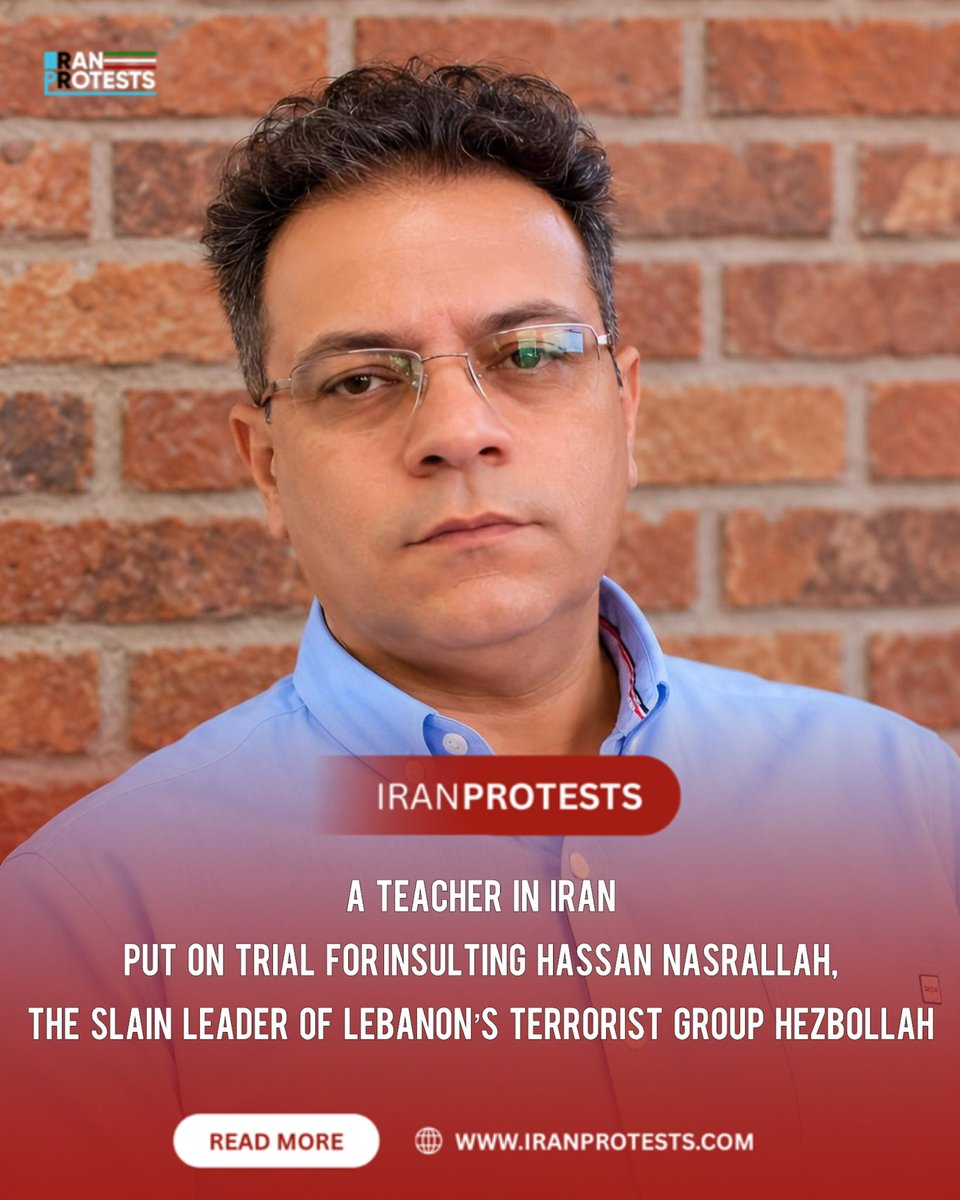
Siamak Sadeghi Chehrazi, a teachers’ union activist in Khuzestan Province and a member of the board of the province’s Teachers’ Trade Association, appeared before Branch 1 of the Revolutionary Court in Ahvaz, Iran, on Wednesday, October 28, 2026, for a hearing on the charges against him.
He faces charges of “insulting Hassan Nasrallah on social media” and “engaging in propaganda against the Islamic Republic,” among other allegations.
Sadeghi Chehrazi was previously arrested in Ahvaz on March 29, 2026, while traveling during the Nowruz (Persian New Year) holidays. Following his interrogation, bail was set at 10 billion tomans (Iranian currency) as a condition of his provisional release.
Death Sentences Issued or Upheld for at Least 15 Iranian Citizens by the Islamic Republic Regime
During September–October 2026, reports emerged of death sentences being issued or upheld against at least 15 Iranian citizens by the Islamic Republic regime. These individuals were arrested or had legal proceedings initiated against them between the January 2026 nationwide uprising and October 2026.
The 15 individuals are Mohammad Naderi, Najmeh Amini, Mozhdeh Hashemi Bazargani, Mahboubeh Shabani, Arman Almasi, Mehdi Nami, Khosrow Mohammadinia, Masoud Tushmalani, Sirvan Shabani, Mohsen Babaeian, Borzou Rezaei, Mohammadamin Mandani, Hadi Abbasian, Homayoun Shabankareh, and Ilya Benrashid.
Some of these cases are directly linked to the January 2026 nationwide uprising, while others involve individuals arrested in the following months on political, security-related, or religious grounds. The charges brought against them include moharebeh (“waging war against God”), espionage, collaboration with hostile governments, blasphemy against the Prophet, and other security-related offenses.
Not all of these death sentences are final. In some cases, legal avenues for appeal, judicial review, or retrial remain available.
Reports of these sentences in September–October have emerged amid growing concerns over the increasing use of capital punishment by the Islamic Republic regime, particularly against individuals detained in connection with the January 2026 nationwide uprising.
According to the regime’s official account, Mostavavi was accused of collaborating with the United States and Israel, having ties to the monarchist movement, and supporting Crown Prince Reza Pahlavi.
Islamic Republic Regime Executes Ali-Sina Mostavavi in Kerman
On Wednesday, October 14, the Islamic Republic regime’s judiciary announced the execution of Ali-Sina Mostavavi in Kerman, Iran.
In solemn memory of the innocent souls lost to an act of profound darkness on October 7. May the weight of their absence be an enduring reminder of the devastation of hatred, and may we find the courage and collective strength to build a world defined by humanity and peace.
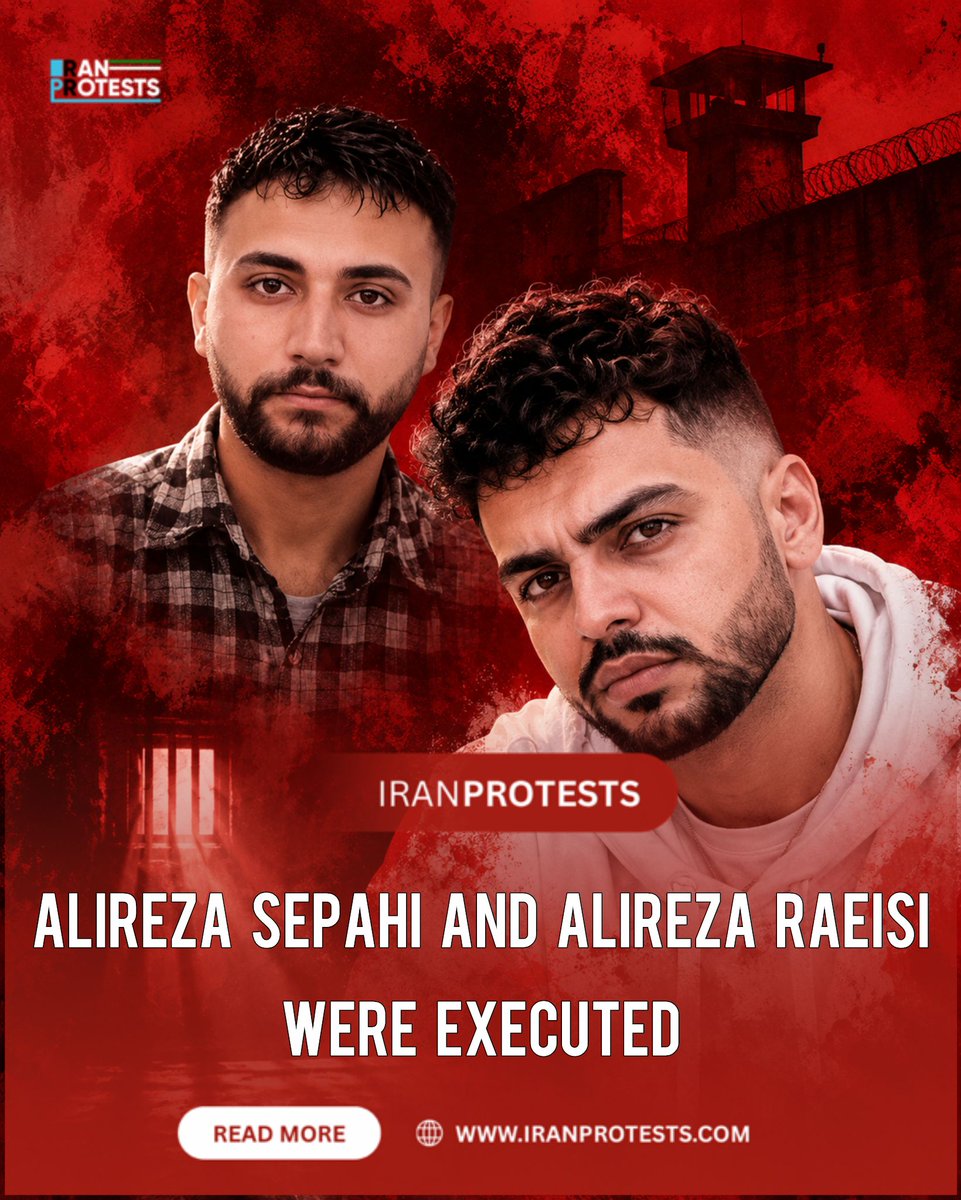
According to reports, Alireza Sepahi and Alireza Raeisi were executed on Monday morning, October 5, 2026, at Dastgerd Prison in Isfahan. Both men were arrested during the nationwide protests in January and were defendants in the well-known "Alikhani Square" case. So far, the judiciary of the Islamic Republic has not officially announced the executions.
Alireza Sepahi's lawyer stated that although a parallel court had initially accepted their request for a retrial, the Isfahan Revolutionary Court rejected the appeal in less than 48 hours without even holding a hearing. Reports also show that security camera footage and other evidence proved Sepahi was somewhere else when the alleged incident took place in Alikhani Square. Despite this evidence, he was sentenced to death four times.
Sepahi, who was born in 2001, was arrested on January 10, 2026. Just one day before his execution, he married his fiancée, Mahshad Keshani, during a phone call from inside the jail. She is also currently imprisoned.
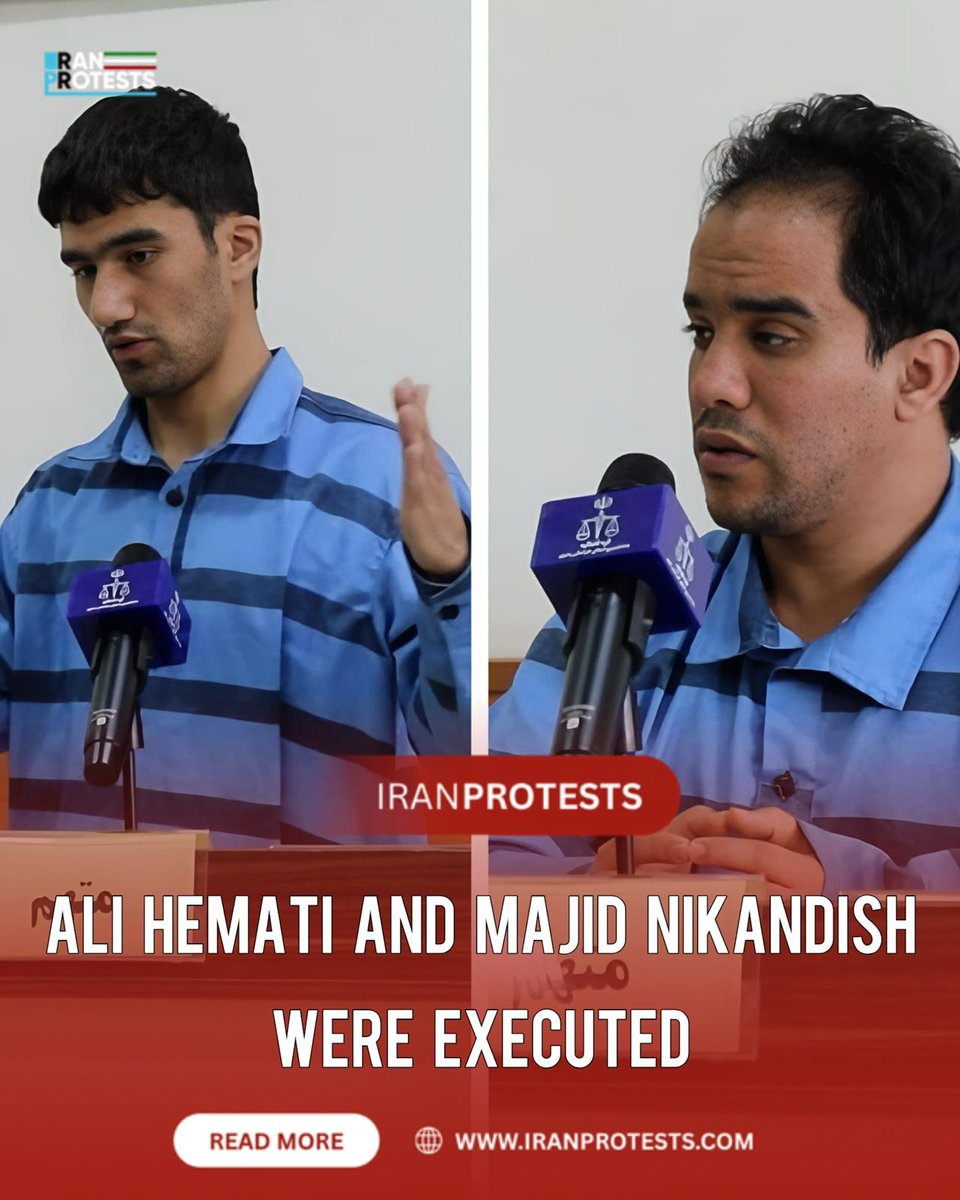
The Islamic republic’s judiciary announced that the death sentences of Ali Hemmati and Majid Nikandish, two men detained during the Dey 2584 uprising in Mashhad, were carried out early Wednesday, October 8. The two men had been arrested on January 8 in Mashhad’s Tabarsi district.
The judiciary claimed that the two were among the “main figures” involved in that day’s protests and had played a role in the killing of four police officers. However, no details have been made public regarding the specific charges that led to their death sentences, the court branch that heard their cases, the dates of their trials, or the judicial proceedings followed in their cases.
The executions took place amid warnings from human rights organizations in recent months about a rise in death sentences and executions in cases related to protests, as well as judicial proceedings lacking adequate due-process safeguards.
The Judiciary of the Islamic Republic has announced that the death sentence of Hossein Pedaran, a prisoner detained in Isfahan, has been carried out. He had been sentenced to death on charges of "espionage and intelligence cooperation for the benefit of Israel," a verdict that was subsequently upheld by the Supreme Court.
The judicial apparatus claims that Pedaran provided Mossad with intelligence regarding sensitive military and missile facilities in Isfahan province, as well as the personnel working at these centers, receiving payments in Euros in exchange. It is further alleged that some of the facilities about which information was transmitted were targeted during the war.
Nevertheless, no details regarding the time of his arrest, the specific court branch, the identity of his defense attorney, or the exact date of the execution have been released, and no independently verifiable documents concerning the allegations have been made available to the public.
On September 11, IAL pauses in solemn remembrance of the thousands of innocent lives taken that day.
Their absence and the enduring grief of those left behind continue to echo through the years, standing as a testament to the human cost of hatred and to the profound darkness of those who chose hatred over humanity.
We honor those we lost with enduring respect and compassion for those who continue to carry their loss, along with a solemn promise never to forget.