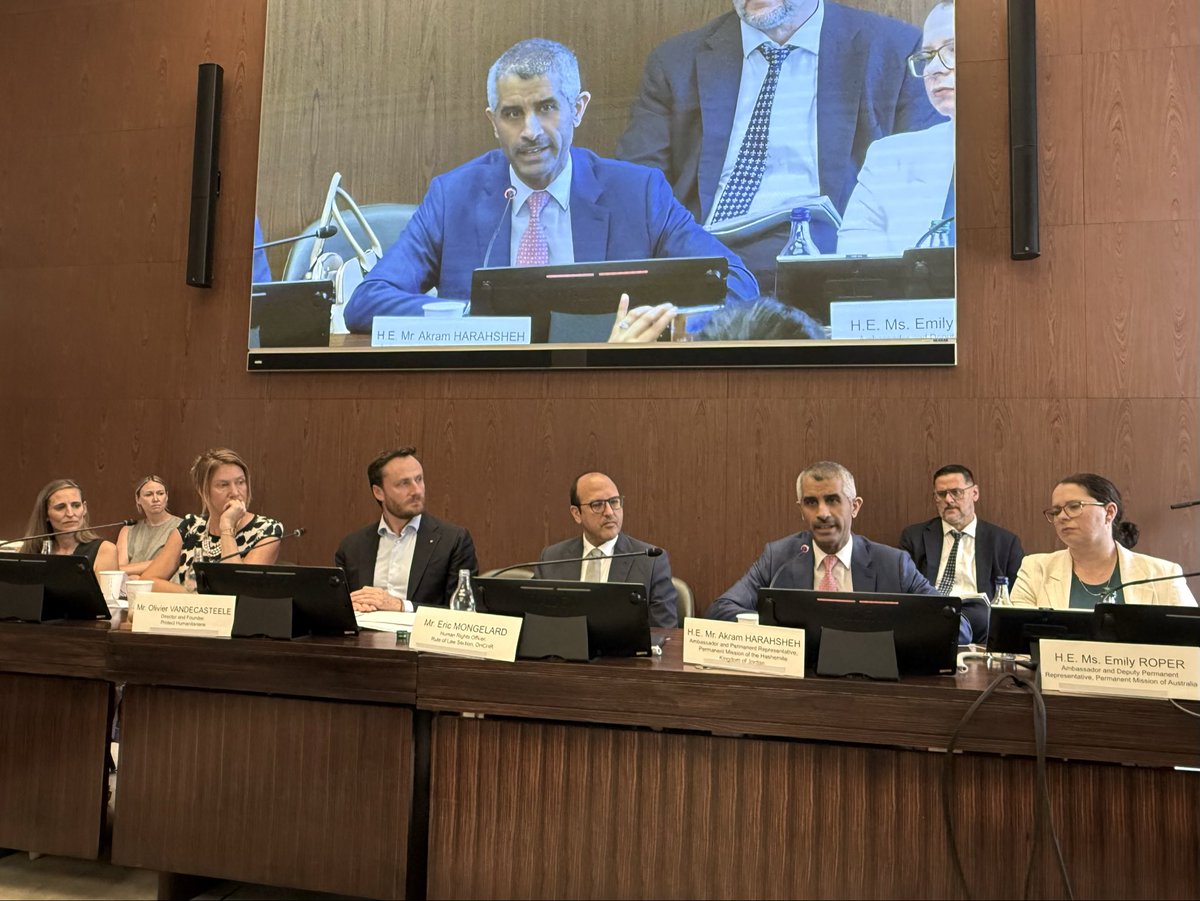
Thank you to @UNHumanRights, @P_Humanitarians, @frontline_nego and @LegalActionWW for a thoughtful discussion.
Their insights and practical recommendations helped identify ways to address arbitrary detention and strengthen protection for humanitarian personnel.
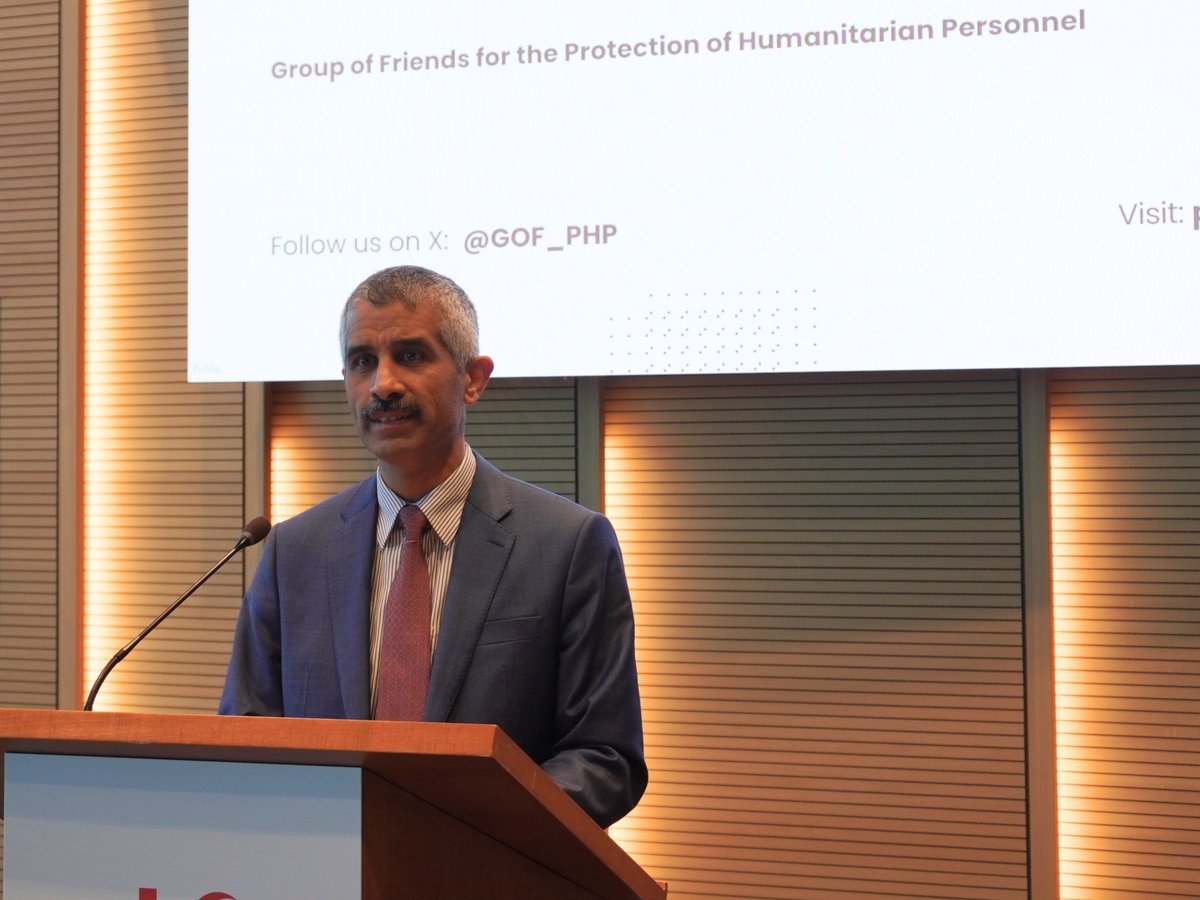
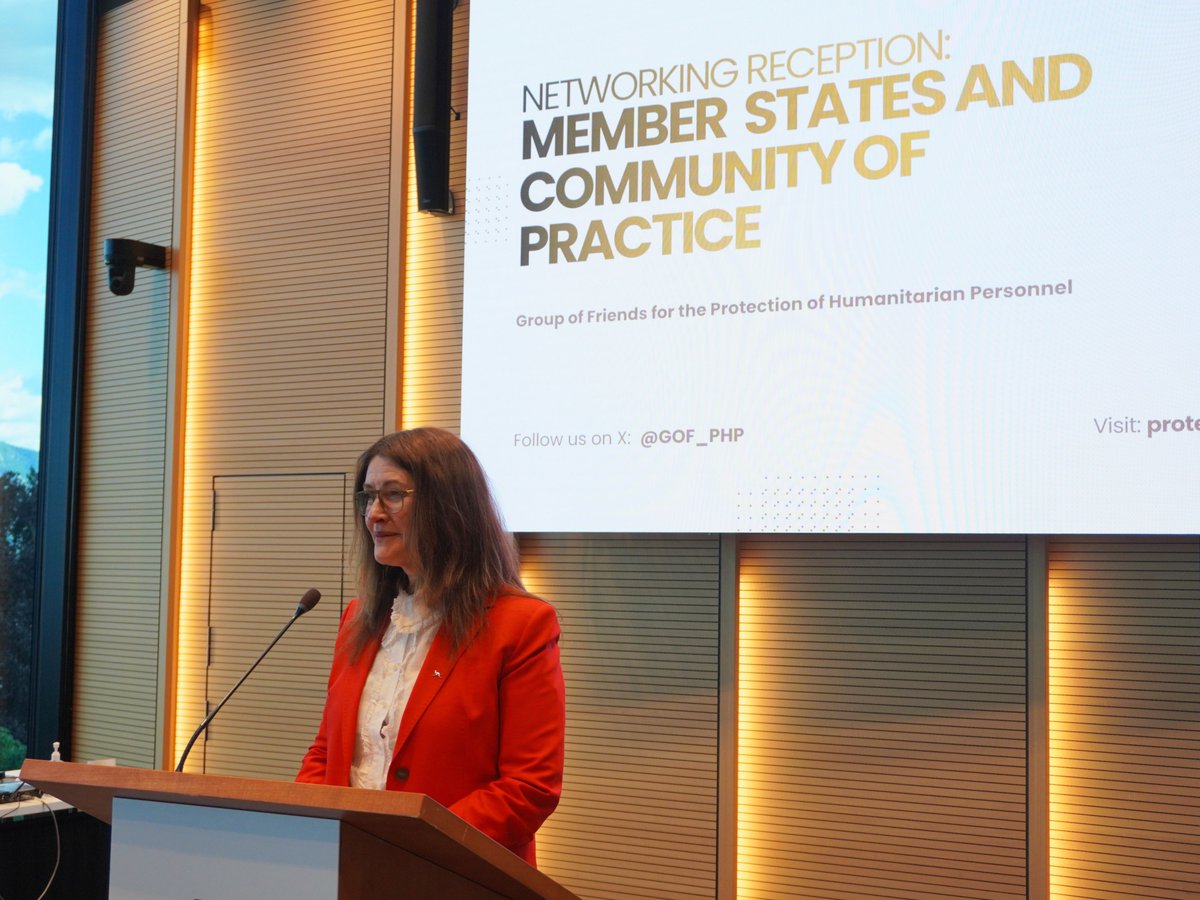
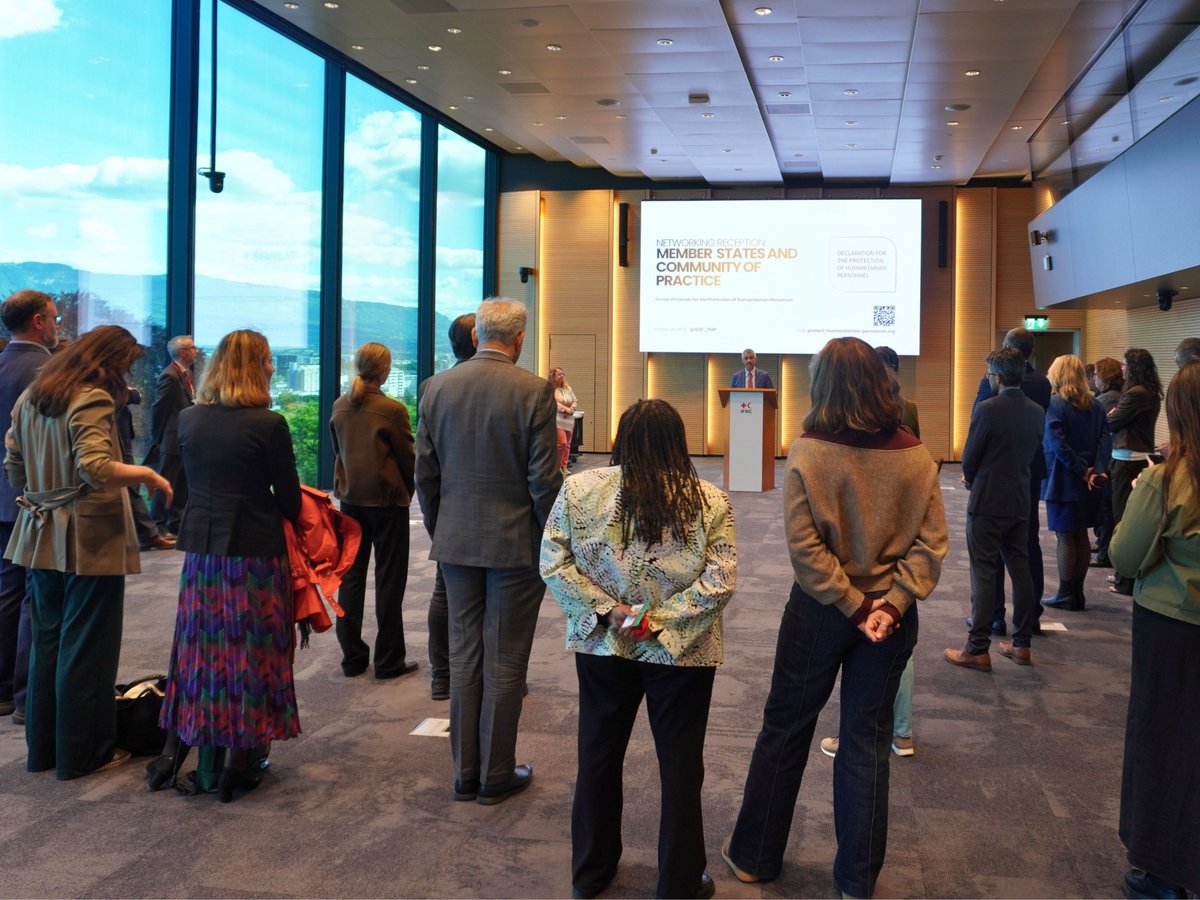
Today at #HRC62, we held a side event on arbitrary detention of humanitarian personnel.
It brought together first-hand testimonies alongside legal, human rights and humanitarian perspectives to support the Declaration for the Protection of Humanitarian Personnel.
We warmly welcome Mozambique 🇲🇿 as a new signatory to the Declaration for the Protection of Humanitarian Personnel.
Every endorsement strengthens our collective efforts to protect the people who continue to serve those in crisis, often at great personal risk.
At today’s Permanent Representative meeting, one message was clear:
Member State signatories to the Declaration for the Protection of Humanitarian Personnel are determined to turn words into action so humanitarian personnel can work safely, without fear, for people in need.
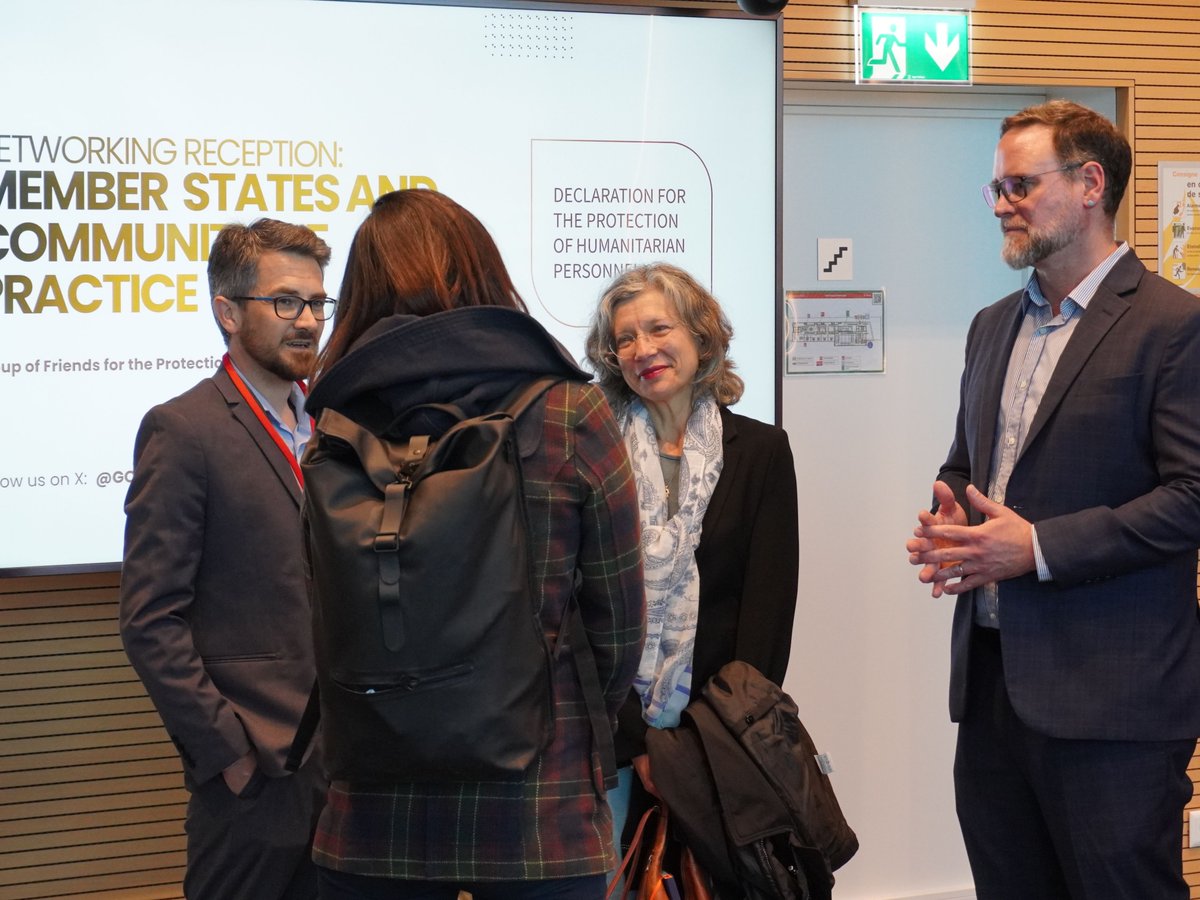
The Group of Friends for the Protection of Humanitarian Personnel held its first Permanent Representative meeting with the presence of @UNReliefChief Tom Fletcher.
We thank you for your time and insights into the challenges humanitarian workers face on the frontlines of crisis.
Frontline voices from South Sudan, Ukraine and Yemen underline the risks faced by local humanitarian personnel and the need to turn commitments into stronger protection.
Read our latest article, "A Call to Action: Humanising Humanitarians": https://t.co/KgnuZaGlIX
We warmly welcome Uganda 🇺🇬 as the latest State to sign the Declaration for the Protection of Humanitarian Personnel.
Every new endorsement strengthens our shared commitment to protect humanitarians and uphold international humanitarian law. @geneva_uganda#ProtectHumanitarians
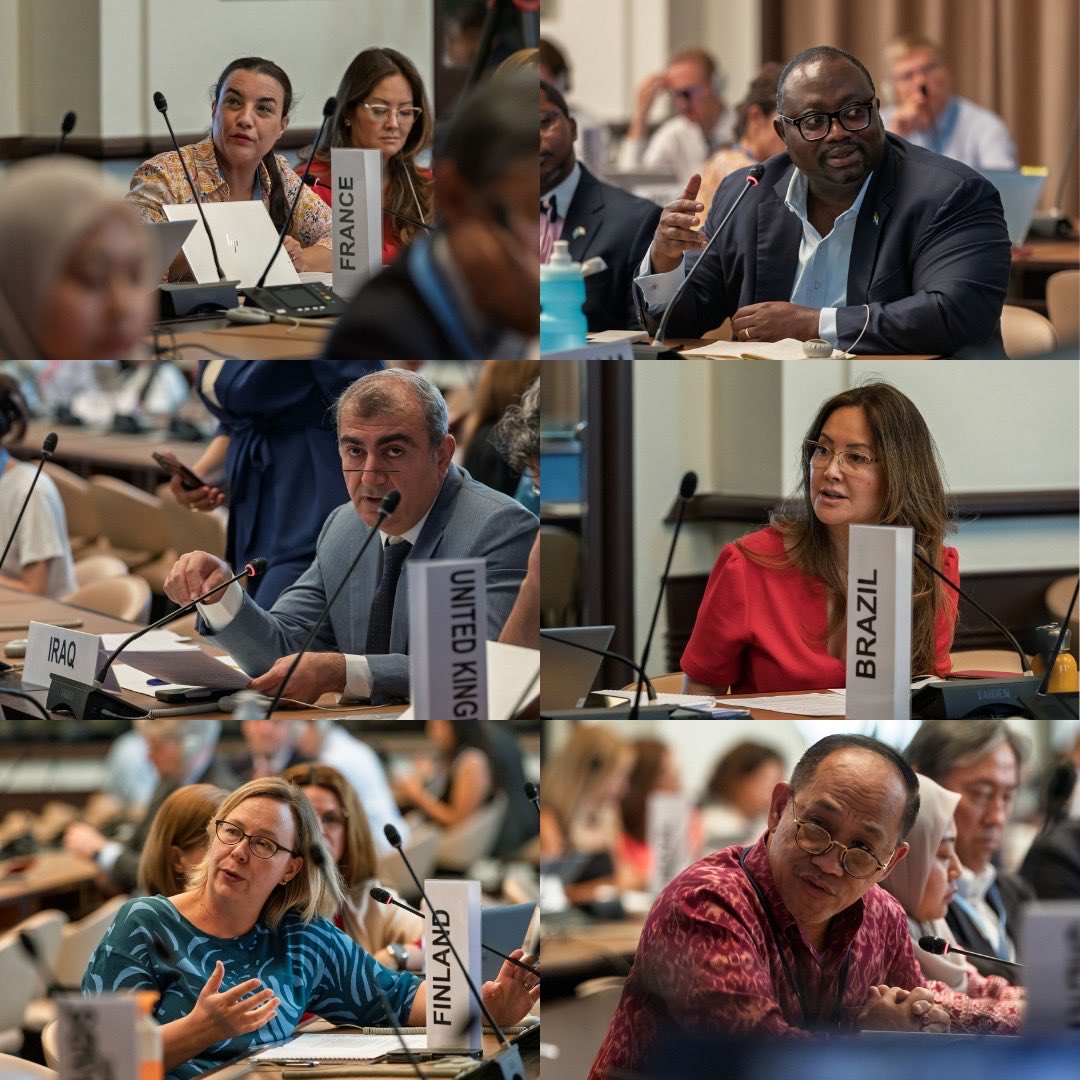
The expert meeting provided a platform for States to share examples and good practices in implementing the Declaration for the Protection of Humanitarian
Personnel.
Thank you to all representatives and partners who joined the discussion.
#ProtectHumanitarians
The Group of Friends, co-chaired by @AustraliaUN_GVA & @JOR_PM_Geneva, convened an expert-level meeting to discuss one of the four pillars of the Declaration for the Protection of Humanitarian Personnel: Alignment of protections for international, national and local humanitarians
"As humanitarians, we spend our lives responding to emergencies and communicating about disasters. But we are just normal people. We are not immune to the trauma, the panic, or the losses that people around us are facing. And yet, we keep going. Because there is no other choice."
On 8 April 2026, Black Wednesday, over 150 airstrikes struck Lebanon in ten minutes. 357 people were killed. 1,223 injured.
The events of that day profoundly affected the lives of people working to help others. Lama @chidiac_la19600, from @IFRC in Beirut, Lebanon, is one of them. She tells her story about that day, when time stood still as she tried to locate her family. 👉https://t.co/Jmc6MAOiYT
At #WHA79, Jordan 🇯🇴 spoke on behalf of 🇦🇺🇧🇷🇨🇴🇮🇩🇯🇵🇸🇱🇨🇭 to reaffirm a shared commitment: protecting humanitarian personnel and upholding #IHL.
Read the full statement: https://t.co/oLKmCZE0AW
This includes safe and unhindered humanitarian access, practical measures to protect humanitarian personnel, and accountability when #IHL is violated.
States have a key role in turning these commitments into concrete measures that keep civilians safe. #PoCWeek
Aid deliveries can be delayed.
Services can be suspended.
Civilians can be left without the support they urgently need, with potential long-lasting and far-reaching effects.
Protecting humanitarian personnel is protecting civilians. #PoCWeek
As conflicts increase and humanitarians face rising threats, communities already living through crisis are put at greater risk.
At #PoCWeek, we have the opportunity to advance practical solutions that help protect people affected by conflict and those who support them.
We are deeply concerned by the recent incident in Ostriv, Ukraine, where a @UNOCHA convoy was hit by drones while delivering aid.
Under #IHL, humanitarian personnel, facilities and transport used in relief operations must be respected and protected at all times. #NotATarget
A productive meeting between NGOs and the Co-Chairs of the Group of Friends for the Protection of Humanitarian Personnel, @AustraliaUN_GVA and @JOR_PM_Geneva.
Political advocacy must be informed by lived experience and operational reality to ensure humanitarians are protected.
Our thoughts remain with the families and colleagues of the 13 Red Cross and Red Crescent staff and volunteers who lost their lives while serving others this year.
Protecting humanitarian personnel must remain a global priority.
Our strength? A global network that comes together to deliver vital humanitarian support at the most critical stages of people’s migration journeys.
In 2025, the @IFRC’s Global Route-Based Migration Programme brought together 66 National Red Cross and Red Crescent Societies to support more than one million people with essential services, including food, water, connectivity, basic health care and much more.
Learn more about the programme: https://t.co/ScHWWTm7SZ
A Red Cross and Red Crescent day that hits different. Today, celebrating from the @GOF_PHP side.
A day to honour the invaluable work of Red Cross and Red Crescent volunteers and staff worldwide, and to pay tribute to those who lost their lives while serving their communities⛑️
On World Red Cross and Red Crescent Day, we honour more than 17 million volunteers worldwide and remember those who lost their lives helping others.
#UnitedInHumanity#RedCrossDay#RedCrescentDay
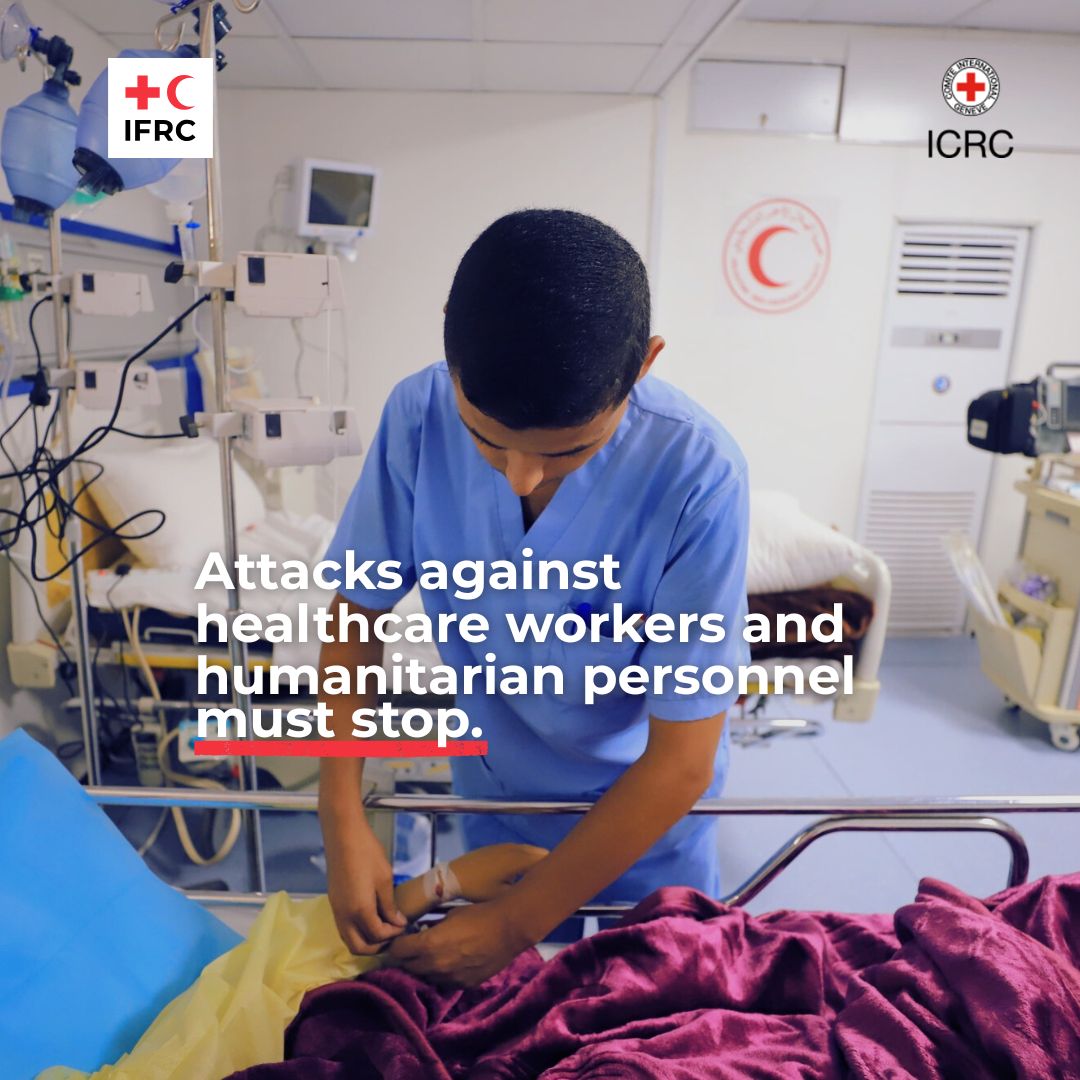
In places affected by conflict, violence against those providing care and assistance has deeply affected the Red Cross and Red Crescent Movement, including National Societies, whose volunteers and community health workers are often on the front lines of response.
Medical and humanitarian personnel are protected under different rules of international humanitarian law, but both must be respected and protected at all times. They must not be attacked, threatened, or obstructed from carrying out their work.
States and parties to conflict have the power and the responsibility to prevent such acts and ensure respect for their obligations under IHL.