Do we truly appreciate the power of Irish placenames?
A wonderful way to reconnect with Irish is through our local placenames, because our ‘logainmneacha’ can show us the beauty of the language all around us.
Eolas anseo: https://t.co/HjaxAQ4rFe
〰️Preorder now on our website!
A landmark centenary publication that brings the 1926 census to life through stunning visual material and essays by leading historians, exploring themes of identity, migration, language and everyday life in the newly independent Ireland 📋 🇮🇪
A beautiful photo of Mainie Tom with five of her eight daughters, from left to right Bríd, Kate, Sally, Mary and Maggie in Bungowla, Inishmore, Aran Islands in 1952. A special hello to all of the daughters (and their families) who are now living in both Ireland and the USA. ❤
Abbeyleix & District Historical Society is seeking support for it's petition to host the 2027 Famine Commemoration.
Recently the community have undertaken many projects to highlight the impact of the Famine locally.
Link to sign petition: https://t.co/6MHmREsc3E
@LaoisCouncil
c1916, Selling the Shamrock ☘️
Against the muted backdrop of foggy Dublin in 1916, two young girls clad in green cloaks sell sprigs of fresh shamrock. Oblivious to the impending historical shift, just weeks before the Rising, they continue the St. Patrick's Day tradition. ☘️
Our Reading Room will be closed to the public on Tuesday 17 March and will re-open at 10am on Wednesday 18 March.
To our communities worldwide, we wish you #LáFhéilePádraig daoibh go léir!
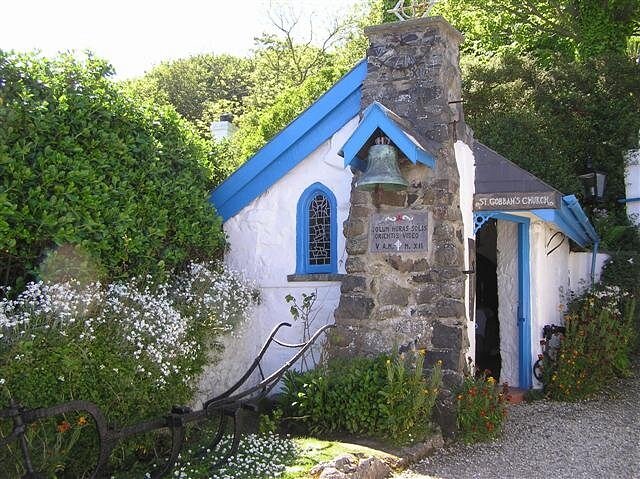
💧 Holy Wells of Ireland ☘️
With over 3,000 recorded holy wells, Ireland has one of the highest concentrations of sacred springs anywhere in the world. Known in Irish as Tobar Beannaithe, these “blessed wells” are deeply woven into Ireland’s religious and cultural landscape 💚
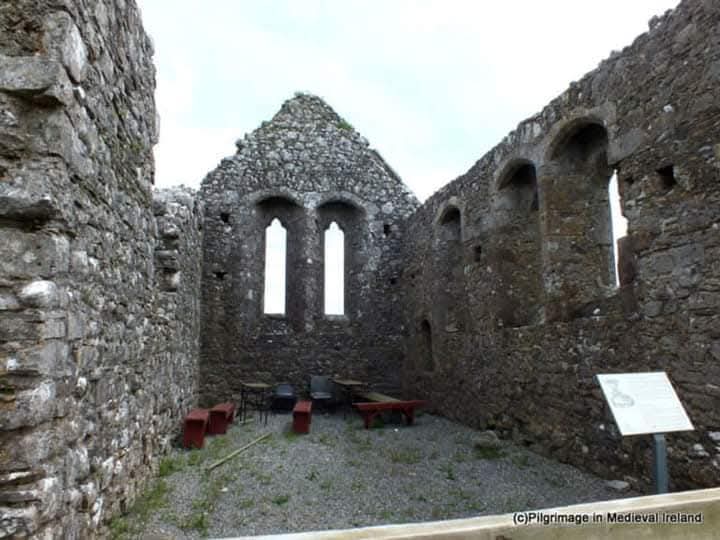
Today in 1980, Michael Webb and his son were exploring the ruins of a historic abbey on an island surrounded by bog near Killenaule, Tipperary. They were using a wonky metal detector when they received a faint signal.
The lads dug for only a few minutes before they discovered the priceless Derrynaflan Chalice on the ancient site. The horde also included a liturgical strainer, a paten and a bronze basin.
These religious treasures would've been buried beneath the monastic site in the 9th century to conceal them from marauding Vikings. The gorgeous engraved silver is decorated with gold filigree panels, die-stamped mounts, and rivets. The bowl is made of beaten lathe-polished silver. the exquiside handles are studed with amber.
Father and son reported their fabulous find and handed over the relics to the government. Naturally, the family expected compensation. The High Court supported their claim of the full estimated value (£5.5 million in 1980s).
But the Supreme Court ruled that as totally unrealistic, the treasure belonged to the people and the Irish state. Also, there was a preservation order on the ruin under the National Monuments Act, 1930, making it an offence to injure or interfere with the site. They were eventually offered a £10,000 reward fee.
The Derrynaflan Chalice can be viewed by everyone at the National Museum of Ireland on Kildare Street, Dublin. But before you get any ideas about being a treasure hunter, hold your horses...This case resulted in a change in the law. The National Monuments (Amendment) Act of 1987 made using metal detectors without express permission of land owners or a licence illegal.
DONEGAL, IRELAND 🇮🇪
In 2009, Liam Emmery planted this Celtic Cross pattern in the woods in Donegal.
Liam died in 2010 before the fruits of his work could be seen, but his creation is now visible from the sky.
May love and laughter light your days and warm your heart and home.
May good and faithful friends be yours, wherever you may roam.
May peace and plenty bless your world with joy that long endures.
May all life’s passing seasons bring the best to you and yours.
- Irish Blessing
Valentine who?
Spread the love and set up a date with all the Irish saints this weekend💞
From Patrick to Gobnait (the patron saint of bees and beekeeping), and Brighid to Sineall (the bell-ringer of St Patrick), this book contains over 1,000 entries on Ireland’s local saints.
With stabilisation & conservation works underway on the protected 175‑year‑old Flaxmill at Cleeves, it is timely to hear from Conservation Architect James Sibson on its history as one of Limerick’s most important industrial buildings
https://t.co/cJOduyiG6f
#ProjectIreland2040
U.S. Online Historical Photos Research
Looking for photos of your ancestors or surroundings? New photo archives have been added (4,195 total collections)
Check out these Free Online Historical Photo Databases, many of which are searchable
https://t.co/plw65lhJzq #genealogy