WHAT IS ZONE 2?
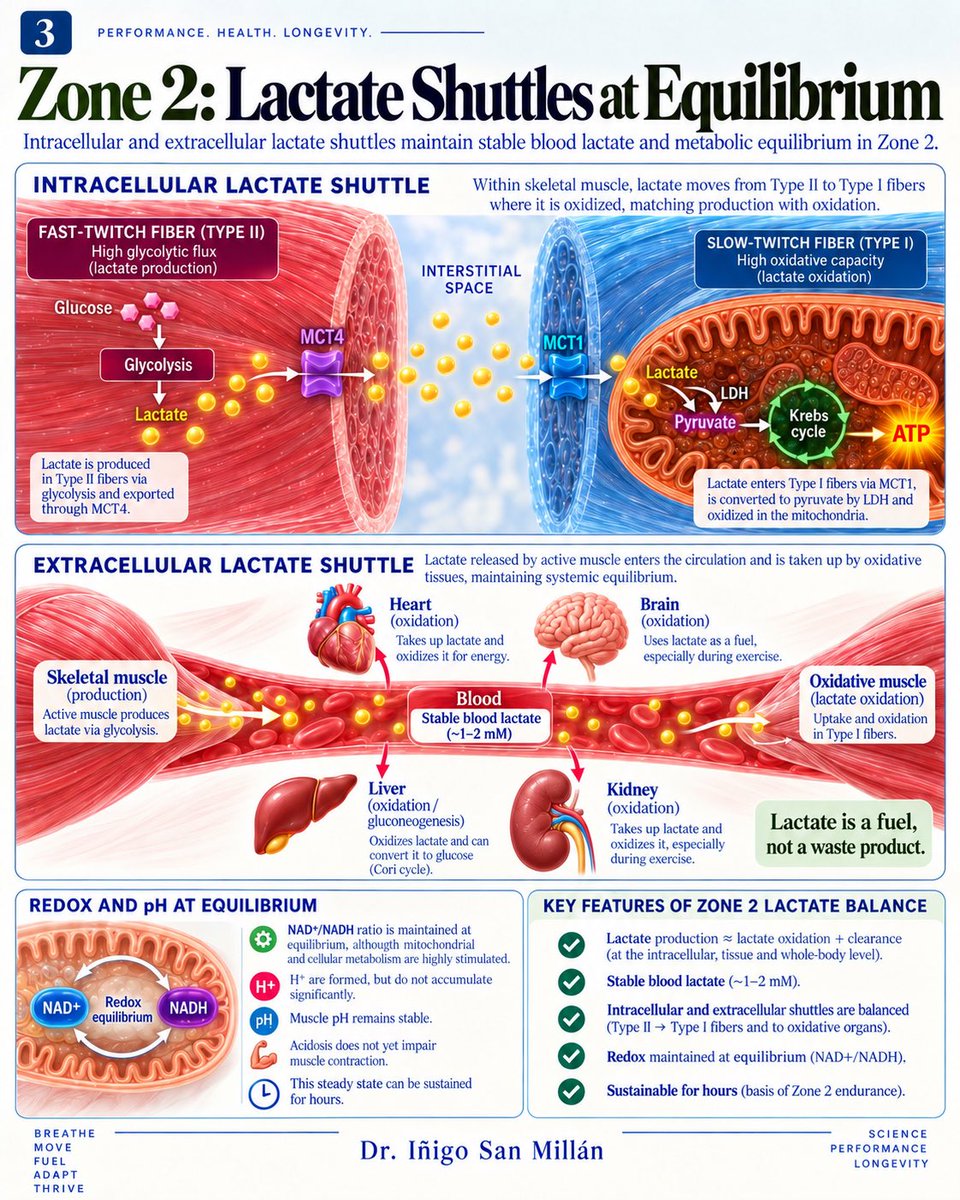
I would like to condense 30 years of work and research in muscle physiology, metabolism, and bioenergetics into how I understand and describe Zone 2 from a bioenergetic perspective.
I have explained these concepts many times over the years in podcasts, interviews, lectures and posts, but I have never tried to bring the entire metabolic story together visually.
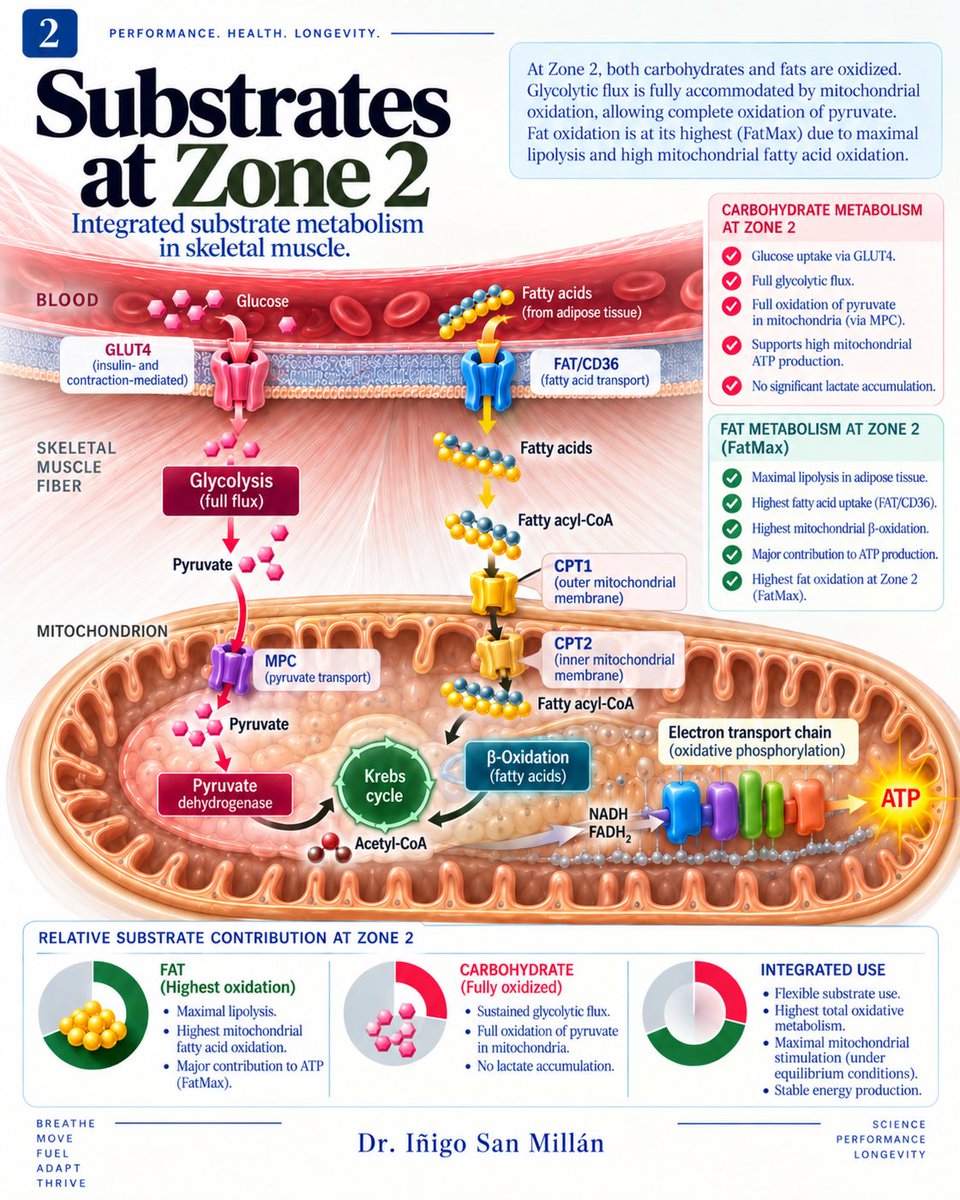
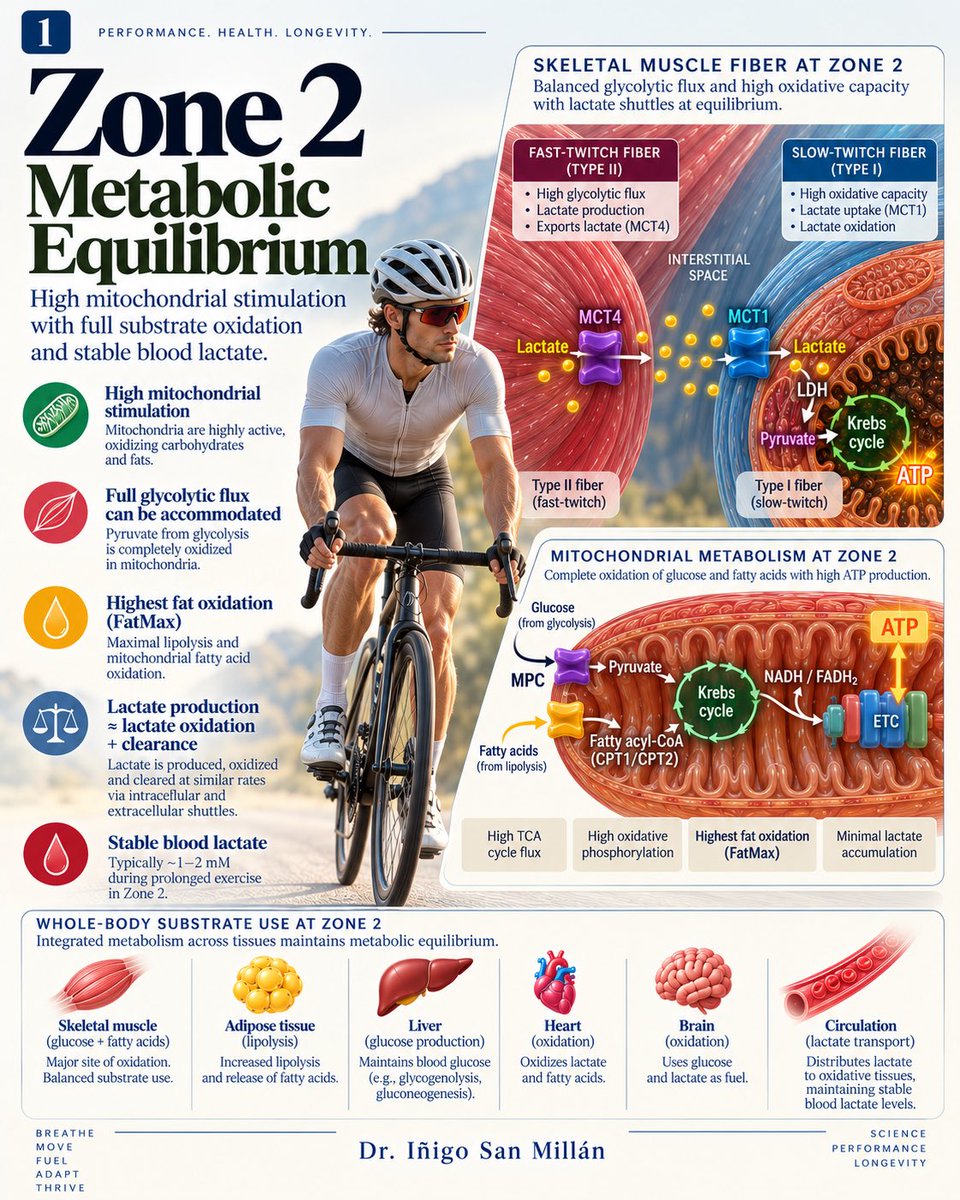
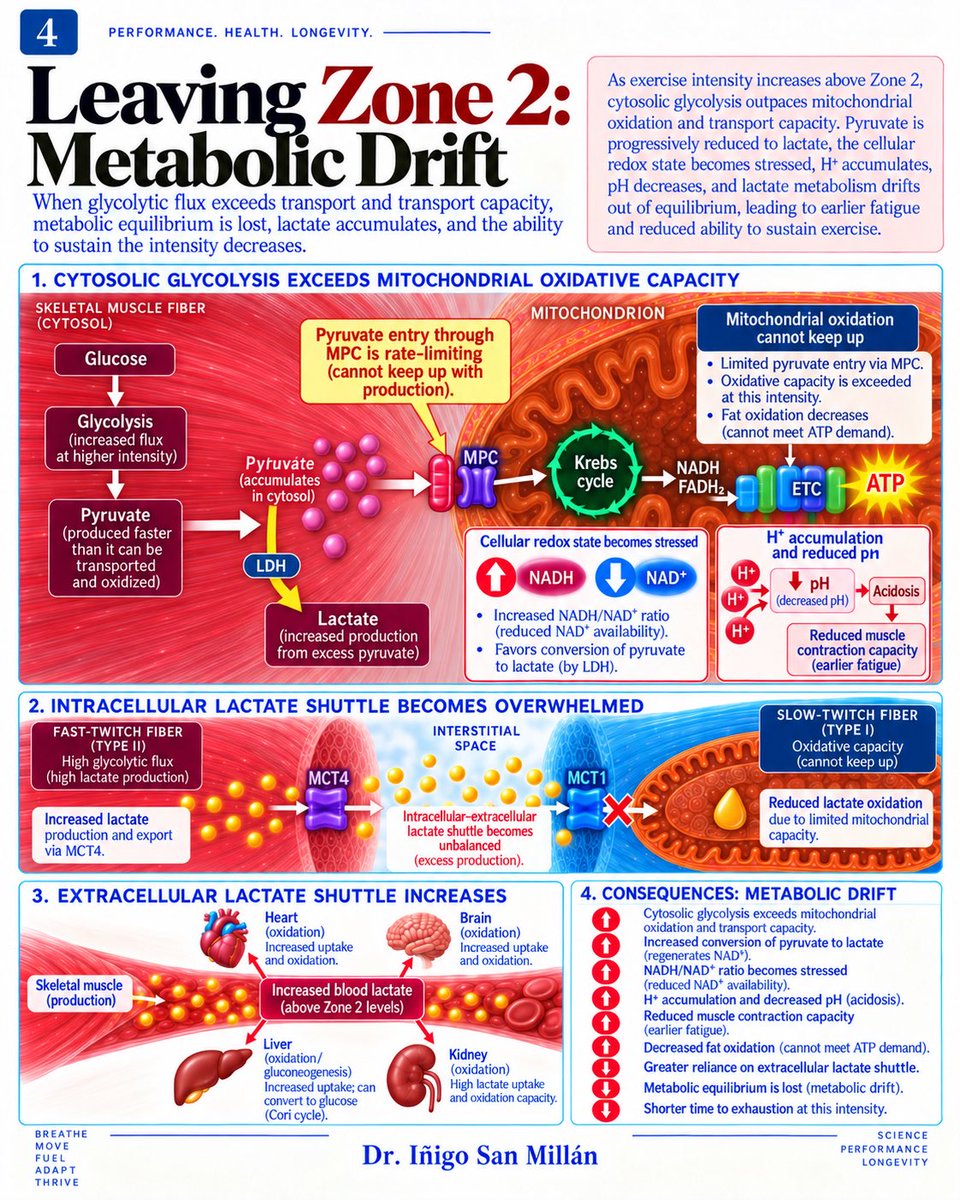
So here it is: 30 years of work and research condensed into five slides, in an AI-produced carousel that I guided scientifically, concept by concept.
For me, Zone 2 is not simply a heart rate, power output, pace or lactate number…It is a METABOLIC STATE.
It is the intensity at which mitochondrial and bioenergetic demand is the highest, while the cell can still maintain METABOLIC EQUILIBRIUM.
And when that equilibrium begins to break, we start moving away from Zone 2 and into what I describe as METABOLIC DRIFT
This carousel is my attempt to explain my vision of what Zone 2 represents at the biochemical and bioenergetic level.
Identifying where your Zone 2 is can help targeting these cellular and mitochondrial adaptations.
#zone2 #metabolicequilibrium #MetabolicDrift
Running injuries are fundamentally a load versus capacity issue. If you get injured, the load you placed on your body, whether chronically over time or acutely from one session or a recent stretch of training, exceeded the capacity of a certain tissue. That could be your Achilles, hamstring, patellar tendon, or whatever.
Running injuries are also multifactorial, which is why I think it’s wrong or short-sighted to blame one single thing for an injury.
For example, people will say, “These shoes made me injured.” Well, take the thought experiment that I could jog a half mile slowly in Timberland boots and not get injured. That doesn’t mean you should run in Timberland boots, it means that even something less than ideal isn’t necessarily enough by itself to cause an injury. The shoes could be a contributing factor, but you still have to consider the total load.
Same thing when a PT says you have weak glutes, an anterior pelvic tilt, some imbalance, or a problem with your running form. Those things matter, but if you were running 2-3 times a week and staying healthy, they weren’t preventing you from handling that load. Start running more frequently, doing longer runs and adding harder workouts, and suddenly certain weaknesses get exposed.
That’s a useful way to think about injury. You currently have a capacity problem relative to the load you’re placing on that tissue.
And that leads to some pretty basic corrective measures. First, decrease the load. Rethink the running you’re doing in terms of frequency, volume and intensity. You don’t necessarily have to stop running, but you need to get the load back below what the tissue can currently tolerate.
Then build the capacity back up with strength training. Running itself builds capacity when you stay within what you can tolerate and progressively add more. Eventually, higher force activities like faster running and sprinting can build your ability to tolerate those loads too, as long as they’re introduced progressively.
Cross training can bridge the gap. You can maintain or build your aerobic fitness while temporarily reducing the specific mechanical loads from running.
So rather than asking, “What one thing caused my injury?” a better question is: “Why did the load I was doing exceed my capacity, and what do I need to change on both sides of that equation?”
I’m on @buymeacoffee. If you like my work, you can buy me a coffee and share your thoughts 🎉☕ https://t.co/egK9J3dmxy
Otra forma más para que los televidentes del canal puedan hacer sus contribución☕️
https://t.co/nNR4CDUQ8o
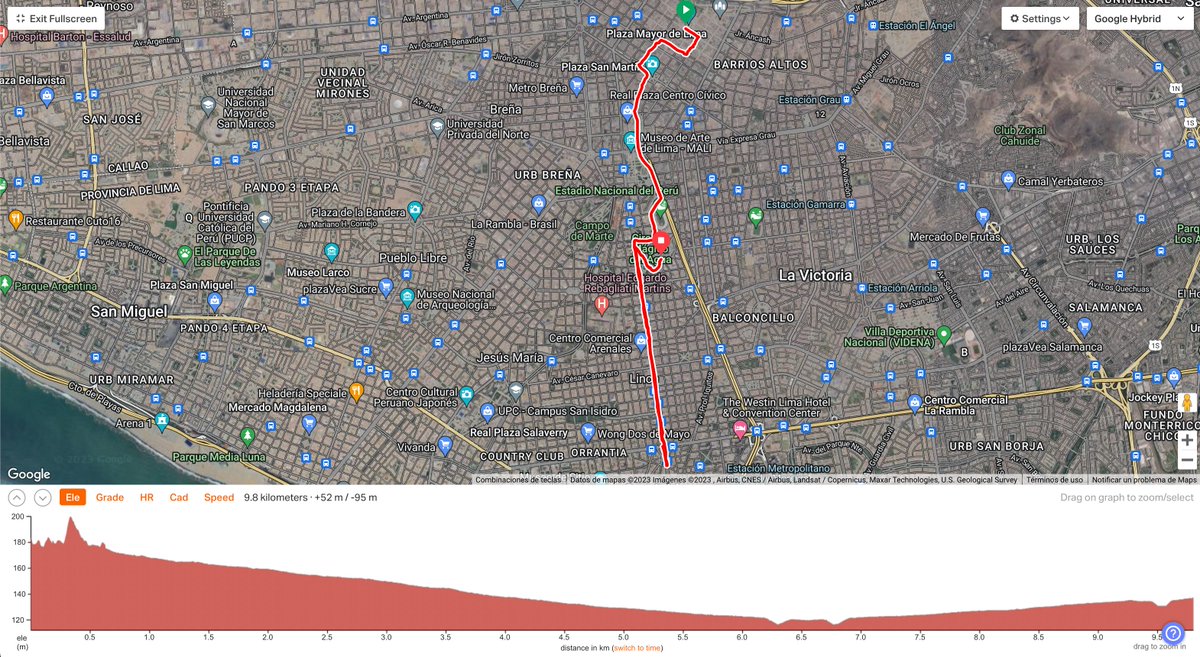
@__pawbrand Una opción puede ser en esta parte del Campo de Marte, un trote hasta la Plaza de Armas puede ser el calentamiento y al terminar en meta el carro te quedaría cerca
https://t.co/IvhO55plGa
- Km 8-9.5 —> 1.00-1.04IF aumentando ligeramente la intensidad para no perder pace en subida, momento de la verdad 🤬
- Km 9.5-10 —> 1.05-1.10IF último acelerón hasta meta 🏁
Dosificación 10K de Lima 2023
Intensidad relativa (IF) en función al rFTP, aunque también encaja usando el pace de umbral. Como el perfil de la ruta es bastante sencillo el foco debe estar en los 3km finales que son de subida.
#KiaMediaMaratónDeLima
🧵
- Calentar bien unos 20min, primero trote aeróbico y al final algunos cambios de ritmo
- Entrar temprano al corral asignado
- Km 0-1 —> 1.00-1.05IF buscando mejorar posición sin hacer demasiados cambios de ritmo
- Km 2-7 —> 0.98-1.00IF aprovechando la bajada, guardando piernas
So after the Lance Armstrong documentary, let's talk about why the "Well everyone was doing it" excuse to justify Lance's performance falls flat.
A brief thread.
Move from Dependence to Independence
Coaching is about making your own job obsolete. Good coaches foster independence. We should be working towards having our athlete be self-sufficient, with our role as simply course correcting the ship as it goes.
"La educación básica es continua. Arranca a los 3 años y termina a los 17 en 5to de secundaria. La forma cómo se plantea, qué competencias y de qué manera se abordarán las áreas en cada grado es arbitraria. Cada país lo hace de otra manera."
"¿Perder el año podría ser una opción? Por ningún lado. Perder el año sería un insulto a profesores y alumnos que trabajan duramente en la modalidad atípica que les ha tocado en un año escolar atípico y a los padres que los están acompañando. Es absurdo". https://t.co/1Frb6UMUuI
When it comes to motivation, are you Ego or Task orientated?
Ego:
-Outcome orientated
-Success is dependent on performing better than others
-Prove superiority
Task:
-Focusing on improving relative to previous performances.
-Not comparing to others
-Self-referenced
-Mastery
Abro hilo sobre el efecto económico del Covid-19 (pronto un artículo completo sobre esto). El Covid-19 le va a asestar un golpe brutal a la economía peruana. Lo primero es que el Perú es mucho más vulnerable por su alto grado de informalidad: más de 11 millones de personas.