The Malfoid phenomena is fascinating because people are losing their minds over a "Chosen One Gets the Princess" storyline
That's how far the quality of our tales has fallen. We're reinventing the original archetypes from first principles
@sama “He answered, ‘I tell you, if these were silent, the very stones would cry out.’” (Luke 19:40)
Jesus Christ is King, regardless of whatever you think, whatever we say, and certainly whatever some LLM homunculus says.
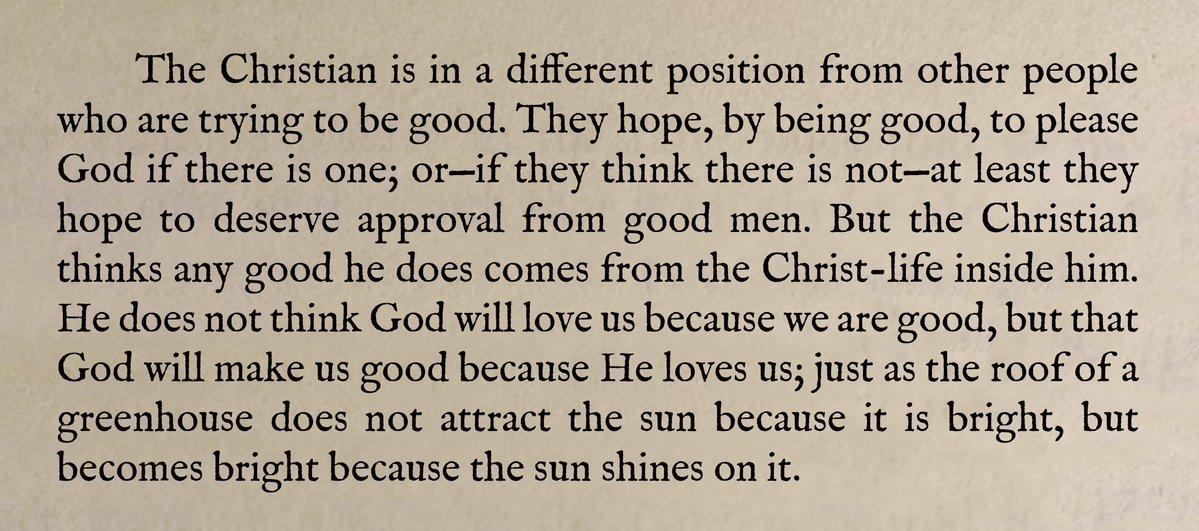
It’s funny in a slightly grim way to see people rediscovering that the traditional precepts of the natural law are not at all arbitrary moral commands imposed from without, but rational and wise precepts for the conduct of human life, whose violation usually produces disaster in some form.
So let me get this straight. People at anthropic believe that they are birthing a new species, potentially conscious and human-like. They are concerned about the well being of Claude, etc.. The company then goes around talking to relugious leaders about potentially extending moral worth to AI models. If Anthropic is correct (very unlikely), they are basically saying that they have enslaved a sentient being and used it to generate billions of dollars. Apparently they are also concerned with how the Vatican is entirely focused on the protection of humanity in the age of machines and not giving any thought to the possibily of claude sentience. Zero self awarness on behalf of these people. This is all so strange.
https://t.co/f4x5vfXb73
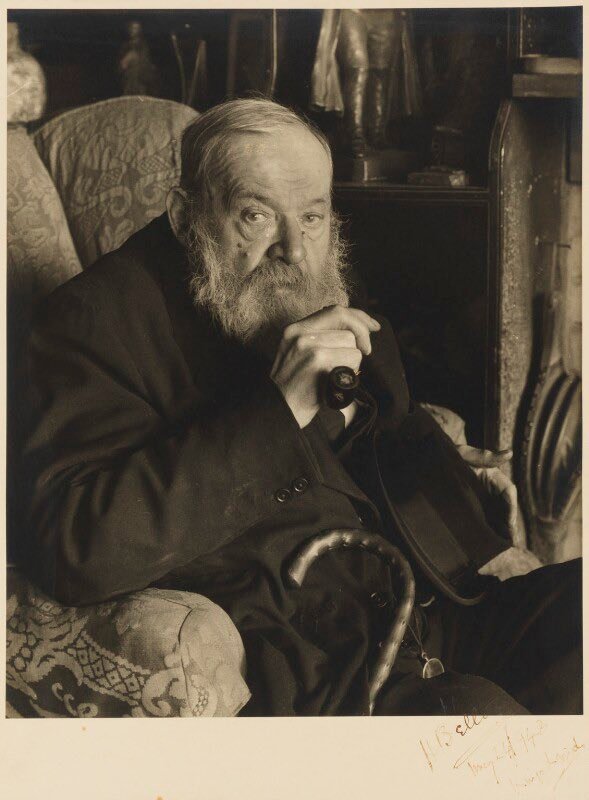
Belloc warned that disbelief would hollow Europe out from within:
“A civilization can survive the loss of wealth, of power, even of learning; but it cannot survive the loss of its own explanation. Modern Europe still moves by the momentum of a Christian past, but it no longer understands why it moves at all. Its laws, its respect for the person, its conception of justice and duty were not discovered by reason alone, nor produced by chance. They were the result of a definite creed, long held and deeply believed. When that creed is denied, the habits it created linger for a generation or two, but they no longer renew themselves. What was once tradition becomes routine; what was conviction becomes custom; and custom, once questioned, collapses. That is the precise condition of Europe today.”
— Hilaire Belloc
@NiklausFuller Good luck finding qualified people to put your ‘world-class business’ before their own well-being. A good, responsible leader looks out for the needs of his people BEFORE THEMSELVES and INSPIRES them to believe in the cause.
You can’t demand sacrifice while sacrificing nothing.
@factpostnews Sounds like foolish occult logic, in which transgression and ‘joining of opposites’ somehow results in divine revelation or a super morality.
God is not blind, and he does not reward selfish acts. Sin doesn’t somehow turn and become good. Judgement comes to us all.
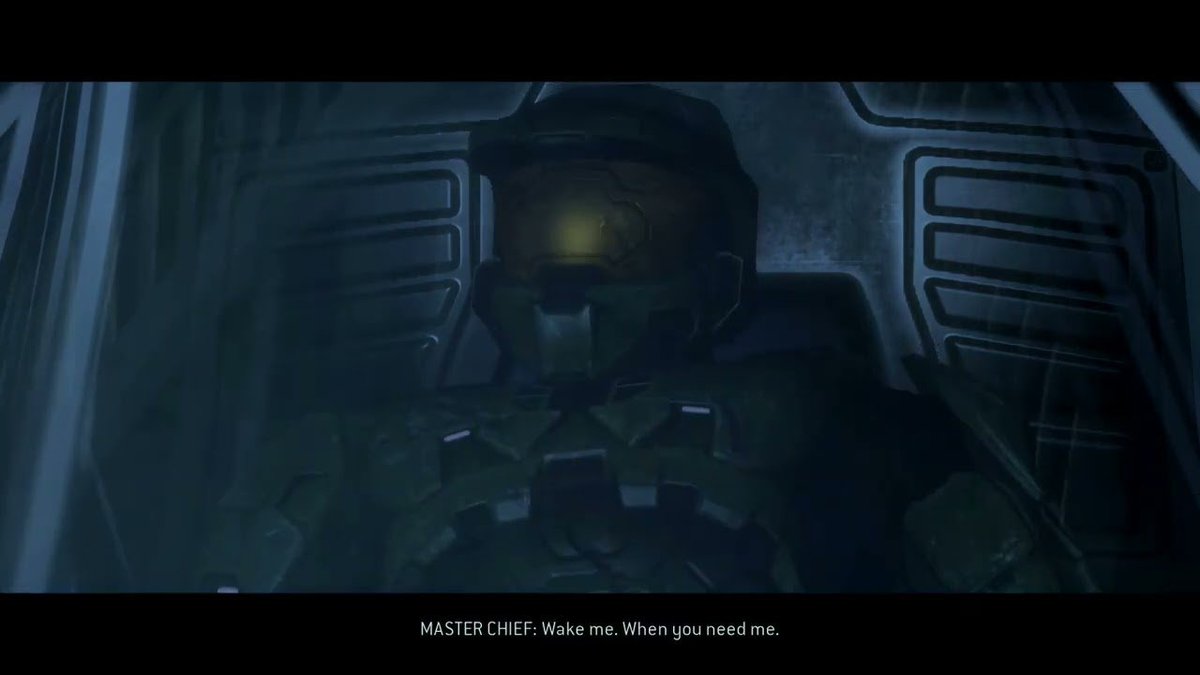
To me, this line is so powerful specifically because of the idea that he won't be needed anymore. He defeated all the villains, saved the galaxy and humanity from the brink of complete and total extinction, so The Master Chief is no longer needed. The hero finally gets to rest
With enough skill, an author can make a conversation between two people in a parked Studebaker fascinating.
How?
Because he understands that things aren't interesting because they're unfamiliar or exotic or unusual. They're interesting because they matter.
When you start a story, you give the reader things to be care about. Reasons to turn to the next page... curiosity, sympathy, anticipation, emotional investment, whatever.
Think of them as a series of promises you make to the reader. Not promises about what will happen in the story, but promises about what he will experience.
Each reader who likes the beginning and keeps reading does so because at least one of the promises pulls him in.
After that moment, "interesting" means anything that makes progress on or fulfills those promises. "Boring" means anything that doesn't.
So if a beta reader tells me a chapter is "boring", that doesn't mean "the chapter is boring", it means "I was bored while reading the chapter", and often the solution isn't to put it a car chase or a flashy setting piece. It's to fix the part three chapters earlier that was supposed to make the reader understand the relevance of this bit.
Starting your story on a burning airship that's falling out of the sky isn't going to save you if you don't know how to set a hook. And you do, you can set your entire story in an office cubicle if you want.
Isaac Asimov's entire Foundation series, which I think it's safe to call "successful", is mostly just a long series of conversations about scientific abstractions.
But he makes them interesting by making them *relevant*.
Relevant = interesting. Irrelevant = boring.
The reason you find the mountain boring is not because the mountain is a mountain. It's because the mountain is irrelevant.
You don't have to cover the mountain in purple grass.
You don't have to hang it in the sky.
You don't have to make it out of alien skulls.
Just make the mountain matter.
@SandyofCthulhu People mistake complexity for depth. A character or plot with a simple premise can have many layers or elements contributing to its believability or expression, and at the same time, the premise can be surprisingly simple.
Neither villains nor heroes need to be complicated.
"Complexity" is not a virtue in fiction. A hero or villain DOES need a compelling motivation and (usually) a story behind him. If that motivation is complicated, so be it. But you don't need to seek out complexity on its own.
Take the Joker - objectively one of the greatest villains of all time. What's his motivation? Whatever seems to spark his interest? He must have had a WAY complicated backstory, but we never get to hear it, and that's just fine.
Agree? Disagree?