El antiviral nirmatrelvir debe su poder al grupo ciano! El mismo grupo que también encuentras en el "super glue". Lo contamos en colaboración con la Dra. Jazmín @Jazzqfb@Quim_Cinvestav y el Dr. Edgar @edymors en @RevistaAyP@cinvestav 🧪
https://t.co/pDvcKQZKvy
During my PhD, I used to tell myself, “I’ll remember this.”
A method someone casually explained, feedback from a meeting, a random idea that came to me on a walk, none of it seemed worth writing down at the time. Spoiler: I forgot most of it.
If you catch yourself doing the same, here’s what I learned the hard way:
⭐ Write it down right away.
Even a few messy bullet points in a notebook or phone can save hours of confusion later.
⭐ Create a system you’ll actually use.
It doesn’t have to be fancy. A running doc, a voice note, sticky notes, or whatever makes it easy to find later.
⭐ Treat your notes as your second brain.
You’re juggling a lot during a PhD. Don’t rely on memory when you can rely on a system.
Take notes for your future self; you’ll be grateful you did.
🧪📄#NuevaPublicacionIQUNAM con la colaboración del Dr. Joaquín Barroso Flores, investigador del #IQUNAM, en @NatureComms: the halide effect in diastereoselective Grignard reactions applied to C4´ modified nucleoside synthesis" #OpenAccess
🔗 https://t.co/JNoxfbW68d
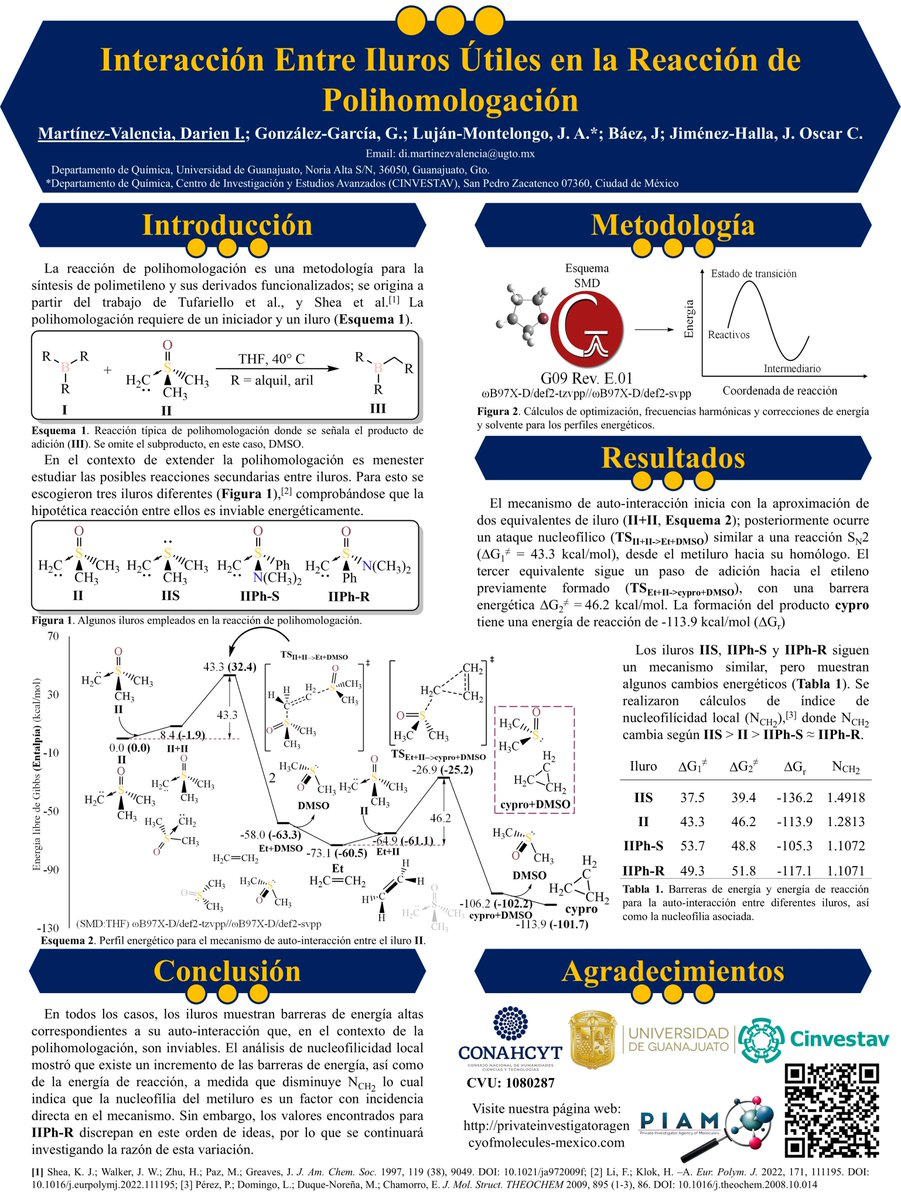
Congratulations to @LeoLugoF from @UdeGuanajuato on winning an honorable mention in the #LatinXChemComp category.🏆We congratulate Leonardo on this remarkable achievement.
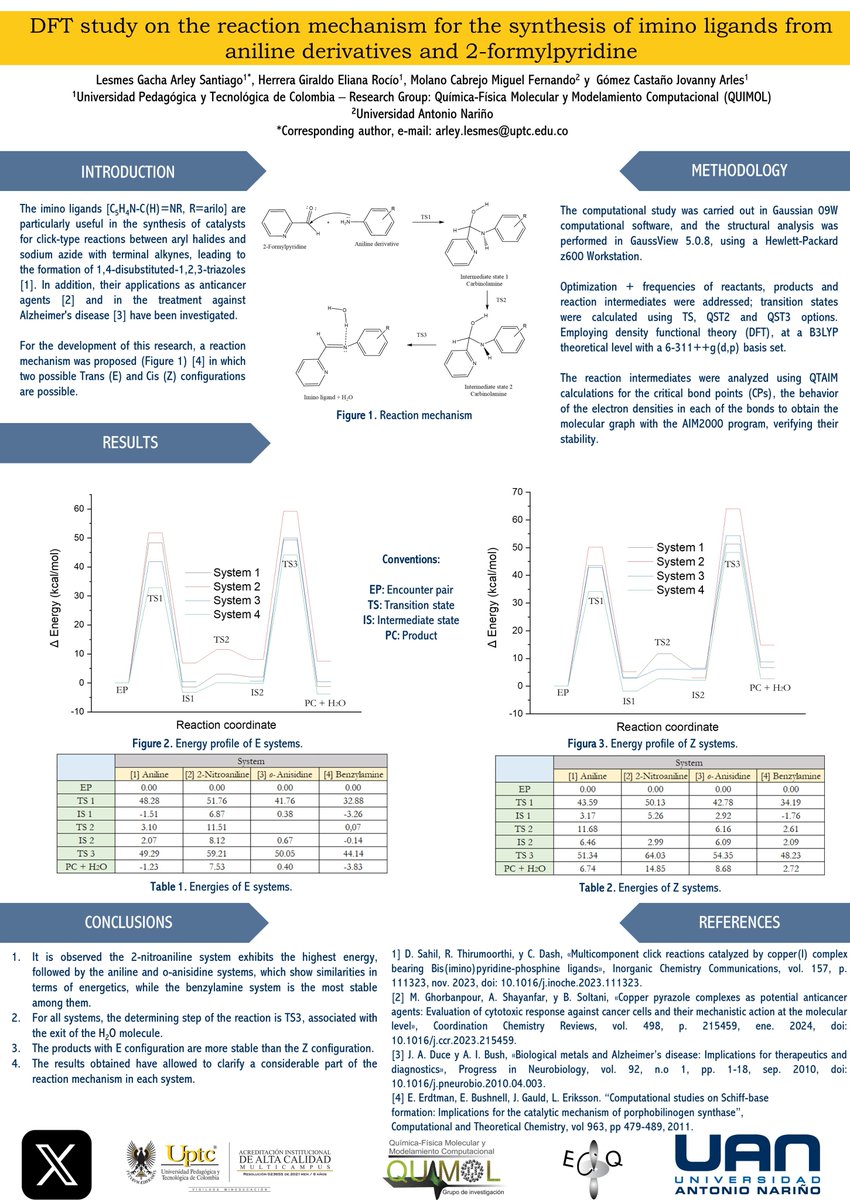
@OrgSynLujanLab@LatinXChem Thank you, prof. That’s an excellent point of view. I suppose the sulfinate ylide might be less nucleophilic at the methylide compared to Corey’s ylide, due to the electron-withdrawing effect of the ‘=O’ group, but I don’t know. Sulfinate ylide could be a good candidate! 👍🏻
@asanlesmes29@LatinXChem Hola Santiago. Esa es una interesante pregunta, la respuesta es sí, el modelo PCM con los parámetros SMD hacen referencia a una solvatación implícita en la que nuestro sistema es colocado en una cavidad que se rodea de un medio continuo polarizable, de ahí el nombre
@lab_fsp@joaquinbarroso@LatinXChem Jeje, inútiles en el contexto de la polihomologacion, quizas. Inútiles en general no, definitivamente no, para algo han de servir
@joaquinbarroso@LatinXChem De hecho, la intención futura sería que cualquier iluro candidato a usarse en polihomologacion muestre barreras de auto-interacción muy altas, como se muestran en el póster. Por el momento, estamos trabajando en eso
@joaquinbarroso@LatinXChem En ese sentido, por eso se les llama “útiles”. Ahora bien, lo que quisimos mostrar con estos resultados es que la reacción de estos iluros está orientada sobre el borano y no entre ellos mismos, esto lo probamos dadas las altísimas barreras.
@EsteLizama@LatinXChem Buena tarde. Ok, muy bien. Una pregunta, empleando el momento dipolar como descriptor, que clase de información esperarías que te indique en tus sistemas?