Agentic AI is moving from conference keynotes into clinical workflows. The shift is real and the potential is significant.
But there is a constraint that most of the conversation around clinical AI agents is not addressing directly.
An agent is only as reliable as the environment it operates in.
In healthcare, that environment is defined not just by data quality but by the regulatory and institutional frameworks that determine whether the agent's outputs can be acted upon.
A clinical AI agent that surfaces a treatment recommendation is useful.
One whose recommendation can be traced, validated, and accepted by a regulator is deployable.
The difference between those two things is not the model. It is the infrastructure underneath the model, including the data provenance, the validation layer, the compliance architecture that makes the output trustworthy enough to use in a clinical setting.
Agentic AI will not scale in healthcare because the models got better. It will scale when the infrastructure those models depend on is built to the standard the industry actually requires.
This AI Doesn't Need Cameras To Protect Your Home.
He Built An AI That Sees Intruders Without A Single Camera.
For decades, home security meant the same thing.
More cameras.
More storage.
More cables.
More blind spots.
If someone walked outside the camera's view, the system saw nothing.
One developer thought there had to be a better way.
Instead of building another security camera, he built an AI agent that could "see" people using nothing but Wi-Fi signals.
He assembled a small AI Box on his own PC and trained it to analyze tiny changes in wireless signals moving through a home. Every time someone entered a room, walked down a hallway, or approached a window, the AI instantly recognized the movement without using a single camera.
No video recordings.
No privacy concerns.
No expensive camera installations.
Just a few small wireless sensors and an AI agent quietly watching over the entire house.
The craziest part?
He realized he wasn't selling security hardware.
He was selling peace of mind.
Instead of targeting homeowners, he partnered with local security companies. They stopped installing cameras in many situations and began offering his AI system as a cheaper, faster, and more private alternative for indoor monitoring.
The AI could detect unexpected movement, recognize unusual activity patterns, alert homeowners in real time, and even notify emergency contacts if an elderly person appeared to have fallen or stopped moving for an unusual amount of time.
Within months, several security providers adopted the platform.
According to him, the recurring software licenses generated over $40,000 in monthly revenue, while the AI kept monitoring thousands of homes 24 hours a day.
He didn't build another smart home gadget.
He built an AI security system that doesn't need to watch you to know you're there.
In the video below, you'll see the technology behind the system and how AI can detect human movement using nothing more than Wi-Fi signals.
Do you think Wi-Fi sensing could eventually replace indoor security cameras, or would you still prefer traditional surveillance?
I'd love to hear your thoughts in the comments.
Follow @DimaHolovatyi for more AI stories, automation, and business ideas before everyone else catches on.
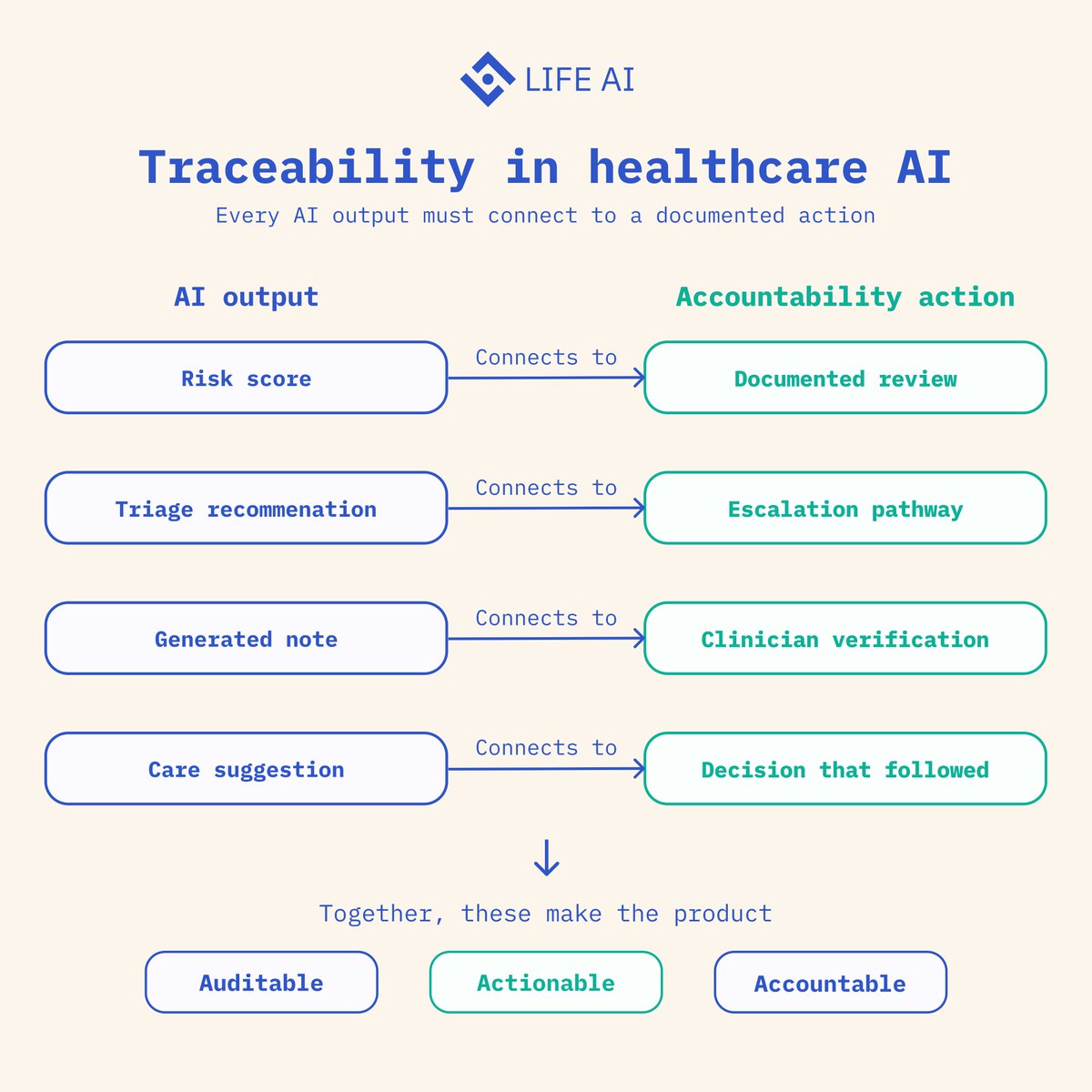
If a healthcare AI product cannot show who acted on its output, when the action occurred, and why the decision was made, it will struggle in real clinical environments.
Clinical teams need more than accurate predictions or well-written summaries.
They need traceability.
A risk score should connect to a documented review.
A triage recommendation should connect to an escalation pathway.
A generated note should connect to clinician verification.
A care suggestion should connect to the decision that followed.
This is not an administrative detail. It is part of clinical accountability.
Healthcare AI products that lack traceability create uncertainty for clinicians, compliance teams, and health system leaders.
The strongest products will not only generate useful outputs.
They will make those outputs auditable, actionable, and accountable inside the care workflow.
He Couldn't Find One Song... So He Built An AI That Could.
Everyone has had this problem.
A song gets stuck in your head.
You remember a few words.
Maybe part of the melody.
Maybe you can only hum it.
But no matter what you search, you never find it.
After running into this problem over and over again, one developer decided to build something better.
Instead...
He built an AI agent.
The idea started after seeing how AI could recognize songs from a simple hum.
But he realized that wasn't enough.
People don't always remember the melody correctly.
Sometimes they only remember a few random words, the mood of the song, where they heard it, or even the type of voice.
So he trained his AI to combine everything.
Users can hum the melody, type a few lyrics, describe the song, mention where they heard it, or even explain the feeling it gave them.
The AI analyzes every clue at the same time.
It searches lyric databases, streaming platforms, viral TikTok sounds, YouTube videos, remixes, covers, forgotten releases, and similar melodies before ranking the most likely matches.
The craziest part?
It keeps learning from every successful search.
Every time someone confirms the correct song, the system becomes even better at recognizing similar patterns in the future.
He turned it into a simple App Store app.
Within the first 24 hours, the app generated over $3,000 from people paying a small fee to finally find songs they had been searching for for months.
According to him, people weren't paying to identify music.
They were paying to solve a problem that had frustrated them for years.
In the video below, you'll see the AI technology that inspired the entire idea—and how one developer turned a simple music recognition feature into a product people were willing to pay for.
Have you ever spent hours trying to find one song you couldn't remember?
Tell me your longest search in the comments.
Follow @DimaHolovatyi for more AI stories, automation, and business ideas before they become mainstream.
Weekend is a golden time for self-care. 💚
Take care of your body. Take care of your mind.
How many can you check off this weekend? Tell us in the comments 👇
Allah
Allah
Allah
Allah
Allah
Allah
Allah
Allah
Allah
Allah
Allah
Allah
Allah
Allah
Allah
Allah
Allah
Allah
Allah
Allah
Allah
Allah
Allah
Allah
Allah
Allah
Allah
Allah
Allah
Allah
Allah
Allah
Allah
Allah
Allah
Allah
Allah
Allah
Allah
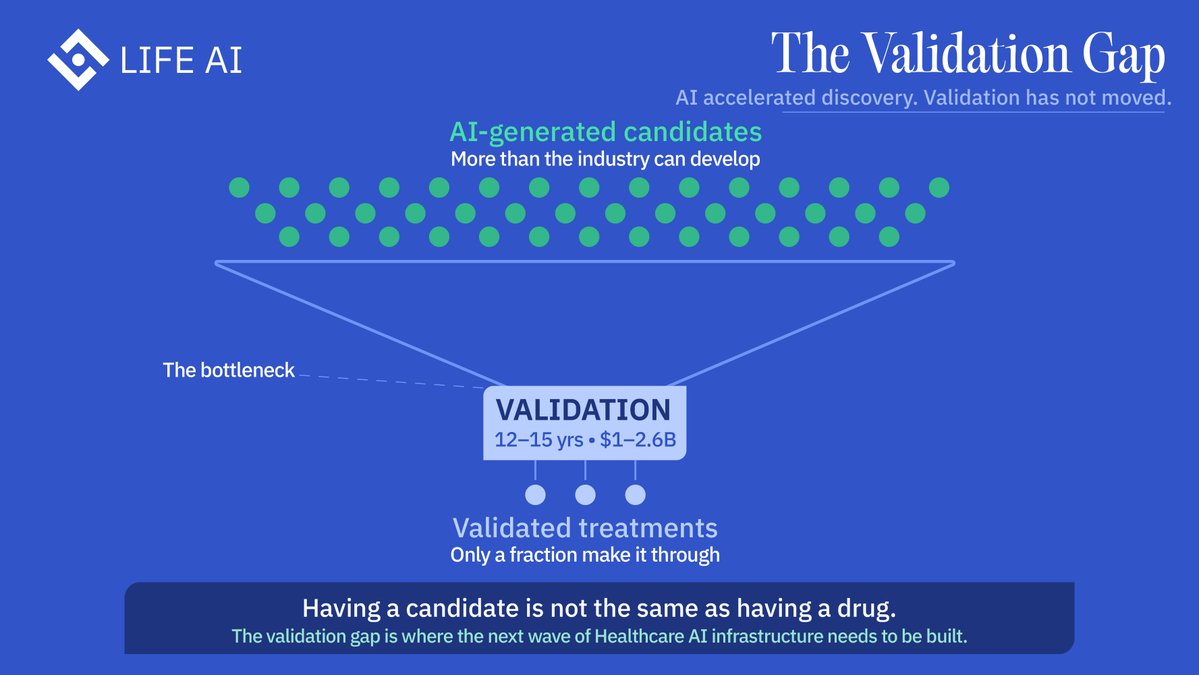
AI has made drug candidates abundant. The industry now has more promising compounds than it can develop.
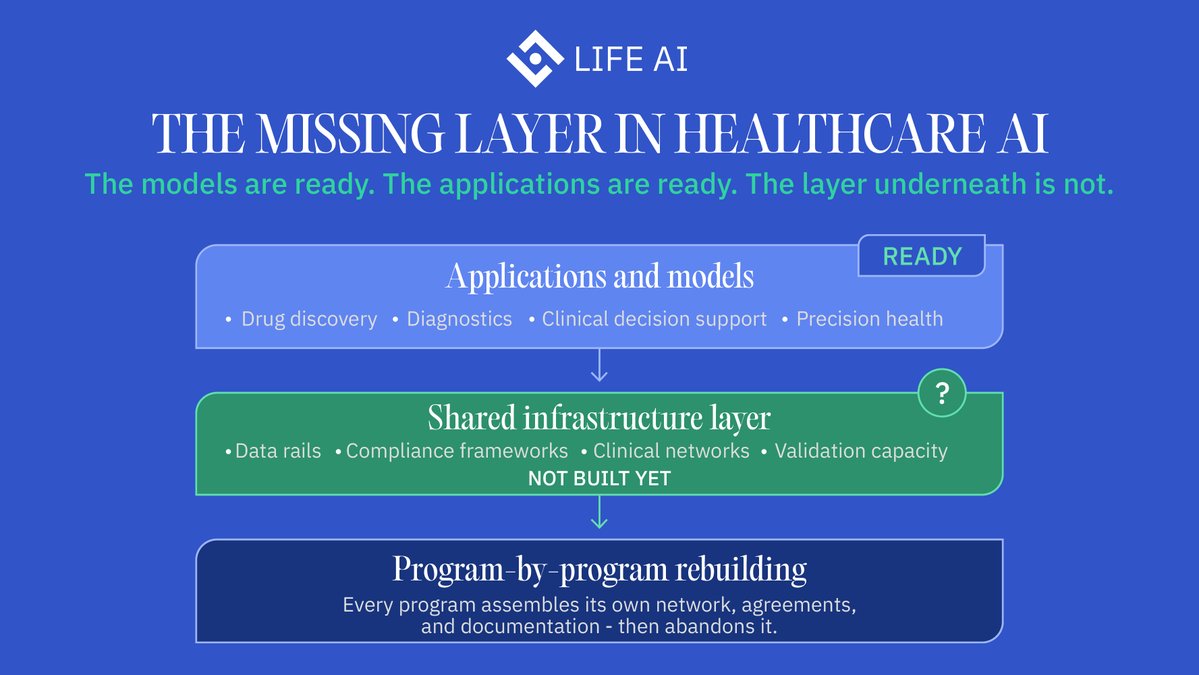
The bottleneck is not discovery. It is everything that comes after: the clinical networks, compliance frameworks, and data rails that determine whether a candidate ever reaches a patient. Every program builds these from scratch. When the program ends, the work disappears. The next program starts over.
Every industry that scaled did the same thing first: made the underlying work reusable. Fintech called it payment rails. Logistics called it shipping protocols.
Healthcare AI has not made that move. The models are ready. The candidates are ready. The infrastructure that connects them to patients, regulators, and clinical reality is still being assembled by hand, one program at a time.
That is the problem worth solving.
They're saying it's the most American web series ever.
9am, July 4, celebrate 250 years on the cutting edge of reality with the premier.
Get zapped into where the 80s never stopped, they just got better...and a little weirder.
Releasing here and the dedicated @TheVaporwhere page
You’re made of 37 trillion cells.
All working. All coordinating. Right now.
Your body already knows how to take care of itself.
We’re here to make sure the system around it does too.
AI drug discovery has attracted billions in investment over the last decade.
The thesis was straightforward: if AI can find better drug candidates faster, the economics of pharmaceutical R&D change permanently. That thesis has proven correct. AI-led discovery pipelines are now generating more candidates than the industry can develop.
That last part is worth paying attention to.
Having a candidate is not the same as having a drug. Every candidate still needs to clear preclinical studies, clinical trials, regulatory review, and real-world deployment. That process takes 12 to 15 years and costs between $1 billion and $2.6 billion per drug, regardless of how the candidate was found.
Discovery and validation move at very different speeds. AI has accelerated one. The other has not changed much.
Validation has always been the more expensive, more time-consuming part of drug development. And the coordination infrastructure that determines whether any of those candidates ever reach a patient, including the data rails, compliance frameworks, and clinical networks, has seen far less investment than the discovery side.
The validation gap is real. Whether it is a science problem, an infrastructure problem, or something in between is a question the industry is only beginning to ask seriously.
Why Healthcare AI Needs a New Category of Infrastructure
In fintech, the infrastructure came before the applications.
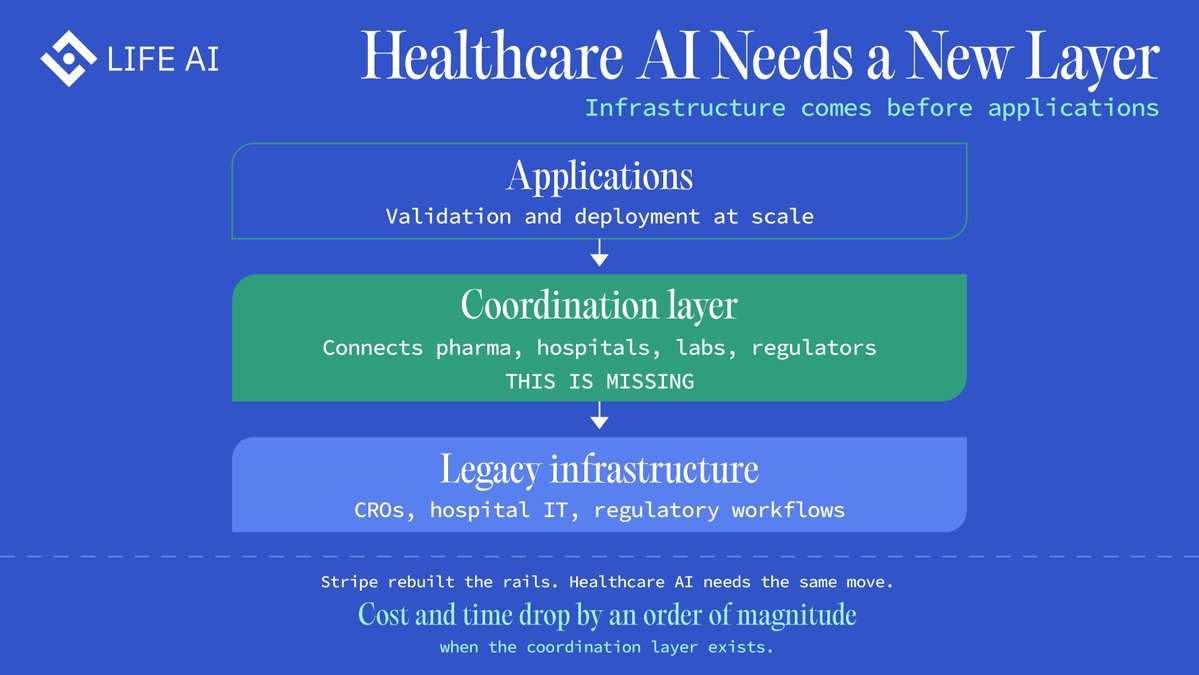
Stripe did not build payments on top of the existing banking system. It rebuilt the rails. Once those rails existed, thousands of applications became possible that could not have been built before.
Healthcare AI is at the same inflection point.
The existing infrastructure, including CROs, hospital IT systems, and regulatory workflows, was built for a different era. It was designed for human coordination at human speed. It was not designed to move AI generated evidence through clinical validation at scale.
What the industry needs is not more point solutions. It needs a new coordination layer that is purpose built for regulated healthcare and designed to connect pharma, hospitals, labs, regulators, and patients around a shared set of rails.
When that layer exists, the cost and time required to develop and validate healthcare AI programs drop by an order of magnitude. Not because the science changed, but because the infrastructure finally caught up.