Daily Pearl(s):
Wilson's Disease
The triad of new-onset psychiatric symptoms, a movement disorder, and liver dysfunction in a young adult is highly suggestive of Wilson's Disease.
Psychiatric manifestations can be the initial and most prominent feature, often leading to a misdiagnosis of a primary psychiatric disorder. The presence of any subtle neurologic or systemic sign (like hepatomegaly) should prompt a broader workup.
Wilson's Disease can present with virtually any movement disorder (tremor, dystonia, parkinsonism, chorea), which can be asymmetric or unilateral, mimicking other conditions.
A slit-lamp exam is crucial in suspected cases to look for Kayser-Fleischer rings, which are highly specific, though their absence does not rule out the diagnosis, especially in patients with purely hepatic presentations.
Serum ceruloplasmin is low in most but not all patients with Wilson's Disease (it is an acute phase reactant and can be falsely normal), making 24-hour urinary copper excretion a more reliable screening test.
Oral contraceptives can falsely elevate ceruloplasmin levels due to estrogen's effect on hepatic protein synthesis, potentially masking a true deficiency.
Brain MRI findings, such as T2 hyperintensity in the basal ganglia, are classic but not universally present; a normal MRI does not exclude the diagnosis.
Source: January 27, 2026 Neuro VMR - acute psychiatric disturbance and tremors
Daily Pearl(s):
Alcoholic Ketoacidosis and NAGMA
Ketoacidosis (from alcohol, diabetes, or starvation) can present as a normal anion gap metabolic acidosis (NAGMA) if renal function is preserved.
When renal function is preserved, the kidneys can efficiently excrete the negatively charged keto-anions. To maintain electroneutrality, the renal tubules reabsorb chloride in exchange for the excreted ketones.
This anion exchange effectively "closes" the anion gap by replacing the unmeasured keto-anions with the measured chloride anion, resulting in a hyperchloremic, normal anion gap metabolic acidosis.
Thus, a calculated anion gap should not be used to rule out ketoacidosis; if clinical suspicion is high based on the history, a direct serum beta-hydroxybutyrate level is the definitive test.
Source: CPS - Episode 437 RLR An Abnormal Normal Gap Acidosis
Truism from one of my favorite attendings when I was a trainee:
"People lie about sex, drugs, and taking their iron pills"
reported only 1-2 drinks
but seemed to have DTs & early alcohol hepatitis
I treated as such
first time I sent a PEth for clarity
Drank like a fish!
How do you communicate uncertainty in the🏥?
It's not easy, but incredibly important as families will hang on your every word.
To avoid getting lost, let's review a basic framework🧵
#Scriptsfornewdocs#HM#MedTwitter#MedX
1/9
1/ 🚨 NEW #5Pearls: Pleural Effusions 🌊
Did you know up to 30% of pleural effusions of have more than one etiology?
Let’s dive in!
🖥️: https://t.co/i1QEz6zE7B
Sponsor: Oakstone CME
Featuring: @PulmPEEPs
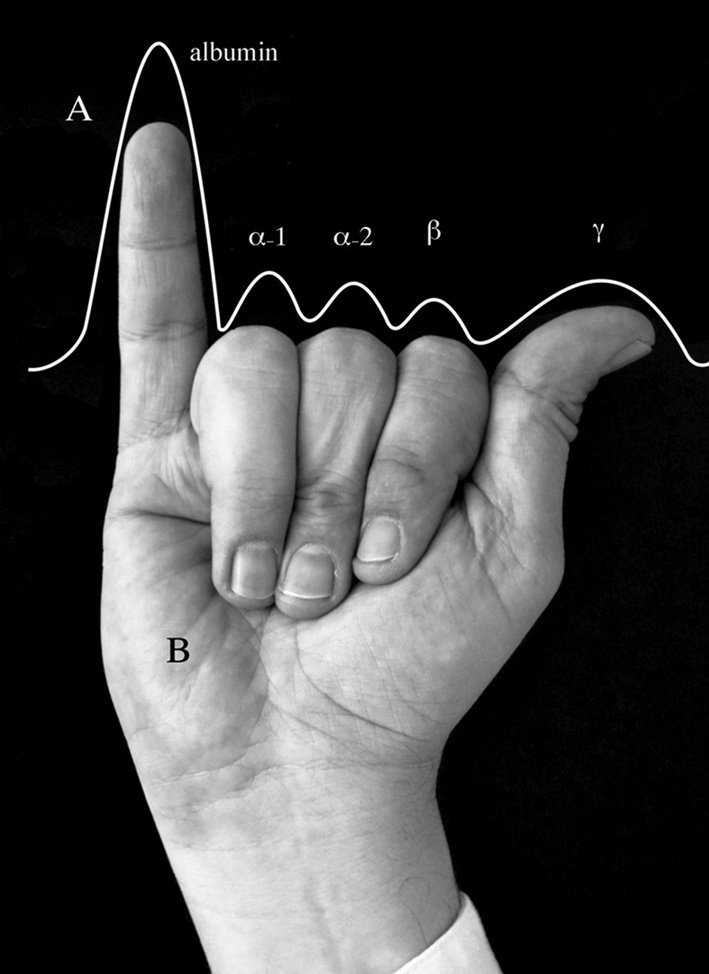
An easy way to remember serum protein electrophoresis for #MedstudentTwitter !
In myeloma, the thumb goes ⤴️ and the pinky finger goes ⤵️
Read 👇🏼 to learn more!
#MedTwitter
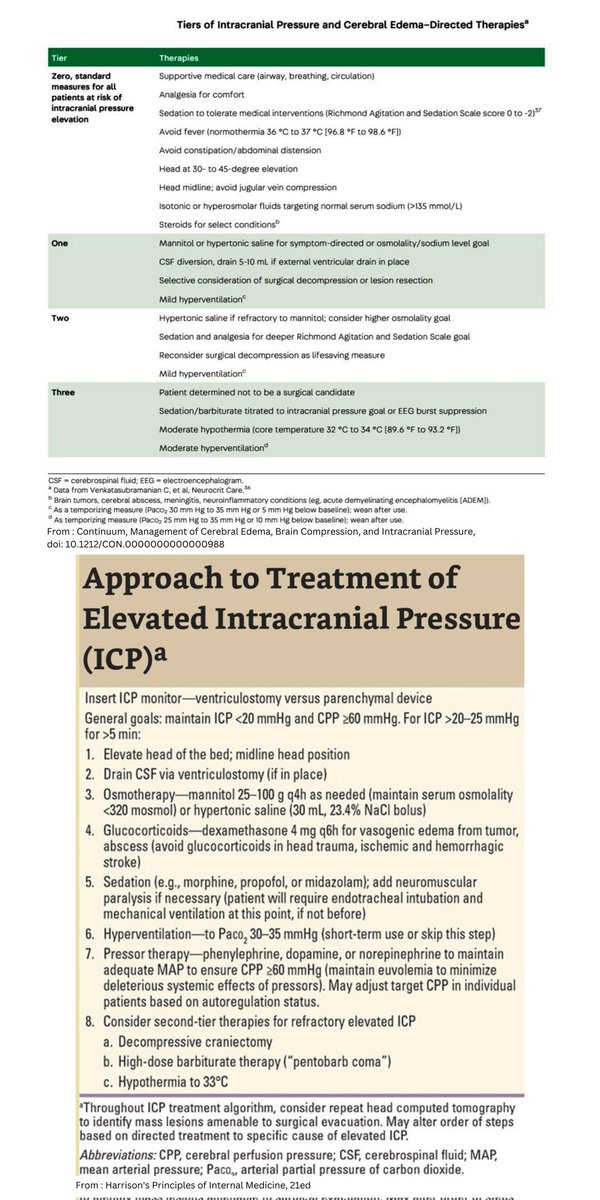
🌟 CEREBRAL EDEMA - Approach to management
🔸️Hyperventilation should primarily be used as a transient intervention to bridge a patient to a more definitive intracranial pressure reduction therapy because it can induce cerebral ischemia.
-Intracranial pressure–targeted therapy should follow a tiered approach in which therapies from higher tiers are introduced after ensuring optimization of lower-tier interventions.
From :
1. Continuum, Management of Cerebral Edema, Brain Compression and Intracranial Pressure
https://t.co/OGRKMCzJC6
2. Harrison's Principles of Internal Medicine, 21ed
Imagine a loved one being treated incorrectly for their MI.
Yet...do YOU even understand when an NSTEMI is really an NSTEMI?
Finally understand it in 2 minutes:
1/3. I’ve been sitting on this news for a while, but I’m happy to share that I’ll be joining the brilliant community of scholars at the Rochester Institute of Technology as a tenure-track Assistant Professor of Public Policy this fall. Super grateful for this opportunity!
16/16
☞ Subarachnoid hemorrhage is associated with deep/inverted "cerebral T-waves"
☞ Cerebral T-waves are the result of sympathetic activation, either from injury to the hypothalamus and/or insular cortex
15/15
☞ HMG CoA reductase activity is highest overnight
☞ Based on this, statins with short half-lives may be more effective when taken at night
☞ For statins with longer half-lives, timing likely does not matter