Thread
1/10 New! @AEI I make the case that the federal government should accelerate energy innovation by systematically and strategically employing the diverse and powerful tools it has used only piecemeal in the past. @JesseJenkins@vsiv https://t.co/rHjJlegC9K
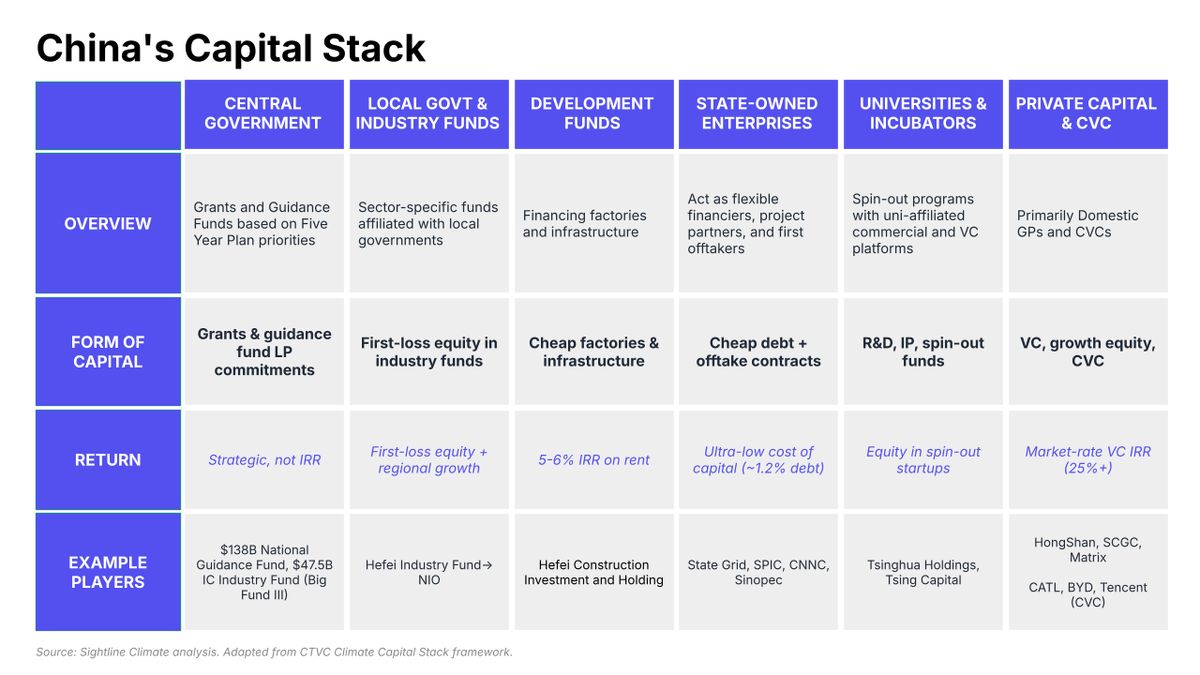
1/ Amid all the hype around China's 15th FYP, worth revisiting this CTVC piece to understand how clean tech financing actually works in China — and what it means for Western strategy.
https://t.co/subvQSZ7NP
President Donald Trump and Chinese President Xi Jinping are slated to meet in Beijing on May 14–15, marking the first state visit to China from a U.S. president since 2017, when Trump was first in office.
Looming over the upcoming summit are geopolitical tensions—particularly trade—Taiwan, the Iran war, and artificial intelligence. Meanwhile, the global economy continues to feel the effects of soaring oil and gas prices from the Strait of Hormuz blockade and the simmering trade war between the United States and China.
@rushdoshi, @ProfDavidHart, @DavidMSacks1, @ChrisRMcGuire, and @heidirediker analyze what to expect: https://t.co/4lYypjAMwb
Congrats @fervoenergy@TimMLatimer !! Per @axios its "offering was massively oversubscribed, says a source with knowledge of the IPO, and bankers are marketing it as "the largest primary clean energy public equity deal of all time."
Energy innovation is a global process—but not all countries contribute equally, writes energy expert @ProfDavidHart.
CFR’s Global Energy Innovation Index ranks 39 countries by how they contribute to improving energy technologies. According to the tracker, Sweden ranks 1st, the United States ranks 13th, and China ranks 29th.
Compare countries in the interactive index: https://t.co/5iX94iiqpb
Energy data junkies, rejoice! @CFR_org has launched a dataviz site for our Global Energy Innovation Index with dot plots, maps & tables. A veritable feast for you fiends. @vsiv@colin_cunliff@JesseJenkins@DanielRaimi https://t.co/BnY8WiIP6Y
Silicon Valley invests in high-risk, small-scale start-ups, while Wall Street invests in low-risk, large-scale commercial businesses. Investors tend to be wary of energy innovations that are medium-risk and scaling up. Analysts have dubbed this gap "the missing middle," and estimated the funding shortfall to be as much as $100 to $200 billion.
The Council on Foreign Relations convened a diverse group of experts to explore how to fill the gap, and unblock the development of technologies that could make the energy system more secure, affordable, reliable, and sustainable.
Read @profdavidhart's new report: https://t.co/iSUS5pXI1K
1/9 Thread: Pleased to share publication of “Financing the Missing Middle: Mobilizing Investment to Scale Emerging Energy Technologies” by @CFR_org This essay collection offers insights on the #MissingMiddle challenge from several perspectives. https://t.co/0B9bCs7dte
8/9 Regional collaborations involving all sectors could implement ED strategies that fill the missing middle. Read @aaronbrickman@BenFeshbach & Whitney Mann (@RockyMtnInst ), “Energy Technology Commercialization Can Power Regional Economic Strategy—and Vice Versa”
Everyone knows by now that China is winning the US war with Iran as renewable-EV-battery exports grow. But that isn’t the full story. China is also winning w inputs into its new big three, electricity system buildouts, & innovation. My latest @CFR_org https://t.co/Do5NXzlXD8
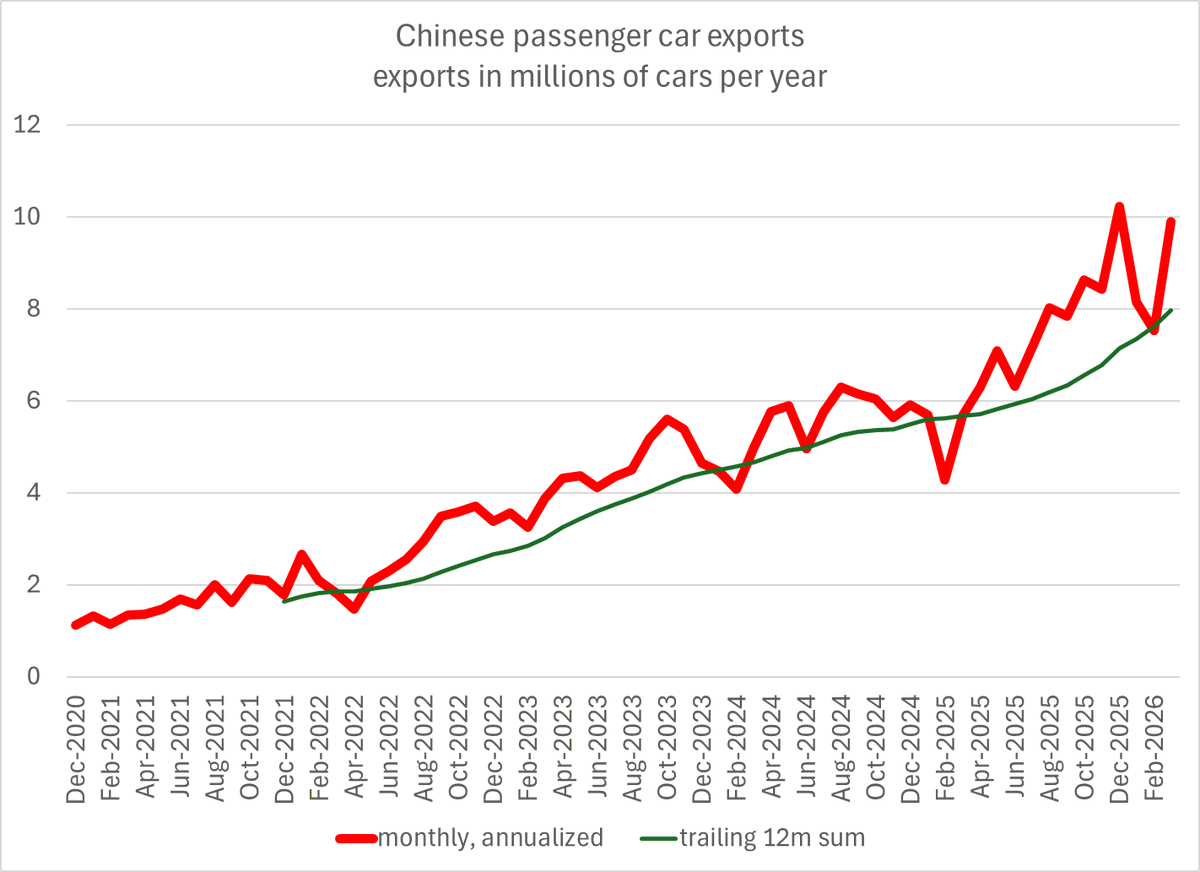
China looks to be on track to export 10m passenger cars this year -- up from 5.4m in 2024. A huge increase; way more than forecast. Vehicle exports will be higher still
Broader point being that it will take more than rhetoric to change China's economic path -- and in key sectors, dependence on exports is rising not falling
4/4