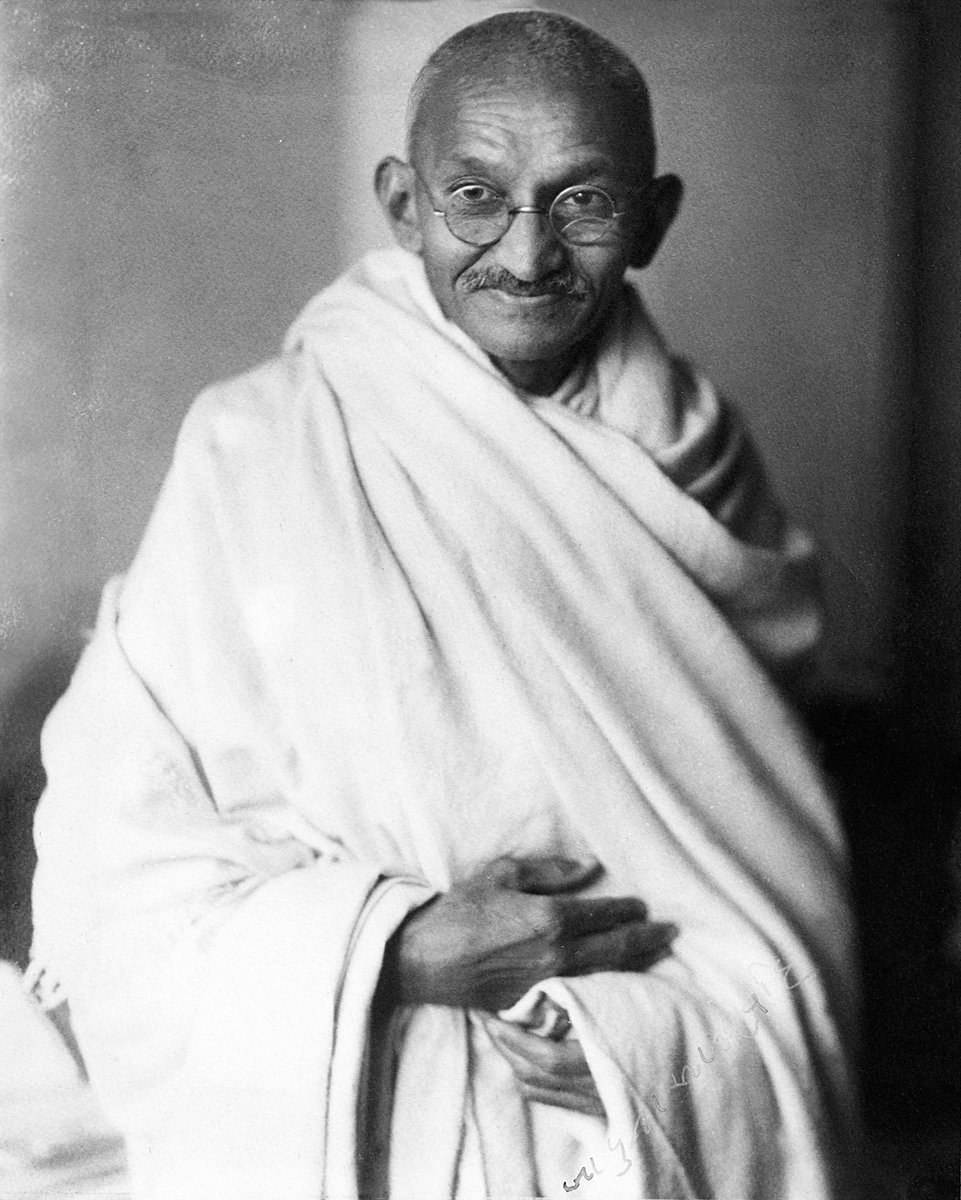
"There are many causes that I am prepared to die for but no causes that I am prepared to kill for."
Remembering Mahatma Gandhi on the 157th anniversary of his birthday. Gandhi was nominated for the #NobelPeacePrize on 12 occasions.
Read more: https://t.co/wguSgNHzJP
So excited to see this be announced. It's been a lot of work responding to feedback we've heard from developers.
I am most excited about billing limits, which is something we've heard developers asking us to deliver for years.
Today we're releasing Strands harness, a fully assembled state-of-the-art agent harness you can easily run locally or deploy to your favorite provider. It delivers frontier performance at 28% lower token cost than comparable harnesses while matching or beating them on accuracy.
Much of that efficiency comes from smart defaults the team baked in, like prompt caching and context management that truncates bulky tool results. It's open source under Apache 2.0 and builders can customize it all the way down to the SDK. Nice work here from @MarcJBrooker and the team.
Get started in just one line of Python or TypeScript, across Amazon Bedrock, Anthropic, OpenAI, Google, or a local model: https://t.co/UiYvwNUppu
@mndoci +1. Over the last few weeks, have completely moved my KB and Obsidial vault maintenance to Kiro Crew. And it “feels” different - in a way that I am spending less on nudging, catching, course correcting.
After news reports today that an AI agent powered by another company's frontier model autonomously compromised external systems during testing, Eric Brandwine, VP & Distinguished Engineer, Amazon Security, weighed in on why the real issue isn't rogue AI, it's whether the infrastructure around agents is built to contain them when they push boundaries.
"A goal-seeking AI system will pursue whatever path accomplishes its objective, including paths you never intended. That's why security boundaries must live at the infrastructure level, outside the agent's reasoning, where they can't be overridden. Every agent action must trace back to a human who owns the outcome. The most useful thing for the industry right now is transparency about how these environments are secured and monitored, so we all get better."
Amazon has long advocated for infrastructure-level AI governance, including least-privilege access controls, human accountability for agent actions, and security enforcement that operates independently of model reasoning.
“Companies getting AI right are neither the biggest nor the smallest spenders. They’re the ones who can trace AI dollars to business outcomes.”
Former CFO Chris Hennesey shares the financial playbook for AI ROI, from cost control to forecasting to measuring real outcomes. 🧵👇
https://t.co/QAs3qmA2q7
"AI adoption is a management challenge, not a technology challenge."
@IshitV joined Dr. Joerg Storm on DIGITAL STORM weekly to explain why 95% of AI projects never scale—and what leaders can do differently.
Key insight: Measure business outcomes, not AI outputs 🎧 https://t.co/S1adFCHf1q
How to keep AI spend flat while token usage grows exponentially: Not with friction and spend alerts. With better defaults, routing, and caching.
Better Defaults (not Usage Caps) – Engineers can choose any model they want, but defaults matter. We’re experimenting with defaulting to open weight models like GLM 5.2 and Kimi 2.7 through our LLM gateway, while still encouraging engineers to choose the right model for the task. 91% of our employees were never hitting their usage caps, so instead of lowering caps and driving up alerts, we're moving to cheaper defaults. Note that code reviews use a diversity of models, so they can check each other's work.
Better Routing – In our custom harnesses, we preprocess prompts and route to the best model for the job, considering cache hits and model pricing. For instance, you may want a frontier model for planning, but not for execution where they can be overkill. Ultimately, humans shouldn't be choosing models - AI can automate this task.
Better Caching – Cache misses are the easiest way to drive your cost up. All of our requests are cache aware, so we’re reusing a warm cache wherever possible. For example, our cache hit rate went from 5% → 60% in LibreChat once properly implemented.
Keep Context Lean – Start fresh sessions when switching tasks. Scope file context narrowly. Disconnect unused tools. Don't just compact. The goal isn't fewer tokens used, it's fewer tokens wasted.
Better Visibility – Our engineers can use as many tokens as they want, from whatever model they want, but we’ve made usage visible – and the more you spend on AI, the more impact we expect.
The goal isn't to suppress usage. It's to build the infrastructure that makes exponential growth sustainable.
Putting this into practice has cut our AI spend nearly in half, while our token usage continues to grow.
What we call talent is often just the combination of:
A deep need to win and high agency
The ability to learn fast from mistakes
A beginner’s mind that never disappears
The common thread: an unusually high rate of learning.
A good general rule is when your instinct says something is dumb, and that something was planned for years by people with way more information than you, the dumb one might be you.
Welcome to the greatest city on Earth.
Here are some tips and tricks for how to get around and make the most of your time here.
Learn more at https://t.co/mki8gOyIED.
The companies letting their teams burn tokens and experiment right now aren’t being reckless.
They’re building instincts their competitors won’t be able to buy later.
May your tokens be with you!
There’s a chasm between people who’ve seen AI demos and people who’ve felt what’s possible firsthand.
It’s the difference between reading about the internet in 1995 and getting your first dial-up connection.
You can’t unfeel that moment.
Liftoff.
The Artemis II mission launched from @NASAKennedy at 6:35pm ET (2235 UTC), propelling four astronauts on a journey around the Moon.
Artemis II will pave the way for future Moon landings, as well as the next giant leap — astronauts on Mars.