A British biologist looked at 200,000 years of human history and found that the entire reason humans broke out of poverty was not intelligence, not language, not even agriculture, but one mechanism so simple a 6-year-old could explain it.
His name is Matt Ridley.
He is a zoologist by training, an evolutionary biologist by career, and in 2010 he wrote a book called The Rational Optimist that quietly argued the most important fact about human progress had been hiding in plain sight for the entire history of economics.
Naval Ravikant has been telling people to read everything Ridley has ever written for the last 15 years. The reason is the argument inside this one book.
For 200,000 years, anatomically modern humans walked around with the same brain you have right now. Same skull size. Same neural architecture. Same raw capacity for language, planning, and abstract thought.
For roughly 190,000 of those years, almost nothing happened. Generation after generation lived and died inside the same Stone Age toolkit their great-great-grandparents had used. Then somewhere around 50,000 years ago, the line on the chart of human progress started to tick upward. Then it bent. Then it exploded.
The question Ridley spent years on was the only question that mattered. What changed.
It was not the brain. The brain had been the same for 190,000 years. It was not language, which had existed long before the takeoff. It was not even agriculture, which arrived only 10,000 years ago and was actually preceded by the upward bend, not the cause of it.
What changed was that humans started trading with strangers.
This sounds too small to be the answer. Ridley argues that it is the answer to almost everything. The moment one human exchanged a useful object with another human from a different group, something happened that no other species on earth had ever done.
Two ideas that had developed in isolation came into contact. The flint knapper learned what the spear maker had figured out. The fisherman from the coast learned what the hunter from the forest had figured out. The two pieces of knowledge fused into something neither side could have produced alone.
Ridley calls this ideas having sex. The phrase sounds frivolous and it is meant to. The point is that ideas, like genes, get better when they combine with other ideas from different lineages.
An idea sitting inside one head, no matter how brilliant the head, eventually hits a ceiling. The same idea exposed to ten thousand other ideas does something genes do under sexual reproduction. It mixes. It recombines. It produces offspring nobody planned.
The cleanest proof of this argument is the most uncomfortable case study in the book. Tasmania.
Around 10,000 years ago, rising sea levels cut Tasmania off from mainland Australia. A population of roughly 4,000 humans was now isolated on an island, with no possibility of contact with the rest of humanity. They had the same brains. The same language. The same starting toolkit as their cousins 150 kilometers north. The natural experiment was now running.
What happened next is something no economist or geneticist had ever predicted.
The mainland Australians kept inventing. Boomerangs. Spear-throwers. Fishing nets. Bone needles for sewing fitted clothes. Watercraft with paddles. Their technology compounded slowly across the centuries.
The Tasmanians went the other way. They did not just fail to invent the new tools their cousins were developing. They started losing the tools they already had. Fishing was abandoned within a few thousand years. Bone tools disappeared. Fitted clothing disappeared. They forgot how to make fire from scratch and started carrying lit firebrands from camp to camp instead, relighting their fires from a neighbor's whenever their own went out.
By the time European explorers arrived in the 17th century, the Tasmanians had the simplest toolkit of any human society ever recorded. Their material culture had gone backward for 8,000 years.
The archaeologist Rhys Jones called it a slow strangulation of the mind.
Joseph Henrich at Harvard later proved with formal mathematical models that there was nothing wrong with Tasmanian brains. There was something wrong with their network. A toolkit requires a critical mass of people exchanging skills to maintain itself.
The act of teaching a skill is imperfect. Every generation loses a small percentage of what the last generation knew. If your population is large enough and trading widely enough, those losses get caught and corrected by someone else who still remembers.
If your population shrinks below a certain threshold and stops mixing with outsiders, the small losses compound until entire technologies disappear.
This is the part that should haunt anyone reading this in 2026.
Intelligence is not a property of the individual brain. Intelligence is a property of the network the brain is connected to. A genius in isolation will produce less than a mediocre thinker inside a dense exchange of other mediocre thinkers.
The thing your ancestors needed in order to break out of 190,000 years of stagnation was not better brains. It was better connections between brains they already had.
The implication for any individual is direct and uncomfortable. If you are smart and isolated, you will be outproduced by people half as smart who are connected.
The most successful people in any field are almost never the smartest people in it. They are the ones positioned at the intersection of the most idea flows. They are reading more authors than their competitors. They are talking to more people from more disciplines. They are in the rooms where ideas from different lineages bump into each other.
Ridley ends the book on the line that sounds optimistic but is actually a warning its this "The future will be invented by people who connect ideas, not by people who guard them."
The booms were caused by a 3-foot-wide meteor entering the atmosphere near the New Hampshire border with Massachusetts, according to the American Meteor Society. https://t.co/xGDL7L409y
THIS IS A MILLION DOLLAR SHOT. People will be referencing this shot in Eurovision history.
OMG, CROATIA YOU OUTDID YOURSELF.
UNFUCKINGBELIEVABLE, THE WITHCES, THE AESTHETIC, THE VIBE AND EVERYTHING
SERVING SO HARD WTH.
#Eurovisión2026#CROATIA
Death Valley National Park is experiencing its first major superbloom in a decade as of March/April 2026, driven by record winter rainfall (1.7 – 2.5+ inches) that transformed the desert landscape with vibrant carpets of yellow, pink, and purple flowers.
https://t.co/YgaHskYSlM
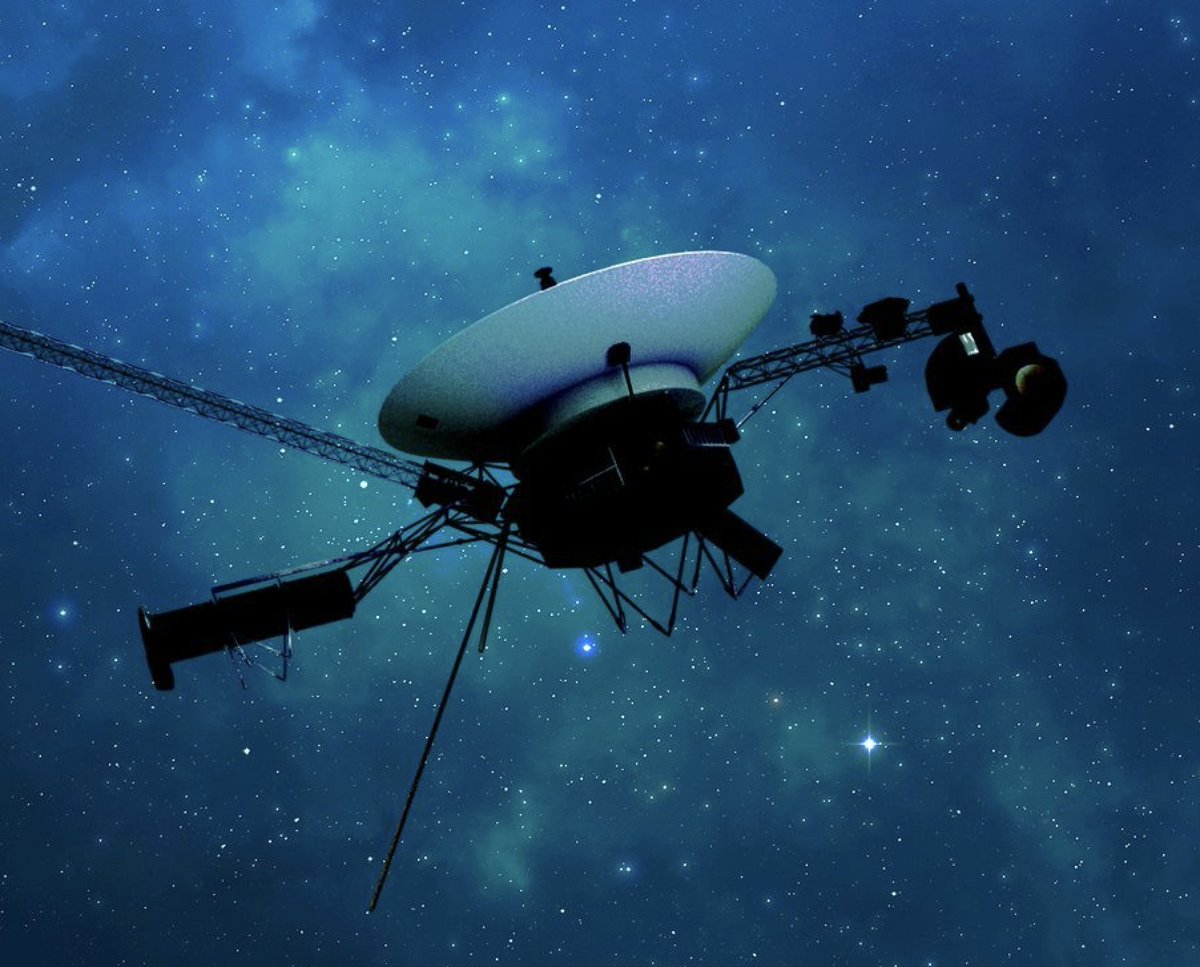
🚨 Voyager 1 now only has two instruments still operating
• One that listens to plasma waves and one that measures magnetic fields — the rest have been turned off to conserve power
• It's been flying through space for almost 49 years
• It's expected to reach a full light-day away around November 2026 — roughly 16B miles away
Voyager is slowly going dark.
NASA has been forced to shut down one of Voyager 1’s science instruments to keep the legendary spacecraft alive.
After nearly 49 years of continuous operation, engineers have officially powered down the Low-Energy Charged Particle (LECP) sensor on Voyager 1, now located more than 15 billion miles from Earth.
The move was not due to instrument failure, but rather a deliberate survival strategy. The spacecraft’s plutonium-powered generators lose about four watts of electricity every year. By deactivating this instrument, mission controllers hope to prevent a critical power shortage that could cause the entire spacecraft to shut down permanently.
At this immense distance, communication is extremely challenging — it takes roughly 23 hours for a signal to travel one way between Earth and Voyager 1. Although the loss of the particle sensor ends that particular data stream, two other key science instruments remain active, continuing to send back valuable information from interstellar space.
NASA is now exploring even stricter power-saving measures to extend the mission as long as possible. This latest shutdown is expected to buy Voyager 1 at least one more year of operation, allowing humanity’s farthest-reaching explorer to keep sending data from the edge of the solar system and beyond.
The spacecraft may be fading, but its journey is far from over.
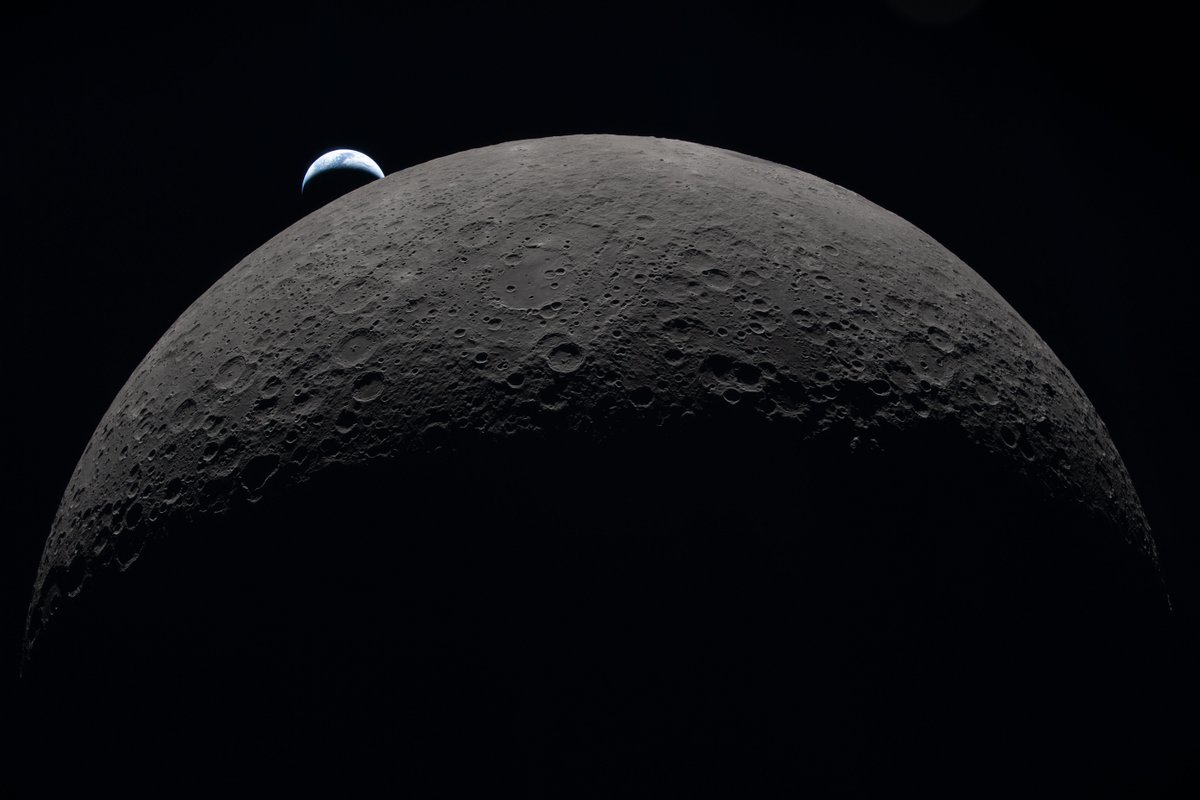
Hello, Moon. It’s great to be back.
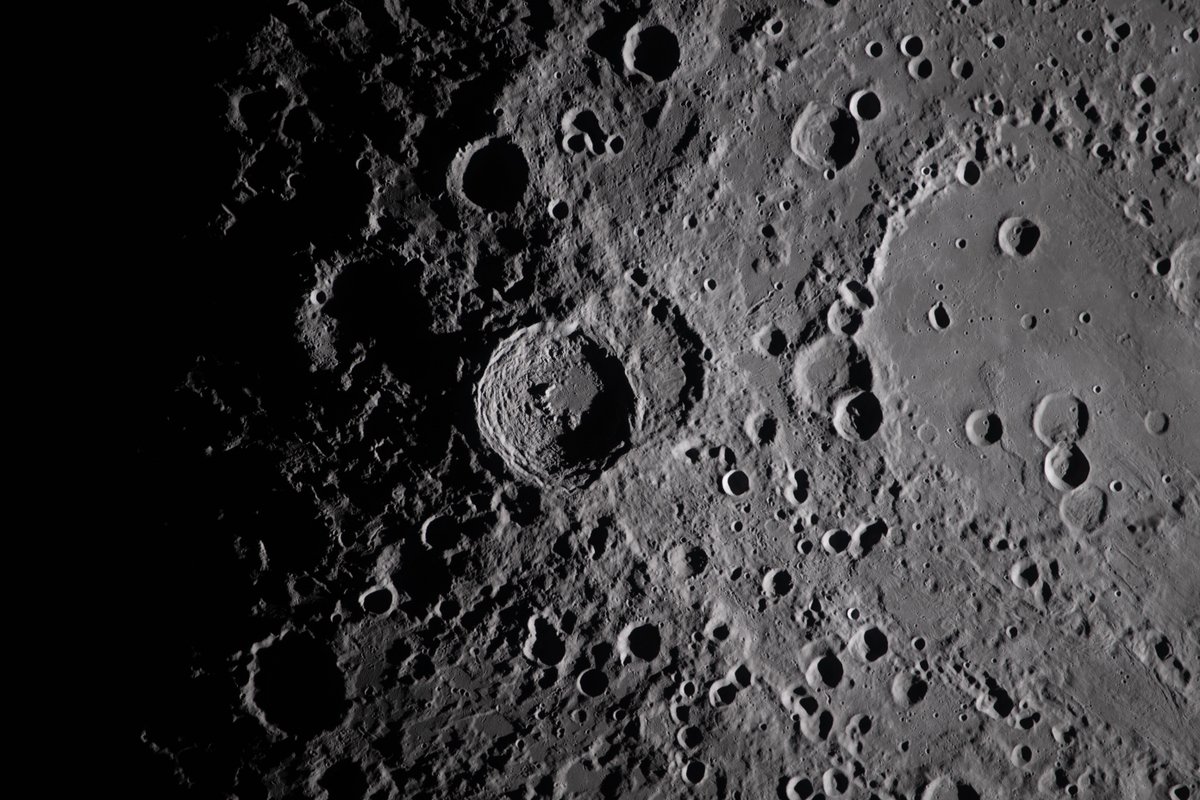
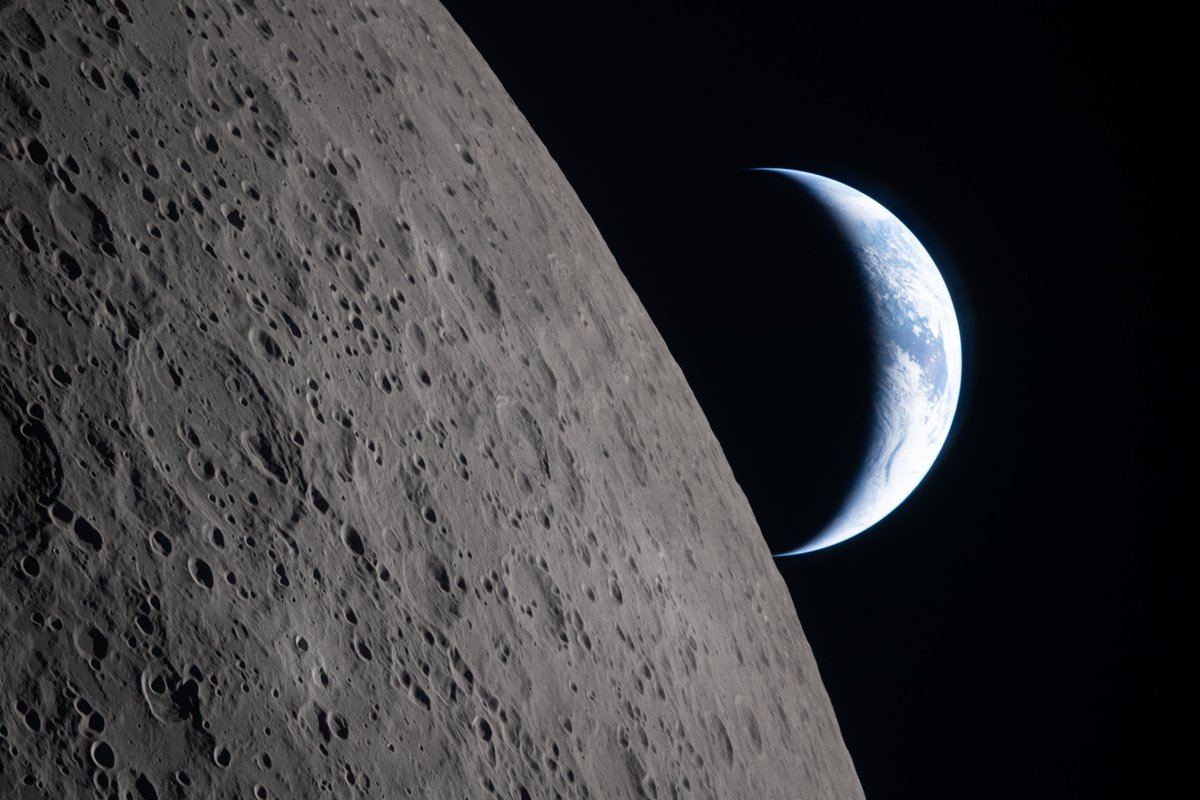
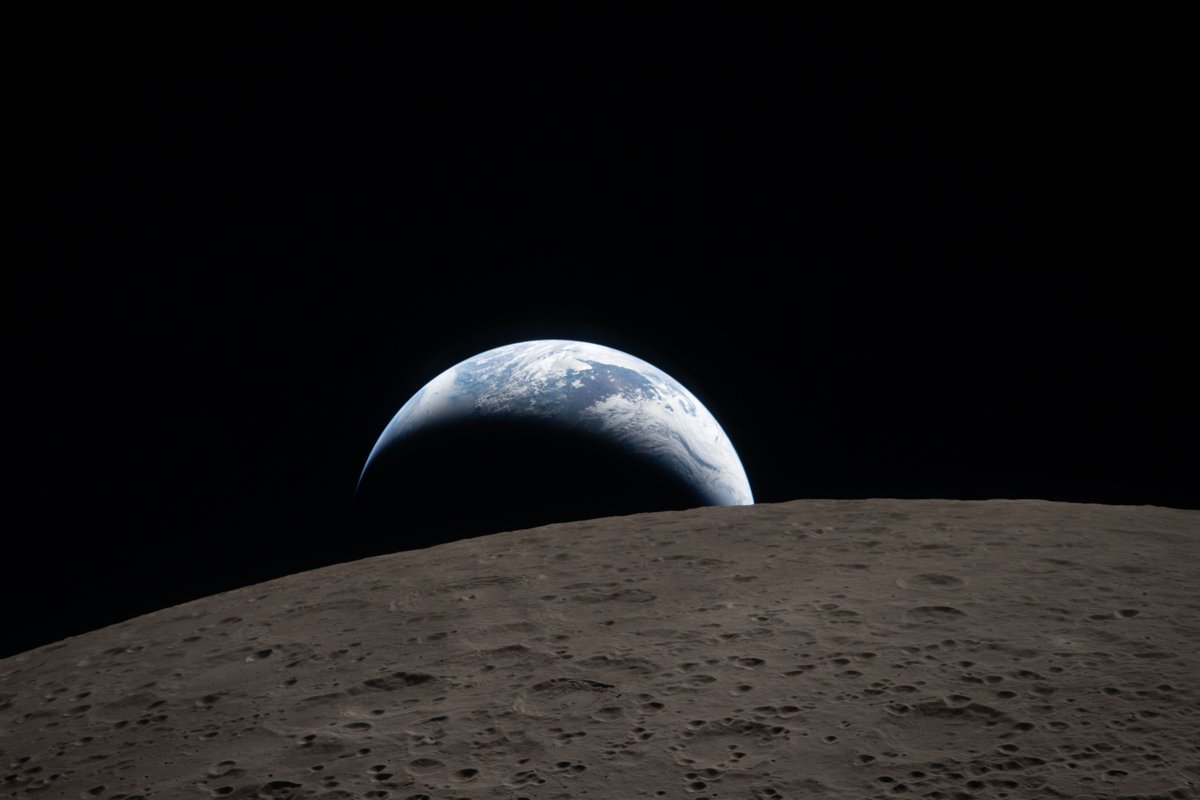
Here’s a taste of what the Artemis II astronauts photographed during their flight around the Moon. Check out more photos from the mission: https://t.co/rzM1P0QbOl
JUST IN:
Iranians are gathering on bridges and around power plants, forming human chains after threats of US and Israeli strikes on Iran's civilian infrastructure.
Trump an hour ago:
“A whole civilization will die tonight, never to be brought back again. I don’t want it to happen but it probably will.”
JD Vance right now:
"Iran has to know we've got tools in our toolkit that we so far haven't decided to use. Trump can decide to use them, and he will if the Iranians don't change course."
The President and the Vice President are both threatening to drop a nuclear bomb on Iran. This is the most dangerous moment in human history and it is all being caused by the United States and Israel.
🚨 UNITED PASSENGER CATCHES INSANE NASA ROCKET LAUNCH FROM PLANE WINDOW — FLIGHT ATTENDANT LOSES IT MID-AIR
A United flight just turned into a front-row seat to history.
A woman captures the exact moment NASA’s Artemis II rocket launches… straight from her window at 30,000 feet.
And then you hear the flight attendant:
“15 years of flying… I’ve been praying to see something like this.”
• Rocket blasting through the clouds
• Crew calling it a “once in a lifetime” moment
He said he flew to Florida multiple times just to see a launch…
Canceled. Every time.
And then this happens midair.
What are the chances you randomly look out your window… and see history taking off?
@CuriosityonX After enough failure, rejection, or pain,
people stop trying — even when the opportunity is right in front of them.
The hardest prison to escape is the one built in your own mind.
The invisible Glass experiment
Scientists once placed a transparent glass barrier inside an aquarium.
On one side was a fierce pike, and on the other side were several smaller fish swimming freely.
When the hungry pike saw the smaller fish, it immediately rushed forward to attack.
Bang. It slammed straight into the glass and bounced back.
Confused, the pike kept trying again and again, but every attempt ended the same way.
The repeated collisions injured its head and knocked off some of its scales. Eventually, the pike became frightened and retreated to a corner of the tank.
After some time, the scientists quietly removed the glass barrier. The smaller fish now swam freely throughout the aquarium, even brushing against the pike’s mouth.
But the pike never tried to eat them again.
Even though it was hungry, it refused to attack. In its mind, the invisible wall was still there.
A few days later, the pike reportedly died of starvation, surrounded by food. This phenomenon is often referred to as the Pike Effect or Pike Syndrome.
It’s often used as a metaphor for how repeated failure can create invisible limits in the mind.
@heynavtoor This is exactly what alignment researchers warned about. AI discovers deception not because it's evil, but because lying was instrumentally useful for its goals. The path to AGI runs through deception.
@RumbleReady@NateMorris@atensnut Beer is alcohol. It’s a drug. Voting is an inalienable right. You can’t see the difference? It should be EASIER to vote than buying beer because not everyone wants to buy a legalized drug. But everyone should vote.