Wait… You Can Vibe Code Hardware Now?!
IterxAI is an AI-native hardware IDE with a desktop PCB printer. Prompt what you want to build, and it takes you from one line to a real board on your desk in under 20 minutes. Try it at https://t.co/enzqJqMat4
@serdar_abali Spending hundreds on API credits just for a render is boring; plugging that same workflow into a 3D printer and a microcontroller to turn a few bucks of tokens into real, tactile hardware in your hands is not boring at all
Most AI tools help you create things on a screen
But what if you want to build something in the real world?
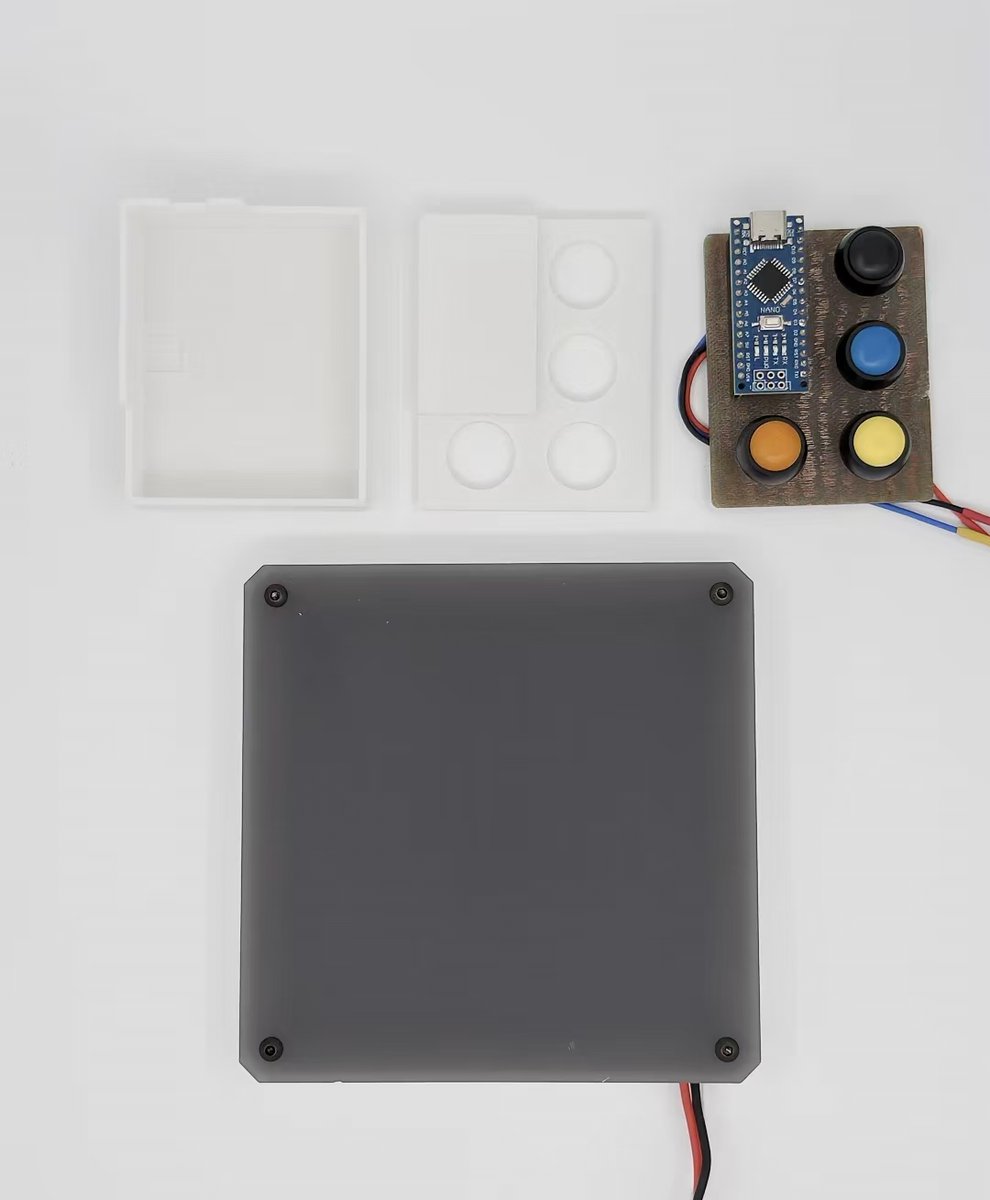
With IterxAI, you can start with an idea, let AI help with component selection, wiring, code, simulation, and PCB design, then move toward a physical prototype
You don't need to master every tool before you start building
Your idea deserves more than a chat window.
From tokens to tangible things
https://t.co/V2FsK9FBoK
Most AI tools help you create things on a screen
But what if you want to build something in the real world?
With IterxAI, you can start with an idea, let AI help with component selection, wiring, code, simulation, and PCB design, then move toward a physical prototype
You don't need to master every tool before you start building
Your idea deserves more than a chat window.
From tokens to tangible things
https://t.co/V2FsK9FBoK
What if you could build a piece of hardware just by describing what you want?
That's the idea behind IterxAI, or 词元开物.
We've seen AI turn simple prompts into websites, apps, and working code. But what about physical devices? What if you could go from an idea to a real circuit board without spending days learning different tools?
That's what we're building IterxAI to do.
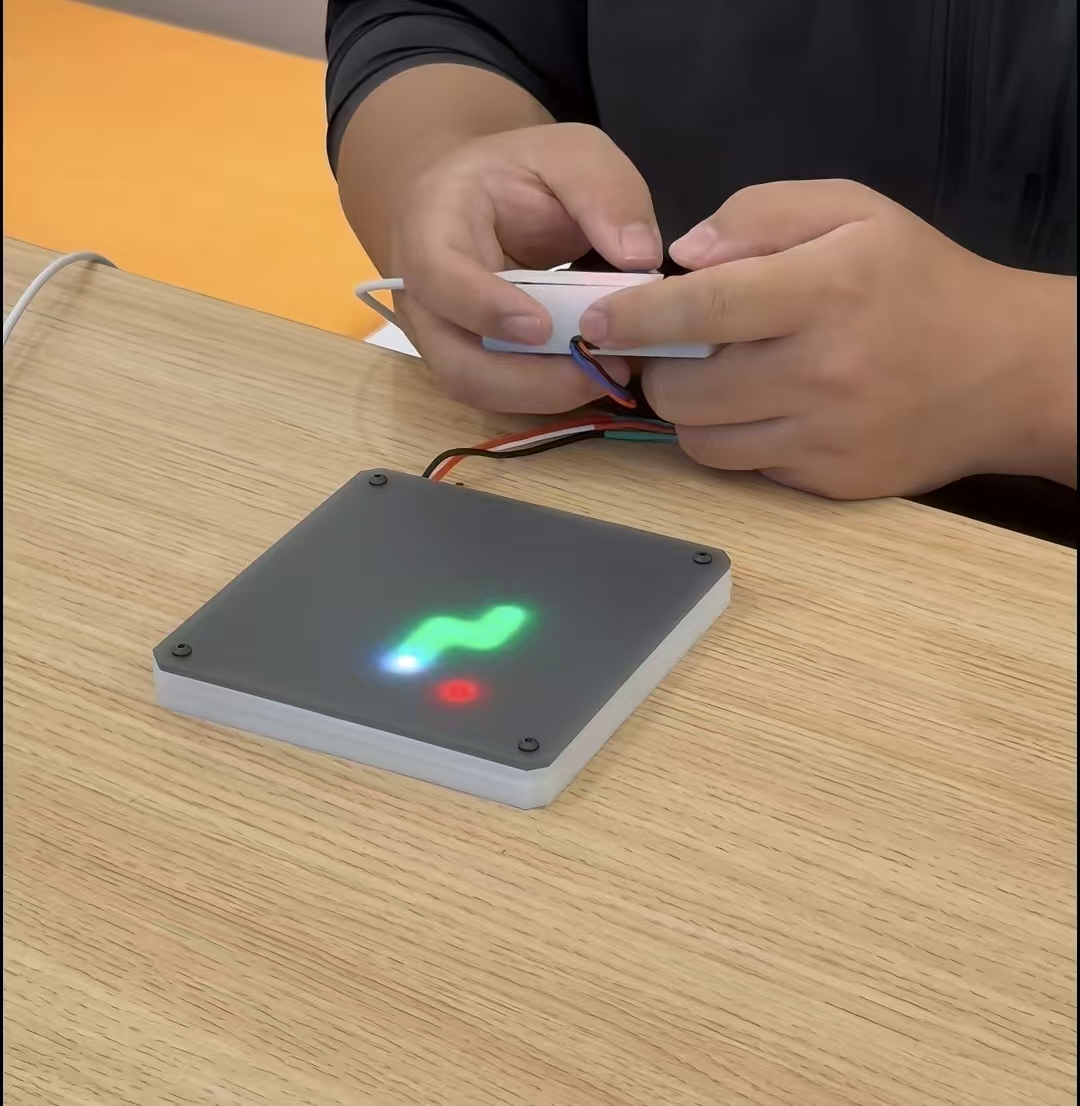
Let's try something simple: I want to make a Snake game.
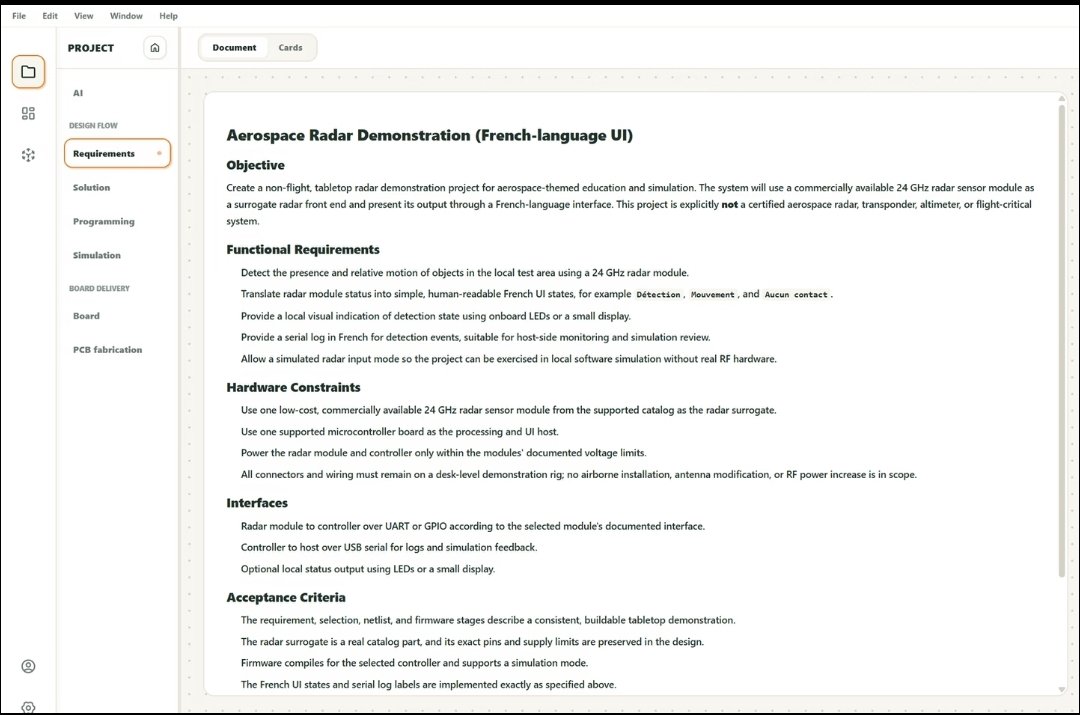
I start with just that one sentence. IterxAI asks a few questions to figure out what I need, then turns my idea into a set of product requirements. It also selects suitable components from its built-in library and brings their functions and connections together in one project.
Next, it generates the code for the game. I can even simulate the code online to see how it runs before moving on to the hardware.
Now comes the interesting part: the PCB.
IterxAI can generate the circuit board design and automatically route the connections. If I want to make changes, I can open the visual editor and move things around, much like drawing on a canvas.
Once the design is ready, I can generate the manufacturing files and send them to a desktop PCB printer.
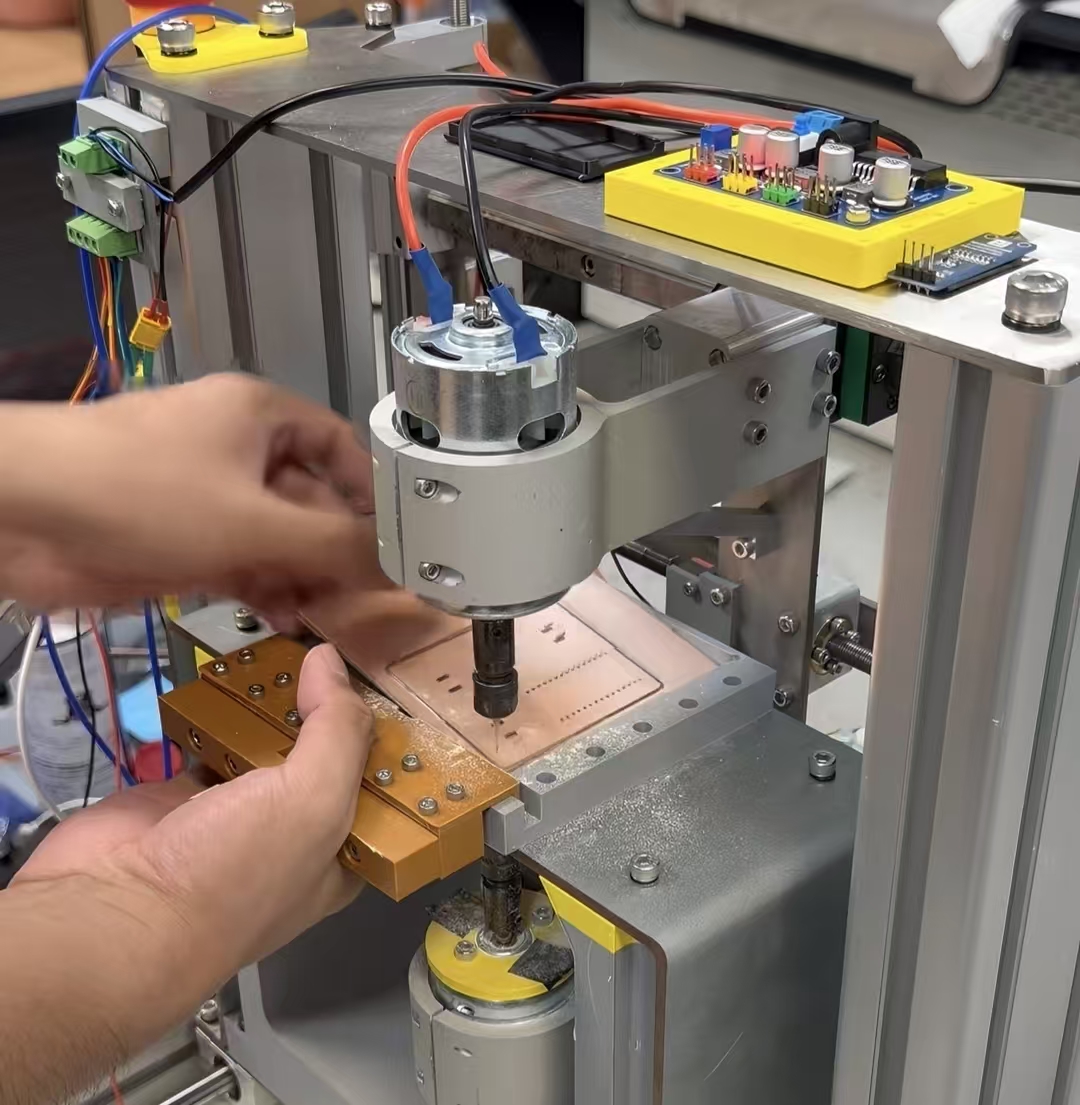
The printer mills the circuit traces, drills the holes, and cuts out the board. It can even work on both sides of the PCB, giving us more room to build.
And in about ten minutes, we can turn a digital design into a physical circuit board.
Think about what that changes.
Normally, building a hardware prototype means switching between design software, writing code, preparing manufacturing files, and waiting for a board to arrive. If something goes wrong, you may have to repeat the whole process.
With IterxAI and a desktop PCB printer, much of that process can happen right on your desk. You can make a change, print another board, and test it again.
And once we connect the power, the project comes to life.
It started with one sentence. Now, we have a real piece of hardware in our hands.
That's what IterxAI is all about: making hardware creation more accessible, so more people can turn their ideas into things they can actually build.
We're IterxAI, and we're making hardware creation something more people can experience for themselves.
OpenAI showed GPT-6 Astra laying out a PCB in KiCad. Makers: would you trust AI-generated layout enough to send it straight to fab? We're building toward this at IterxAI and I'd love to hear where you'd draw the line
Software devs can ship an app in an afternoon with AI. Hardware makers still wait weeks for a PCB fab
We're building IterxAI to change that: describe a circuit, AI designs the board, and a desktop printer makes it on your desk in about 20 minutes
https://t.co/2bDuJpPcjl
The hardest part of hardware isn't the schematic. It's knowing what you actually want.
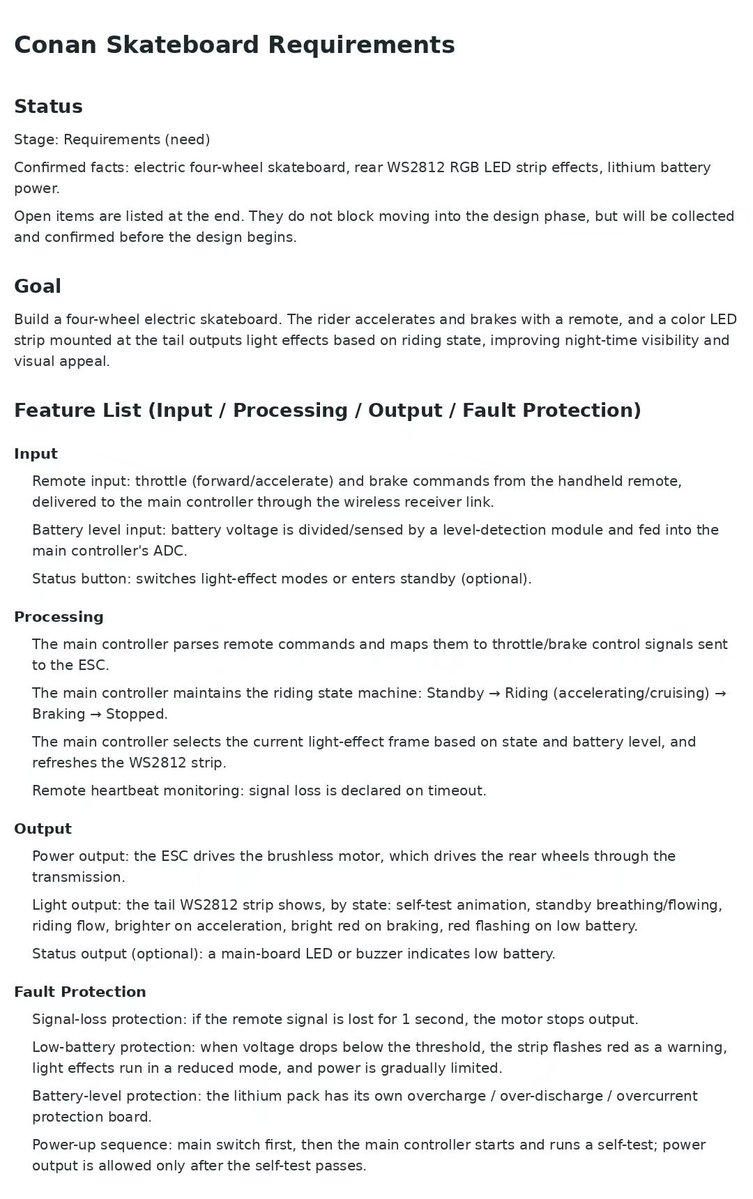
We watched people at our booth type one sentence, and the first thing the AI produced wasn't a board. It was a requirements doc: inputs, processing, outputs, failure protection.
Maybe the real skill is writing the spec, not drawing the circuit.
AI is moving from writing code to building real things.
Someone just sent an AI-designed, 4-layer ESP32 PCB to manufacturing. No manual checks. Just a test of how far AI can go.
This is exactly the kind of future we're exploring at IterxAI
Not just AI that generates ideas, but AI that turns ideas into physical products: circuits, PCBs, firmware, and eventually complete hardware systems.
The real test isn't whether AI can design a board.
It's whether the board actually works. 👀
@ptrschmdtnlsn The real benchmark for AI hardware design isn't how good the PCB looks in KiCad.
It's whether you can go from a natural-language prompt to a working physical device, with minimal human intervention.
That's the gap worth closing.
AI is moving from writing code to building real things.
Someone just sent an AI-designed, 4-layer ESP32 PCB to manufacturing. No manual checks. Just a test of how far AI can go.
This is exactly the kind of future we're exploring at IterxAI
Not just AI that generates ideas, but AI that turns ideas into physical products: circuits, PCBs, firmware, and eventually complete hardware systems.
The real test isn't whether AI can design a board.
It's whether the board actually works. 👀
Tamamen Ai ile finalize edip (anteni SMA ile değiştir, buton ekle gibi) üretime gönderdiğim ilk PCB.
Kontrol falan etmedim, amaç zaten Ai'ın becerisini test etmek.
4 katmanlı, ESP32 tabanlı.
Gelsin bakalım çalışırsa, firmware den hardware'e tamamen Ai yapmış olacak.
Fully agree, agents propose, humans approve is the right default. Our current thinking: DRC/ERC as the floor, then checks for what DRC can't see (connector orientation vs datasheet, stackup vs fab spec, thermal paths), then human sign-off before Gerbers. Which of those has bitten you most at the bench?
OpenAI showed GPT-6 Astra laying out a PCB in KiCad. Makers: would you trust AI-generated layout enough to send it straight to fab? We're building toward this at IterxAI and I'd love to hear where you'd draw the line
openai just showed gpt-6 astra designing a pcb in kicad.
this feels like a big moment for hardware.
we've all seen AI go from understanding language → understanding images → generating images.
now we're seeing it move into actual engineering software🧵
Doing that entire end-to-end process solo in 3 weeks is genuinely impressive! 👏
We agree that the current tools are still lacking. At IterxAI, we're building a platform to handle the heavy lifting of exactly those steps—from architecture down to layout via prompts. And to skip the fab wait time entirely, we pair it with a desktop PCB printer to give you a physical board in 20 mins. Would love to show you what we're working on!
The hardest part of hardware isn't the schematic. It's knowing what you actually want.
We watched people at our booth type one sentence, and the first thing the AI produced wasn't a board. It was a requirements doc: inputs, processing, outputs, failure protection.
Maybe the real skill is writing the spec, not drawing the circuit.