Bridging is where interoperability becomes operational.
The strongest designs aim to combine access across networks with controls that protect the movement of value.
$CRCW #blockchain#Web3
"A fair launch means nobody starts ahead of you."
That's how Sean opens his latest blog. No insiders on cheap tokens, or fund waiting to dump the second there's liquidity. Everybody walks up to the same starting line, and the network earns its way up from there.
Sean explains how we spent a year turning down venture money to protect that. The offers came with governance grabs, locked treasuries, and discounted tokens built to be offloaded onto the community. Frame said no to every one.
The structure that finally made a fair launch fundable was a public company. Its value lives in the growth of the business, not in an insider allocation to unload on retail. 📈
When trading demand spikes, many swaps reach the network in the same moment. 🚥
Frame is being designed to process the ones that arrive together as one batch, rather than one at a time. The aim is fewer failed transactions during heavy activity.
Interoperability is not only a technical goal.
It is an infrastructure requirement for markets where assets, users, and applications span multiple networks.
$CRCW #blockchain#Web3
Cross-chain infrastructure can create value by reducing friction between networks.
But that value depends on security models that can scale with adoption.
$CRCW #blockchain#Web3
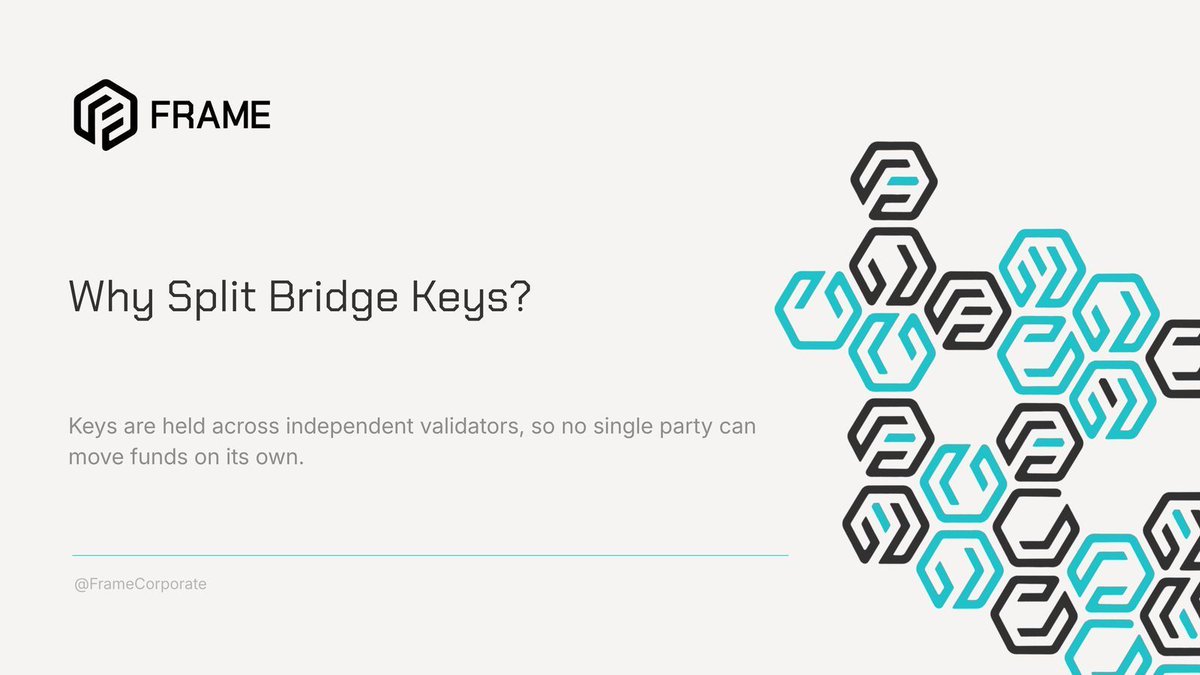
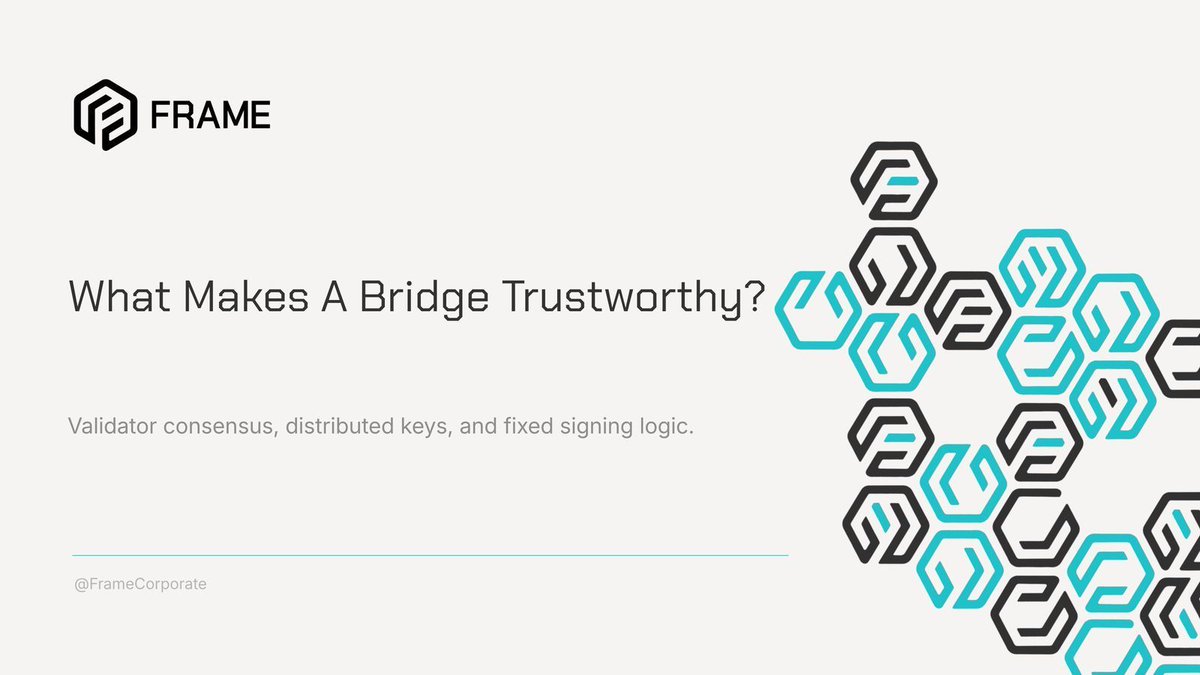
How can a bridge prove that validators agreed? Frame's design uses cryptographic proof of a validator committee supermajority before funds can leave.
#blockchain#Web3