Happy to share that my article, “Targeting transthyretin deposition in lumbar spinal stenosis: a mechanistic rationale for tafamidis,” has just been published in the surgery section, neurosurgery subsection, of the journal Frontiers!
doi: 10.3389/fsurg.2026.1816506
Alex, our 2nd Neuralink patient @BarrowNeuro, has an amazing story of resilience and transformation after spinal cord injury. I'll be talking with Alex at Barrow Neuroscience Symposium on May 15 about his new life with brain-computer interface. Join us: https://t.co/kGF9TW4lNO
The nucleus pulposus, from the Latin "pulpa" meaning "the fleshy part, pulp of fruit" and the suffix "-osus" meaning "full of, prone to", is a remnant of the notochord.
The scalenus minimus, or Albinus muscle, is a fascinating anatomical variant - an extra slip extending from the C7 transverse process to the 1st rib or Sibson’s fascia.
Its presence can narrow the thoracic outlet, predisposing patients to neurogenic or arterial TOS.
"If a man is ignorant of the position of a vital nerve, muscle, artery, or important vein, he is more likely to maim his patients or to destroy rather than save life”
- Galen, On Anatomical Procedures
This week, #CEDIMAT celebrates the “Jornada Médica Juan Manuel Taveras” - honoring the father of #Neuroradiology and a true Dominican pioneer in medicine. 🇩🇴
Here I share an insightful interview from @AANSNeuro ↓
https://t.co/oIB6uMquUJ
Perimesencephalic subarachnoid hemorrhage (pmSAH) has long been labeled “benign.”
But new evidence says otherwise 👇
A recent study found that larger hemorrhage volume strongly predicts hydrocephalus, vasospasm, and worse outcomes - even when no aneurysm is found.
This study shows that volume of blood on CT can predict complications.
>10 cm³ → high hydrocephalus risk
>8 cm³ → risk of vasospasm
Quantifying hemorrhage burden offers a window into risk prediction, monitoring, and early intervention for these patients.
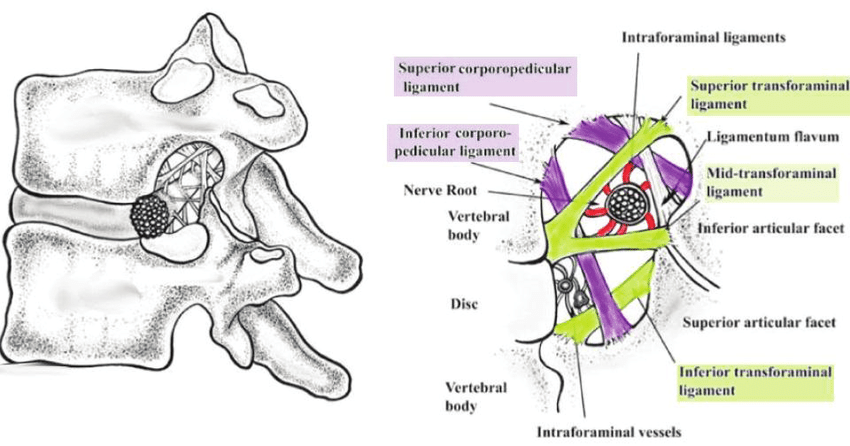
The transforaminal ligaments were thought to be a cause of low back pain, but now are known to be normal anatomic structures that help hold components of the neural canal in place.
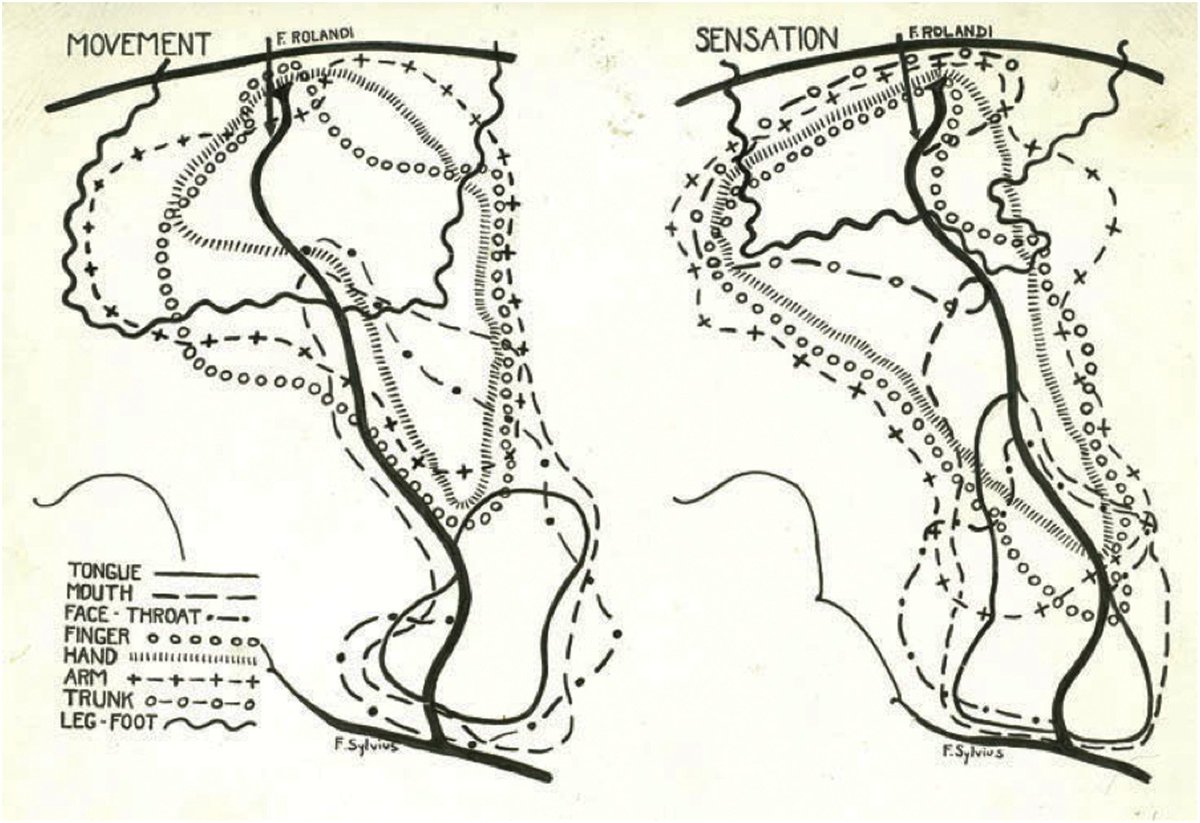
The Montreal procedure and the homunculus - both conceived by Dr. Wilder Penfield.
Pupil of Osler, Sherrington, Cajal, Cushing, Foerster... Indeed, a pioneer #neurosurgeon who unified almost all branches of #neurosciences.
He devised three types of homunculus: one purely sensorial, one purely motor, and one subcortical, just over the thalamus.
All of them represent the extent of which brain areas control which part of the body! Highly used in modern day #Neurosurgery!