SIKORSKI: What Russians do routinely is stage false flag operations as provocations. So, we suspect Putin is planning to put together some Ukrainian drones and set them against a NATO country or even against Russia itself, and then respond because he's desperate and he's losing.
Another whining russian. Another reminder that this imperial nation is beyond cure.
This man owned property that burned in today's Wildberries warehouse fire. Instead of asking why russian warehouses keep going up in flames, he's accusing Wildberries of cheating him.
The irony is that just weeks ago, after Ukrainian drone strikes began disrupting russian logistics, Wildberries changed its compensation policy. Now it's all classified as "force majeure," which means no one gets paid.
Even after losing his property, he still refuses to see the obvious: this is a consequence of the war russia chose to unleash against Ukraine. In the russian mindset, everyone is guilty except russia itself.
🇺🇦💥 Magyar: Our Operation changes the enemy’s priorities from the front to the sea. The enemy removes up to 200 Rubicon teams from the frontline to protect the shadow fleet.
The forces of the entire 51st air defense division and the anti-aircraft regiment of the remnants of the Black Sea Fleet are also involved.
During the first 13 days in the Azov and Black Seas, the Birds hit 172 units of the Russian shadow fleet: tankers, gas carriers, dry cargo ships, ferries, floating cranes and tugs.
Putin's approval ratings are showing a noticeable decline. All of Russia's main polling agencies - the Levada Center, VTsIOM, and FOM - are reporting the same trend.
According to the Levada Center, 74% of respondents approved of Putin's performance in June. While this remains a high figure, it is 13 percentage points lower than in August 2025.
VTsIOM recorded a drop in presidential approval from 70.4% at the end of June to 65.1% by mid-July. Trust in Putin also declined over the same period, from 76.7% to 71%.
According to FOM, 66% of respondents rated Putin's performance positively on July 10-12, compared with 75% a month earlier. The share of those who said they do not trust the president rose to 20%.
The absolute figures differ due to survey methodologies: Levada conducts monthly face-to-face interviews, VTsIOM uses a mixed methodology, and FOM carries out weekly surveys. However, all three point to the same trend - a gradual decline in support.
Another important signal comes from the Levada Center's findings. Russians are increasingly citing not the war itself but its impact on their own lives as the main events. In June, 24% of respondents mentioned Ukrainian drone attacks, while 22% cited fuel shortages and rising gasoline prices. Only 7% cited the war itself as a separate event.
This suggests a shift in public perception. Whereas the war previously remained a distant background issue for many Russians, it is now increasingly associated with tangible inconveniences - strikes on Russian territory, disruptions at airports, fuel shortages, and rising prices.
At the same time, it would be premature to speak of an anti-war shift. In June, 67% of Levada respondents continued to support the actions of Russian troops, although that figure fell by seven percentage points over the month. At the same time, 64% supported moving to peace negotiations, while only 29% favored continuing the war.
There is no contradiction here. A significant share of Russians simultaneously supports the military as a state institution while also wanting the war to end because of its economic and social consequences, without abandoning the desire for Russia to achieve its objectives.
Economic indicators also point to worsening public sentiment. In June, Levada's consumer sentiment index fell to 94 points. A score of 100 is considered the threshold between predominantly optimistic and predominantly pessimistic assessments. The index has not been this low since October 2022.
Over the past year, the index has fallen by 23 points, with nearly half of that decline occurring in May and June alone. Russians are becoming increasingly pessimistic about both the current economic situation and their personal prospects. Thirty-five percent said their family’s financial situation had worsened over the past year, while only 13% reported improvement. Even among Putin's supporters, only 16% said their standard of living had improved.
Another trend is the gradual weakening of television's information monopoly. It remains the main source of news for 56% of Russians, yet only about one-third of the population trusts it - the lowest level on record. Meanwhile, the combined audience of online news sources has already surpassed that of television.
This does not mean Russian society has drastically changed its political views. However, it is becoming increasingly difficult for the authorities to explain everyday problems through the official narrative of having the situation fully under control. Fuel shortages, drone attacks, and rising prices are part of people's personal experience.
Levada's data also points to growing information polarization. Support for Putin and the war remains highest among those who rely primarily on television for news. Among YouTube users, younger people, lower-income citizens, and those who believe the country is heading in the wrong direction, support is significantly lower.
These findings do not signal an imminent political crisis. Polls in an authoritarian state always reflect the influence of fear, self-censorship, and the absence of political alternatives. However, the simultaneous deterioration of several indicators - presidential approval, economic assessments, consumer sentiment, attitudes toward the war, and trust in television - points to a gradual erosion of public loyalty.
For the Kremlin, it is particularly dangerous that different problems are increasingly being perceived as interconnected.
Ukrainian strikes reduce Russia's oil refining capacity, fuel shortages increase transportation costs, more expensive logistics drive inflation higher, and worsening economic conditions reduce the public's willingness to tolerate the war. If this trend continues, the current decline in Putin's ratings could become the beginning of a longer-term erosion of passive public support for the authorities.
So far, there is no regime crisis in Russia. However, the informal social contract that underpinned the country's stability in recent years is increasingly crumbling: citizens do not interfere in politics, and the state does not allow the war to significantly worsen their daily lives.
📹: A recent street poll of residents of Moscow and St. Petersburg by Sota @Sota_Vision
⚡️Update: Russian logistics centers hit in overnight attack used for military equipment, Zelensky says.
"These are warehouses used to supply war materiel: navigation equipment, components for drone production, and other supplies for the Russian army."
https://t.co/HKtupppCfL
Yesterday and today have been filled with consultations. Of course, I hear what people are saying. Today, I spoke at length with Mykhailo Fedorov. I also spoke with Oleksandr Syrskyi today. Decisions regarding the army will be worked out.
Thank you to everyone who cares about Ukraine. Thank you to everyone defending our positions on the front line and to those doing their best to bring the war back home – to Russia, where it came from. Glory to Ukraine!
Ukraine’s 79th Air Assault Brigade says its Ratel H 1162 ground robot, nicknamed “Grandpa,” has remained operational for nearly a year. It has completed around 50 missions, survived 3 FPV hits and delivered about 19 tonnes of supplies. #Ukraine
Russian wildfire units have been called in to extinguish the fires at the Wildberries logistics hub in Elektrostal, Moscow region, in Russia, but there is nothing to salvage any more. The halls are smoldering piles of metal and concrete.
Expert: The loss of Crimea would mean the end for Putin
“Crimea is a sacred symbol and Putin’s phylactery. The loss of Crimea would automatically mean the dictator’s political death and the end of the Russian imperial project. He will never be forgiven or forgotten for this in Russia,” said Taras Berezovets, a representative of the Ukrainian Territorial Defense Forces Command.
Putin has repeatedly presented the occupation of the peninsula as the greatest achievement of his political career. During the announcement of Crimea’s annexation, he spoke with a trembling voice and tears in his eyes — an unusually emotional reaction for a leader who usually avoids showing feelings.
According to Berezovets, this was tied not only to Soviet nostalgia but also to a long-standing Russian myth portraying Crimea as “Russian territory” that Moscow was destined to “return.”
The annexation of Donbas did not trigger the same level of public enthusiasm in Russia as the takeover of Crimea. Many Russians viewed the peninsula as a valuable trophy, so its return to Ukraine would strike at one of the central symbols of Putin’s rule.
“For them, this loss would not just be painful — it would be fatal,” Berezovets added.
🤡🐑 Russia should launch a military operation against NATO countries that supply weapons, transmit intelligence, and provide other support to Ukraine, stated Chechen leader Ramzan Kadyrov.
According to him, Russia is currently “conducting gentle military operations,” and this approach must change, since NATO countries understand “only the language of force.”
Українці, не ходіть у АТБ.
АТБ спонсорує пʼяту колону, яка хоче зруйнувати нашу обороноздатність.
Нагадаю, що Труху купили за величезні кошти спеціально щоб атакувати Михайла Федорова. Ця помийка відстоює антиукраїнські інтереси.
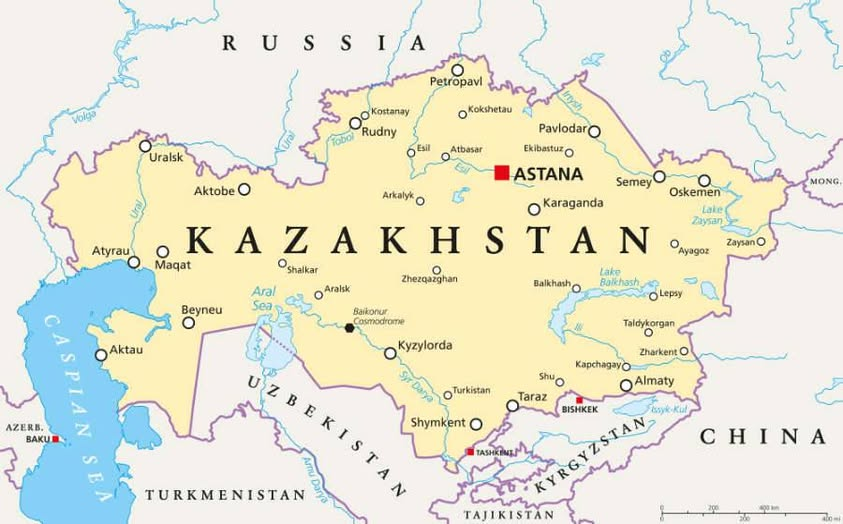
The cracks in Russia's economic alliances are widening into canyons. Kazakhstan has officially banned all imports of Russian wheat, delivering a massive economic blow to the Kremlin from within its own trade bloc.
The strategic consequences of Astana's decision:
The Death of EAEU Unity: Both nations belong to the Eurasian Economic Union, designed to ensure the free flow of goods. Kazakhstan breaking the rules to blockade Russian grain proves the bloc is functionally fractured under the weight of regional instability.
Choking the Transit Route: Russia is facing a massive grain surplus and desperately needs Kazakhstan’s rail infrastructure to smuggle and export wheat to Central Asia, Iran, and China. This ban effectively bottlenecks Russia’s agricultural escape route to the East.
Economic Self-Preservation: Moscow’s heavily discounted, sanctioned wheat was cannibalizing Kazakhstan's domestic market. Astana chose to protect its own economy rather than bail out Putin's war-torn finances.
First Beijing freezes the gas pipelines, now Central Asian allies block the grain corridors. Russia is learning the hard way that a vulnerable, isolated petro-state has no real friends—only neighbors protecting their own interests.
Soldiers of Ukraine’s 425th Skelya Regiment cleared part of Kostiantynivka and raised Ukrainian flags. Large parts of the city remain a contested gray zone, with neither side holding firm or uncontested control. #Ukraine
This morning, Ukrainian attack drones successfully struck the second-largest order-fulfillment center of the Russian ecommerce giant Wildberries.
Seen here, the Moscow-area facility, completely engulfed in flames, sends a massive plume of smoke skyward over Russia's capital.
🚨 BREAKING NEWS:
Russia has offered to sell LNG to South Asian countries at a 40% discount due to sanctions.
Putin wants to capitalize on this opportunity.
The US will enrich everyone and then collapse..
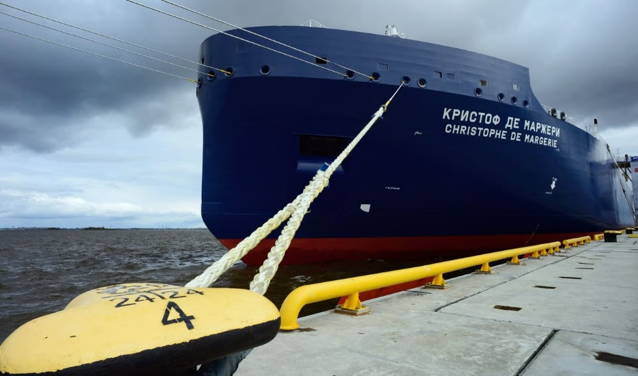
⚡⚡⚡BREAKING: Over 100 European parliamentarians from 16 countries are demanding Danish shipyard Fayard immediately stop servicing Russia’s Arc7 ice-class #LNG tankers. With the EU embargo starting in 2027, MEPs say Fayard must close this loophole NOW — no more repairs in 2026. However, with #EnergyCrisis looming over Europe the fight against Russian energy could turn into another hypocrisy. Or.. no? #GlobalEnergy