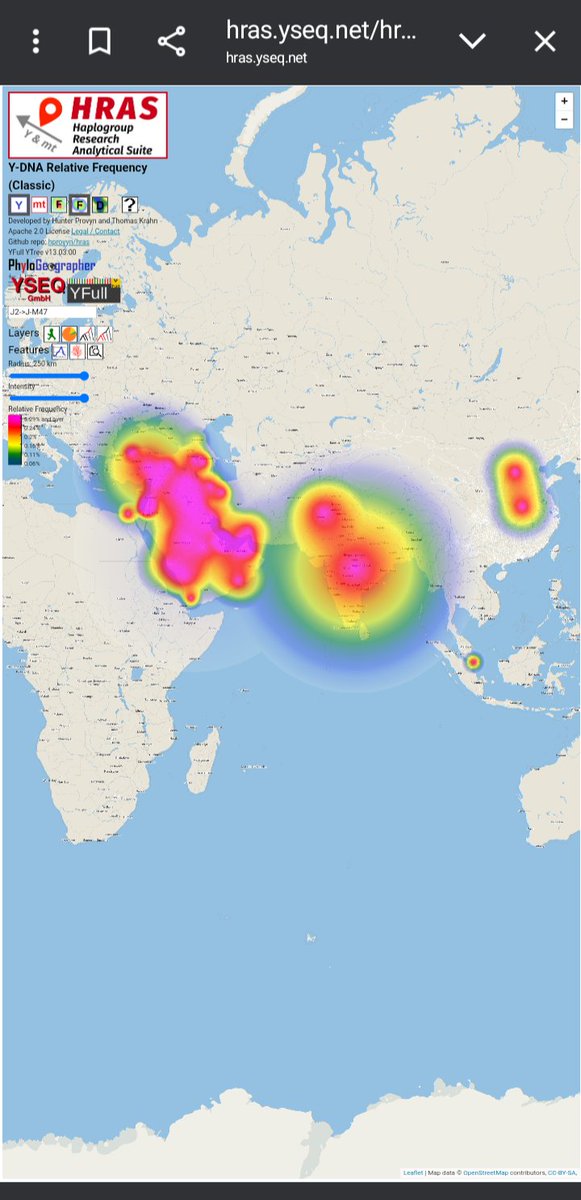
Y-DNA distribution map of haplogroup J2a-M47.
In this post and previous posts, I have shown the geography of men with the paternal haplogroup J-M47 in various configurations. It is clear that J-M47 migrated from the Kurdistan and Zagros regions to other regions in the ...
@tiriganofgutium@ehmed77747 Atası Şəmkirin #Düyərli kəndindən Sarı Hüseynli nəslindən, anası isə #Zəyəm_Cırdaxan kəndindən olan azərbaycanlının DNT test nəticəsi. Toplam Şərqi Avrasiya genetik irsi 11,02% təşkil edir. Y-DNT: J-M47.
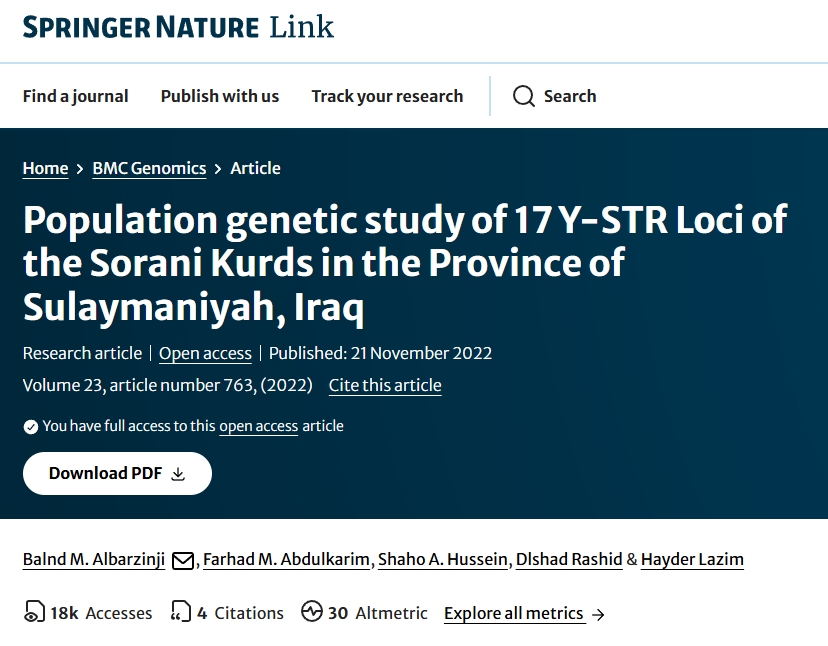
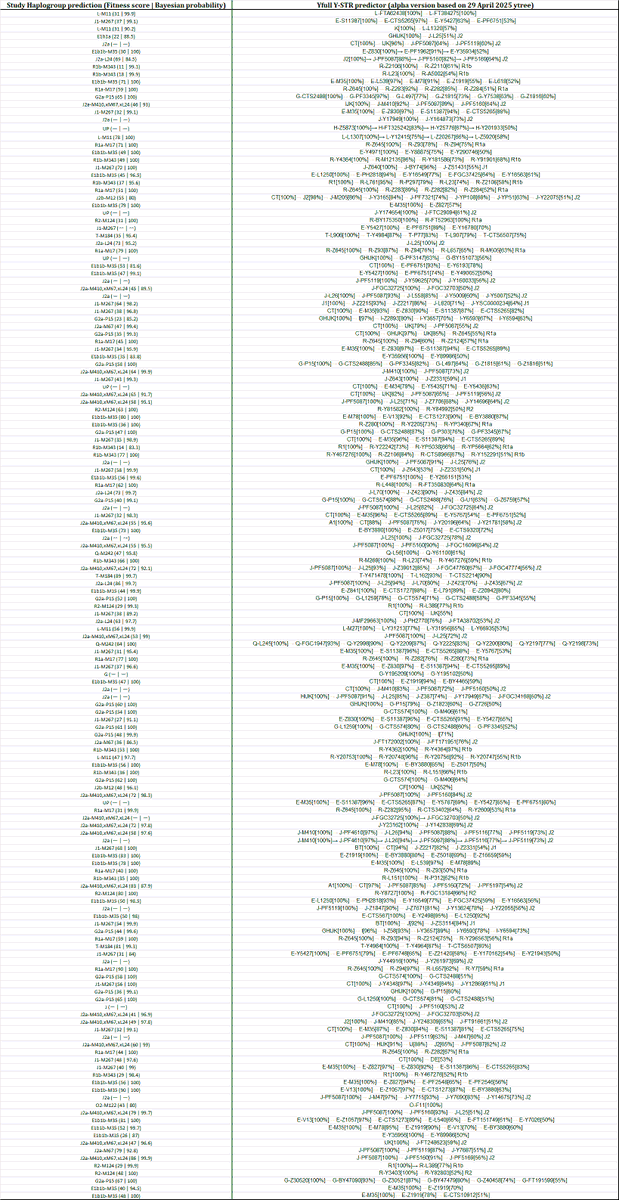
Completed a re-analysis of the STR profiles from the paper “Population Genetic Study of 17 Y-STR Loci of the Sorani Kurds in the Province of Sulaymaniyah, Iraq” using the most robust Y-STR predictor currently available, the YFull predictor (alpha version). Many haplogroup assignments reported in the original paper were incorrect and have now been updated. For example, several samples previously classified as J1 are more accurately placed under E.
Because the dataset includes only 17 Y-STR markers, a number of predictions remain unreliable, although the overall accuracy has improved significantly. The STRs were intentionally not run through Morley, which is among the least reliable predictors. NevGen performs better, but still does not match the accuracy of the YFull tool.
At a minimum, scientific studies should test 22 Y-STRs, especially given that the baseline FTDNA test now uses 37 markers. Papers relying solely on 17-marker panels offer poor resolution, and many haplogroups will inevitably fall outside the predictive capability of such limited STR sets. Unfortunately, the authors of this paper are about to release yet another paper with similar quality STRs.
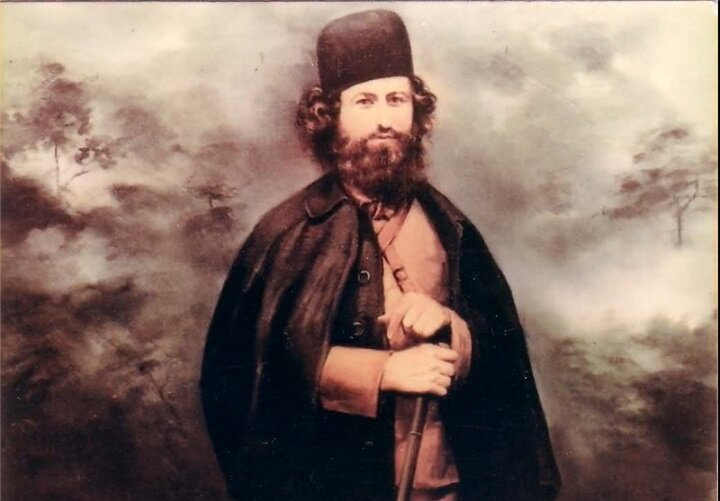
Mirzā Kuchak Khān was a major revolutionary figure in early 20th-century Iran, born into a wealthy landowning Kurdish family (Kurmanji origin) in Gilan from the Rashvand/Reshwan tribe. He led the short-lived Gilan Socialist Soviet Republic (1920–1921) through his movement, Nehzat-e Jangal, which began in 1914.
A friend of mine from the same Kurdish Rashvand branch in Gilan carries Y-haplogroup J2-L25>Z7700. His lineage will be upgraded to a Y-700 test soon.
This is the third branch/outlier of Reshwan/Rashvand Kurds that differ from the main 2 paternal lineages of the tribe that is currently based primarily in central Anatolia (E1b-BY206101 and R1b-FT186298).
As a side note, the English version of his Wikipedia page contains errors, so it should be ignored.
Atası Şəmkirin #Düyərli kəndindən Sarı Hüseynli nəslindən, anası isə #Zəyəm_Cırdaxan kəndindən olan azərbaycanlının DNT test nəticəsi. Toplam Şərqi Avrasiya genetik irsi 11,02% təşkil edir. Y-DNT: J-M47.
Atası Şamaxı şəhərindən, anası rus olan azərbaycanlının DNT test nəticəsi. Toplam Şərqi Avrasiya irsi 5,6% təşkil edir. Y-DNT: J-Y3740. Birbaşa etnik yaxınlıq siyahısında uzaqdan Balkan türkləri gəlir.
Azerbaijan DNA 🗡️
Şəmkirin #Şiştəpə kəndindən olan azərbaycanlının DNT test nəticəsi. Toplam Şərqi Asiya genetik irsi 9,71% təşkil edir. Y-DNT: J-Y3740. Birbaşa etnik yaxınlıq siyahısında Şəmkir, Ağstafa, Miyanə və Qars azərbaycanlıları gəlir. Qədim DNT nümunələri ilə qarışıq
J2a1a1a2a2b - J-M47
The single Pashtun J-M47 sample is a Khwaja Khel Pashtun from Swat. This clade is probably since the Iron Age strongly associated with Southwest Iran and likely represents in Pashtuns admix with people from Iran. The ultimate origin of the clade in the Bronze Age and before is unclear but it might be of Bronze Age/Eneolithic Central Asian origin too.
FTDNA: https://t.co/vse9e5GbOT
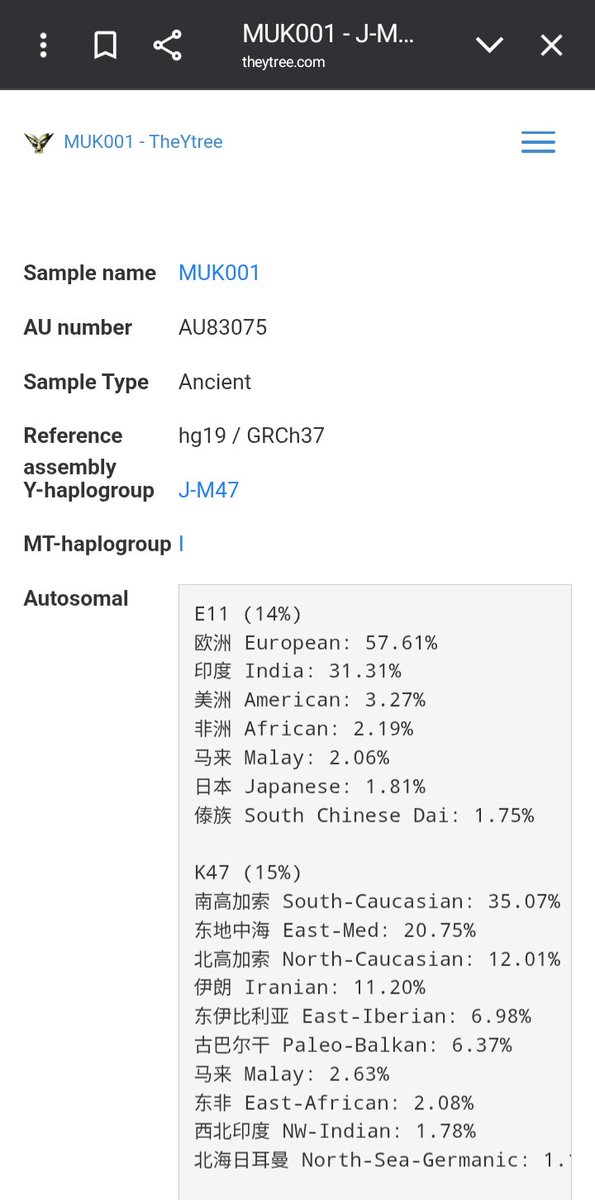
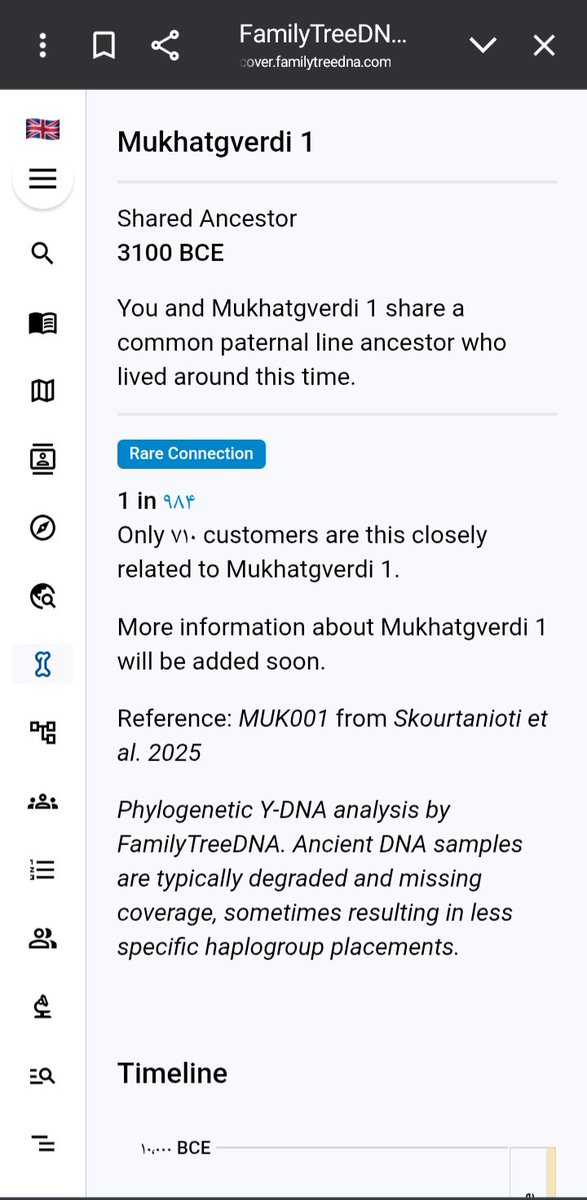
Nimûneya herî kevin a aîdî haplogroup J2-M47 li başûrê Qefqasyayê li Gurcistanê hat dîtin, ku dîroka wê ji serdema Sasaniyan a dereng heta serdema Îslamê ya destpêkê ye. Nimûne; MUK001
https://t.co/VCNjDe3CgN
The oldest discovered sample of paternal haplogroup J-M47 from the South Caucasus, Georgia. Dated to the late Sasanian to early Islamic period.
Sample ID: MUK001
https://t.co/gWvbzbLrwi
https://t.co/1pF7pjPtfx