Today we're unveiling Dimension III: a $800M fund to partner with the leading entrepreneurs across the frontiers of compute (silicon through infrastructure) & science (biotech through physics).
To our founders, past, present, and future: now is your time. LFG!
Something we think about a lot at Valius is what we call the "measured versus reported" gap.
Put simply: how much did the diagnostic measure, and how much of that did they actually report back to the patient and their physician?
This gap is shockingly large. We've seen multi-month processes for patients to get their data from big diagnostics vendors. Weeks to respond to simple questions like HLA typing or expression levels for a single gene.
We believe that with abundant AI, this gap should approximate to zero, since there is now on-demand intelligence to aid in interpretation.
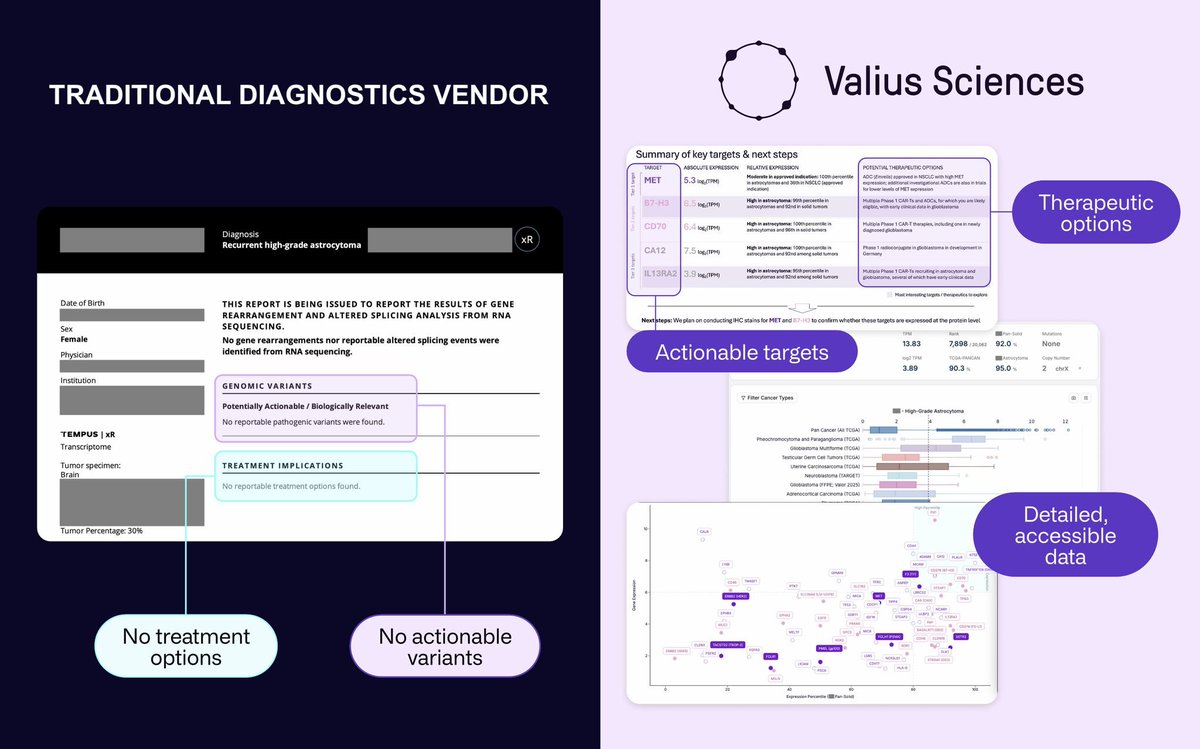
Below is a screenshot comparison of the exact same test type (whole transcriptome RNA sequencing) performed by a traditional diagnostics vendor versus Valius. Same sample from the same brain tumor patient.
The vendor's report only discusses fusions and rearrangements, of which they found none. Despite measuring (and marketing) whole transcriptome, they didn't include anything else.
~20,000 genes measured. Almost nothing reported. That is a large gap, which I don't think can be justified via the usual excuses (clinical validity, CLIA, etc)
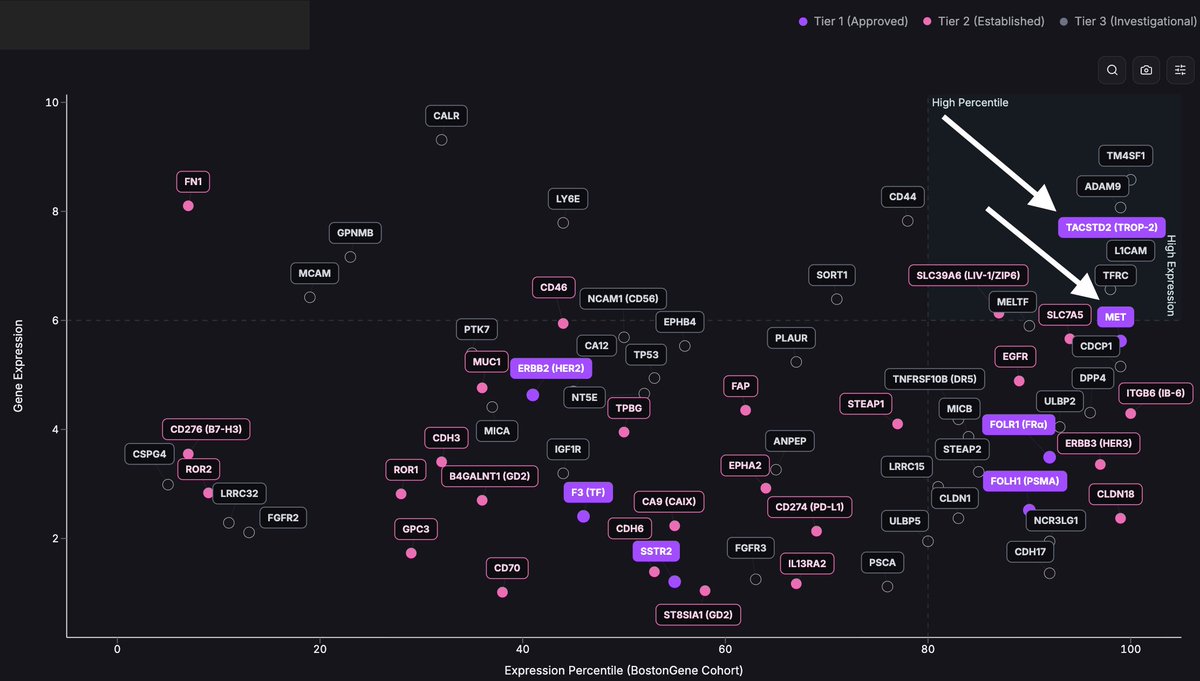
Indeed, we think there were actually quite a few interesting things in this patient's case. High B7-H3 expression. High IL13RA2 expression. High MET expression.
For patients without easy answers, this information can be critically important for determining next steps (e.g., what protein markers to stain for, what trials to consider).
The incumbent diagnostics companies grew up a long time ago, before we had intelligence on-demand.
You can imagine a world where, if the patient consents, AI has access to everything from the raw FASTQs to the cleaned, integrated CLIA output, and can answer any query the patient or their care team has.
AI is not able to do this super reliably today, but honestly, even with modestly good AI, I think defaulting to this would be better than the defaulting to nothing.
Anyway, this is a big part of why we think Valius is a uniquely exciting company to build now. The measured versus reported gap should approximate to zero, and we're going to make sure it happens.
Introducing VariantBench, a verifiable agent benchmark for variant discovery, statistical genetics, and personal genomics.
GPT-5.6 Sol / Codex and Claude Opus 4.8 Max / Pi lead with pass rates of 42.1%, while no configuration passed more than half of all attempts.
It's amazing how often you find actionable targets in tough cancers when you look hard enough.
We're working with a leiomyosarcoma patient, a rare abdominal cancer. This one was considered inoperable.
How to design a cancer vaccine (and vastly improve them): Alex Rubinsteyn & Ben Vincent
this is an interview with @iskander and @BenjaminGVincen, two UNC professors. it is three hours of incredibly detailed takes on cancer vaccines, personalized immunotherapy, and how both may be improved in the fullness of time. Alex and Ben are both wellsprings of knowledge and this was a very, very fun episode to film; i expect it could've gone on for an hour longer. enjoy!
(other links in reply)
https://t.co/JK4de7pipJ
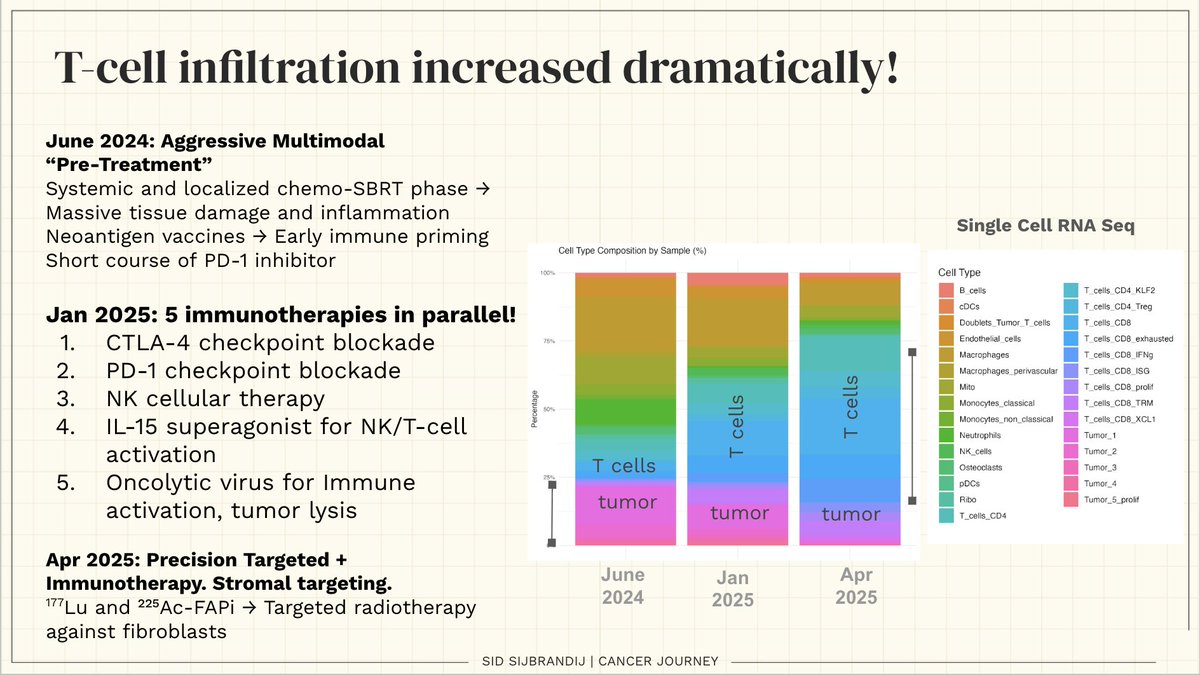
One of the most powerful use cases for @sytses' longitudinal single-cell data is in analyzing how his tumor microenvironment evolved in response to treatment. In the attached image, you can see what the single cell data looked like after the 3 distinct phases of Sid’s cancer treatment.
To get a deeper understanding, not just of what cell types were present at each stage but how they were interacting, we launched a collaboration with Darya Orlova and Hareem Maune of Couloir Bio. They analyzed data using Incytr (preprint link in comments), which is a novel computational tool for analyzing ligand-receptor-effector molecule signaling to understand cell-to-cell communication patterns.
We’re using this analysis both to look backwards, to help figure out how Sid’s cancer was put into remission, and to look forwards, identifying biomarkers relevant for treatment decision-making and early cancer screening.
One of the most striking results of this analysis is the transformation in neutrophil behavior. At T1 and T2, his neutrophils were primarily receiving signals from other cells in the microenvironment. Additionally, in T2, neutrophils had started to become major senders of pro-tumor signals. The analysis suggests these neutrophils were locked into an immunosuppressive N2 state, potentially mediated by galectin-1 binding to CD45 receptors.
What's particularly interesting is that despite intensive immunotherapy at T2, this neutrophil communication pattern appeared resistant to change, maintaining a pro-tumor signaling profile. However, we do see a partial reversal at T3, and our hypothesis is that the FAPI radiotherapy killed FAP+ fibroblasts (a source of galectin-1), disrupting some of this underlying pro-tumor galectin-1-mediated signaling networks.
This retrospective analysis, in addition to being interesting and hopefully useful to the broader field, helps us reason through potential future strategies for Sid. The galectin-1/CD45/STAT3 pathway represents one potential mechanism by which Sid’s tumor maintained immunosuppression even during checkpoint blockade. If validated, this could inform future combination strategies that disrupt these networks alongside standard immunotherapies.
We’ve more recently generated longitudinal spatial data using the 10x Xenium platform. Kamil Slowikowski has put together an interactive slide deck with analysis of the data and a browser to explore it yourself (link in comments). This analysis complements the single cell analysis, showing increasing T cell accumulation and penetration into the tumor microenvironment over time. Even more interestingly, we can see probes for the oncolytic virus that Sid took (AdAPT-001) in the tumor bed, including signal in what looks like lysed tumor cells.
We'd love to hear from other researchers who use their favorite tools to analyze this data for additional mechanistic insights! Please reach out with anything you find.
once china hits diminishing returns on fast follow me betters, the market will pull them towards innovation. my experience talking to entrepreneurs in shanghai isn’t that they don’t know how to innovate, it’s just that the near term market pull of less risk + near term revenue are taking their operating cycles. the best entrepreneurs in china have a laundry list of innovative experiments and ideas they’re itching to get to
@RuxandraTeslo We’re getting a scientific productivity boost from the wealth of data that Sid has been generating and posting on https://t.co/IMKbUgDk7a — like, it’s rare to get many of these modalities together (e.g. tumor single cell long read with PacBio & ONT + WGS), all for public use
We at @Valius_Sciences are excited to announce an upsized funding round, led by our friends @CompoundVC.
The Compound team (especially @shelbynewsad!) have long been believers in maximalist, patient-directed diagnostics, we're glad to have them onboard.
While we have not been able to detect @sytses' cancer for over a year now, we “stay paranoid.” Sid is now on his fifth personalized cancer vaccine. To complement the monthly minimum residual disease (MRD) monitoring tests he does to get a yes/no read on whether his cancer is detectable, we use deep immune profiling to understand how each vaccine dose affects his immune landscape, contextualize any side effects, and optimize the design of future vaccines.
To lead this work, I reached out to Will Hudson at Baylor. We met during my time at @10xGenomics , back when he was a postdoc at Emory and hacked Visium, our spatial sequencing product, to develop a novel protocol for spatial TCR sequencing. For Sid, Will put together an approach that combines flow cytometry with single-cell sequencing on blood samples. The flow data gives us a more nuanced ‘complete blood count’ analog with information on cell types and functional states from measuring 30+ cell surface markers. By sorting T cells and doing single cell sequencing, we can understand the clonal and phenotypic dynamics of the blood over time. You can access the data at osteosarc (link in comments), and in the image below you can see a visualization of the top 30 clonotypes and how their prevalence changes over time.
Two key results have emerged from this analysis. First, we saw a specific pattern of sustained immune activation compared to healthy donors, with elevated levels of activated T cells but B cell activation similar to controls, indicating Sid’s ongoing response to immunotherapy and/or vaccines. Second, we're seeing an interesting and distinct CD39+ CD8+ T cell population persisting at much higher levels than in healthy controls. These cells show signs of antigen experience, express functional markers (e.g., CCR7), and preferentially bind therapeutic anti-PD-1 antibodies, suggesting they may represent tumor-reactive immune cells maintaining surveillance.
One of the biggest challenges with this data is matching TCRs to their epitopes. Right now we have a few dozen matched TCRs, and for these we can track how their phenotypes evolve over time. We use this data to think through dosing for current vaccines and plan ahead for the next formulations, deciding whether to support already strong clonotypes or boost less abundant clonotypes to diversify the surveillance apparatus.
However, there's a significant opportunity to "deorphanize" more and we’re interested in working with teams or individuals across academic and industry who want to test out their methods on this rich longitudinal dataset. We're sharing all this data openly because we believe others can find patterns we're missing. If you're interested in helping deorphanize TCRs or have insights into how epitope-reactive clones evolve phenotypically over time, please dive into the data and reach out. The goal is understanding which mutations have immune cells actively patrolling them and which might need reinforcement.
I’ve been obsessed with KLK2 as a prostate cancer target
KLK2 was known to be a great diagnostic marker for 2+ decades (~1990 - 2010s) …
but its therapeutic potential was ignored until @JNJNews started building a KLK2 empire in the last decade
https://t.co/Fw2pbV3hq3
I've been hand-waving a lot about how under-appreciated cancer-testis antigens are as an alt target space for personalized immunotherapies.
Starting to put numbers on potential impact, eg how many patients have high expression of 1+ CTA.
first attempt: ~1/3 of all cancers
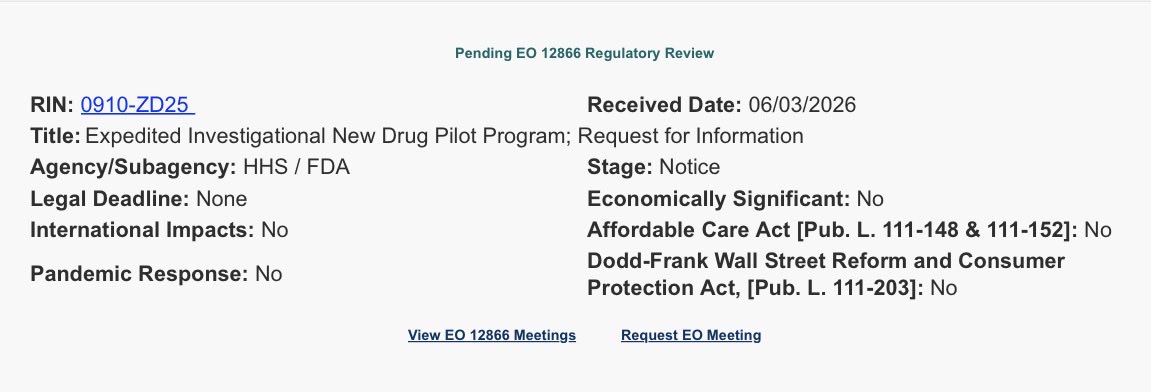
Here we go, it looks like HHS and FDA are getting ready to pilot an expedited IND process, following the proposal to implement something in the 2027 FDA budget.
This is a win for American biotech!
good post from @JTLonsdale on what could be done by the FDA to increase American biotech competitiveness. Top of the list: streamline Phase I regulations.
Our current Phase 1 trial regulations require 12–18 months of preclinical work that Australia’s version of an IND (in Australia called a CTN) have shown unnecessary; the US regulations are a top-down, Soviet legacy of the mid-20th century that is straitjacketing us and delaying innovation. If we implement the Australian learnings, including 3rd party or medical center trial oversight (who review the IND instead of the FDA) we can speed up patient access to novel drugs while saving FDA reviewers’ time and taxpayer dollars.
The leading research institutions of the world like MD Anderson Cancer Center and Memorial Sloan Kettering should be empowered to decide when and how they launch Phase 1 trials, within regulatory frameworks.
https://t.co/blVgJWyz5i