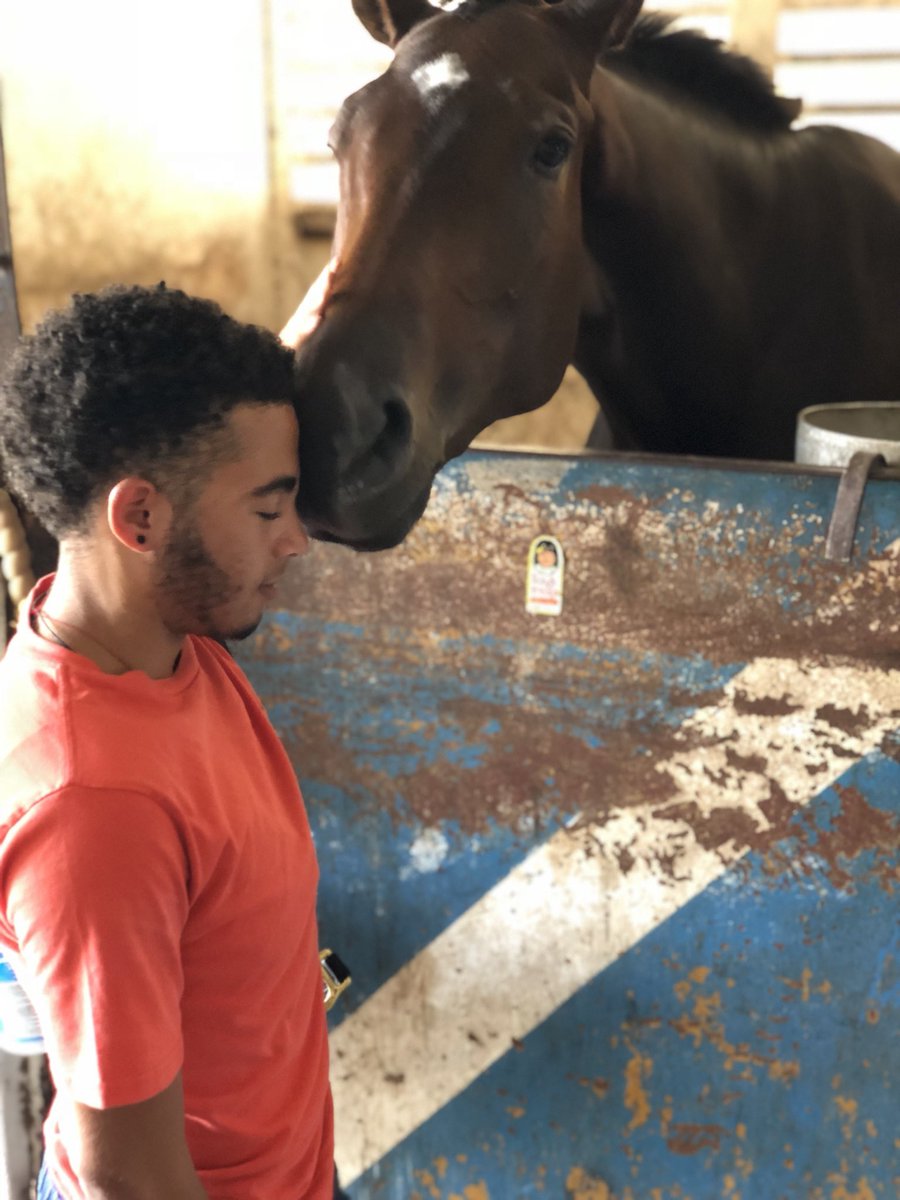
"If you marry that woman with Down syndrome, you're out of my will."
My mother said it plain as day. No hesitation.
I was 25 when I met Hannah. It was a small café near my workshop — the kind of place where the chairs don't match and the coffee is always slightly too hot. She was sitting alone by the window, reading.
On our very first date, she looked at me and said, quietly and without any drama: "I have Down syndrome. I live with my parents. I just wanted you to know that up front — no surprises."
I didn't say much. I just thought: whoever raised this woman did something right.
When I told my family, my mother said I'd ruin my future. That people would talk. That she wouldn't help us. A few friends stopped calling — slowly at first, then all at once.
Hannah never argued with any of them. She never once asked me to defend her or fight for her. She just kept showing up — meeting me after work, ordering the same chamomile tea, making me laugh at things I hadn't noticed before.
Coffee became dinners. Dinners became Sunday mornings. One year later, I proposed in the same church where I was baptized, surrounded by the twelve people who hadn't walked away.
We married that same year.
Ten years later, we are raising our son, Caleb. Every night, Hannah falls asleep holding my hand. Every morning, Caleb climbs into our bed before either of us is ready to be awake. That's our family. The one they said wouldn't last.
Last month, I ran into an old friend who had stopped calling. He looked at a photo of the three of us on my phone and said, "You look really happy, man."
"I am," I said. And that was enough.
My mother never changed her mind. She missed the wedding. She's missed every birthday Caleb has had.
I don't tell this story for sympathy. I tell it because someone out there is standing exactly where I stood — being told that love has conditions, that the people who are supposed to be in your corner get a vote on who deserves to be in your life.
They don't.
@IncelKulak for those needing context: WVU stands for West Virginia University. that entire region is full of crazy white ass mfs that will sing about country roads taking them home while riding on a couch strapped to the bed of a pick up truck with a beer in one hand and an AR in the other.
The answer is a definitive NO. But the student's logic makes perfect sense on the surface. We view mosquitoes as tiny, flying syringes.
But a biological insect is fundamentally different from a human-made tool.
• Firstly, a needle is a single hollow tube that can accidentally inject leftover blood. A mosquito’s proboscis is a two-way system. It sucks blood up one tube and injects its own saliva down a completely different tube. You are getting injected with mosquito spit, not the previous person's blood.
• A razor blade cannot digest blood. But when a mosquito drinks HIV-infected blood, its stomach enzymes literally digest the fragile virus, treating it as food. HIV has not evolved to survive and replicate inside an insect's gut like Malaria or Dengue (Hopefully never).
• A hollow needle holds a clinically significant volume of blood. Even if a microscopic fraction of infected blood remained on the outside of the mosquito's mouthparts, it wouldn't matter. To reach the minimum viral load necessary to transmit HIV, you would need to be bitten by roughly 10 million HIV-fed mosquitoes simultaneously.
Hi, I am Dr Priyam, FOLLOW ME for more such posts.
🐝 Lorsque les abeilles ne peuvent pas éliminer une menace, elles la rendent inoffensive et la neutralise.
Il arrive parfois qu’une souris s’introduise dans une ruche, attirée par la chaleur et l’odeur du miel. Les abeilles l’attaquent alors en groupe jusqu’à neutraliser l’intrus. Mais un problème subsiste : le corps est trop lourd pour être transporté hors de la ruche.
Et c’est là qu’intervient l’un des comportements les plus fascinants du monde animal.
Pour éviter que le cadavre ne se décompose et ne contamine toute la colonie, les abeilles le recouvrent entièrement de propolis, une résine naturelle qu’elles récoltent sur les arbres. Cette substance possède de puissantes propriétés antibactériennes et antifongiques.
Peu à peu, le corps se dessèche, se conserve et devient totalement inoffensif pour la ruche.
Ce phénomène, observé par les scientifiques et les apiculteurs, est considéré comme l’un des exemples les plus impressionnants d’hygiène collective chez les insectes sociaux.