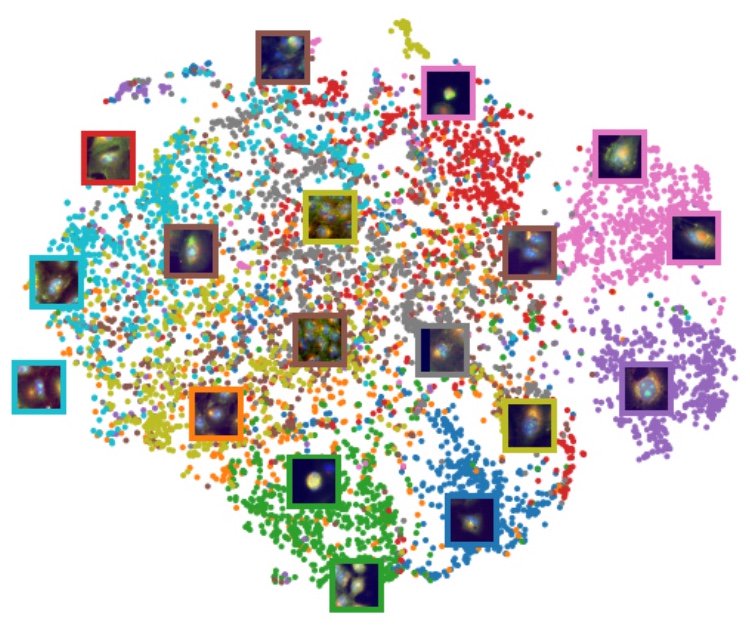
Join the morning session of the Cytodata #symposium on October 18 and learn about #interpretability of #DeepLearning models in #bioimage, deep learning applications to organelle tracking and methods to understand heterogeneity from #SingleCell#data!
https://t.co/xiyB89WH9t
We used Cell Painting to capture morphological changes of lung cancer cells after introducing mutations using gene overexpression. Images were processed using deep convolutional networks to quantify morphology at the single cell level.
Clinical sequencing of cancer tumors routinely finds new variants whose functional impact on the corresponding gene is unknown. We show that images of cells expressing these variants contain clues that predict their impact - Check out our recent paper! https://t.co/TiWk97PFLK
Want to devote your expertise in machine learning to accelerate the pace at which new medicines are found? Join @DrAnneCarpenter and me at the @broadinstitute to glean insights from biological images! Learn more about this postdoctoral position at https://t.co/UyvHnz9vDQ.
The Carpenter Lab at the Broad Institute (Cambridge, MA, US) is hiring for our new Postdoctoral Training Program in Bioimage Analysis. We are looking for bright, organized biological microscopists who want to learn to collaboratively create cutting-edge image analysis workflows.
What are the actively-maintained resources for hosting deep learning models (model zoos) out there? We found some; what else exists?
Genomics
https://t.co/tFfBCv1qWI
Detection(TF)
https://t.co/WupO8L3E3V
Generic(MXNet)
https://t.co/qdbRLUNxgr
Generic
https://t.co/DGBJZlfdjT
Teachers! Parents!
It is legal and perfectly welcome to email scientists asking for a PDF of their paper.
Until all papers are free, please RT to make this more widely known. And fyi, scientists don't get the $$ from sales of papers so all it costs us is 1 minute of time!
Using auxiliary tasks is a common way to speed up learning, though it's not clear a priori if/when a given aux task will help the main task. We propose a simple method that adapts aux losses using cosine similarity of gradients: https://t.co/P8c1o1QlZo
@balajiln @rpascanu @sidfix
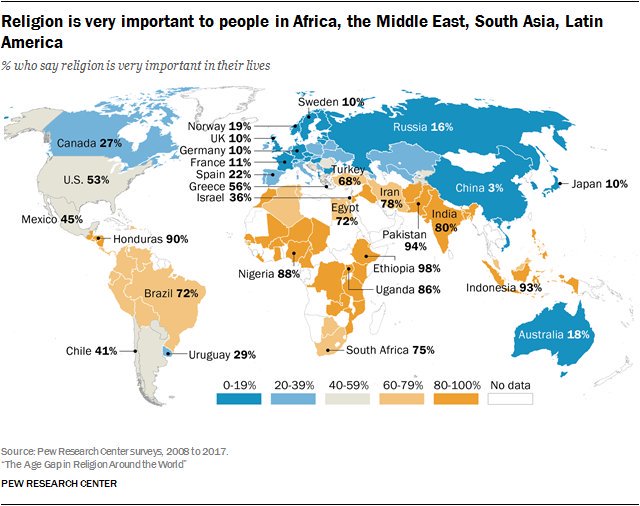
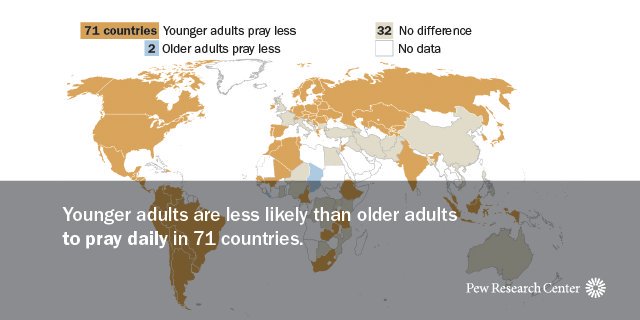
% who say religion is very important
China 3%
UK 10%
Japan 10%
Sweden 10%
France 11%
Russia 16%
Australia 18%
Spain 22%
Canada 27%
Mexico 45%
US 53%
Greece 56%
Turkey 68%
Brazil 72%
Egypt 72%
S Africa 75%
India 80%
Nigeria 88%
Honduras 90%
Indonesia 93%
Ethiopia 98%
#isa18wcs
We're honored to host the 3rd CytoData Symposium and hackathon from Sep 21-25, 2018 at the Broad! CytoData brings together the community of researchers mining microscopy image data. Learn more at https://t.co/5BNTuFc1HD and register at https://t.co/EefZQqPmeH
We evaluated a couple of deep learning architectures vs. classical image processing on 20,000 manually annotated nuclei!
Paper from @jccaicedo in BioRxiv! https://t.co/Dja7rNdpJb
Neat trick to train deep learning models without conventional biological ground truth: Weakly supervised learning of single-cell feature embeddings. Postdoc @jccaicedo's paper coming out at CVPR: https://t.co/XSUqca2xWZ