🧠 Printed Neurons That Can “Talk” to the Brain
Scientists at Northwestern University have created artificial neurons that are printed like tiny electronic ink. These neurons are not alive, but they produce signals so similar to real brain cells that living neurons actually respond to them.
In early tests, real brain tissue reacted to the artificial signals — almost like the two were communicating in the same language. This opens the door to future brain-controlled medical devices, smarter implants, and brain-like computers.
It’s a small step in technology… but a big question for the future: where does the human brain end and machines begin?
Northwestern University. (2026, April 15). Printed neurons communicate with living brain cells. Nature Nanotechnology / Northwestern Engineering research release
A brilliant Chinese engineer has invented a device that transforms a regular bicycle into an electric bicycle in just10 seconds.This converter, which simply attaches to the bicycle frame and moves the rear wheel, is capable of reaching a top speed of 32km
Dubai Civil Defence has introduced robot dogs for firefighting in high-risk areas like high-rise and industrial fires.
They’re remotely operated, fire-resistant and use heat sensors to find hotspots, with some able to blast water up to 60 metres.
Absolutely massive. China just tested a new heavy-lift cargo drone capable of flying 3,000 kilometers without refueling. With an 18 cubic meter cargo bay, it can deliver hundreds of emergency tents to disaster zones. The future of logistics is unmanned.
It looks like a spaceship. But it is 60 years old.
This is the XB-70 Valkyrie.
Built in the 1960s, it was designed to fly at Mach 3 (three times the speed of sound) and outrun a nuclear blast.
It was so fast that the friction from the air heated the
skin to over 600°F. To survive, the pilots wore pressurized space suits.
But the craziest part was the wings.
Once it hit supersonic speed, the wingtips would physically fold down 65 degrees.
This allowed the plane to "ride" its own shockwave, like a surfer riding a wave.
It used six massive jet engines aligned in a row.
Only two were ever built. One crashed in a tragic accident, and the other sits in a museum.
We haven't built anything like it since.
Was this the peak of human engineering?
In Guilin, China, high-speed trains have become a full-on spectacle. Crowds gather at viewpoints to watch them pass.
Not built as an attraction, but it’s turned into one anyway.
China is taking land use to the next level with solar-photovoltaic and livestock integration projects.
They combine solar power generation with grazing or animal husbandry, letting the same land produce clean energy and food at the same time. Sheep or cattle can graze under the panels, keeping vegetation in check, while the panels provide shade and help conserve soil moisture.
Farmers earn from both electricity and livestock, making rural land far more productive. It’s a smart way to boost renewable energy, support agriculture, and improve incomes without taking land away from either.
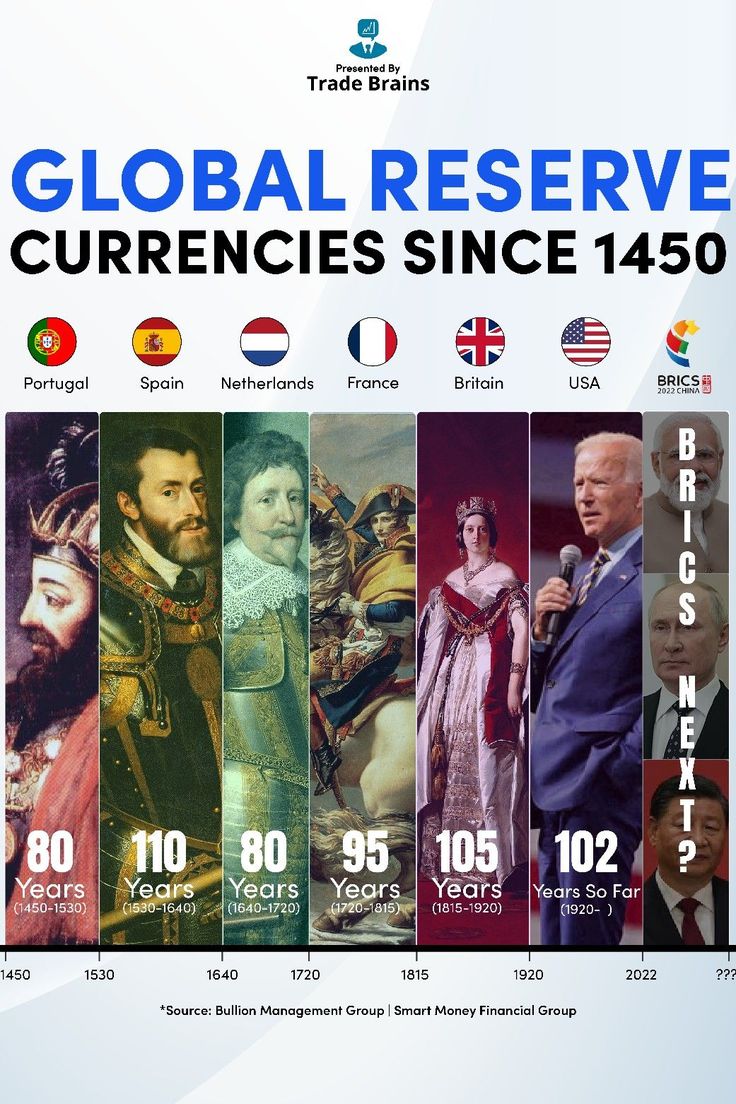
Global Reserve Currencies Since 1450 🏛️
🇵🇹 Portugal — 80 Years (1450–1530)
🇪🇸 Spain — 110 Years (1530–1640)
🇳🇱 Netherlands — 80 Years (1640–1720)
🇫🇷 France — 95 Years (1720–1815)
🇬🇧 Britain — 105 Years (1815–1920)
🇺🇸 USA — 106 Years (1920–Present)
History suggests that global reserve status usually shifts every 80 to 110 years.
New MIT research accounts for uncertainty to help engineers design complex systems that are more reliable in the face of real-world unpredictability, like delivery drones that navigate changing environments. https://t.co/N46t5bZb8B
MIT researchers developed new algorithms for trajectory planning and control of fixed-wing “tailsitter” aircraft, which are faster and more efficient than traditional quadcopter drones. https://t.co/hlZ1g1nmod
🇧🇷 Apresentação do drone eVTOL "Caburé", fabricado pela empresa brasileira TUPAN.
O drone possui uma versão elétrica focada em missões de curto alcance até 50 km e uma versão de turbina que tem alcance de 500 km. Ambas podem carregar de 16 a 32 kg de explosivos.
Learn quantum with Sandia ⚛️ High school students can create circuits on a real quantum computer while teachers gain valuable quantum resources for the classroom at Sandia’s free summer QCaMP. Register by April 3.
➡️ https://t.co/In75J2KbM5
Brain-inspired computers are shockingly good at math 🤖 Sandia researchers developed an algorithm that enables neuromorphic computers to tackle partial differential equations and simulate real-world systems.
➡️ https://t.co/rXvNLwoLHa