@LinkofSunshine Also build a damn maglev to Upstate. The Albany region and all of the Hudson Valley could be opened up - and even all the way into Central New York / Syracuse would be at the outside edge of semi-frequent commuting range.
@JieJia19966@evijanEnl Wide open, flat, easy to move armies across. That's why all of the nations around it saw such vastly fluctuating borders as well. There's no natural boundary to block armies and people.
@JieJia19966@evijanEnl It's all about the geography. Countries with more natural borders, such as rivers, mountain ranges, coastlines, etc. are often more stable - especially if those are effective natural boundaries to movement. Poland is almost entirely within the East & North European Plains though.
It's sad logging in here, seeing all of my old group chats, the number of people I used to be close with. I had so much community on here before that nazi fuck took over and turned the place evil.
I dont buy the "there is no placating the anti Israel Dem base" argument
Scott Wiener abandoned bad positions on this issue for better ones, which satisfied most Dems and secured him a comfortable victory in maybe the most lefty district in the nation
Improvement works
It’s worth digging into *why* we can’t have this kind of fine grained urbanism:
- Building is so damn difficult you need a staff to navigate the bureaucracy.
- Mom and pop owners are generally relegated to single family zones where setbacks and FAR prohibit anything like this.
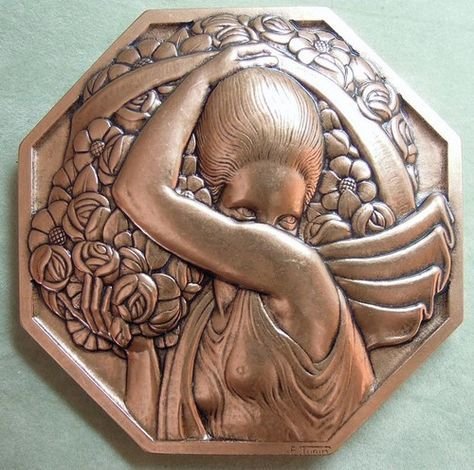
Art Deco didn't die from being exhausted, it got blacklisted.
Its three main phases - Zigzag, PWA / Stripped Classical, & Streamline - weren't exactly sequential, they overlapped all throughout the 30s. But what happened after 1929 wasn't just that zig zag Deco became too expensive, it was evolving from the 'Return to Order' (WW1) beginnings towards a more robust machine age adapted classicism.
Earlier funding collapsed from private elites to the state, and a more civic form emerged - Stripped Classical/Classical Moderne. It was transatlantic, global. The American WPA, PWA, democracies and authoritarian regimes across the West all embraced it because the goal was the same: instill optimism, civic-mindedness, and resilience. Put your skilled artists & artisans to work.
It was seen as worthy recieving state funding for its public face - blending both classical & modern, a forward facing embrace between design, industry & craft.
That more colorful zig zag form was made logistically difficult to revive after 29, then that difficulty was made permanent. Deco needed a 50-year Beaux-Arts ecosystem - terracotta kilns like Gladding McBean and Atlantic Terra Cotta, plasterers, metal foundries, carvers, mosaicists - & that ecosystem took two hits.
The 29 crash bankrupted the firms & dissolved the apprenticeship pipeline, then the war shifted what was left to war industries. By 1948 a fully crafted lobby was hard to build like 1926 even if you wanted to.
Hard isnt impossible. With a regular cycle craft revives with demand, but revival was blocked.
Tax codes, FAR, federal budgets, and curtain-wall specs all rewarded flat, uncrafted surfaces, so there wasnt much incentive to maintain the ateliers.
The firmest lockout was ideological. To make High Modernism the post-war approved standard, its promoters had to discredit what came before.
Politically, Stripped Classicism was rebranded as "fascistic" because Hitler, Mussolini and Stalin had used identical forms. Culturally Deco, especially Streamline, was the 1930s World's Fair spirit: mass-produced household objects made beautiful, futuristic, optimistic, commercial & everyday.
High Modernism was austere, 'European' & highbrow, it treated that populist optimism as kitsch. That created a self-fulfilling loop: disincentivize the decorative, let craft firms die, then accuse dead craft as proof decorative design is infeasible.
Hence the narrative that Deco simply "fell from public taste" is fake.
It was slowed by the war, logistically hollowed out by '48, then ideologically blacklisted afterwards - making way for [indirect] tacit state support through modernist capture this time with the opposite design ethos: (mid century)"modernism".
The people never chose the glass modernist box over Deco. The people were simply never asked.
Bloated with handouts to conservative landowners and contractors, bizarrely designed to focus on serving the most conservative parts of the state to the detriment of the more progressive centers of productivity
With Dems like these who even needs Rs?
Reminder, as always, that "city populations" are fake, compared to "MSA populations."
"Boston" is about 49 sq miles and excludes places like Cambridge and Somerville.
"Phoenix" is about 520 sq miles.
The 2020 census lists Boston MSA pop as 4,941,632, Phoenix as 4,845,832.
@_giacomo_volpe_ Upstate NY also has 3x metro areas of more than a million people each that are still fairly affordable and a fourth that has 750k and growing that's still affordable.
People sleep on NY. They think about NYC only and miss out on the enormous and naturally beautiful rest of the state. We've got three whole mountain ranges !