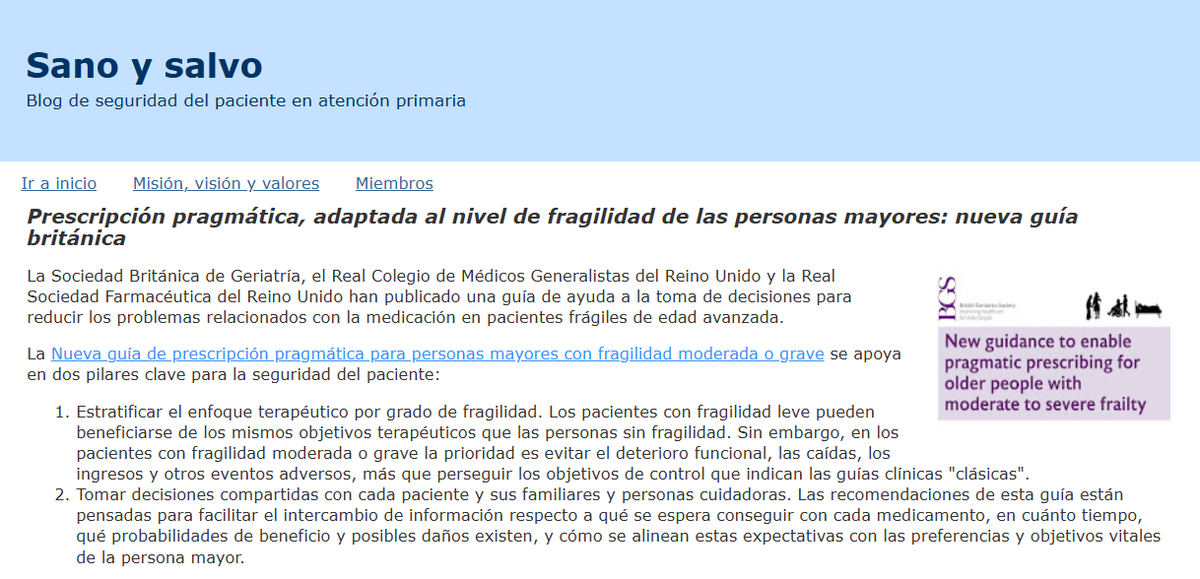
Prescripción pragmática, adaptada al nivel de fragilidad de las personas mayores: nueva guía británica
. Flexibilizar objetivos y simplificar tratamientos
. Abordaje de 6 situaciones clínicas frecuentes
. Traducción al español guía y notas
+ info: https://t.co/DkhyUvRjhR
#SegPac
DVRd en mieloma: ¿con o sin mantenimiento?
1⃣ Está implícitamente autorizado y financiado sin saber si funciona.
2⃣ Inhibirse -tras un buen IPT- como ha hecho la CIMP solo añade confusión.
3⃣ ¿Ahora qué? Conflictos, pacientes perjudicados y despilfarro: https://t.co/8FQ62RD4j6
📢‼️ Publicado el informe #GENESIS definitivo de #ELAFIBRANOR en el tratamiento de la colangitis biliar primaria. Puedes consultarlo en: https://t.co/LC0C6YRa6z
🚨Cinco años de un gráfico emblemático: el vacío de z-scores entre −2 y 2 en más de un millón de estudios de PubMed sigue mostrando un sesgo de publicación masivo. Los resultados no significativos desaparecen del registro.
#stats#datascience#research
https://t.co/jNroDvXeWR
Key Statistical Terminology
1. Hypothesis and P-value
In any clinical trial, the null hypothesis assumes there is no difference between treatment groups.
The P-value represents the probability of observing a difference at least as extreme as the one seen, if the null hypothesis were true.
A smaller P-value means the observed effect is unlikely due to chance, but it says nothing about how large or meaningful that effect is.
Example:
In DESTINY-Breast05, the invasive disease-free survival difference between arms had P < 0.001, suggesting the probability that this result occurred by chance is less than 0.1%.
---
2. Statistical Significance
When the P-value falls below a predefined threshold (usually 0.05), the result is said to be statistically significant.
However, “significant” here does not mean “important” — it simply indicates that random variation is unlikely to explain the result.
Example:
A large colon cancer trial might report a median OS improvement of 0.8 months (P = 0.04). The result is statistically significant, but the clinical benefit is trivial.
---
3. Type I and Type II Errors
Type I error (false positive): Concluding there is an effect when there is none.
Type II error (false negative): Failing to detect a true effect.
Example:
A small early study suggested T-DM1 improved OS, but later phase III data did not confirm it → likely Type I error.
Conversely, a small subgroup of MSI-H gastric cancer patients might truly benefit from immunotherapy, yet a low-powered trial could miss it → Type II error.
---
4. Statistical Power
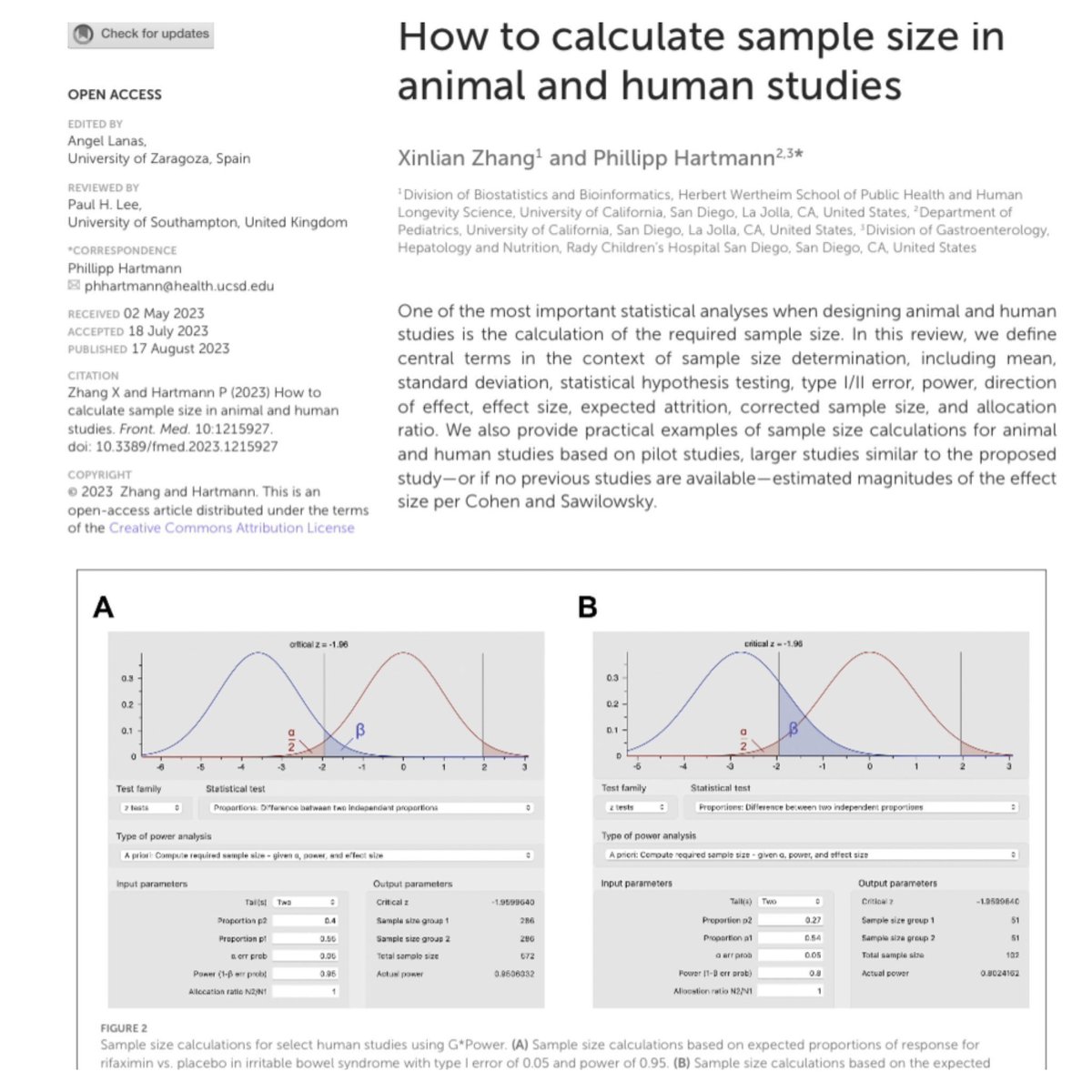
The probability of correctly detecting a true difference when one exists. Adequate power (usually ≥ 80%) depends on sample size, effect magnitude, and variability.
Example:
A 60-patient single-center trial may lack power to detect a modest immunotherapy effect, whereas a multi-thousand-patient phase III study can.
---
5. Effect Size
Indicates how large the observed difference is.
While the P-value asks “does an effect exist?”, the effect size asks “how meaningful is it?”.
Example:
In DESTINY-Breast03, HR = 0.28 reflects not only a statistically significant result but also a clinically substantial effect size.
---
6. Confidence Interval (CI)
Represents the precision of an estimate.
A 95% CI means that if the study were repeated many times, the true value would lie within this range 95% of the time.
Narrower intervals imply greater certainty.
Example:
In KEYNOTE-522, the pCR rate difference had a 95% CI = 6.3–21.4.
Because the interval did not cross zero, the effect was statistically significant.
---
7. Correlation vs. Causation
Correlation indicates that two variables move together; causation means one directly influences the other.
Correlation alone never proves causality — a biological or mechanistic explanation is required.
Example:
In breast cancer, age correlates with ER positivity (older patients, higher ER expression) — a correlation, not causation.
By contrast, smoking causes lung cancer through mutagenic DNA damage — a causal link.
---
8. Clinical Significance
Refers to whether a statistically significant result translates into a meaningful benefit for patients — improved survival, function, or quality of life.
Ideally, both statistical and clinical significance align.
Example:
A new agent extending median OS by two months (P < 0.05) may lack clinical relevance if toxicity is high.
Conversely, DESTINY-Breast trials show both statistical and clinical significance, with large, durable benefits.
¿Por qué tardan en financiarse los medicamentos en España?
¿Está justificada esta espera?
Por fin podemos compartir este estudio que tanto trabajo nos ha costado: @Hilario_FH@Fonsecaea_ y Ana Coples.
👉https://t.co/DoyNgp7fdC
We have new results on T cell responses to #Omicron, and its good news!
Paper submitted for peer review & preprint:
https://t.co/40Y8obKzkK
📢TL;DR: Most of your T cell responses from vaccination or previous infection still recognise Omicron.
#Getvaccinated#GetthoseTcellsnow