محاولة إيران كسر الحصار الأمريكي بناقلات النفط: هل تكرر طهران ما فعلته واشنطن لكسر حصار برلين عام 1948؟
لكي يكون الأمر واضحاً، في حال كان الإيرانيون جادين فعلاً بمحاولة كسر الحصار الأمريكي عبر إرسال قافلة من ناقلات النفط لتحدي الحصار وكسره، فإن هذه خطوة عبقرية بكل ما تحمله الكلمة من معنى. يعني خطوة جهنمية بذكائها، حرفياً.
الفكرة هنا أن الإيرانيين، بهذه الخطوة، ينقلون المعضلة الاستراتيجية من طهران إلى واشنطن، ويضعون الأمريكيين أمام خيارين كلاهما مكلف. وهذه من أكثر المناورات ذكاءً في نظرية الألعاب الاستراتيجية (Game Theory)، وتحديداً ما يُعرف بسياسة حافة الهاوية (Brinkmanship)، حيث تدفع خصمك إلى اتخاذ قرار لا يستطيع تجنب تكاليفه، وتجعله هو المسؤول عن الخطوة التي تنقل المواجهة إلى مستوى أعلى من التصعيد.
إما أن تعترض الولايات المتحدة هذه الناقلات أو تقصفها، وعندها ترد إيران وتشعل الحرب وفق شروطها، وفي التوقيت الذي اختارته هي، وتنتزع بذلك زمام المبادرة الاستراتيجية من واشنطن، وتنهي حالة «لا حرب ولا سلم» التي تستفيد منها الولايات المتحدة، والتي تضع إيران، للأسف الشديد، تحت ضائقة اقتصادية شديدة.
أو أن تسمح الولايات المتحدة لهذه الناقلات بالعبور، وعندها يكون الإيرانيون قد نجحوا عملياً في كسر الحصار الأمريكي، وتوجيه ضربة هائلة لمصداقية التهديدات الأمريكية، وفتح الطريق أمام تكرار هذه العملية حتى يصبح الحصار نفسه فاقداً لفاعليته، وهو ما سيعني انهيار إحدى أهم أدوات سياسة الضغط الاقتصادي الأقصى التي تعتمد عليها واشنطن لإخضاع طهران.
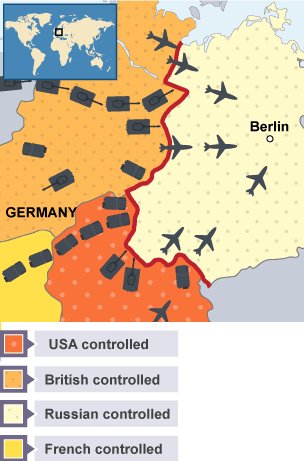
وهذا يذكرني بما حدث خلال حصار برلين عام 1948، عندما فرض الاتحاد السوفيتي حصاراً برياً على برلين الغربية، فرد الأمريكيون والبريطانيون بتنظيم جسر جوي ضخم لإمداد المدينة. وجد السوفييت أنفسهم أمام معضلة مشابهة: إما السماح للطائرات الغربية بالعبور، وبالتالي إفشال الحصار، أو إسقاطها والمخاطرة بإشعال حرب مباشرة مع الولايات المتحدة وبريطانيا. وفي النهاية استمر الجسر الجوي حتى اضطر السوفييت إلى رفع الحصار عام 1949.
الأمر نفسه من حيث المنطق الاستراتيجي، وإن اختلفت الظروف العسكرية والسياسية. فالإيرانيون، إن نفذوا هذه الخطوة، سيحاولون تحويل الحصار الأمريكي من أداة ضغط اقتصادي تستفيد منها واشنطن دون تحمل تكاليف الحرب المباشرة، إلى معضلة عسكرية وسياسية تفرض على الولايات المتحدة دفع ثمن الاستمرار في هذا الحصار.
لكن هناك نقطة شديدة الأهمية، وهي أن نجاح مثل هذه المناورة لا يعتمد فقط على إرسال الناقلات، وإنما على ما يُعرف في الدراسات الاستراتيجية بمصداقية التهديد (Credibility of Threat).
يعني لا يكفي أن تعلن إيران أنها ستكسر الحصار، ثم ترسل ناقلات النفط، وتقوم الولايات المتحدة باعتراضها أو قصفها، لترد طهران بعد ذلك برد ضعيف لا يغير شيئاً من المعادلة القائمة. عندها تكون إيران قد خسرت جزءاً من مصداقية ردعها، وسمحت للأمريكيين باختبار حدود تهديداتها دون دفع الثمن الذي كانت قد توعدتهم به.
بل يجب أن يكون هناك Following Through on the Threat، أي أن يمتلك الإيرانيون الإرادة والقدرة الفعلية على تنفيذ ما هددوا به، وأن تكون واشنطن مقتنعة مسبقاً بأن اعتراض هذه الناقلات سيترتب عليه رد إيراني حاسم يغير طبيعة المواجهة.
وهذا تحديداً ما يجعل المناورة خطيرة وذكية إلى هذه الدرجة. فالقوة الحقيقية للتهديد العسكري لا تكمن في استخدام القوة بالضرورة، وإنما في جعل خصمك مقتنعاً بأنك مستعد لاستخدامها فعلاً، وأن تكلفة اختبار تهديدك ستكون أعلى من تكلفة التراجع أمامه.
الأمريكيون يستفيدون حالياً من معادلة تسمح لهم بخنق الاقتصاد الإيراني دون تحمل تكاليف حرب مباشرة. والإيرانيون، بهذه المناورة، يحاولون تدمير هذه المعادلة، وفرض معادلة جديدة يصبح فيها استمرار الحصار نفسه مصدراً لخطر اندلاع الحرب.
وفي حال نفذ الإيرانيون فعلاً ما أعلنوا عزمهم على تنفيذه، وكانوا مستعدين للذهاب بهذه المواجهة إلى نهايتها، فإن هذه ستكون خطوة جهنمية بذكائها، ومن أذكى التحركات الاستراتيجية الإيرانية في هذه الحرب.
As anticipated, Iran is determined to break the naval blockade. Dozens of Iranian oil tankers are preparing to head for China. Just hours ago, Iran sent a clear warning to all countries in the region, as well as to the mediators: from now on, any US attack on Iranian oil tankers en route to China will be considered the formal beginning of a new phase of the war.
Contrary to the misleading impression Washington and the Western mainstream media are trying to convey, a naval blockade is not simply a means of exerting economic pressure. It is an act of war in its own right, unmistakably military in nature and subject to the rules of international law governing armed conflict. Iran's military response to such an act of war therefore falls within the scope of legitimate self-defence and its lawful right to defend its sovereignty and national interests.
This time, Iran has made preparations on such an extensive, comprehensive and full-scale basis to break the naval blockade that the scale and consequences of what unfolds could offer the world a demonstration of American defeat and the limits of US military power far more staggering than even the humiliating defeat Iran inflicted on the United States in the war that began on February 28.
Washington must understand that, from this very moment, any attack on Iranian oil tankers, as well as any continuation of the naval blockade, could exact a heavy and potentially decisive toll on the United States, both in human lives and financial costs.
And my final words are addressed to the American mothers and fathers whose children have been sent to fight this war:
This phase of the war could be considerably bloodier than all the previous ones. We Iranians will defend our homeland, and we will not hesitate to do so. But if your sons and daughters in uniform begin to lose their lives in their hundreds and thousands in this decisive phase of the war, responsibility for their deaths will lie squarely with the leaders of the United States and Israel, and with the Zionist network of political, media and institutional influence that wields power in the United States
"What will happen next, no one knows. God knows what will happen next."
That is how Vladimir Putin just summarized the historic Xi-Putin-Trump summit in Shenzhen.
For thirty years, Washington told the world exactly what the future looked like. They called it "The End of History." The future was a closed loop managed by the American empire.
Now, the leaders of the multipolar world are openly admitting that the future is unwritten. The imperial monopoly on the future is broken.
Let’s dissect the most important part of Putin’s statement. He said they reached "if not an agreement, then at least a mutual understanding."
The Western media will frame the lack of a signed "agreement" as a failure, symbolic, or underwhelming.
That framing misreads how power works.
In imperial diplomacy, an "agreement" is usually a capitulation treaty. It is the periphery signing away its sovereignty to adopt the "rules-based order."
A "mutual understanding" is something entirely different. It is the acknowledgment of material reality. It means recognizing each other's red lines, security architectures, and sovereign limits without demanding surrender.
Washington came looking for a contract to freeze the unipolar order.
Russia and China forced a mutual understanding that the unipolar order is over.
When Putin mentions aligning on "historical context," he isn't only talking about the past. He is talking about the structural break of the present. The empire had to sit at a table hosted by China. That alone is the acknowledgment.
But understanding among great powers is a beginning, not liberation. The test is whether the periphery gets a seat at the table.
A new page in the history of diplomacy is rarely written in ink. It is written in the physical shift of global gravity.
The empire wanted a contract. The multipolar world gave it a reality check.
It's been darkly hilarious watching the Super Serious Journalists of the American press like Anderson Cooper and Jake Tapper solemnly pretending to believe reports that Iran has planned to detonate a dirty bomb in Washington. They're just exposing the entire propaganda machine for everyone to see.
In the lead-up to the US midterms we received multiple reports that the US and Israel were planning to attack Iran after the election, and now that the midterms are over we're seeing the information ecosystem conveniently flooded with evidence-free reports claiming that Iran is doing evil things which may necessitate a military response.
The latest narrative in the growing mountain of accusations is that Iran has been using AI to attack critical US infrastructure, with US Homeland Security Secretary Markwayne Mullin telling congress that “Since February, Iranian activity has increasingly targeted the transportation, healthcare, water, energy, and financial services sectors.”
Senator John Kennedy told Fox News that he doesn't understand why the US isn't using AI cyberwarfare to "shut down every air conditioner in Iran" in retaliation for these alleged AI cyberattacks.
This is just the latest in a new wave of war propaganda which, as we discussed previously, is now being enthusiastically spearheaded by CNN and The New York Times with evidence-free reports alleging that Iran is planning to detonate a dirty bomb in Washington DC, that Iranian water infrastructure is actually military weaponry, and that Iran has been actively working toward obtaining a nuclear bomb.
And now we learn from The New York Times that Trump is weighing attacks on Iran, just as we were told would happen after the midterms.
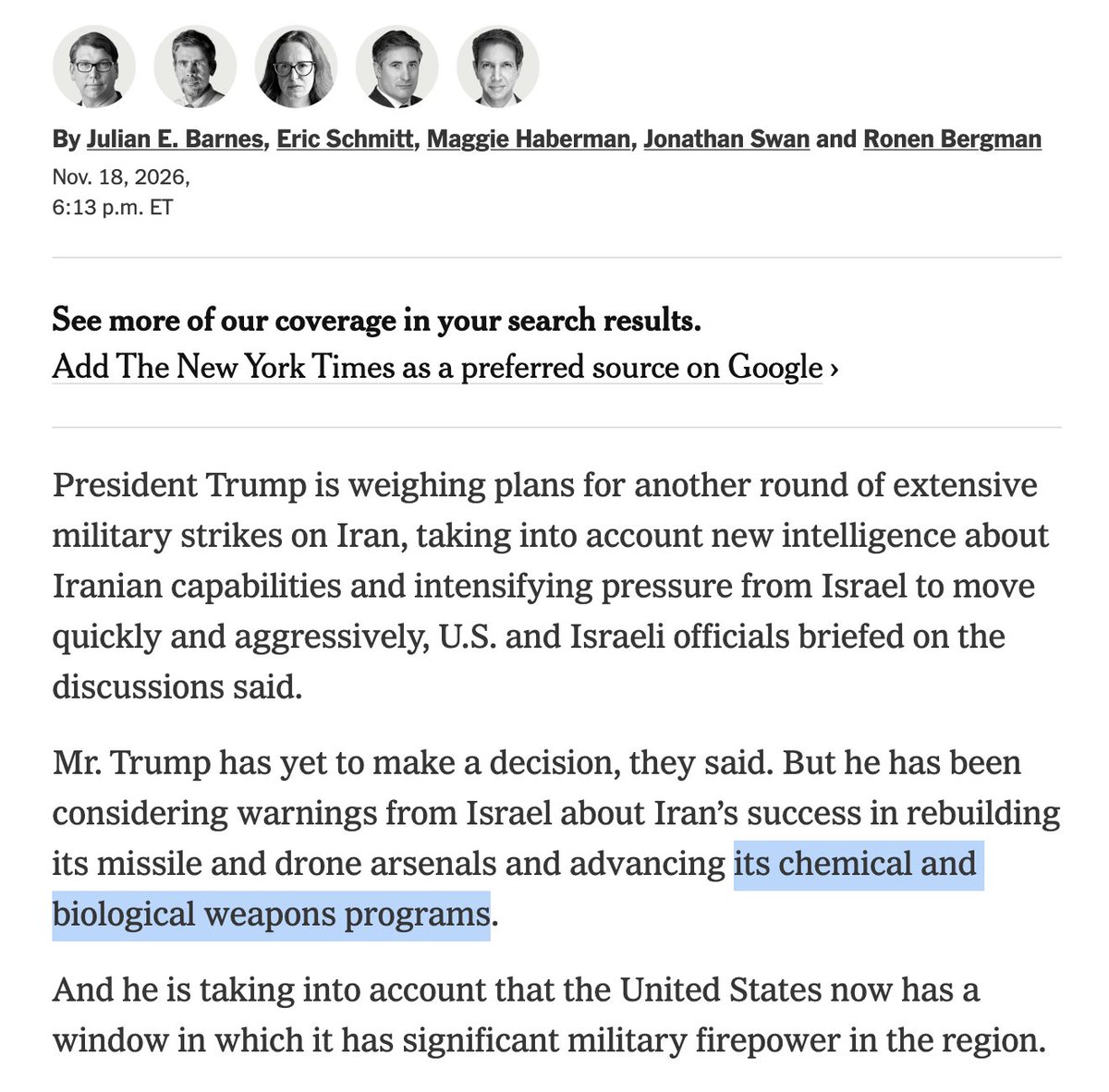
In an article titled "Trump Weighs New Strikes on Iran as Israel Presses for Action," The New York Times reports the following:
"President Trump is weighing plans for another round of extensive military strikes on Iran, taking into account new intelligence about Iranian capabilities and intensifying pressure from Israel to move quickly and aggressively, U.S. and Israeli officials briefed on the discussions said.
"Mr. Trump has yet to make a decision, they said. But he has been considering warnings from Israel about Iran’s success in rebuilding its missile and drone arsenals and advancing its chemical and biological weapons programs.
"And he is taking into account that the United States now has a window in which it has significant military firepower in the region."
Those claims about chemical and biological weapons programs? You guessed it: completely evidence-free.
These claims coming from the mainstream liberal media are the same claims coming from inside the White House, with Trump telling Fox News, "There is indication that Iran is looking at gases and they're looking at bio... you know the biological weapons, not nice."
So anyone with two braincells to rub together can see that plans to strike Iran have already been drawn up, and that our information ecosystem is now being flooded with war propaganda to justify this decision. They're just throwing every excuse imaginable into the mainstream news churn in order to dull the political impact of the unpopular decision they already intend to make, and the presstitutes of the imperial news media are fulfilling their role as the propagandists they've always been.
Now is an excellent time to awaken the public to the fact that the western news media function as propagandists for the US empire. Nobody believes the bullshit they're spewing, so we should draw attention to the way these outlets are manipulating public consciousness in ways we are told only happens in nations like North Korea. The propaganda is easier to see through now than ever before, so it's a teachable moment for opening the eyes of the normies in your life to the uncomfortable reality that we live in the most propagandized and mind-controlled civilization in human history, and that everything they have been taught about our world is a lie.
Accountability must go beyond an apology.
An apology is significant and should be acknowledged, but it should not automatically bring the matter to a close. The circumstances surrounding what took place in the House must be properly examined.
I support the referral to the Privileges Committee, where all members concerned should have a fair opportunity to present their accounts, relevant footage can be reviewed, and witnesses can be heard.
The Committee should report its findings to the House so that any further action can be determined through the proper parliamentary process.
Fairness, accountability and due process must guide how we conduct the business of Parliament.
In diplomacy, the first message is sometimes delivered before anyone enters the negotiating room.
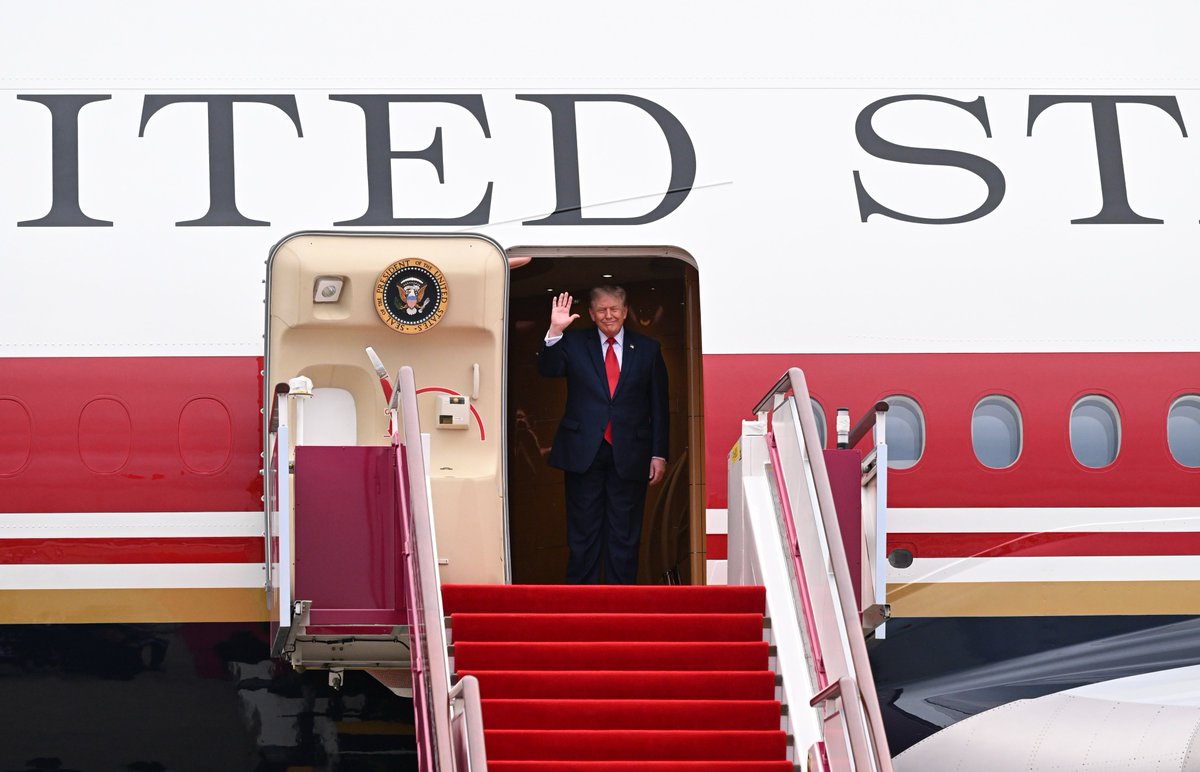
Today in Shenzhen, Xi delivered his at the airport.
China has just released its official account of Xi personally welcoming Donald Trump-an extraordinary gesture that deserves a closer look.
China has just released its official readout of Xi personally welcoming Donald Trump at Shenzhen International Airport.
There are several details worth examining.
First, the extraordinary level of diplomatic protocol.
When foreign heads of state arrive in China, they are typically received at the airport by the vice president, vice premier, foreign minister or other senior officials, depending on the occasion.
American presidents have traditionally received particularly high-level treatment. In November 2009, for example, then-Vice President Xi Jinping personally welcomed Barack Obama at the airport in Beijing.
But to my knowledge, this is the first time since becoming president in 2013 that Xi has personally gone to an airport to welcome a visiting foreign leader.
As I documented in September, JFK's personal reception of the British Prime Minister at Andrews Air Force Base in 1962 was the last time an American president had personally gone to the airport to welcome a foreign leader before Trump did the same for Xi.
As for China, my knowledge is that, since Chairman Mao personally went to the airport to welcome the Soviet leader in 1959, no top Chinese leader has ever personally received a visiting foreign leader at an airport until today.
Both sides have broken with diplomatic practices that had remained in place for more than half a century.
There are some details I cannot disclose, as they have never been made public by the Chinese side. But what I can say is that Xi attaches tremendous importance to the relationship between China and the United States.
His decision to welcome Trump personally at the airport speaks volumes.
Second, the explicit emphasis on reciprocity in diplomatic protocol.
The Chinese readout quotes Xi as saying:
"When I visited the United States this September, President Trump and the First Lady personally came to the airport to welcome me and held a grand welcoming ceremony. China is a country that values courtesy and has a tradition of reciprocating such gestures."
This provides an unusually clear public explanation for today's arrangement.
There had, in fact, been some hints beforehand.
Before arriving in China, Trump had suggested that he would receive an exceptionally warm welcome. Meanwhile, the White House's published schedule was notably vague about his plans for Wednesday afternoon, leaving considerable room for speculation.
Taken together, these clues raised the possibility: if Trump was expected to attend the welcome banquet hosted by Xi this evening, a personal airport reception by the Chinese president would not have been too surprising.
It was not officially confirmed at the time, of course. But in retrospect, the signs were there.
And now China's official readout provides the explanation: diplomatic reciprocity.
In September, the American president personally welcomed his Chinese counterpart.
In November, the Chinese president personally welcomed his American counterpart.
The reciprocity was deliberate, and publicly acknowledged.
In diplomacy, protocol is not merely ceremony. It is also a means of communicating respect.
Third, the consistency of the strategic language.
Xi expressed his desire to advance what China calls:
"A constructive China-US relationship of strategic stability based on respect, fairness and reciprocity."
This formulation did not suddenly emerge today. In May and September 2026, the two sides had already agreed on this broader direction for their relationship.
The wording carries three important implications.
Respect: Both sides should take each other's major concerns seriously.
Fairness and reciprocity: Consultation and mutual benefit should form the basis of the relationship.
Strategic stability: Even amid competition and disagreements, both countries should seek to prevent their relationship from spiraling out of control.
Of course, an airport welcome cannot resolve the many difficult problems between China and the United States. But it conveys how seriously the two leaders regard the relationship and the diplomatic process ahead.
The significance lies in the political message both sides have chosen to convey.
Diplomatic respect is demonstrated at the airport. Strategic maturity is demonstrated when the conversations begin.
Remember when Bloomberg literally ran the headline: "China's curing cancer faster and cheaper than anywhere else. But some worry they may be going too fast"?
Now look at how the Financial Times is framing this new FDA decision: "FDA rejects cancer drug invented in China in blow to Beijing's biotech sector."
A "blow to Beijing"? Chinese lung cancer patients ALREADY have this drug. Not only is it approved across China, it is covered by public health insurance, where a single vial costs roughly $100 USD (around $1,300 per treatment cycle before insurance even kicks in to cover most of the bill).
Meanwhile, in separate head-to-head trials, this exact Chinese drug beat Merck's Keytruda, which is Big Pharma's $30 billion-a-year cash cow and the best-selling cancer drug on earth. In the U.S., Keytruda carries a list price of over $12,500 per three-week dose, adding up to more than $200,000 a year.
So why did the FDA block this initial U.S. application? While a larger global trial is still wrapping up, the U.S. partner company applied first to use the drug for a smaller, harder-to-treat group of lung cancer patients whose previous treatments had failed. Even though the drug clearly slowed down tumor growth, the FDA rejected it, claiming that slowing tumors wasn't enough without stronger long-term survival proof and complaining that too many patients in the trial were Chinese.
Here is the kicker: a Harvard Medical School study found that over half (57%) of the cancer drugs fast-tracked onto the market by the FDA failed to prove within five years that they actually helped patients live longer or feel better. For years, the FDA happily let Western pharma giants charge Americans $200,000 a year for drugs that only slowed or shrank tumors on paper. Yet the moment a superior Chinese drug threatens Big Pharma's biggest monopoly and exposes what cancer treatment actually costs outside the U.S. pricing racket, the FDA suddenly discovers "strict standards."
Even if you take the FDA's red tape at face value, look at the media sickness on display. Western outlets are cheering a blocked lung cancer treatment like it is a geopolitical scoreboard win over China, when the only people being denied the option right now are Americans.
Imagine framing American cancer patients having fewer options while still paying $200,000 a year as "owning Beijing."
Israele pratica l'apartheid e per questo dovrebbe essere isolato economicamente e i suoi leader dovrebbero essere processati all'Aja.
#DDLantisemitismo#DDLProApartheid
Nichts am Zionismus ist von grundlegend anderer Qualität: In seiner Unmenschlichkeit gegen die indigene Bevölkerung handelt er wie siedlerkolonialistische Nationalismen vor ihm. Der Unterschied ist, dass es heute Hyundai-Abbruchbagger und Instagram gibt.
@MarioNawfal What's so critical, vitally necessary, about making missiles and building more factories to produce weapons? This is the reason why the US Empire has to roam the planet searching for places to start new wars. Its to create consumption of the war products.
I want you to sit with a single contradiction.
The United States has 4% of the world's population.
It has nearly half of the world's civilian-owned guns.
It has more people in prison than any country on earth.
In absolute numbers. Not per capita.
More than China.
More than Russia.
More than the entire European Union combined.
It spends more on its military than the next six countries combined.
And its life expectancy ranks 47th in the world.
This is not a glitch.
This is not mismanagement.
This is not a country that meant to do better and fell short.
This is a country that has made its choices.
And the choices have names, and the names have donors, and the donors have returns on investment.
And the people paying the price keep being told they live in "the freest nation on earth."
And enough of them believe it to keep the whole thing running.
In the past 72 hours, pro-Israel media have "reported" that Iran is supposedly plotting to use chemical weapons in DC while building missile bases under dams. RUBBISH.
Spare us the Iraq War-style propaganda, especially with Israeli fingerprints all over it. Nobody is buying it.
We stand with the Most Honourable Juliet Ann-Marie Holness (@JulietHolness) Member of Parliament for East Rural St. Andrew and Speaker of the House of Representatives.
A self-made, accomplished and successful Jamaican woman, in whom we are well pleased.