@4RunnaADA@HMResearchX Sometimes people can’t see the complete picture until the painting is completed. The age of overnight riches is gone. Now it’s what projects have the technology to stand the test of time
Cardano uses Nakamoto consensus, which has the following properties:
It prefers liveness over correctness.
Short-term ambiguity of the unique global blockchain state is tolerated, as it is more important that the blockchain never stops.
Block finality is probabilistic. Each newly appended block confirms all previous blocks - adds another confirmation.
Within a given period (in the Cardano network, it is about 20 seconds), a single node mints a new block, which is disseminated to all other nodes before the next block producer takes its turn. This is the ideal case.
Short-term forks occur when two blocks are minted in the same slot, or in slots that follow each other shortly.
All nodes in the network do not know about all blocks at a given time. Some nodes might not have received the block as they are distant from the block producer.
Therefore, they can append a new block to a block that is supposed to be orphaned according to the rules.
A short-term fork of a blockchain is a situation that is expected and is relatively common.
The protocol rules determine which chain will be preserved in the event of a fork and which will be orphaned, i.e., discarded.
If all new blocks meet the protocol rules, everything works perfectly. The entire stake (all nodes) builds a single canonical chain.
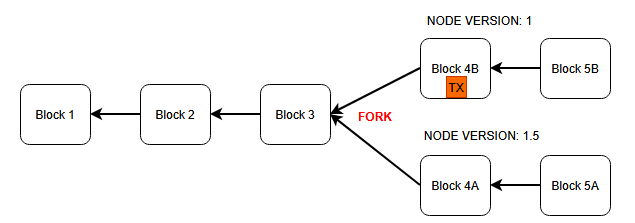
However, different nodes can run different versions of the Cardano protocol (client), or even different implementations of the protocol.
This means that nodes can have slightly different rules for accepting a transaction or block.
A specific transaction may appear that some nodes accept while some nodes reject.
Together with the rejected transaction, the entire block is rejected.
A blockchain fork occurs, and at the same time, the stake (nodes) in the network is divided.
Imagine that a uniquely formatted transaction is submitted.
Only some nodes in the network accept it and continue building chain A, while the other part of the nodes reject this transaction and build chain B.
If a transaction is rejected, the entire block and all subsequent blocks are rejected (by part of the network).
This conflict cannot be resolved without the operators (SPOs) agreeing on what to do next.
All blocks are finalised after 2160 blocks have been appended.
Theoretically, there would be two alternative chains forever.
Fortunately, there is a rule about the longer chain.
This means that the correct (winning) chain is the one that will be longer after some time - i.e. will have more blocks.
The rate of adding new blocks to chain A and chain B usually differs because the stake is distributed unevenly.
If chain A is built by 70% of the stake in the network, blocks will be added faster than in the case of chain B, which is only built by 30% of the stake.
Nodes building chain B will find that chain A is longer.
Operators building chain B (the shorter chain) may decide to upgrade the node version that will get them to the longer chain A.
After a while, chain B will be orphaned, and the majority of the stake will build only chain A again.
This process might be slow as multiple operators upgrade their nodes at different times.
The annoying thing is that some wallets or applications are on chain A while others are on chain B. But that is another story.
The important thing is that the Nakamoto consensus is unstoppable, but at the cost of short-term (or longer-term) uncertainty about the unique global state of the chain.
BFT chains prefer correctness over liveness.
There is always only one correct (unique global) state of the blockchain. If a conflict occurs, the chain stops (or is stopped) because it is usually not possible to resolve the inconsistency without external intervention.
BREAKING NEWS:
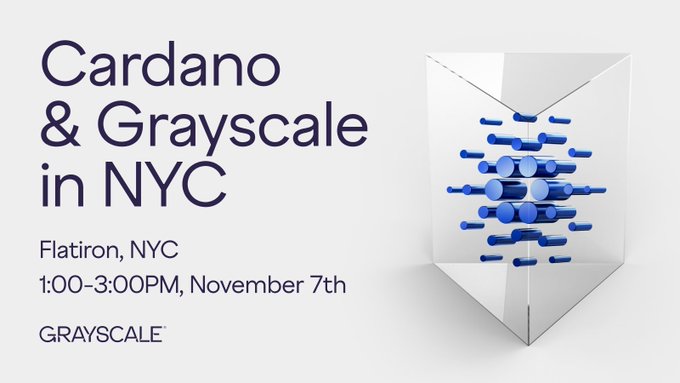
CARDANO TAKES CENTER STAGE IN NEW YORK😱😱😱
@Grayscale will feature Cardano $ADA at its Crypto 5 ETF ($GDLC) event happening today at Flatiron Public Plaza, NYC.
Is $ADA about to become Wall Street’s next big story?
🚨Big news for #Cardano! Introducing Ouroboros Phalanx — our latest upgrade that makes network attacks way harder and more expensive while enabling up to 30% faster transactions.
More secure. More efficient. More Cardano.
Technical & non-technical blogs below 👇:
Fun fact: Cardano holds the distinction for longest running blockchain with zero downtime/exploits
Oh you think Bitcoin had zero issues? Google Bitcoin block 74,638
BREAKING NEWS:
CARDANO UNLEASHES HYDRA NODE 1.0 😱😱😱
The long-awaited scaling protocol has officially launched bringing lightning-fast, low-cost transactions to the #Cardano network.
During testing, Hydra reached over 1,000,000 TPS
How many TPS do you think Hydra will hit now
Yesterday we saw a huge W for @IOHK_Charles and the $ADA community.
The baseless accusations of hundreds of millions of $ADA being stolen by IOHK was completely dismissed.
The @Cardano_CF also confidentially set the record straight with their statement confirming Charles’s innocence.
No we move forward and get back to winning 🏆
Any publication that sold this story must restore their credibility.
$ADA continues to build and maintain dignity in a space with so little.
Déjà vu!👀
100% of the Epoch 2 MNTx rewards are going straight to $NVL stakers, just like last time🥳
These rewards are already visible on your dashboard. They will accrue over a 30-day period and can be claimed daily.
As for the early node operator rewards, they’ve already been restaked.
Thanks for supporting us every step of the way!☁️🤝
@TheUnpopularEL VCs and the rest of this space will sleep on cardano until its too late, and then tell everyone they were here the whole time from the beginning just in the background🤦♂️😅
Charles Hoskinson revealed that Midnight tokens could become the first Cardano native assets that will be listed on both Binance and Coinbase.
When will other native assets be listed?
@mr_cata@Cardano_CF Completely agree with everything you’ve said here. We definitely need more options the next tiem this comes around! I feel the only reason the 350m NCL was passed was due to lack of choice and threats to abandon development from person that has the most influence in cardano!
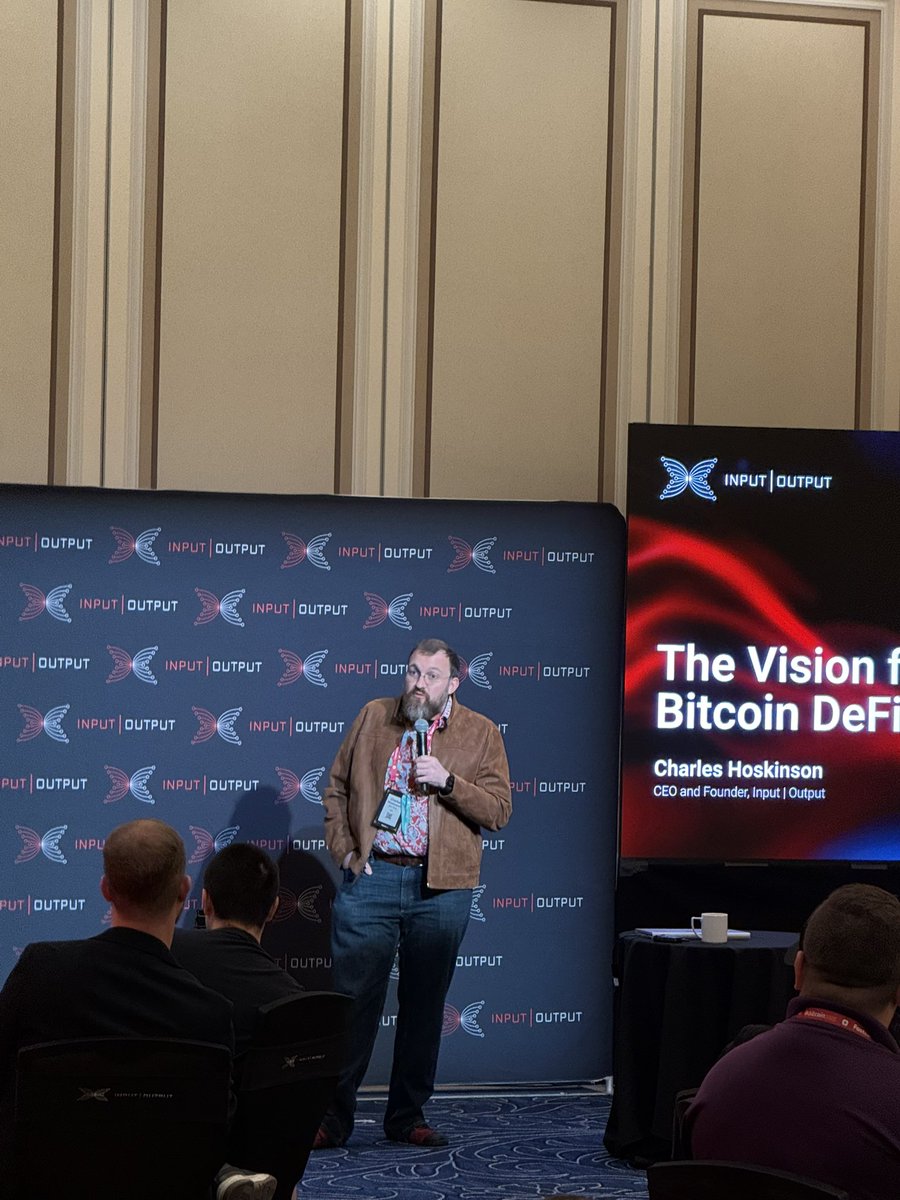
Today at @TheBitcoinConf we demoed how we’re bringing Bitcoin and Cardano together.
Bitcoin has the reach, but DeFi unlocks its full potential. We’re building the technology to bridge them.
Everyone deserves access to the global economy. Be part of it. #Bitcoin2025