@KebbelChri25685@RealJamesWoods It simply a lack of creativity from researchers to find a better alternative to animal testing. So NO we don't have to test on animals. Im a researcher btw.
New Research: Sensory–movement underpinnings of lifelong neurodivergence: getting a grip on autism https://t.co/FqMdlGTcGg #FrontiersIn#IntegrativeNeuroscience
Dr. Andres Lozano, @DrAlfonsoFasano, and @kalialabs@KBI_UHN highlight the results of the first clinical trial of a new treatment for #Parkinsons, bemdaneprocel, which replaces lost #dopamine by generating new neurons from #StemCells.
Read more ➡️ https://t.co/ex8x2tWxnN (3/4)
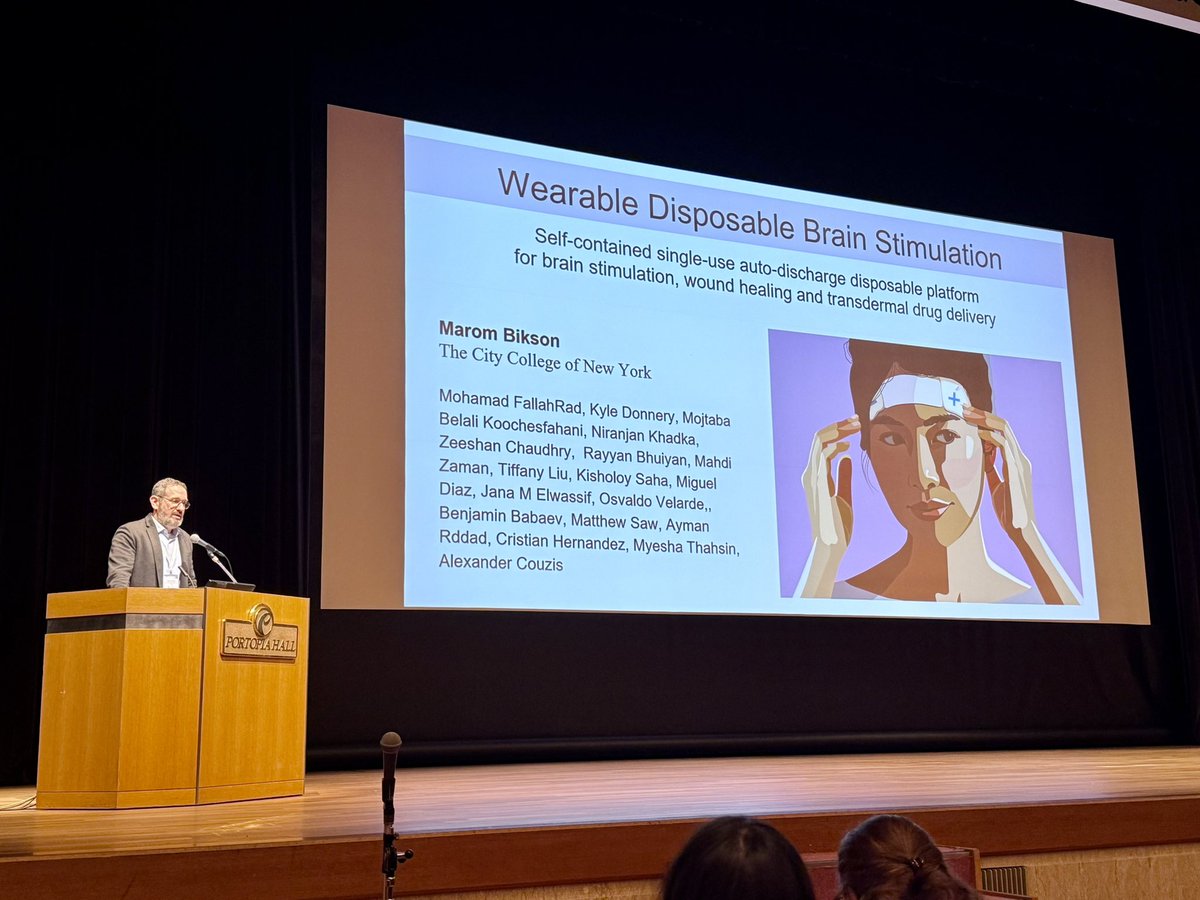
The 6th #BrainStimConf is officially underway! Mark George and Harold Sackeim kicked things off with opening remarks, followed by insightful plenary talks from @marombikson and @cjstagg. Exciting to see papers from both of my PIs—including my own—among the top downloads of 2024! 🔥 @brainstimj@RobertC21093233
@benjamin_kop@drcarysevans One thing though. The 4nchannel is a lot thicker than the 2 channel. So this will increase the tms to scalp distance. In addition the 4 channel is much more focused than the 2 channel. So it may be that the 4 channel is simply not engaging enough neurons. Just an idea.
@benjamin_kop@drcarysevans Interesting. I wonder why there are studies replicating it? If it is a bias then we have to consider a systematic bias in multiple labs. FYI - I have no personal attachment to any protocols - I am just curious.
@benjamin_kop@drcarysevans Since the Zeng result has been replicated multiple times, I wonder if the difference in equipment is the issue. 4 channel vs 2 channel.
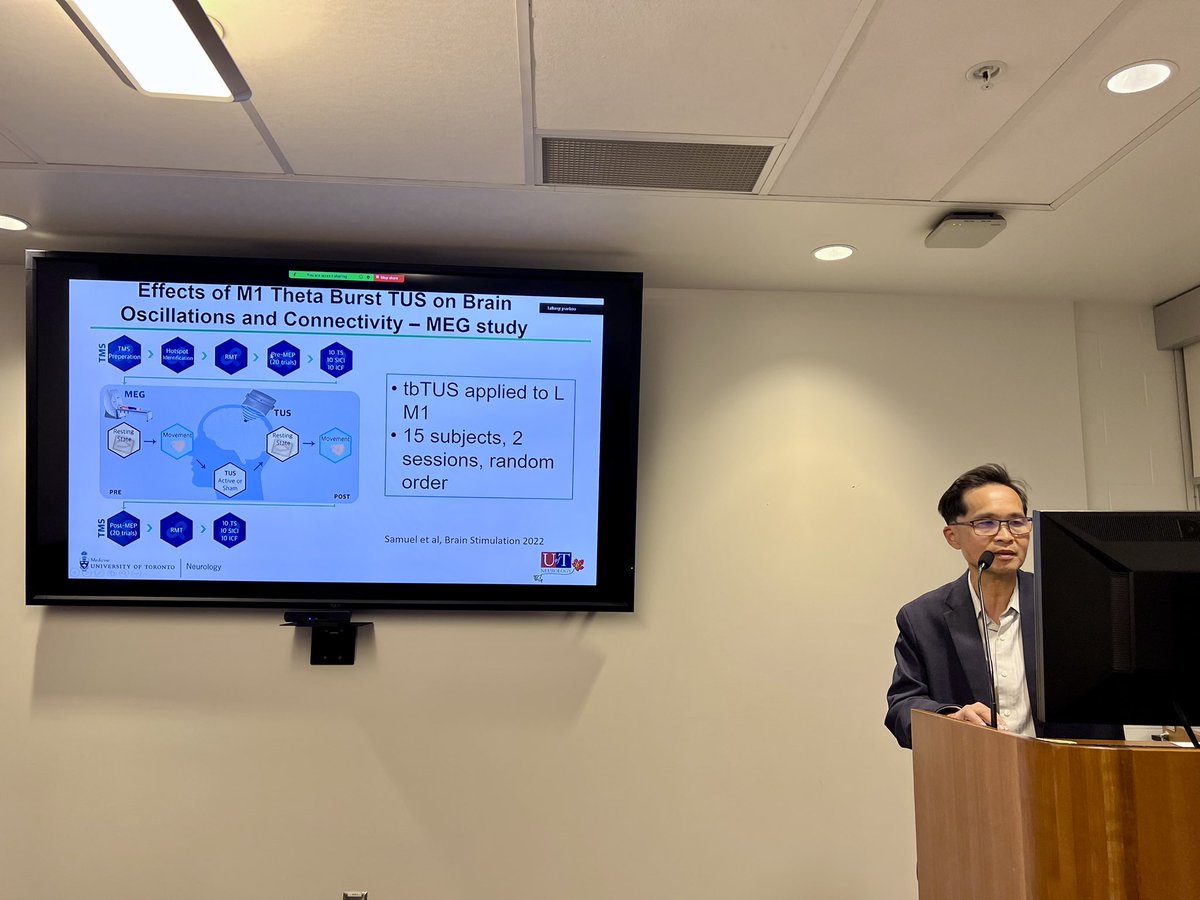
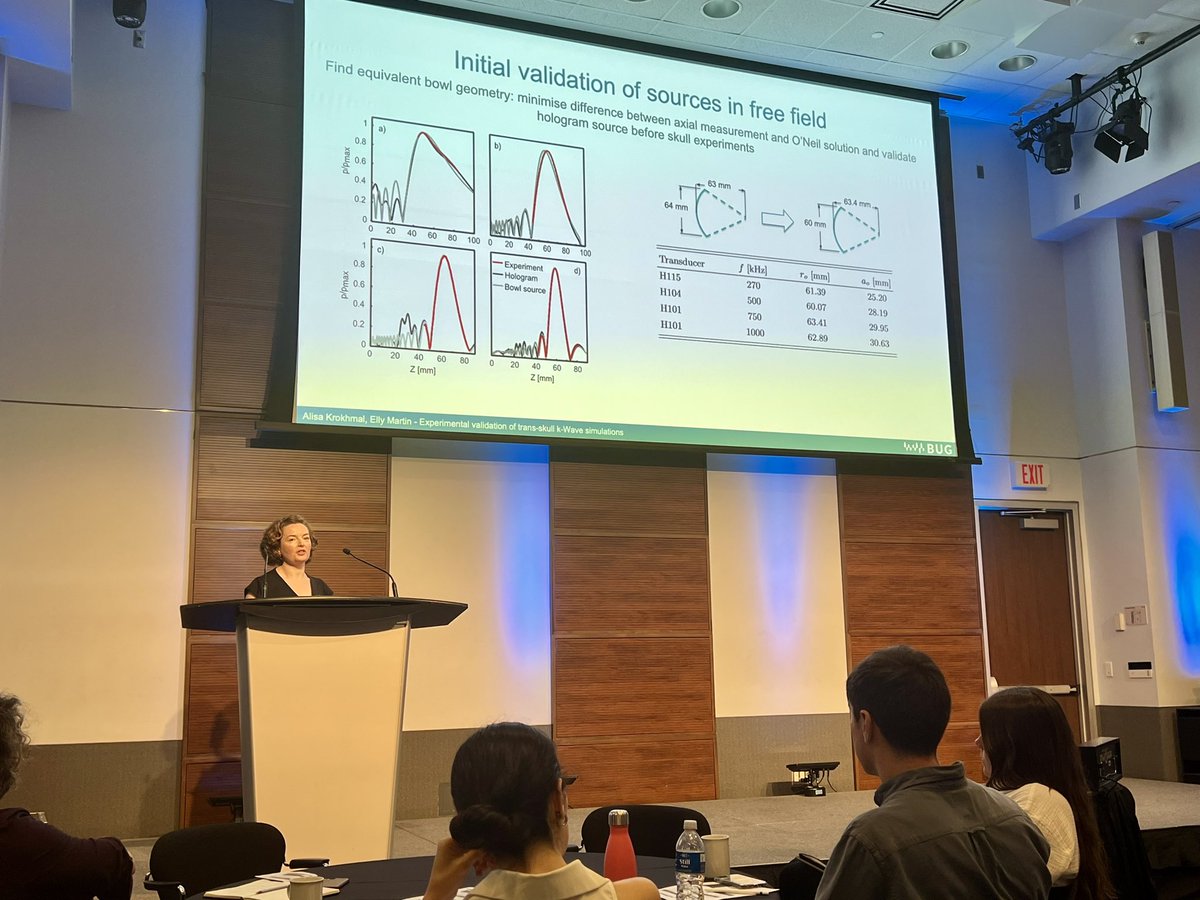
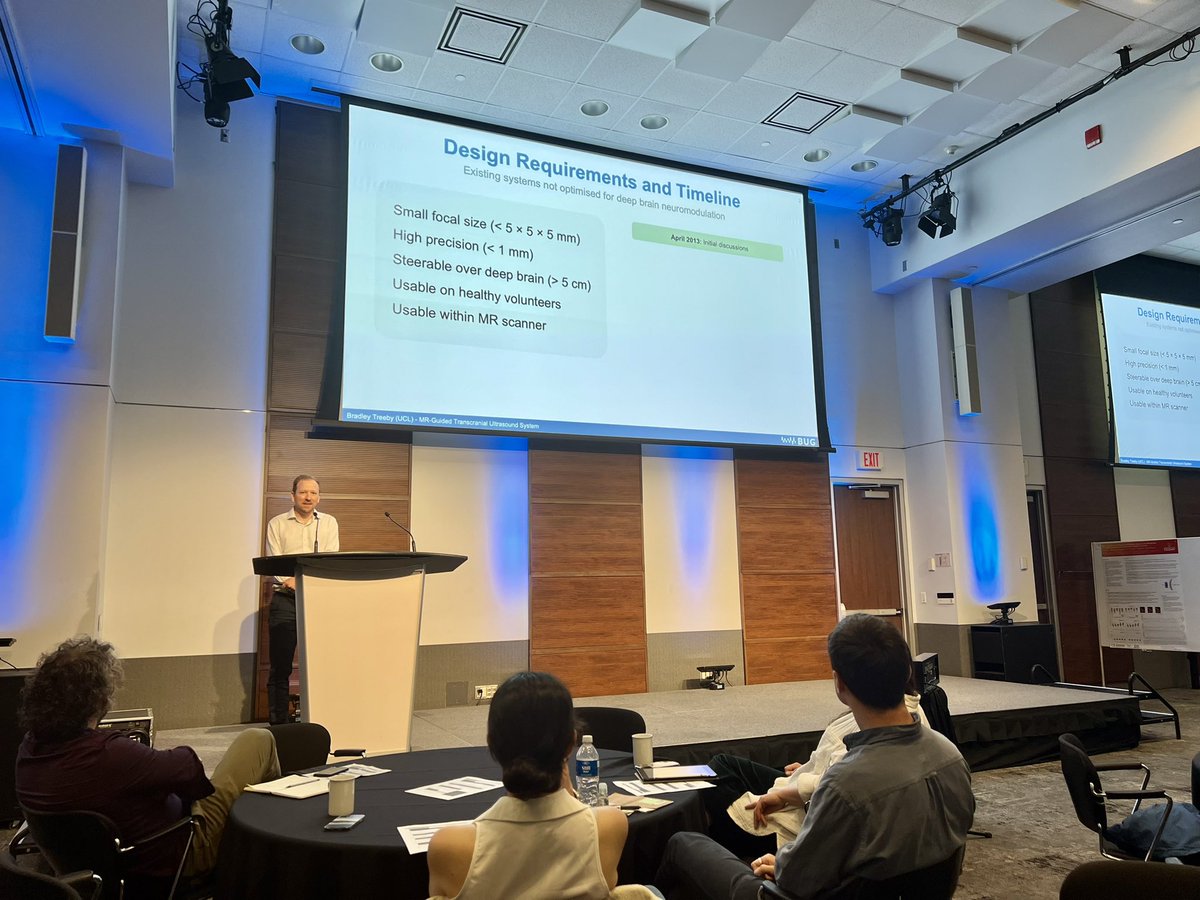
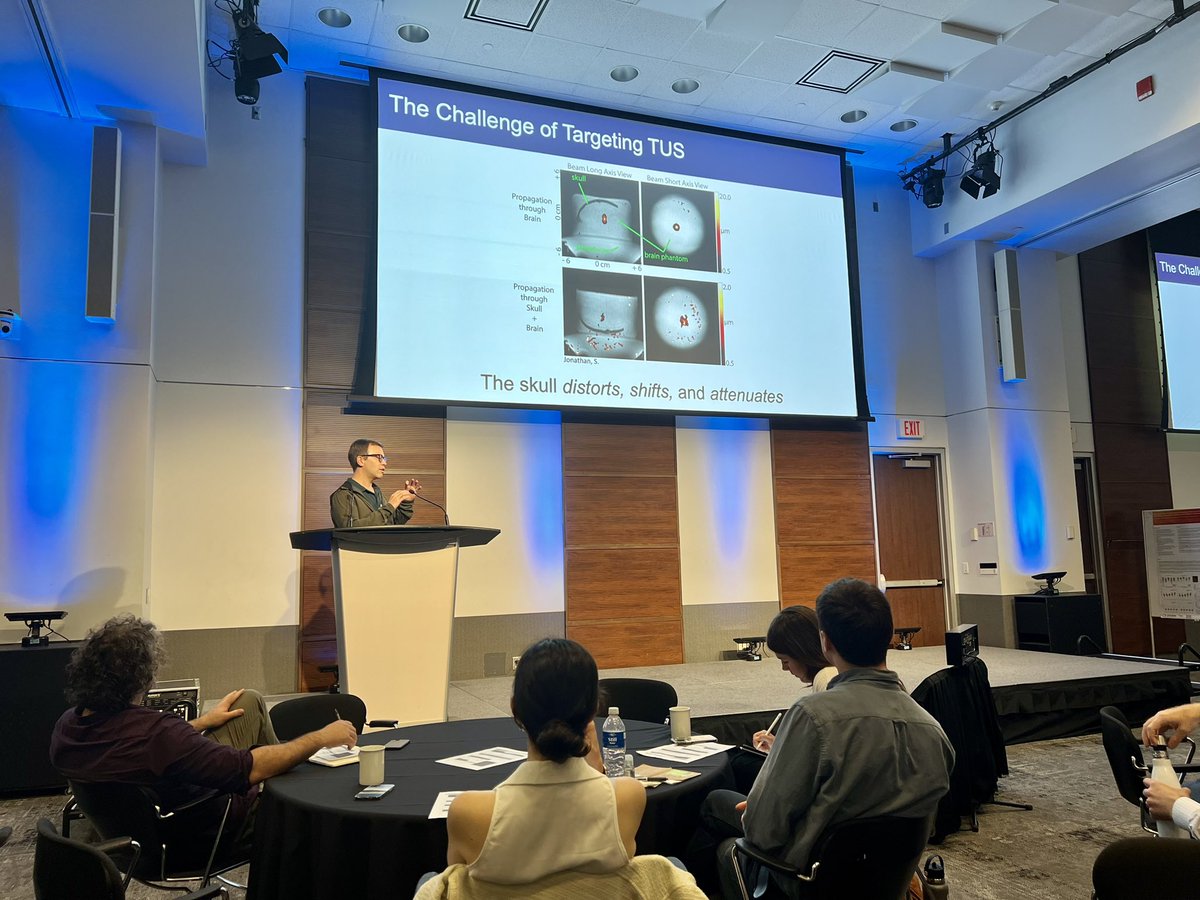
[Motor Cortex] Stanley Chen et al.: "Co-delivery of transcranial focused ultrasound (TUS) and transcranial magnetic stimulation (TMS) can elicit inhibitory after-effect in subjects who showed online inhibition, suggesting that TUS and TMS may interact with each other to produce plasticity effects."
https://t.co/Mw8F6ZTocp
New tools. New treatments. New discoveries. 🔬🩻💉❤️
Check out these health research stories about different ways the health research community is working to help people in Canada be healthy: https://t.co/h3ke4KqGo3
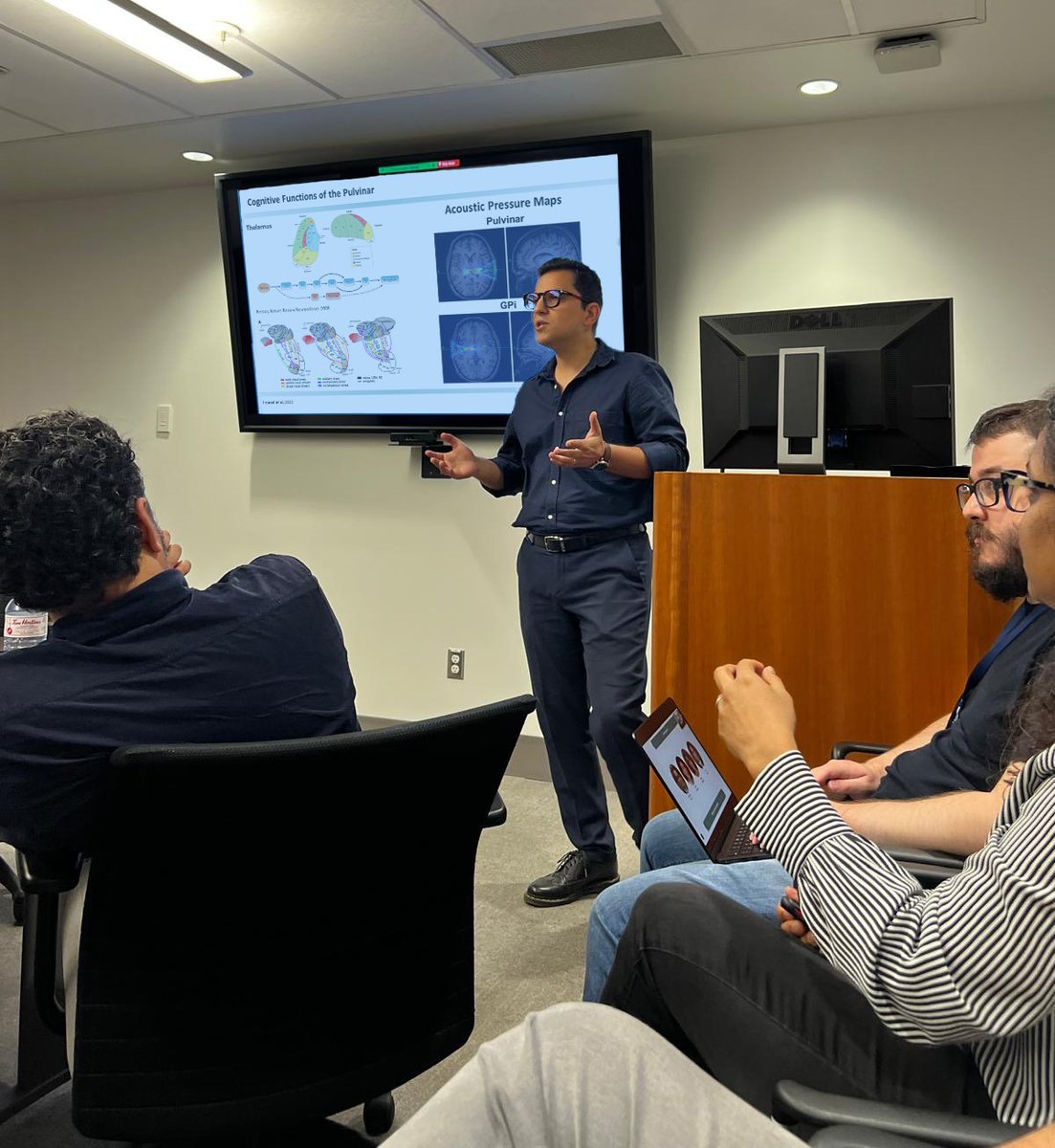
It was a pleasure to participate in the Canadian Focused Ultrasound Meeting and present our brand new data on the selective manipulation of attention & cognitive control using transcranial ultrasound stimulation of deep brain areas in humans. Thanks @JFNankoo for the invitation!
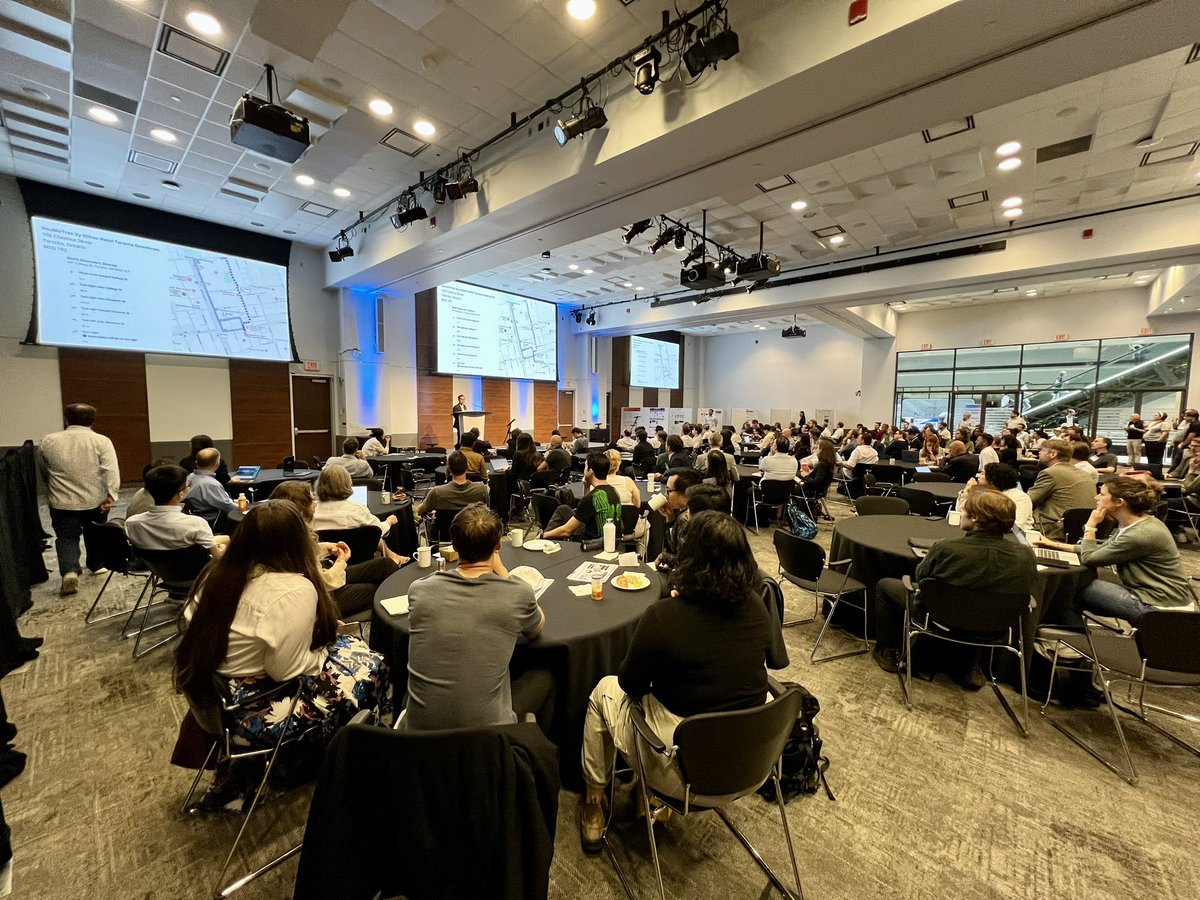
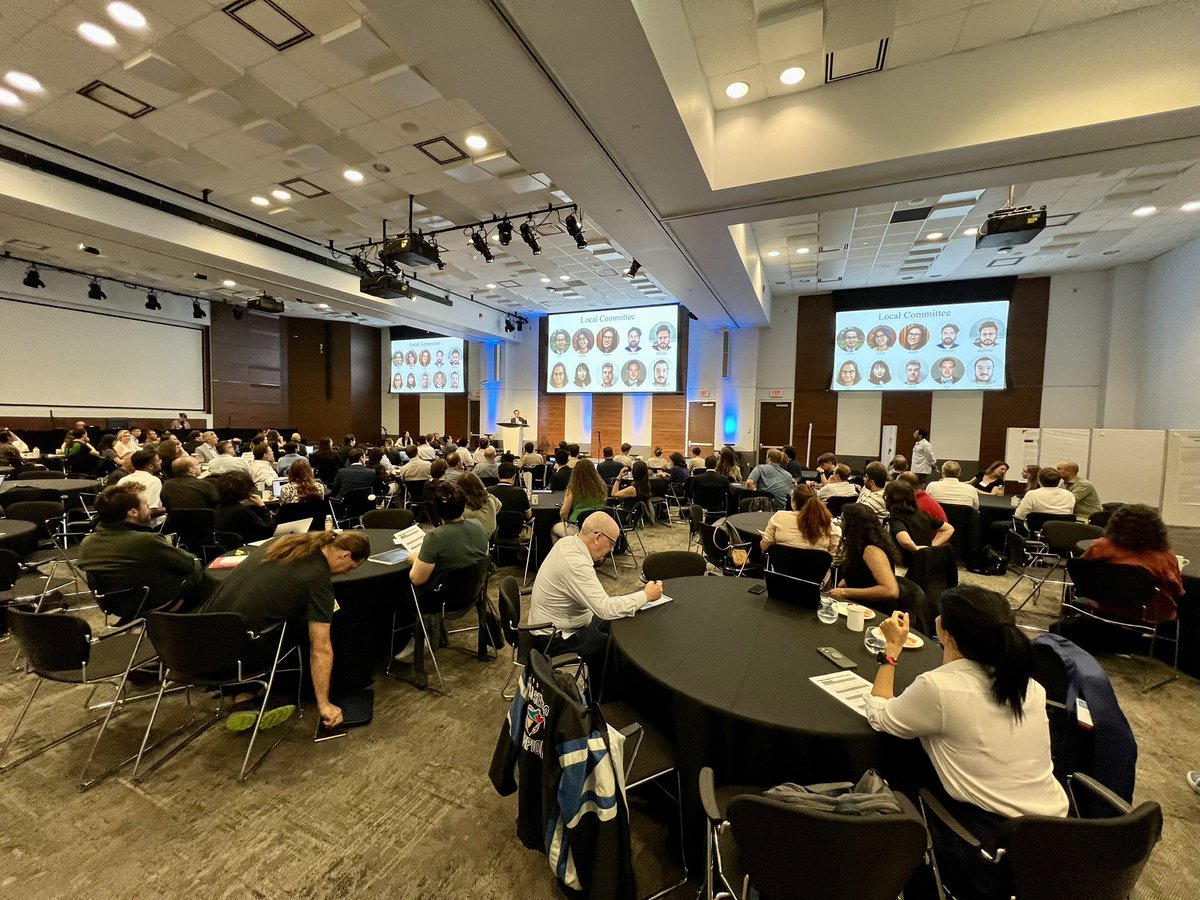
The 1st Canadian Focused Ultrasound Neuromodulation meeting was a success, with participants from across Canada including Ontario, Alberta, BC, and Quebec. Tomorrow, we continue with the international #FUN24 congress @MaRSDD in Toronto! https://t.co/XTqo1KggDi @JFNankoo@RobertC21093233@HamidRamezanpou
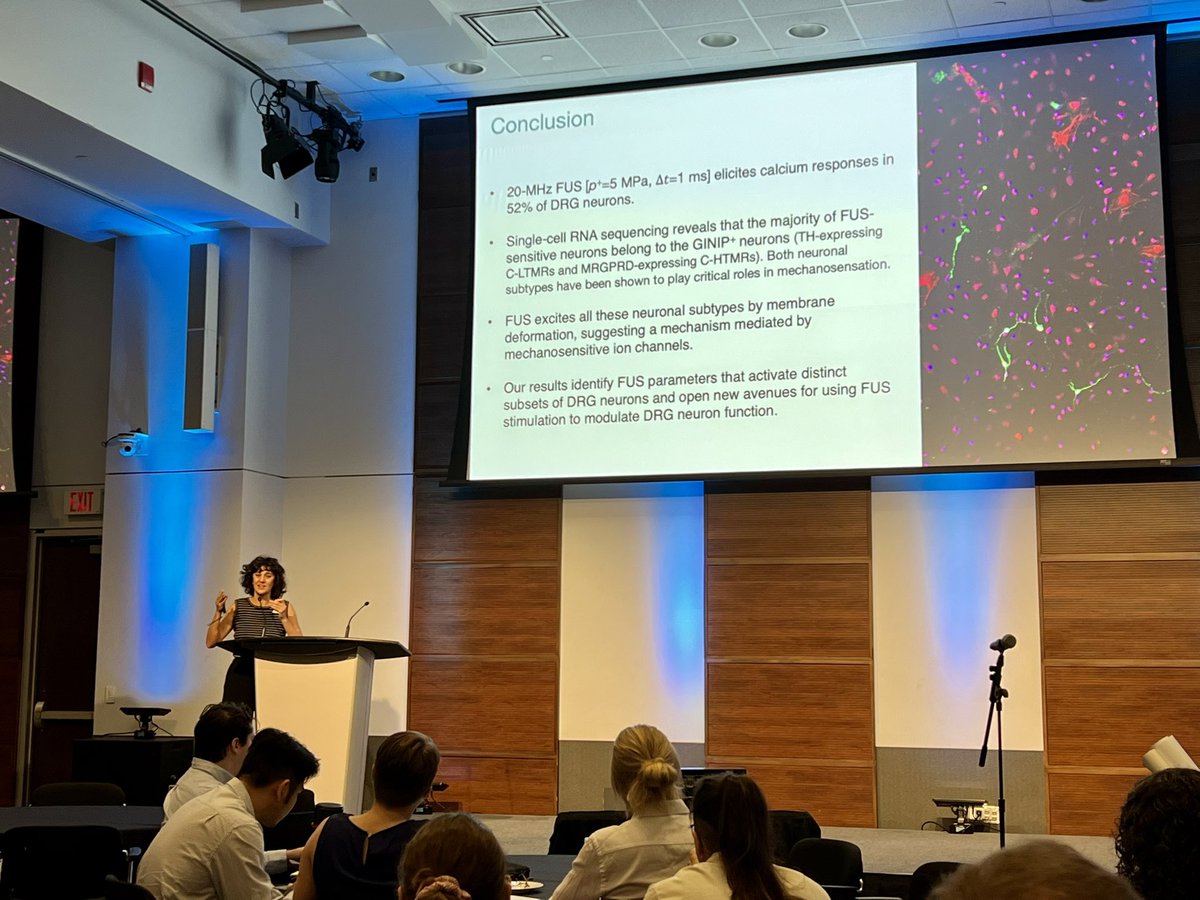
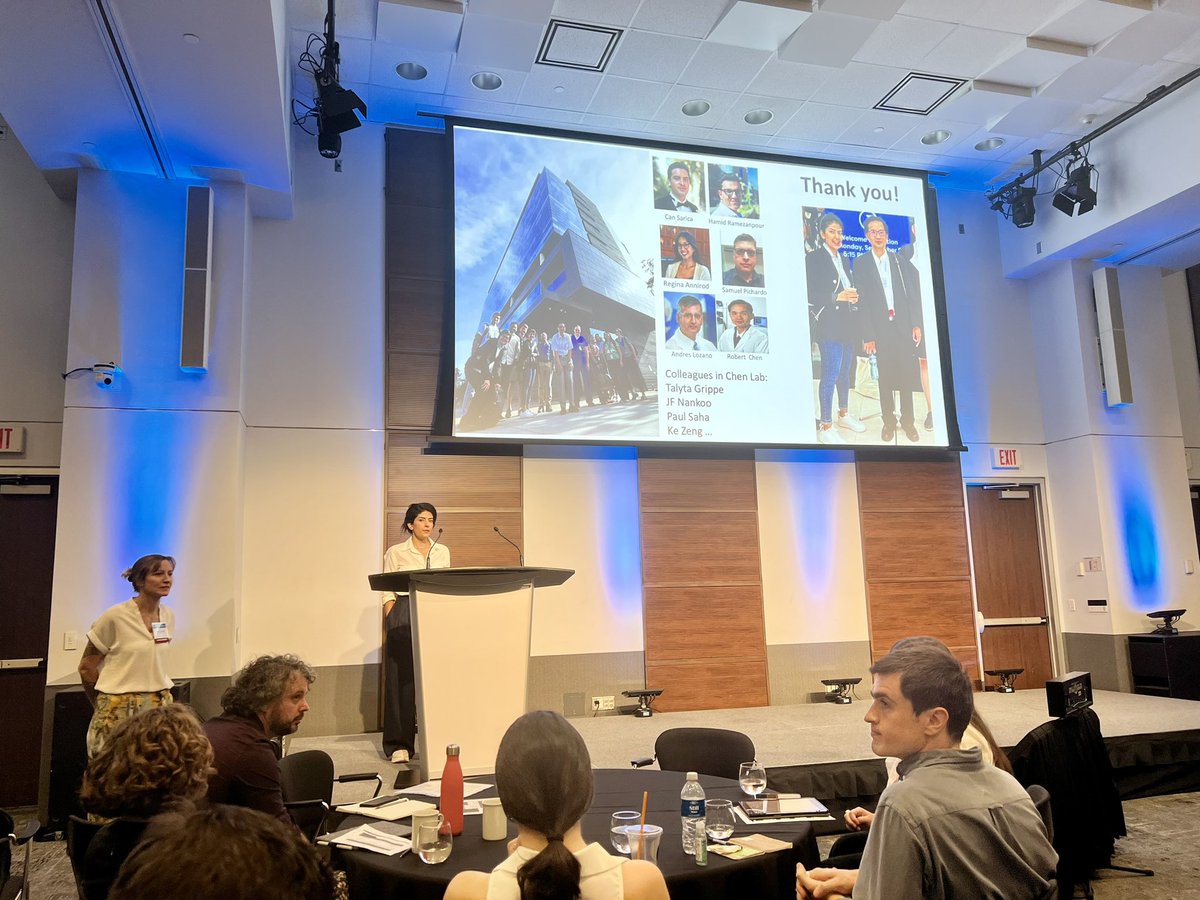
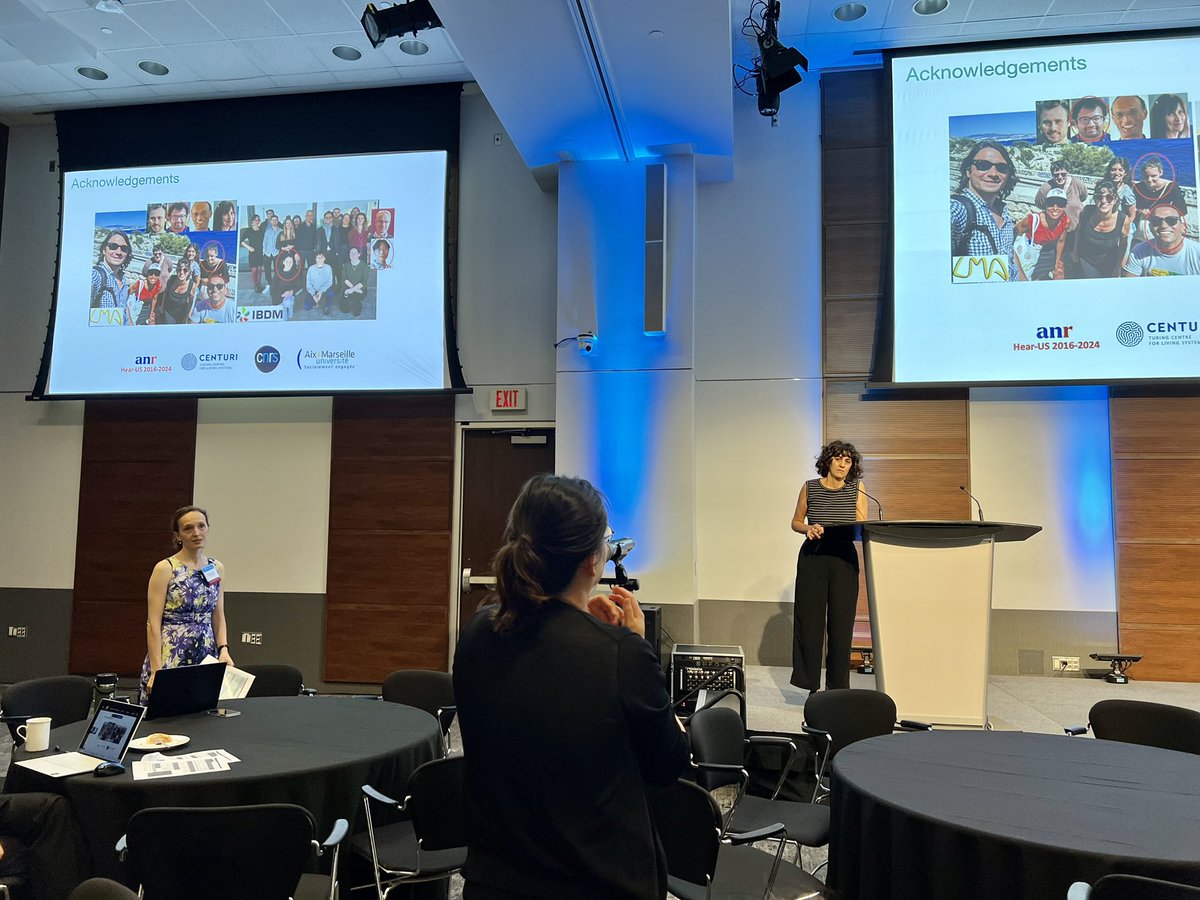
Day two of #FUN24 kicked off with an outstanding presentation by Emilie Franceschini from Aix-Marseille University @univAMU_Europe @LMA_UMR7031. She discussed how some of the dorsal root ganglion neurons are genetically more responsive to focused ultrasound stimulation and the critical role of deformation in FUS response. The session was moderated by Miriam Klein-Flugge @MKFlugge.
We’re thrilled to welcome the #FocusedUltrasound Neuromodulation Society to @itrusst#FUN24 in Toronto! Ready for an exciting second day filled with great presentations.
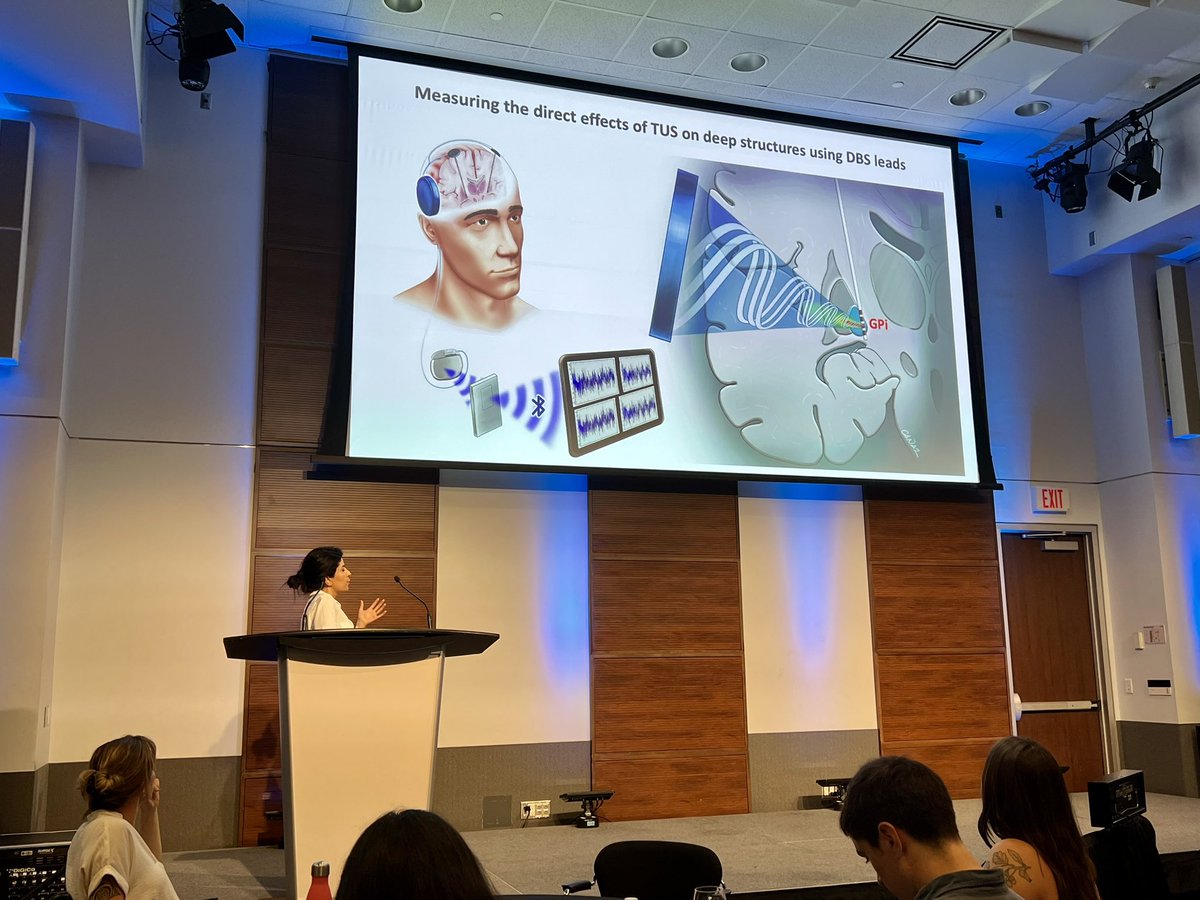
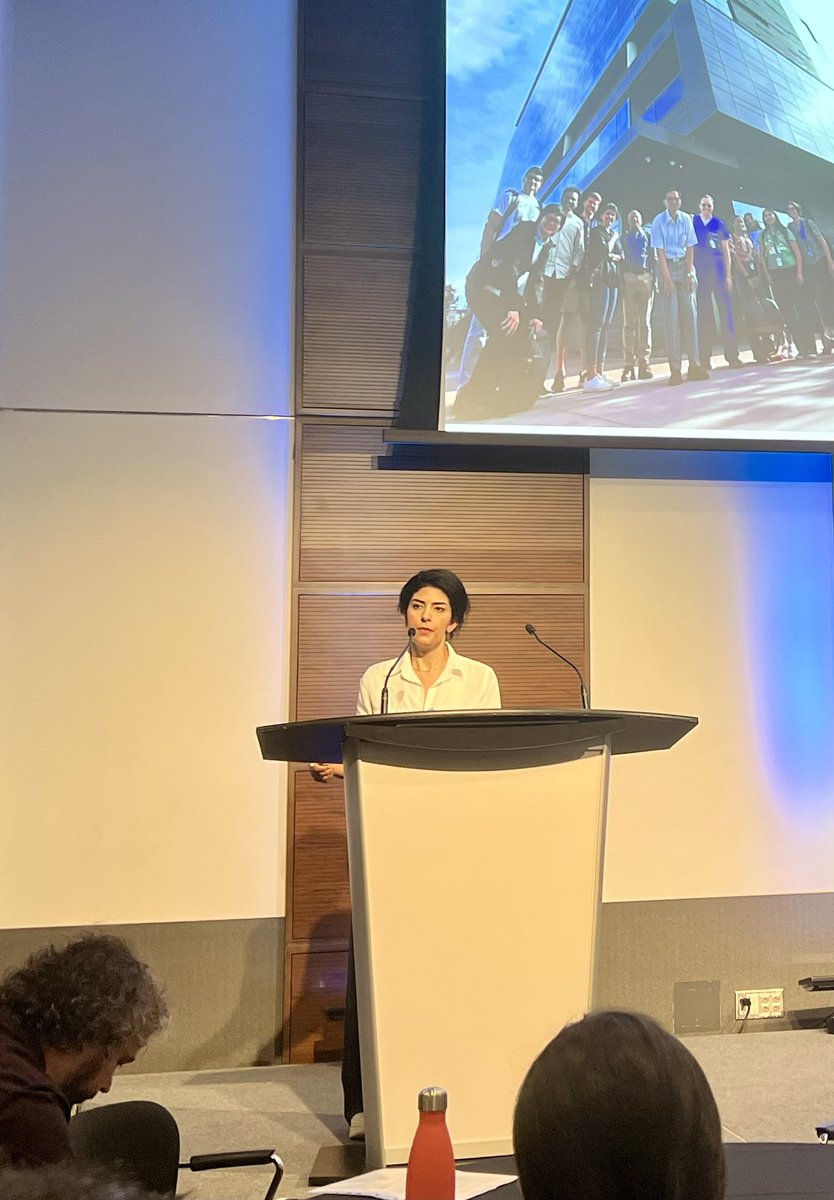
Our second invited speaker, Ghazaleh Darmani, delivered an excellent lecture on how #LFPs change in response to #focusedultrasound stimulation in #ParkinsonsDisease patients in the second session that was moderated by Elsa Fouragnan @EFouragnan from @PlymUni.
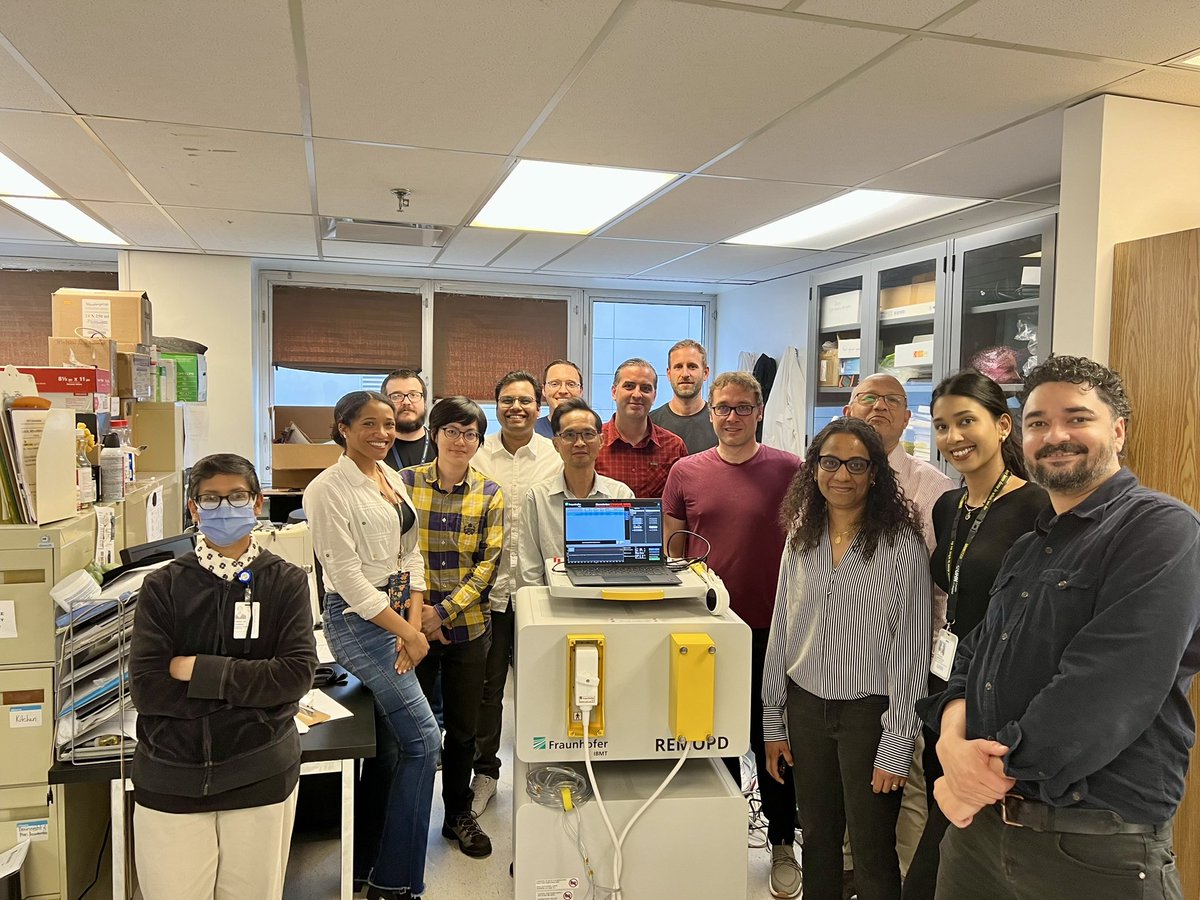
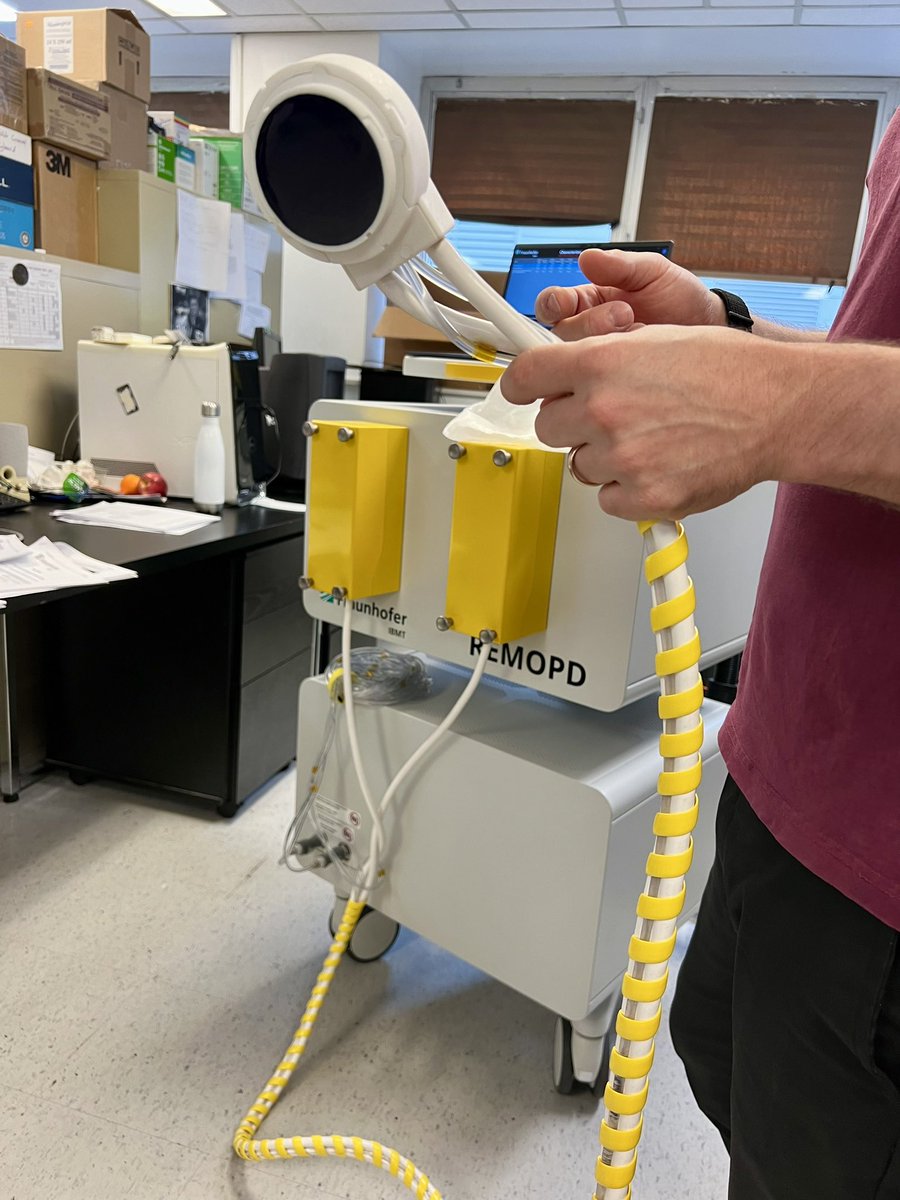
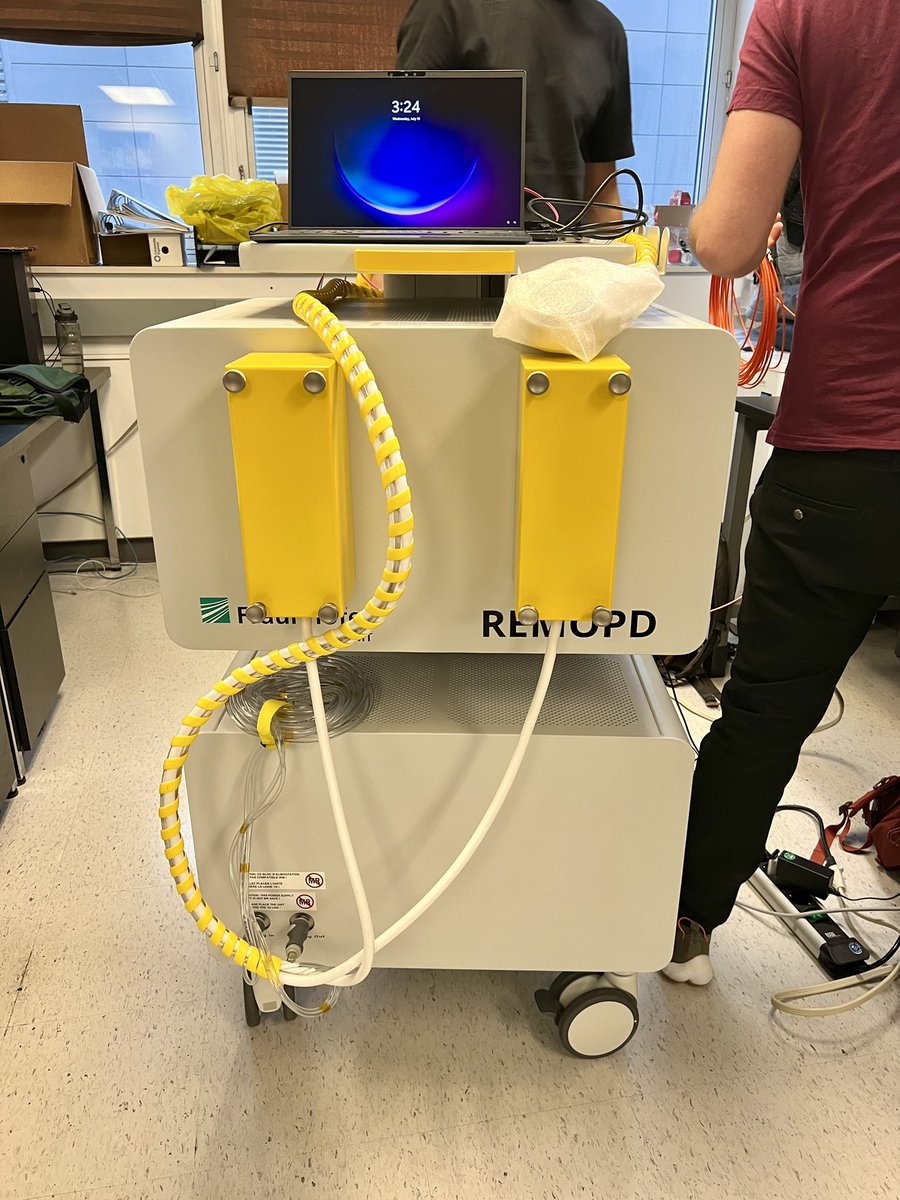
Exciting day in the lab! We've just received our new @Fraunhofer focused ultrasound device. Can't wait to dive into research with this cutting-edge technology! @JFNankoo@RobertC21093233



![ClinicalNeuroph's tweet photo. [Motor Cortex] Stanley Chen et al.: "Co-delivery of transcranial focused ultrasound (TUS) and transcranial magnetic stimulation (TMS) can elicit inhibitory after-effect in subjects who showed online inhibition, suggesting that TUS and TMS may interact with each other to produce plasticity effects."
https://t.co/Mw8F6ZTocp](https://pbs.twimg.com/media/GYFTIkNXAAA0UHl.jpg)
![ClinicalNeuroph's tweet photo. [Motor Cortex] Stanley Chen et al.: "Co-delivery of transcranial focused ultrasound (TUS) and transcranial magnetic stimulation (TMS) can elicit inhibitory after-effect in subjects who showed online inhibition, suggesting that TUS and TMS may interact with each other to produce plasticity effects."
https://t.co/Mw8F6ZTocp](https://pbs.twimg.com/media/GYFTIjtWQAABhQl.jpg)
![ClinicalNeuroph's tweet photo. [Motor Cortex] Stanley Chen et al.: "Co-delivery of transcranial focused ultrasound (TUS) and transcranial magnetic stimulation (TMS) can elicit inhibitory after-effect in subjects who showed online inhibition, suggesting that TUS and TMS may interact with each other to produce plasticity effects."
https://t.co/Mw8F6ZTocp](https://pbs.twimg.com/media/GYFTIixWQAAnyia.jpg)







![ClinicalNeuroph's tweet photo. [Motor Cortex] Stanley Chen et al.: "Co-delivery of transcranial focused ultrasound (TUS) and transcranial magnetic stimulation (TMS) can elicit inhibitory after-effect in subjects who showed online inhibition, suggesting that TUS and TMS may interact with each other to produce plasticity effects."
https://t.co/Mw8F6ZTocp](https://pbs.twimg.com/media/GYFTIknXwAAzBvl.jpg)