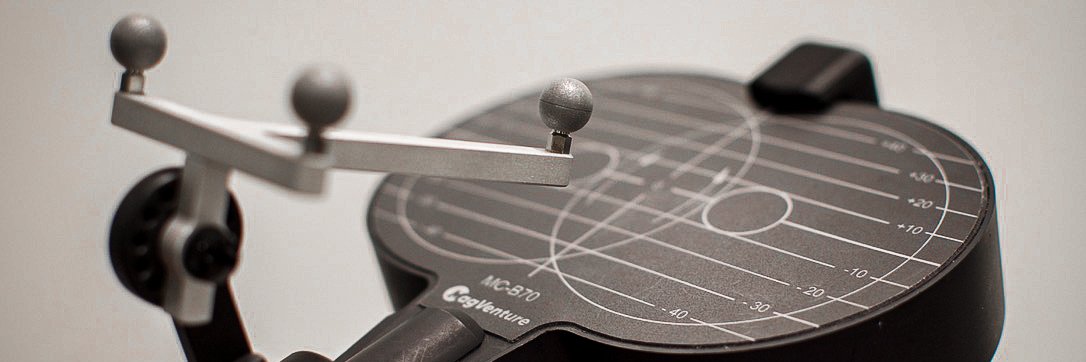
This work shows that TUS can indeed be felt, provides a roadmap for managing participant burden, and supports proper experimental blinding to enhance the validity of TUS research. Thank you to my collaborators @LennartVerhagen, @HannekedenOuden, Kim Butts Pauly, & Linda de Jong!
Hold on to your transducers TUS community! We've focused on managing what participants can hear during stimulation, but how about what they feel?! We've mapped tactile, thermal, & painful sensations during TUS - and revealed how to minimize them. Thread👇
https://t.co/3A1aT1JDPw
Our results also provide preliminary evidence that particle displacement is a primary biophysical driving force underlying somatosensory co-stimulation. In the future, we may be able to leverage such insights to maximise CNS neuromodulatory efficacy while minimizing confounds.
@JFNankoo@drcarysevans Focal volume is an interesting thought. We piloted a 2CH 250kHz at Donders and also found no suggestion of an offline effect, but these were pilots. It’s possible, but considering the required precision that implies and the likely target variability, its an unlikely explanation
Effects of 5Hz-rTUS (tbTUS) on corticospinal excitability are less robust than we initially thought. Check out my new preprint with @drcarysevans and Po-Yu Fong showing that offline excitatory TUS-TMS effects don't replicate. Thread below 👇 https://t.co/Y8Pn8LCh4y
@JFNankoo@drcarysevans For this offline protocol TMS and TUS aren’t delivered concurrently, so the transducer is not placed in-between the TMS coil and scalp. In other words, the TMS coil is placed directly on the head for both studies
@JFNankoo@drcarysevans But, there are still tbTUS studies from other labs in other experimental contexts, and those do show promising results as well so it’s not that we think the tbTUS protocol is weak! Mainly that it appears to be less robust for M1 excitability
@JFNankoo@drcarysevans Its great that you’re engaging! All of the TUS-TMS studies that replicate the offline excitatory effect, to my knowledge, are from the same lab.
@JFNankoo@drcarysevans Of course, it remains possible that the originally reported effects are valid! If future work included double blinding and validated TMS neuronavigation, that would go a long way in demonstrating how robust these effects are when using the same equipment!
@JFNankoo@drcarysevans It’s much more likely that the differences in the other works: structural targeting, neuronav, and blinding, contribute to the discrepancy. In line with that, a recent paper mentioned that the TMS coil could be unconsciously repositioned, leading to bias
@JFNankoo@drcarysevans We ran the study double-blinded only, so with the information we have the discrepancy in results is likely due to double blinding and/or TMS neuronavigation! Even if single blinding like Zeng, neuronavigation would eg still have removed possible unconscious bias in TMS placement
We speculate on why prior findings don’t replicate in our manuscript, but one thing is clear: double-blinding, TUS (& TMS) neuronavigation, and acoustic simulations are key to supporting the replicability required for TUS to truly make waves!
For those of you now concerned about using this protocol, don't worry! There are still multiple convincing studies using 5Hz-rTUS/tbTUS with promising results, so there's no need to abandon it. Instead, let's focus our efforts on reproducibility in this quickly expanding field!