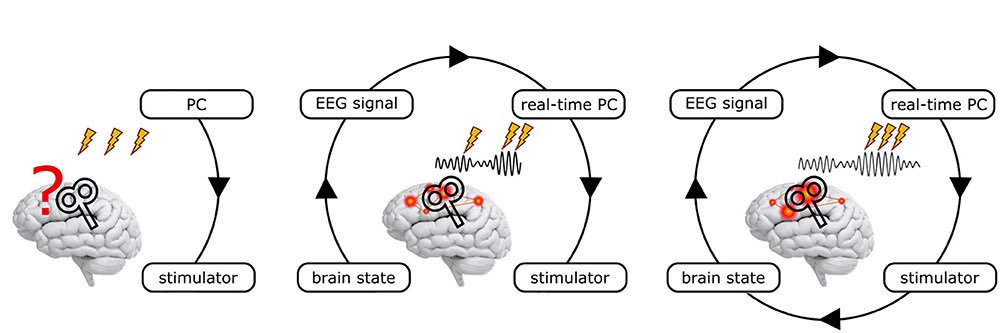
The ITRUSST Practical Guide on Transcranial Ultrasonic Stimulation (TUS) for neuromodulation is finally out, endorsed by the International Federation of Clinical Neurophysiology (IFCN). This is quite the “opus magnum” with 23 beautiful educational figures.
https://t.co/u8iWbl4MQi
Thrilled to announce our new paper in @NatureNeuro !
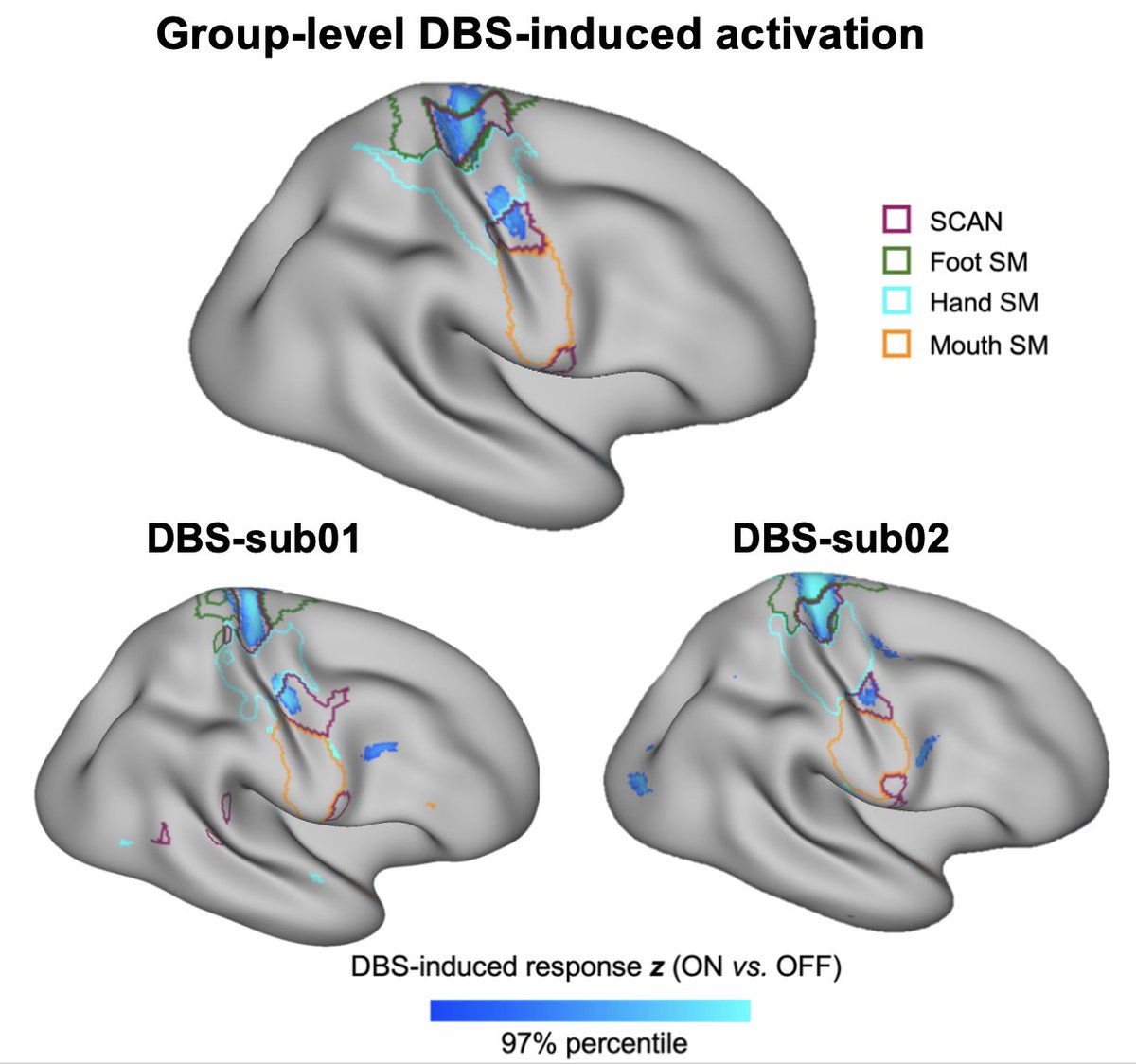
We managed the impossible: precision functional mapping during #DBS, with 11.7h fMRI/patient.
Selective DBS-induced deactivations in the SCAN, building on our recent @Nature paper. @hesheng3@iamzhangvv
https://t.co/d8xOuNI31w
New manuscript by Soleimani et al. | Dose-response in transcranial brain stimulation is complex & non-monotonic. A comprehensive framework to improve reproducibility, safety & clinical translation. 🧠⚡
Full text: https://t.co/7W0ChjFbbp
A brain injury was reported in a trial using ultrasound, framed as low-intensity TUS. @ButtsPauly and I reviewed the case and disagreed with how it's framed. Key acoustic data are missing. Case: https://t.co/V6kbsqPl5s Letters: https://t.co/JGVtK9Qotq | https://t.co/LvnxlJZ2yn
Introducing FASTANS - Fast Targeted Functional Network Stimulation
🐍 Python implementation of TANS (@cl9681 et al.).
🎯 Optimizes TMS coil placements for precise, personalized network targeting within minutes! 🚀
Code, instructions, and example data: https://t.co/u4nuXkrTF5
Launched in 2023, Imaging Neuroscience is now firmly established, with full indexing (PubMed, etc.) and 700 papers to date.
We're very happy to announce that we are able to reduce the APC to $1400.
Huge thanks to all authors, reviewers, editorial team+board, and MIT Press.
🎯Meet PlanTUS: a fast, open-source tool to pick where to place a transducer for transcranial ultrasonic stimulation (TUS) on an individual head – before you run heavy simulations.
Paper: https://t.co/M75XwcQ1UM
Code & instructions: https://t.co/yWrVXNIBzm
Open PhD position starting in Oct 2025 at the Neuroimaging Center Mainz, using transcranial ultrasonic stimulation (TUS) with AI-driven phased-array and crossbeam technology for deep brain neuromodulation and fMRI/EEG for proof of neural target engagement. https://t.co/Gx9Cx2t8QS
Open PhD position in the Collaborative Research Center on "Neuropsychobiology of Aggression". The position is located at the Neuroimaging Center (NIC) in Mainz and involves working with Transcranial Ultrasonic Stimulation (TUS) in combination with EEG. https://t.co/VdckLQNcoe
1/11 How does our brain's hierarchical organization impact its response to stimulation? We found striking differences between "high-order" networks (involved in complex cognition) vs "low-order" networks (handling sensory/motor functions) @NatureComms
https://t.co/LyjzKhEbju
It's Only Two Weeks Away! Register Now ~ "Rising Scientists in Therapeutic Ultrasound" Special Webinar Session On April 17 / 18
https://t.co/ZIld5LrL2n
Excited to announce the 500th paper published by Imaging Neuroscience ! @ImagingNeurosci@mitpress
We've come a long way in a short time and are hugely grateful to the neuroimaging community for your support.
Hope to see lots of you at OHBM @OHBM
We are hiring!! 🤩
If you are a (soon-to-be) postdoc with expertise in human 😴 research, you are exactly what we are looking for.
Come join my team at https://t.co/n92korEoGO and investigate how different sleep stages affect memory and 🧠 microstructure!
It's One Week Away! Webinar next Thursday featuring James Choi, Ph.D. from Imperial College London presenting:
"Microbubble Dynamics in Brain Microvessels — Insights into how ultrasound-driven microbubbles alter the blood-brain barrier permeability"
https://t.co/rJa1IH99tA
Did you know there are 400 miles of blood vessels in the human brain? Did you know there is also a complex blood–brain barrier which protects us, but also can block drug and innovative gene therapies. Rust and colleagues discuss both sides of the 'wall' that protects our brain in the journal Brain.
Key Points:
- What is the blood-brain barrier (BBB)?
- The authors remind us that it is a vascular structure.
- The barrier is designed to protect us from toxins and pathogens circulating in the blood.
- Unfortunately, the barrier can also block drugs and therapies designed to treat disorders of the brain.
My take: The brain is a hungry organ. The brain's blood vessels spans 400 miles. Experts think that every one of your ~86 billion neurons has its own capillary w/in 25 µm. There is a complex vascular barrier designed to exchange ions, molecules and cells. It is important for us to remember that the barrier is actually different across our brain regions. As we age, the barrier changes. If we hit our head, the barrier changes. If we get a degenerative disease like Parkinson's or Alzheimer's, the barrier changes. We are entering an era of nanomedicine and of uncaging drugs designed to slip by this barrier. Gene and other therapies will depend on beating the barrier. Focused ultrasound and other techniques have been under development for improving delivery of treatments. So for those designing the next generation of brain therapies remember – ad augusta per angusta – to glory through narrow spaces.
https://t.co/FERDzmo9tE #parkinson @Brain1878
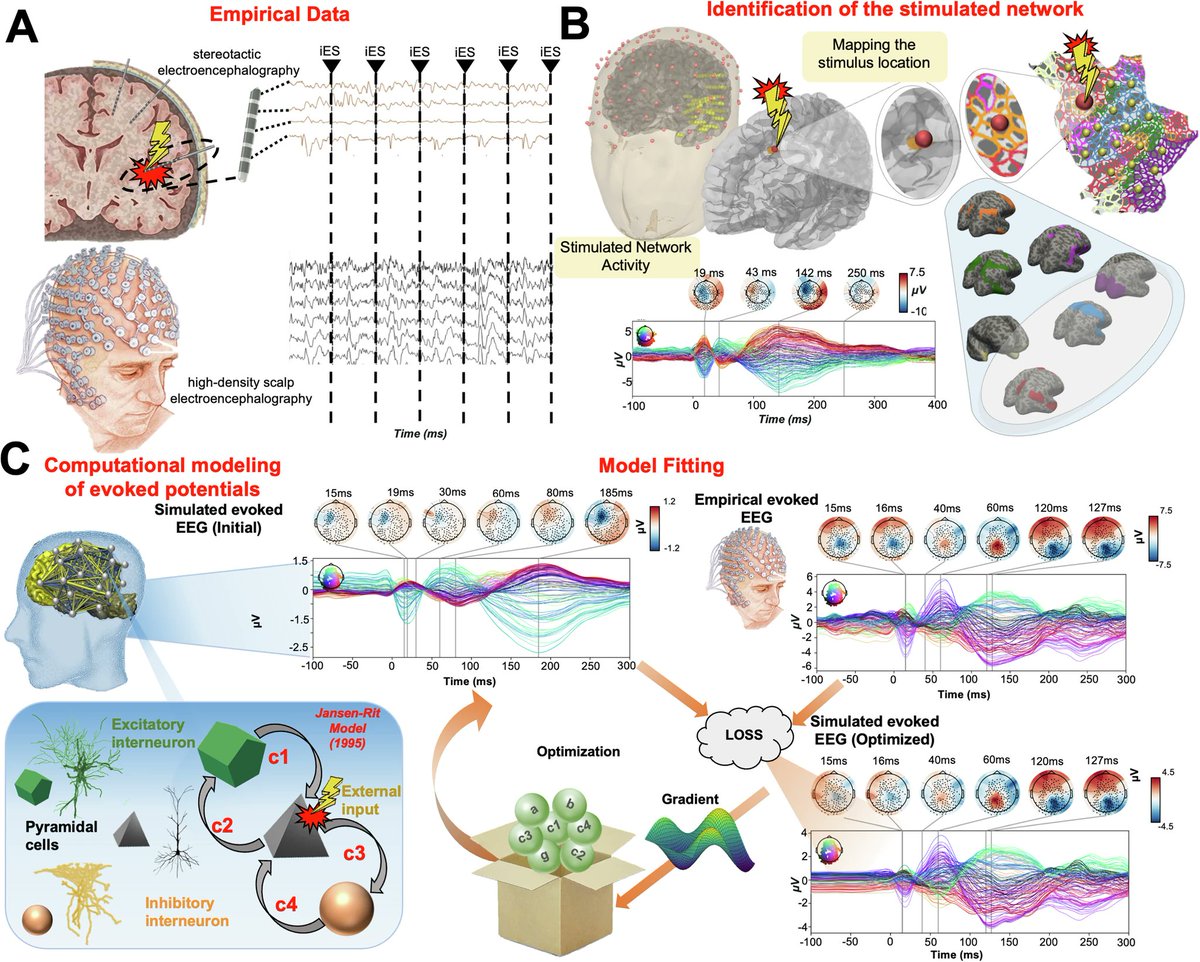
Led by @k_weise_, @brainstimj paper explains mismatch between (macroscopic) electric fields predicted during Transcranial Magnetic Stimulation (TMS) vs. neuron-level e-field thresholds. Microscopic field inhomogeneity corrects neuron activation threshold https://t.co/8NXXNgrV3n
[Highlight of the Month] Murphy et al. A practical guide to transcranial ultrasonic stimulation from the IFCN-endorsed ITRUSST consortium. Clin Neurophysiol 2025;171:192-226. Open access: https://t.co/DChfdrkUew
Our new paper is out in Brain Stimulation @brainstimj
"Pulsed inhibition of corticospinal excitability by the thalamocortical sleep spindle"
With an amazing team @tobergmann, @ulfziemann1@czrenner @ Prince Okyere & @ Milad Amini
https://t.co/387zbr0R8D
Briefly breaking my twitter silence to mention that I am hiring, postdocs, PhDs and admin folks to found a new institute for network stimulation in Cologne, Germany!
More info on the other platform:
https://t.co/y0Pf2HFS7u
Please RT for reach! 🙏🙏
Reversible opening of blood-brain barrier is here. @NEJM study showed that low-intensity focused ultrasound can temporarily open the blood-brain barrier to augment antibody-based removal of amyloid plaque in patients with Alzheimer’s disease by up to 63%.
https://t.co/aT6aGHfYfr







![ClinicalNeuroph's tweet photo. [Highlight of the Month] Murphy et al. A practical guide to transcranial ultrasonic stimulation from the IFCN-endorsed ITRUSST consortium. Clin Neurophysiol 2025;171:192-226. Open access: https://t.co/DChfdrkUew https://t.co/pFVZybIDIx](https://pbs.twimg.com/media/GlCbGLuWwAAoo0M.jpg)