CCBM épisode 2. INACCEPTABLE. Après les problèmes d'hier, ils me rendent aujourd'hui mon véhicule avec la portière complètement endommagée. Ce manque de professionnalisme est scandaleux. Chers amis, merci de RT (un service que je vous demande):
Comment résoudre le problème de la « dette cachée » au Sénégal ?
Pour l’économiste sénégalais Abdoulaye Ndiaye, lauréat du premier Africa NextGen Economist Prize Jeune Afrique/The Africa Report, la restructuration de la dette apparaît comme la moins mauvaise des solutions.
What is DevSecOps?
DevSecOps emerged as a natural evolution of DevOps practices with a focus on integrating security into the software development and deployment process. The term "DevSecOps" represents the convergence of Development (Dev), Security (Sec), and Operations (Ops) practices, emphasizing the importance of security throughout the software development lifecycle.
The need for DevSecOps arose from the recognition that traditional security approaches, which often involve late-stage security testing or manual security reviews, were insufficient to address the growing complexity and pace of modern software development. By integrating security practices early and continuously throughout the development lifecycle, DevSecOps aims to enhance the security posture of software applications while maintaining agility and innovation.
The diagram below shows the important concepts in DevSecOps.
1 . Automated Security Checks
Use tools to automate security checks and scans. These include Static Application Security Testing (SAST), Dynamic Application Security Testing (DAST) and Dependency Scanning.
2 . Continuous Monitoring
Ensure real-time monitoring of applications to detect and respond to threats. This includes monitoring system logs, user activity and network traffic for any suspicious activity.
3 . CI/CD Automation
Continuous Integration and Continuous Deployment (CI/CD) pipelines ensure that code changes are automatically tested, built, and deployed before deployment. Integrating security checks into these pipelines ensures that vulnerabilities are detected and resolved before deployment.
4 . Infrastructure as Code (IaC)
Use code and automation to manage and configure infrastructure. Tools like Terraform and Ansible can be used for this, ensuring that security best practices are followed in these scripts.
5 . Container Security
As containerization becomes more prevalent, it is critical to ensure container image and runtime security. This includes scanning container images for vulnerabilities and ensuring runtime security.
6 . Secret Management
Ensure that sensitive data like API keys, passwords, and certificates are securely stored and managed. Tools like HashiCorp Vault can help securely manage and access secrets.
7 . Threat Modeling
Regularly assess and model potential threats to your application. This proactive approach helps to understand potential attack vectors and mitigate them.
8. Quality Assurance (QA) Integration
Embed quality checks and tests throughout the development cycle, not just in the post-development phase.
9 . Collaboration and Communication
Facilitates effective communication and collaboration between development, operations and security teams.
10 . Vulnerability Management
Go beyond scanning to systematically manage, prioritize, and remediate discovered vulnerabilities.
On avait perdu le contact avec la sonde Voyager 1, partie de la Terre il y a 46 ans et qui vogue maintenant à plus de 24 milliards de kilomètre de nous, après avoir quitté le système solaire.
On vient de re-rentrer en contact avec la sonde. Thread en images👇
Top 6 Tools to Turn Code into Beautiful Diagrams
- Diagrams
- Go Diagrams
- Mermaid
- PlantUML
- ASCII diagrams
- Markmap
Over to you: Did we miss anything? What's your favorite?
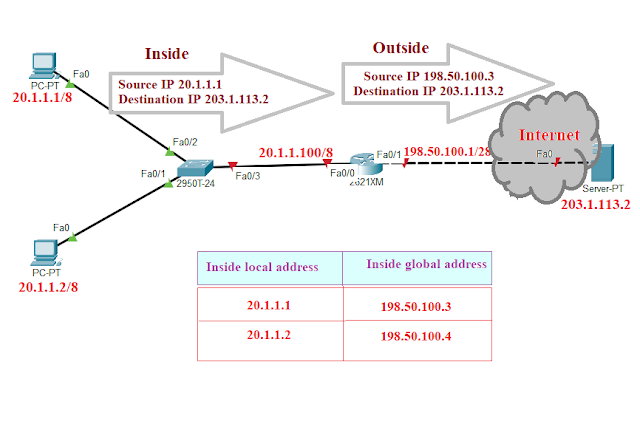
What is NAT (Network Address Translation)? How does NAT work? What is Static NAT? What is dynamic NAT? What is PAT? How to configure NAT?
https://t.co/y005jnFmCT