“Three profoundly destabilizing scientific ideas ricochet through the twentieth century, trisecting it into three unequal parts: the atom, the byte, the gene.”
― Siddhartha Mukherjee, The Gene: An Intimate History
I’ve always believed the No.1 application of AI should be to improve human health.
That work started with AlphaFold, and now at @IsomorphicLabs with the mission to reimagine drug discovery and one day solve all disease!
We are turbocharging that goal with $2.1B in new funding.
@jrkelly@Ginkgo Cool to see the RACs come together, must be 30 of them! I would have loved to work at Ginkgo, why are the offices and labs so empty though, seems like it should be all hands on deck at this point?
@jrkelly lol keep telling yourself that. ginkgo (and related companies) have raised a lot of cash, yet the enterprise value isn’t that different than a recently funded company selling “blueberry nut mix”
Real market alpha isn’t loud confidence; it’s the capacity to stay in contact with fear long enough to read the signal instead of flinching from it.
The market punishes comfort. The founders and investors who separate themselves are the ones who can distinguish “this feels dangerous because it’s stupid” from “this feels dangerous because it will rewire my map.”
An exciting milestone for AI in science: Our C2S-Scale 27B foundation model, built with @Yale and based on Gemma, generated a novel hypothesis about cancer cellular behavior, which scientists experimentally validated in living cells.
With more preclinical and clinical tests, this discovery may reveal a promising new pathway for developing therapies to fight cancer.
> complete reset of work culture.
> increased secrecy - only share what what is needed by law.
> moats that outlast patents (proprietary dosing decisions, hardware, manufacturing techniques).
let’s be honest, it’s mostly culture, in biotech Jensen Huang would have never gotten funded or became CEO.
@RecursionChris is right. bio will still be one of the core pillars of “the coming wave”. tbd when it will happen and where it will come from, which will largely depend on which orgs can break and remake the culture of the “bio” part of “techbio.”
Progress in TechBio may not be noticeable to those who aren’t intimately familiar with the details (e.g. on the inside), but it’s going to be obvious to everyone soon enough. That’s the beauty of compounding…
if you are interested in how we lost the ability to manufacture the most advanced chips, and the situation we are in now because of it, these are two fantastic articles to read back-to-back: How Intel’s Innovation Problem Became a National Security Crisis and Solving America’s Chip Manufacturing Crisis.
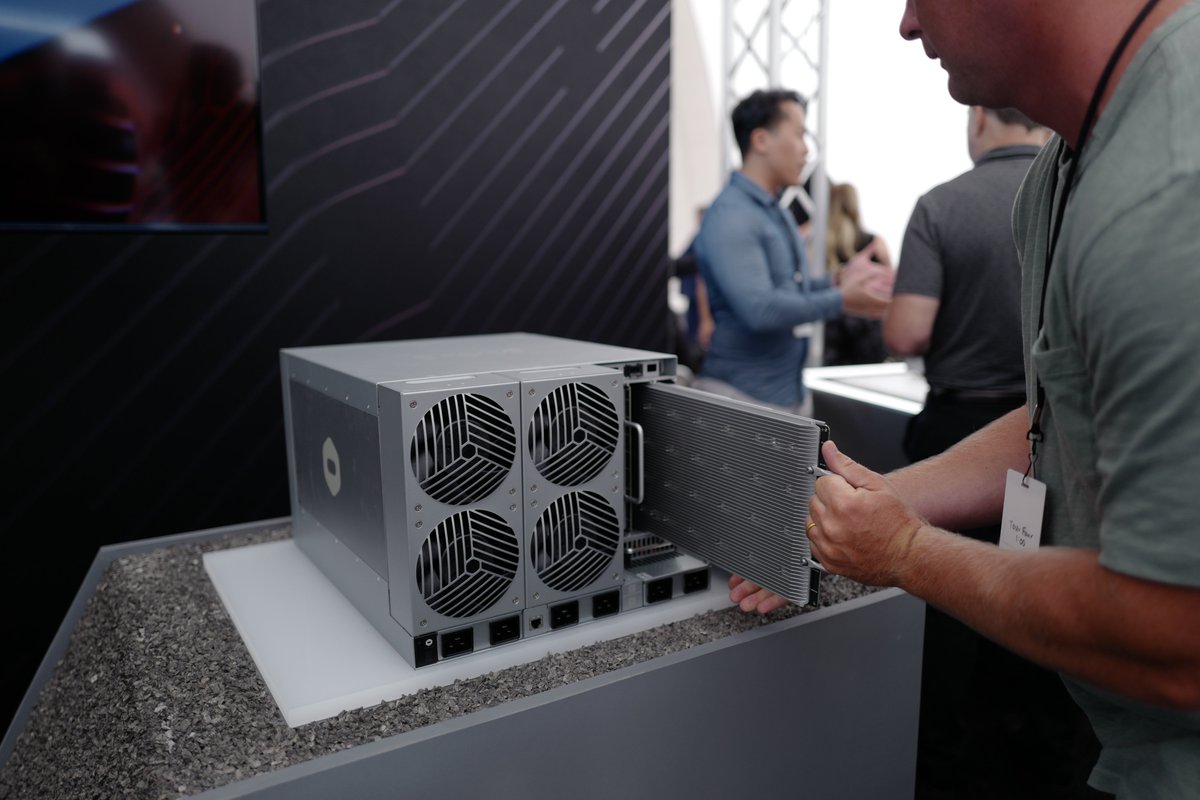
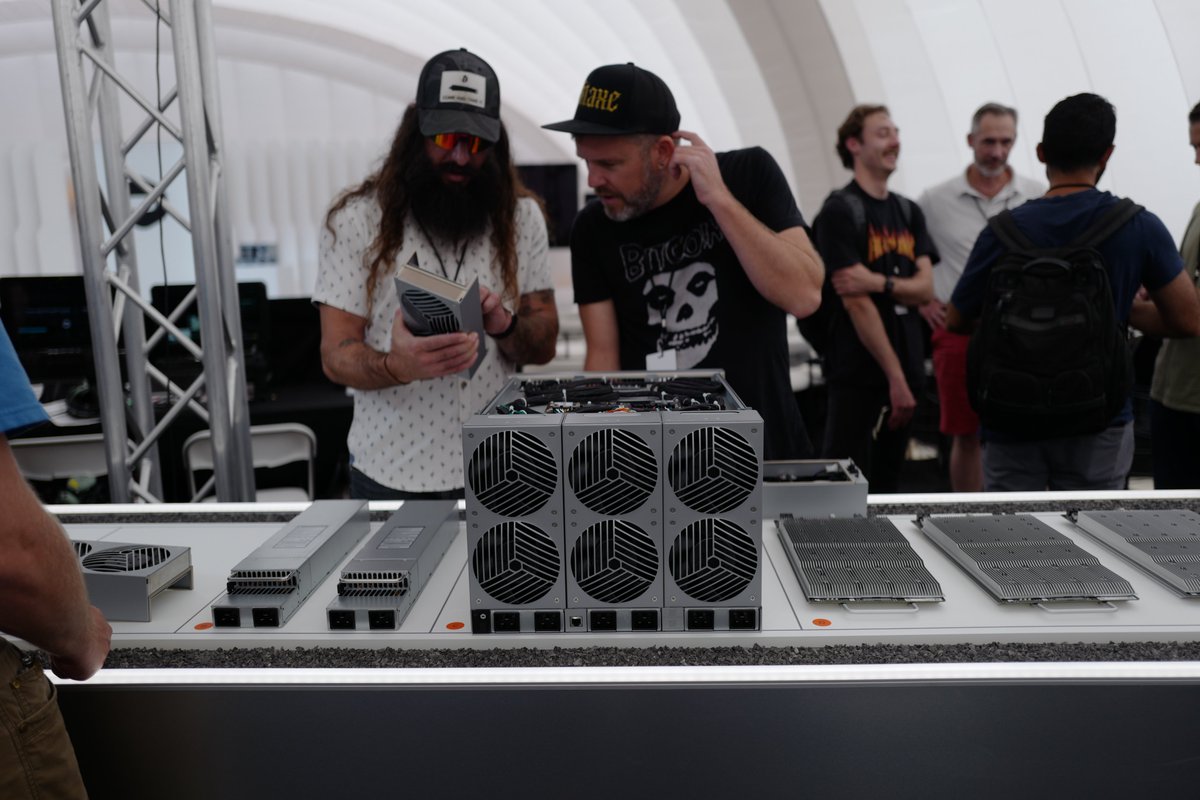
@blocks getting deeper into hardware with mining rig. more companies should push into hardware, even if outside their comfort zone. this appears to be a masterclass in how to break into a new HW business.
@SynBio1 there really isn’t any serious attempt to reference yet. thermo and danaher can’t solve this and there just are not any cracked tools companies that have scaled in bio.
semiconductors are a decent analogy. integrated circuits were enabling tech for radios, missile guidance, calculators, Apollo, and early computers - critical components of the most important technologies, and progressively so.
over the long run, synbio will be just as important - maybe more. the path to get there is the same: build enabling tech for the most important industries… the investment thesis will follow.
TSMC isn’t making a self driving car, NVIDIA doesn’t manufacture robots, Amazon, Meta, Tesla are just starting to design their own chips. its all possible, but not starting from an unprofitable sub-scale business.