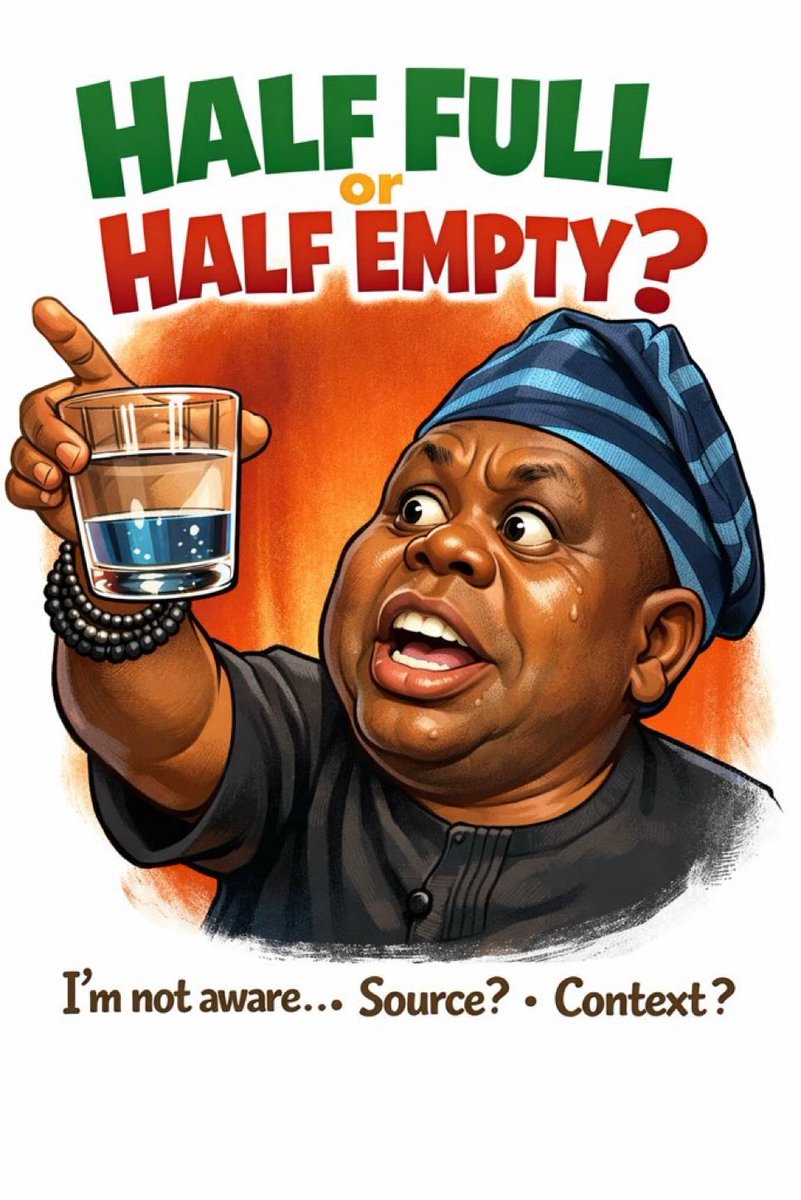
This kind of report is deeply embarrassing not just for our great party, but for Nigeria as a whole
As things stand, If we present Bola as our candidate in 2027, we will face a decisive defeat
APC and Nigeria deserve a cleaner and better candidate
PRESS RELEASE
Weep not for Bwala, Weep for Nigeria
We have read the latest statement issued by Daniel Bwala in the aftermath of his rather embarrassing interview with a mixture of suppressed disgust and embarrassment — not for ourselves, but for the sheer enthusiasm with which he parades falsehoods as though repetition could somehow elevate them into truth.
Bwala’s sudden discovery of courage and rhetorical flourish is rather amusing, especially from someone whose political trajectory has been defined less by conviction and more by opportunistic merchandising of allegiance.
Since he now appears eager to rewrite history, it is necessary to refresh his memory.
We remain in possession of his message requesting that the Atiku Media Team issue a press statement claiming that President Tinubu and his associates were threatening his life. He was quite insistent that we amplify that narrative at the time. We declined deliberately because we recognised it for what it was: a frivolous and opportunistic attempt at political theatre, consistent with his long-established penchant for turning politics into a marketplace where loyalty is traded like a commodity.
He should therefore spare Nigerians the moral lectures about courage and conviction. The record speaks for itself.
His attempt to recast the Mehdi Hassan interview as some heroic act of intellectual bravery is equally amusing. Anyone who watched that exchange objectively saw something quite different. The interviewer methodically dismantled the talking points he came armed with and exposed, one after the other, the contradictions between his past statements and his present posture.
Bwala was confronted with his own words about President Tinubu — statements he once made with remarkable certainty — only to retreat into the tired refuge that “it was politics.” But it is both wicked and morally bankrupt to dismiss matters of grave national consequence as mere politics. The wastage of thousands of Nigerian lives to insecurity over the past two years cannot be brushed aside with that cynical refrain. To trivialise such human tragedy as “politics” is nothing short of wickedness, an admission of abysmal failure, and sheer madness.
He struggled visibly to reconcile those statements with his current role defending the same administration he once criticised so vigorously. When confronted with documented criticisms from credible organisations regarding governance failures, he resorted not to evidence or argument but to the lazy dismissal of calling them “fake news.”
At several points, the interviewer’s persistence reduced his defence of both his principal and the government’s record to a series of evasions and rhetorical detours. What Nigerians witnessed was not the fearless demolition of hostile journalism he now imagines, but the uncomfortable spectacle of a spokesperson struggling to reconcile shifting loyalties with inconvenient facts. In truth, the interview tore through the carefully constructed narrative he attempted to present and left both his arguments and the government’s talking points in tatters.
Bwala boasts about being willing to appear before any interviewer anywhere in the world. But the challenge is not appearing on every television platform across the globe; the real challenge is defending the indefensible. Even if he were granted a prime interview on Heaven Times, the arguments he would carry there would still collapse under the weight of their own contradictions — half-baked, half-foolish, and wholly unconvincing.
How does anyone credibly defend a government that has turned forgery into an instrument of statecraft and gathered around itself a nest of professional forgers? And what kind of government hires its former fiercest critic as its media dry cleaner? Predictably, Mr. Bwala did yesterday what he has always done — he did not clean the garment; he tore it.
When Spokespersons Falter: Lessons in Strategic Communication. The Bwala/Mehdi meltdown.
Public communication at the highest levels of government is not a casual undertaking. The role of a spokesperson is one of the most demanding assignments in political leadership because it sits at the intersection of policy, perception, and national reputation. Every word, tone, gesture, and response becomes part of the narrative through which both domestic and international audiences judge a government.
Recent interview performances by presidential representatives have reignited an important conversation about the professional standards required for spokespersons in the modern media environment. Confronting seasoned international interviewers such as Mehdi Hassan is not merely a media appearance; it is a high-stakes exercise in narrative management.
Effective spokespersons are rarely accidental performers. Communication scholars often reference the “10,000-hour rule,” popularized by Malcolm Gladwell, to illustrate the level of sustained practice required to achieve mastery in complex professions. Political communication is no different. Those who excel in this field typically arrive with years of disciplined engagement campaign messaging, media briefings, crisis communications, and policy translation.
The difference between seasoned communicators and inexperienced voices becomes evident under pressure.
Professional spokespersons understand how to redirect hostile or loaded questions without appearing evasive. They rely on structured communication frameworks often summarized as a “4+1” approach: four supporting points anchored by one central message that consistently returns the conversation to the principal’s policy priorities. The interview is never about the spokesperson. It is about defending, explaining, and contextualizing the decisions of the leader or institution they represent.
Another hallmark of professionalism is message discipline. Skilled communicators resist the temptation to speak for the applause of a narrow political audience. Their true target is the broad middle: undecided citizens, neutral observers, and international audiences whose perceptions influence the credibility of a government. This requires restraint, strategic clarity, and an awareness that statements made in the heat of a televised exchange often reverberate long after the cameras are turned off.
Equally important is situational awareness. Every media platform has a “house style,” every interviewer a known method of questioning, and every audience an expectation of tone. Preparation therefore involves understanding the adversarial dynamics of the interview environment, anticipating lines of attack, and crafting responses that maintain composure while advancing the government’s narrative.
The craft also involves non-verbal communication. Tone of voice, pitch, cadence, posture, and controlled gestures are not cosmetic features; they are tools that reinforce credibility. Audiences often evaluate confidence and authority through these signals even before processing the substance of a response.
For governments, the broader lesson is institutional rather than personal. Strategic communication should be treated as a professional discipline requiring training, mentorship, and continuous preparation. Many successful administrations invest heavily in communication war rooms, message simulation exercises, and spokesperson coaching to ensure that representatives are fully prepared for hostile interviews.
In an era where a single media appearance can circulate globally within minutes, spokesperson performance is no longer a minor detail of governance. It is part of statecraft.
Nigeria, like many democracies, would benefit from a deeper investment in professional communication training for those tasked with representing public institutions. Doing so strengthens not only the credibility of individual leaders but also the country’s voice on the global stage.
They are happy when a foreign journalist grilled a Nigerian Government official.They are not happy when a Nigerian journalist grilled a foreign https://t.co/vpuxX8iNv3 African nation has our collection of colonial maids,neocolonial apprentices,imperialists bootlickers and poodles.When a whiteman called them apes,they would gladly agree they are apes and praise him;if a South African or Ghanaian called them Tigers,they will attack https://t.co/d4eYcAp1zV can trade the dignity of your ancestral home for the faeces of the whiteman but you can never be accepted or respected because of that.
This video between Al Jazeera journalist, Mehdi Hasan, and Daniel Bwala contains clips of Bwala’s previous statements where he said some of the things Mehdi Hasan is asking him about👀👀
From Calling Tinubu 'Drug Baron' to Serving in Cartel Capital — Mike Arnold Mocks Reno Omokri's Poetic Exile to Mexico's Narco Backyard https://t.co/ohx9k3vNFB