I am super happy to see "Nonparametric bounds on informal workers’ share" w/ @antonellodz & @EdoardoSantoni_ available at JRSS:A.
We introduce a new method to estimate the share of informal workers using aggregate, timely data
Here is the link: https://t.co/6qcUOmTC8z
Informal employment in Italy declined after the pandemic: their bounds fell from 10.5–12.6% in 2019 to 7.5–9.5% in 2023.
Authors use partial identification to derive informative bounds on informal employment using publicly available aggregate data and transparent assumptions 💡
Just new, we another spotlight article !
Can official statistics overestimate informal employment? 🤔🤔📈📉 @antonellodz@domenico_depalo@EdoardoSantoni_ 's new approach suggests they did in Italy, before a major methodological revision in 2024. https://t.co/MRjYVt1o2b
3/3 Self-reports and credit records of debt often don’t agree — and the choice of source can meaningfully alter what we conclude about debt and mental health. #DebtAndHealth#SurveyData#UKHLS
2/3 Using linked UKHLS and credit record data: consenters differ from non-consenters, misclassification varies across 8 debt types, and the data source choice affects estimates of debt’s link to mental health.
This review recommends a hands-on guide that applies Machine Learning to real behavioural data with R. It is an applied book on machine learning in behaviour research, with strong focus on practical examples rather than heavy mathematics.
And of course, some literature recs for the 5th spotlight:
Book review: an introduction to machine learning for behaviour analysis using R. Clear examples and code. @ThomasChenUoN@OBU_Psychology
https://t.co/oY2Jh9suL3
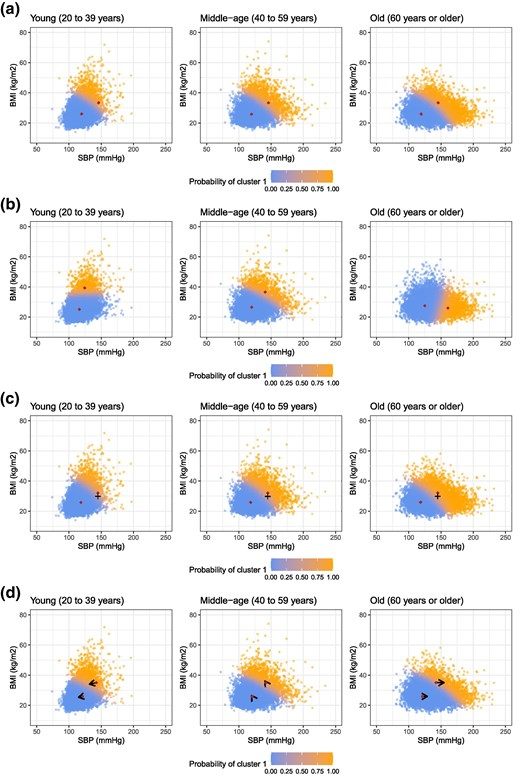
Key findings: Using NHANES across three age groups, the model identified 10 cardiometabolic phenotypes, comparable yet capturing age-specific risk profiles.