Pandemics, trade wars, GenAI: when to reinvent business models rather than apply tactical fixes? This depends on whether the event threatens demand, operations, or both and whether the retailer can sense and act on the signals in time: https://t.co/HYYzV5PhMJ
#JournalofRetailing
Brand collaborations don’t just boost product appeal—they can also broaden consumers’ mindset, leading them to explore offers outside the brand. Research by Han et al. uncovers this “hidden spillover effect” and how it can be managed: https://t.co/g8bgnqveD2
#JournalofRetailing
Your household doesn't shop as one mind — members in the same household have different price memories. Research by Pahwa et al. shows that targeting shoppers individually (not by household) can boost retailer profits by up to 24%: https://t.co/OKPQyff8gc
#JournalofRetailing
Does a department store closure impact retail area visits? Research shows that visits decline initially and then partially recover over time (though to a level below the period before). But there are modeators: https://t.co/nt6w2euSwd
#JournalofRetailing#StoreClosure
Rising real estate prices don’t just raise costs for retailers—they also unlock investment by boosting collateral values. Research by Bahadir shows that across 54 countries, this “collateral effect” drives retail store expansion: https://t.co/nCUBx6QQw3
#JournalofRetailing
Can payment methods make online shopping more sustainable? Research by Garnefeld et al. shows that paying before delivery can reduce online product returns by up to 50%—helping retailers lower costs and CO₂ emissions: https://t.co/KAFROkpZ0K
#JournalofRetailing#ProductReturns
How do wars impact retail sales? Sales fall—but not for all brands. Recent research by Rahman et al. shows that private labels & agile foreign brands outperform global giants, and doing something beats saying something: https://t.co/FrfjKGYFjC
#JournalofRetailing#Uncertainty
How many retailers should a manufacturer sell through? Using an analytical model, research by Basu et al. shows that distribution intensity should be lower for a higher-quality, higher margin product and when the retailer is online: https://t.co/CmW6VENbhF
#JournalofRetailing
The impact of a radical store transformation on category performance? Research by Hermans, @ElsBreugelmans et al. shows positive / negative effects for emphasized / de-emphasized categories and, interestingly, negative effects for unchanged categories: https://t.co/nwV3fY5hd1
Does the practice of addressing customers by name improve the customer experience? Recent research by Srinivasa Raja shows it is a context-dependent influence tactic rather than a universal best practice: https://t.co/pXrRdbS2gA
#JournalofRetailing#CustomerExperience
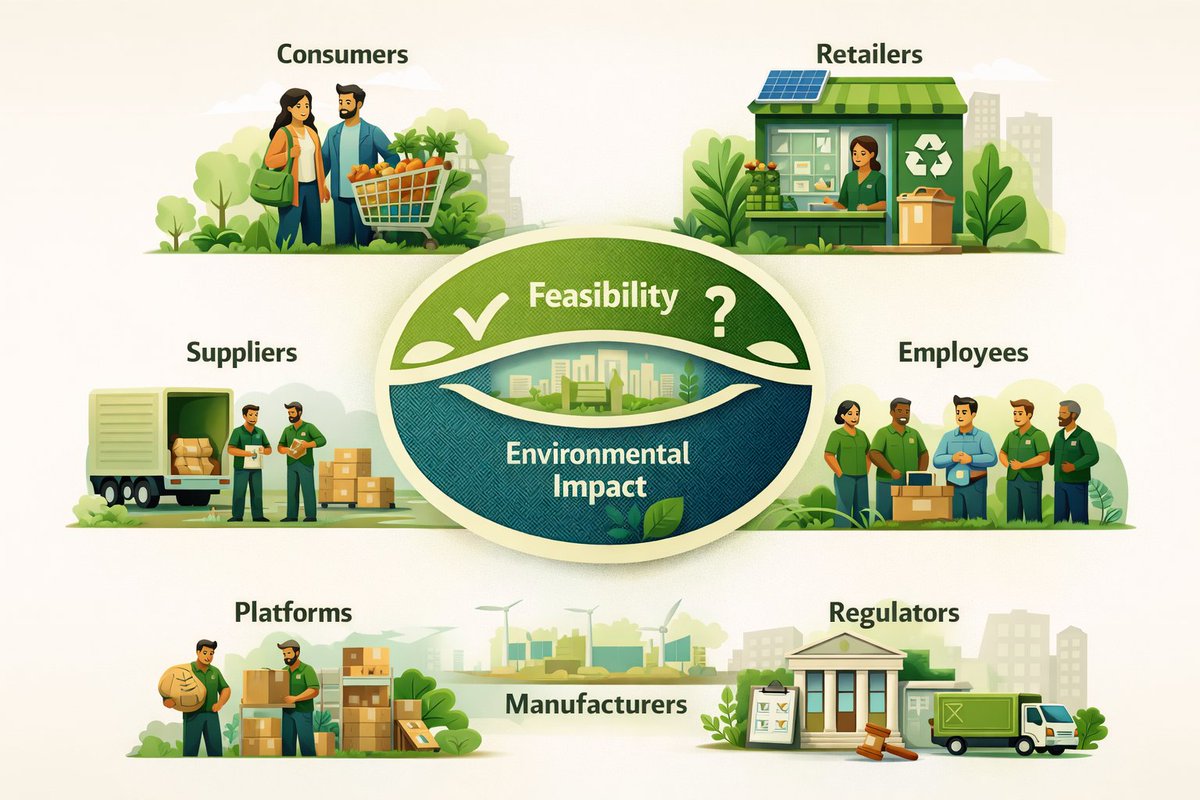
The two-stage framework by Ungemach et al. helps stakeholders identify effective sustainability interventions, highlights research gaps, & reveals opportunities to drive transformative, coordinated change across the retail ecosystem: https://t.co/nwV3fY5hd1
#JournalofRetailing
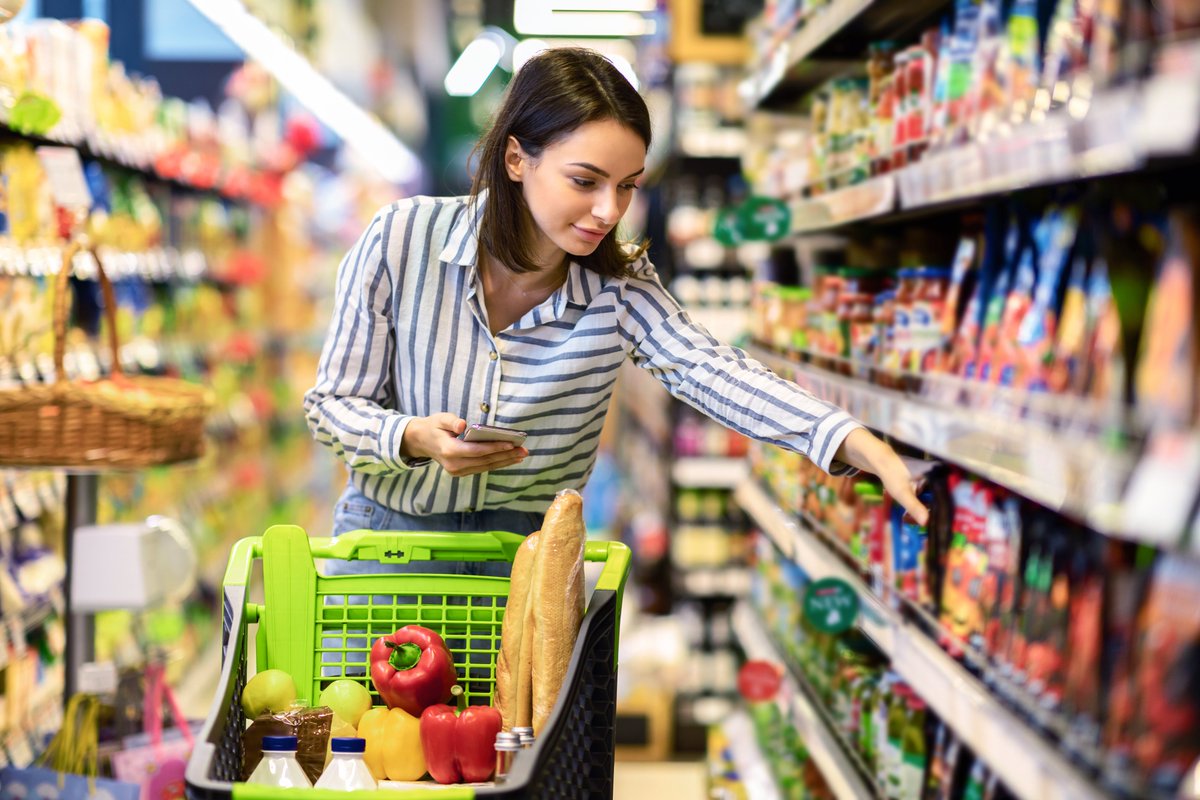
What happens when ads follow you through the store? Research shows that in-cart ads on digital shopping carts increase not only purchases of advertised products but also other items in the same category—expanding the overall basket: https://t.co/9OgA15eGOa
#JournalofRetailing
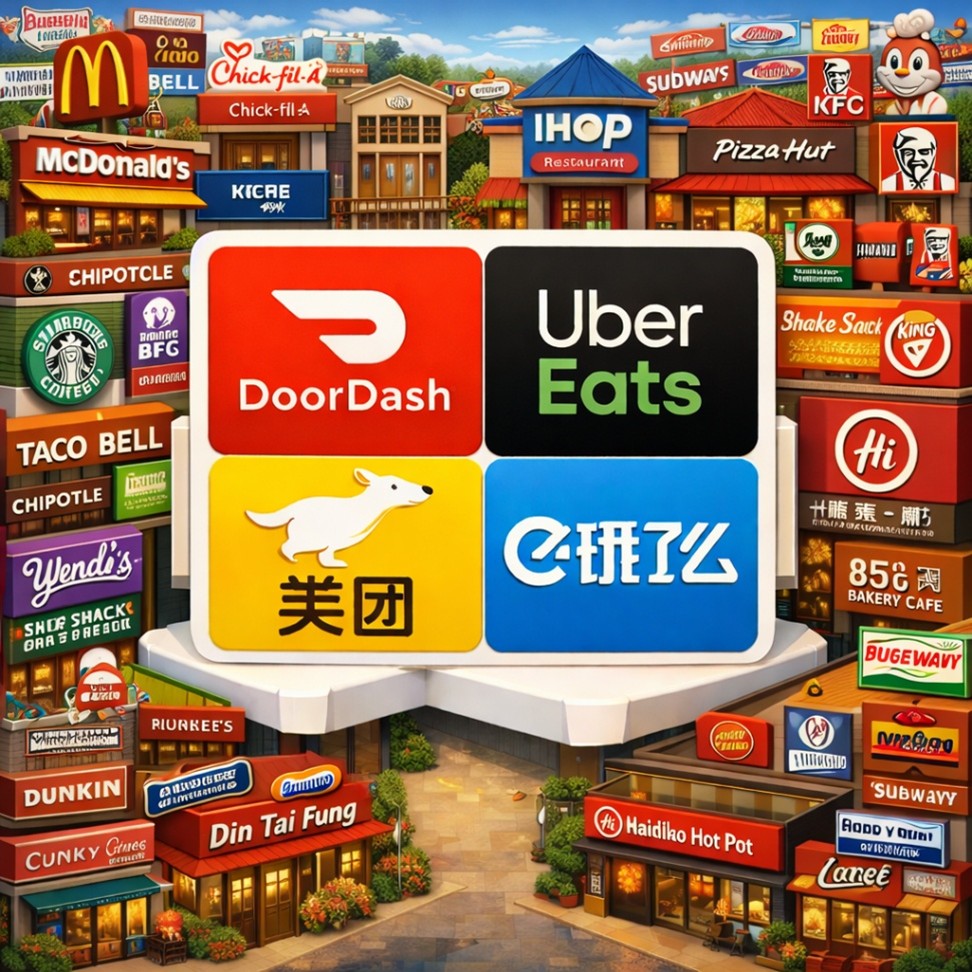
Are partnerships between restaurants and third-party food delivery platforms (such as Meituan and Uber Eats) empowering or exploitive? Recent research shows restaurant–platform partnerships are largely win–neutral: https://t.co/I2DX1DX5Yl
#JournalofRetailing#EcommercePlatforms
Does releasing non-fungible tokens (NFTs) produce financial gains for firms? Recent research by Bahmani et al. uncovers the specific design and commercialization choices that boost stock price. Read more here: https://t.co/I2DX1DX5Yl
#JournalofRetailing#NonFungibleTokens#NFTs
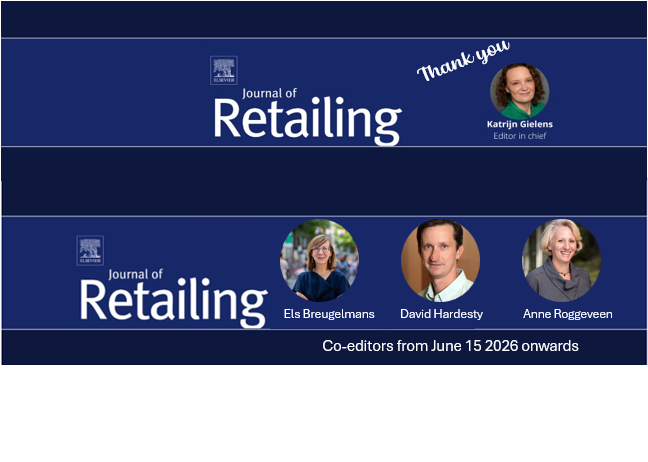
⏩ The #JournalofRetailing is pleased to announce its incoming editorial team. Thanks so much to Katrijn Gielens, who since 2022 has been the editor of the Journal of Retailing. The new Journal of Retailing editorial team will begin processing manuscripts on June 15, 2026.
What if the seller recommends a solution that is not the customer’s first choice? Different style– submissive (agreeing with the customer) vs. dominant (challenging their choice) – can deliver a customer-oriented experience. Read more: https://t.co/avei0ozSoI
#JournalofRetailing
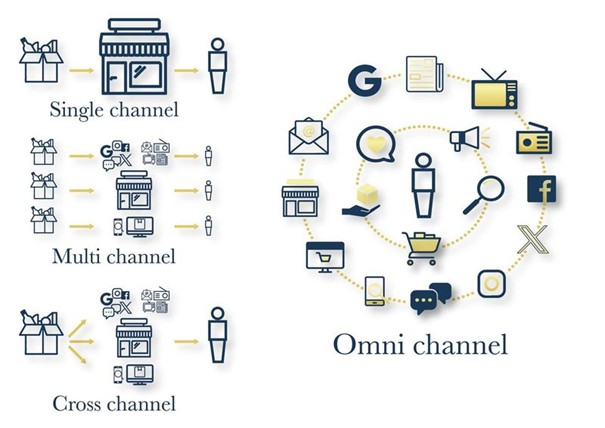
Why is omnichannel retail transformation for some firms a success? Research by Blumenstein et al. shows that success follows when firms continuously reconfigure their sensing, seizing, and transforming capabilities over time: https://t.co/LTVzLxmXJP
#JournalofRetailing
Why do firms sometimes sell products without revealing exactly what customers will get? Research by Li et al. shows that this strategy—known as probabilistic (opaque) selling—can be particularly profitable when consumers seek variety: https://t.co/GYFK3D5taZ
#JournalofRetailing
Should platforms consider similarity-aware sorting algorithms when presenting online reviews? Research by Boajun et al. shows that reducing local redundancy during consumers’ sequential browsing can enhance overall review helpfulness: https://t.co/VyOSXczFjf
#JournalofRetailing
Why do similar shopping malls have totally different performance? Research by de Jong et al. found that mall-controlled attributes drive satisfaction, and satisfaction helps explain long-run mall survival: https://t.co/kZK46IktUF
#JournalofRetailing#ShoppingMalls