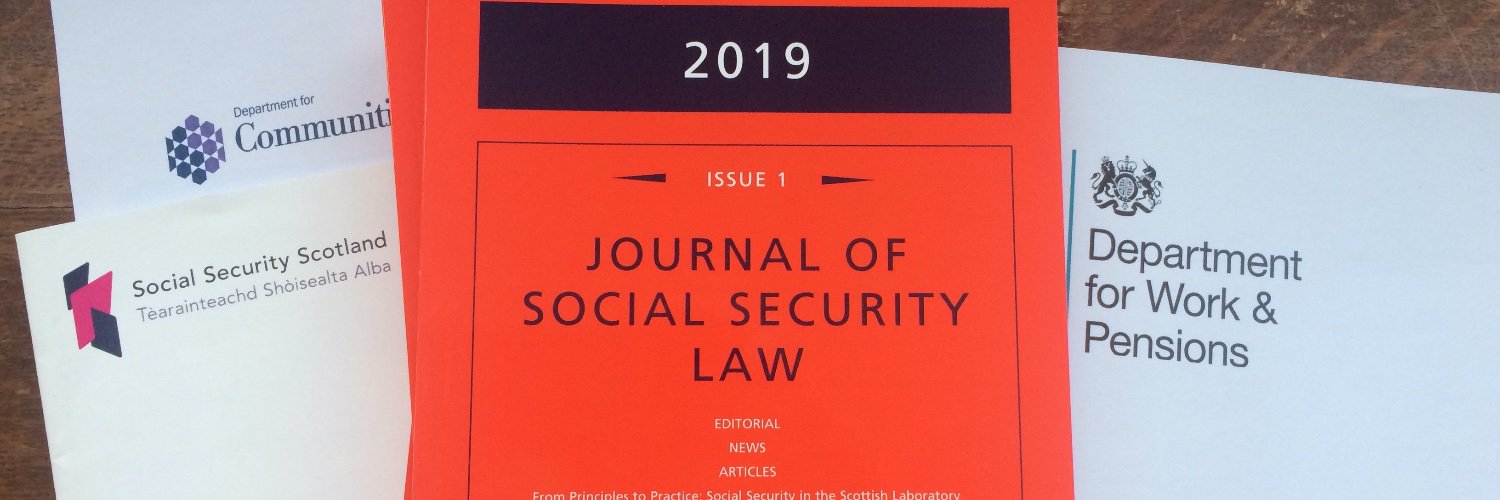
The JSSL provides expert coverage & analysis of developments in #SocialSecurity law/policy/practice, covering welfare benefits in the UK & internationally.
Always good to get the hard copy of JSSL! This edition focuses on 'Justice & Administration', looking at the role of assistance in claiming disability benefits and social security tribunals in the era of devolution. Plus news, book reviews & legislation + case law digests ... 1/n
The gap between rates of Local Housing Allowance and prevailing private rents is close to a record high.
Read how the government can fix it 👇️
https://t.co/3jKJmvOTYs
Join our upcoming course designed for people that want to learn how to use the Quick Benefits Calculator effectively and confidently.
Book your place: https://t.co/rywRmZ86ys
The term "disability" doesnt equate to being in receipt of benefits.
Its a defined term; Equality Act 2010, a disability is a physical or mental condition that has a large and lasting negative effect on your ability to do normal daily activities.
This ⬇️ is duplicitous framing
Is welfare spending 'out of control'?
We took a closer look and discussed some of the big items in Burnham's in-tray in the latest episode of High Resolution 👉 https://t.co/VhFA6HX6V6
'To the person who says it's a snowflake generation, just live just 24 hours as a 16 year old'
Professor Peter Fonagy, the head of an independent review into mental health, ADHD and autism, has told Catherine Burns on #BBCBreakfast that there has been a real rise in mental distress among children and young people, with anxiety, depression, self-harm and eating disorders
https://t.co/eAEvrYadgn
Imagine being disabled and unable to claim PIP because your partner earns “too much”, even though you cannot access or control that money.
Means-testing PIP could leave disabled women financially dependent on partners and make it even harder to escape coercive control, financial abuse or a relationship that has broken down. Household income does not guarantee personal financial security.
PIP recognises the extra costs and barriers caused by disability. It belongs to the disabled person and must remain individual and non-means-tested.
#PIP #DisabilityBenefits #DomesticAbuse #FinancialAbuse #CoerciveControl
3 things to note on all the current tax debates:
1. Raising the income tax Personal Allowance does *not* benefit those on the lowest incomes most. It's people in the richest half of the country who mostly benefit.
(Although mainly middle earners rather than the very rich.)
PIP/ADP is about contributing to the additional costs that disabled people incur as a result and consequence of their disability. Nothing mystical or mysterious about it. The additional costs faced by disabled people in the UK is over £1,000 p/m.
Source: https://t.co/drX69lfeZe
We're concerned by the pace of progress on the Carers Allowance overpayments reassessment exercise (see today's Guardian). We’re calling for a clear plan to speed this up and ensure a swift resolution for carers who have been wrongly given overpayments
https://t.co/VakLeEGRBp
We finish with our case law digest, compiled by @alexa_thomp & Alice Welsh, taking us through the latest decisions from the ECtHR, Court of Appeal and High Court (E&W), as well as the Upper Tribunal, covering everything from the benefit cap to transitional protection to NRPF. 8/n
Always good to get the hard copy of JSSL! This edition focuses on 'Justice & Administration', looking at the role of assistance in claiming disability benefits and social security tribunals in the era of devolution. Plus news, book reviews & legislation + case law digests ... 1/n
Elliot Kent provides the legislation digest, with updates on statutory instruments covering 'right to try', abolition of some legacy benefits, the replacement of DHPs, benefit up-rating, and more. 7/n
Looking to build your knowledge or refresh your skills?
Our training is designed for people working in advice, legal and community sectors, with practical learning based on real issues and real cases.
Choose from live webinars, flexible e-learning and accredited programmes to learn in a way that suits you. Explore upcoming courses and book your place today: https://t.co/7gPTw83dzn
💡 LCNI Connect members benefit from reduced training rates and exclusive discounts. Find out more about membership at: https://t.co/ov8F4YVIvm
UK civil society including @DisRightsUK brings UK poverty and human rights concerns to new UN Special Rapporteur.
Read the @JustFairUK blog here:
https://t.co/U8cRVY7Vzp
New analysis from @TheIFS showing that relatively few low-earners who are saving into a pension are in receipt of UC.
Therefore, measures which particularly increase the pension contributions of low earners *will* result in a substantial reduction in take-home pay.